要約すると
Fairlie Harmarが遺したオリジナル作品の中で最も有名なものは、バーミンガムのバーミンガム博物館・美術館に収蔵されているAfter A Game Of Tennis (1923)です。 それに次いで、St Giles, OxfordとThe Bridge at Monxton (1916)が続きます。 Fairlie Harmarによる18点の作品をカタログに掲載しています。当ギャラリーでは、世界が称賛する18点を選定し、制作年、所蔵美術館、そしてその背景にある物語とともにご紹介しています。
Fairlie Harmarの代表作10選:ギャラリー厳選の作品集
Fairlie Harmarのセレクションが続きます、11から18まで
Fairlie Harmarが心を惹かれた主題
これらのオリジナル作品に繰り返し描かれている4つの主題と、それぞれの最高傑作。
British painting 2点
Fairlie Harmarの原画を所蔵する美術館
このページに掲載されている絵画を最も多く所蔵している 5 の美術館
| 美術館 | 都市 | Fairlie Harmarの作品 | このリストの絵画 |
|---|---|---|---|
| ウルヴァーハンプトン | 2 | Ships on the Thames, Flowers | |
| バーミンガム | 1 | After A Game Of Tennis | |
| リバプール | 1 | The Bridge at Monxton | |
| オックスフォード | 1 | The Laurel Walk | |
| Darlington | 1 | Chibbet, Exmoor, Somerset |
Fairlie Harmarの年代別名作:各時代を象徴するオリジナル作品
Fairlie Harmarの絵画に関するコレクターからの質問
Fairlie Harmarの代表作は何ですか?答えを見る
After A Game Of Tennis (1923)(バーミンガム博物館・美術館, バーミンガム)。次いでSt Giles, Oxford、The Bridge at Monxton (1916)が続きます。
After A Game Of Tennisが制作されたとき、Fairlie Harmarは何歳でしたか?答えを見る
47歳:After A Game Of Tennisは1923年の作品で、Fairlie Harmarの生年は1876年です。
Fairlie Harmarの最も有名な10作品とは?答えを見る
After A Game Of Tennis, St Giles, Oxford, The Bridge at Monxton, The Laurel Walk, Women's Royal Air Force Workers Drilling at Andover Aerodrome, Birthday Celebration, Garden Gate, L'Aveyron, Cheyne Walk Gardens と Sarson Farm, Early Spring。上記のランキングには、それぞれの制作年と所蔵美術館が記載されています。
Fairlie Harmarが遺した作品数は?答えを見る
当カタログには、1912年から1938年にかけて制作されたFairlie Harmarによる18点の作品が収められています。
Fairlie Harmarの名作は、どの美術館に収蔵されていますか?答えを見る
主にWolverhampton Art Gallery (ウルヴァーハンプトン), バーミンガム博物館・美術館 (バーミンガム) と ウォーカー・アート・ギャラリー (リバプール)に所蔵されています。上記の美術館一覧にすべて記載されています。
Fairlie Harmarが最も有名な作品を多く描いたのは何年ですか?答えを見る
1920s年:このページにある全18作品のうち、4作品がその時期に制作されました。そのうちAfter A Game Of Tennis作品が含まれます。
Fairlie Harmarによる最初と最後の代表的なオリジナル作品は何ですか?答えを見る
このページでは、最も古い作品はThe Laurel Walk (1912)、最新の作品はCheyne Walk Gardens (1938)です。
Wolverhampton Art GalleryにはどのFairlie Harmarの作品が展示されていますか?答えを見る
Ships on the Thames と Flowers:Wolverhampton Art Gallery, ウルヴァーハンプトンには、このページに掲載されている作品のうち2点が所蔵されています。
Fairlie Harmar:生涯と作品
Fairlie Harmar (1876–1945): A Painter of Quiet Landscapes and Intimate Portraits
Fairlie Harmar (1876-1945) was an English painter who quietly established herself as a significant figure in early 20th-century British art. Born in Weymouth, Dorset, she pursued her artistic ambitions at the Slade School of Fine Art under the tutelage of Henry Tonks and Fred Brown—a formative experience that instilled in her a meticulous approach to observation and representation. Her oeuvre is characterized by evocative landscapes imbued with subtle tonal harmonies alongside delicately rendered portraits capturing fleeting moments of human emotion. Harmar’s work offers a poignant glimpse into the domestic life and artistic sensibilities of her era, reflecting both Impressionistic influences and a deep connection to the natural world.- Early Life & Education: Fairlie Harmar's formative years were spent in Weymouth, Dorset, where she absorbed the beauty of the coastal landscape—a visual element that would permeate much of her subsequent artistic output. Her studies at the Slade School of Fine Art provided her with invaluable technical skills and intellectual grounding, fostering a disciplined eye for detail and composition.
- Style & Technique: Harmar’s distinctive style leaned heavily towards Impressionism, prioritizing capturing atmospheric conditions and conveying subjective experience rather than striving for photographic accuracy. She skillfully employed muted palettes—often dominated by greens, blues, and browns—to evoke mood and atmosphere, layering brushstrokes to create textured surfaces that subtly shimmered with light.
- Notable Works: Among Harmar’s most celebrated paintings are “A la Chaumière” (1928), a luminous depiction of a Parisian apartment interior bathed in diffused sunlight, and “St Giles, Oxford” (1920), which captures the serene grandeur of Oxford University Chapel. These pieces exemplify her ability to distill complex emotions into simple visual forms—a hallmark of her artistic vision.
- Influences & Connections: Harmar’s artistic sensibilities were undoubtedly shaped by the broader intellectual currents of her time, including discussions surrounding Symbolism and Modernism. Her association with Ezra Pound and fellow artists fostered a stimulating environment for experimentation and critical engagement.
- Legacy & Recognition: Fairlie Harmar's contribution to British art history is recognized through inclusion in prominent collections such as the Ashmolean Museum and the Royal Collection, where her paintings continue to inspire admiration for their understated beauty and psychological depth. Her work stands as a testament to the power of quiet observation and skillful execution—qualities that resonate powerfully with viewers today.
Exploring Landscapes & Domestic Interiors
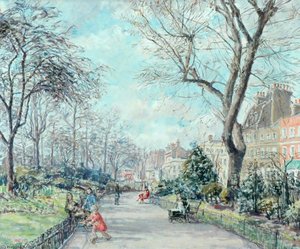
Harmar’s landscapes frequently depict tranquil scenes of Dorset countryside, capturing the subtle shifts in light and color throughout the seasons. She meticulously rendered details—such as foliage textures and reflections on water surfaces—to convey a profound sense of place. Simultaneously, her portraits delve into the inner lives of her subjects, portraying them with sensitivity and empathy. These intimate depictions reveal nuanced expressions of emotion and capture fleeting moments of human connection. Her ability to translate psychological states onto canvas solidified her reputation as one of Britain’s foremost portrait artists.- “Cheyne Walk Gardens” (1938): This Impressionistic landscape showcases Harmar's masterful use of color and brushwork, capturing the autumnal splendor of Cheyne Walk Gardens in Chelsea.