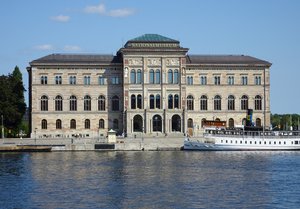
エヴァ・ボニエの肖像画

世界的に有名なエヴァ・ボニエの名作18点、そのすべてが唯一無二の芸術品

11月 2026 更新 · 当サイトの人気スコア(各作品の検索数、閲覧数、注文数)に基づくランキング · 18点の エヴァ・ボニエの作品がカタログにあります

要約すると

Odalisque (1884)はエヴァ・ボニエの作品の中で最も注目を集めている絵画です。原画はストックホルムの国立美術館に所蔵されています。 その後、視線はThe Artist Georg Pauli. Study (1884)とMagdalena (1887)へと移ります。 当カタログに含まれるエヴァ・ボニエの18点の作品のうち、これら18点は最も有名な作品です。制作年、所蔵美術館、そして時代を超えて愛される理由とともに、一点もののオリジナル作品をご紹介します。

1857 – 1909, ストックホルム 最多収蔵館: 国立美術館

ギャラリーの視点で選ぶ、エヴァ・ボニエによるトップ10作品

1
Odalisque (1884) による エヴァ・ボニエ

Odalisque

1884 · Oil · 国立美術館, ストックホルム

In this 1884 oil painting, a female subject is depicted in a close-up portrait, leaning forward in a contemplative pose. The figure is positioned slightly off-center against a neutral, pale cream background. She wears attire associated with the Orientalist theme of an odalisque, featuring a gold headband and a gold choker. Her garment is rendered in shades of peach and pink, contrasting with the deep black of her hair. The…

2
The Artist Georg Pauli. Study (1884) による エヴァ・ボニエ

The Artist Georg Pauli. Study

1884 · Oil On Canvas · 国立美術館, ストックホルム

The Artist Georg Pauli. Study emerges from the brush of Eva Bonnier, a Swedish painter who captures a fleeting moment of introspection. This portrait study focuses on the figure of Georg Pauli, presenting him in a moment of quiet repose. The work exists as a direct encounter between the artist and her subject, frozen in a state of contemplation.

4
Brita Maria (Mussa) Banck (1830-1906), husföreståndarinna (1890) による エヴァ・ボニエ

Brita Maria (Mussa) Banck (1830-1906), husföreståndarinna

1890 · Oil On Canvas · National Portrait Gallery of Sweden, ストレングセス

Brita Maria Banck sits behind a light-colored surface, her gaze fixed and steady. She is the housekeeper, a woman defined by the steady rhythm of a household. The painting captures her in a moment of stillness, an open newspaper resting before her. There is a weight to her presence, a sense of a life lived through the quiet management of a home. The light falls softly across her features, illuminating…

5
The Housekeeper, Brita Maria (Mussa) Banck (1890) による エヴァ・ボニエ

The Housekeeper, Brita Maria (Mussa) Banck

1890 · Oil On Canvas · National Portrait Gallery of Sweden, ストレングセス

The light falls softly across a kitchen table, catching the white of a linen apron and the pale surface of a tablecloth. Brita Maria sits in the center of this domestic stillness, her hands resting in a way that suggests a long day of labor. She wears a dark cardigan that absorbs the light, grounding her figure against the vertical rhythm of the striped wallpaper. There is a weight to…

6
Old Grandmother (1886) による エヴァ・ボニエ

Old Grandmother

1886 · Oil · 国立美術館, ストックホルム

The oil portrait depicts an elderly woman in a close-up, centered composition. Her face occupies the majority of the frame, presented at eye-level to establish a direct connection with the viewer. She wears a blue bonnet and glasses, which frame a face marked by deep wrinkles and textured skin. The lighting originates from the upper left, casting shadows that define the contours of her features and provide a sense of…

7
Fru Hilda Schönthal (1824-1892), förstudie till "Under kastanjen" (1891) による エヴァ・ボニエ

Fru Hilda Schönthal (1824-1892), förstudie till "Under kastanjen"

1891 · Oil On Canvas · 国立美術館, ストックホルム

In this intimate oil portrait, we find ourselves in the presence of Fru Hilda Schönthal. It is a study, a preliminary exploration of form and spirit that precedes a larger work. The subject is an elderly woman, captured in a close-up bust composition that demands a certain level of quiet respect. She gazes directly at us, her eyes steady and filled with a sense of lived experience. There is a…

8
Untitled (AQR9NH) (1895) による エヴァ・ボニエ

Untitled (AQR9NH)

1895 · Oil On Canvas

In this 1895 work, titled Untitled (AQR9NH), the artist Eva Bonnier captures a quiet moment of solitude. A woman sits upon a bench, nestled within an outdoor setting where the world seems to breathe through a soft, diffused light. The scene feels suspended in the gentle warmth of an afternoon, as if the viewer has just stumbled upon a private instance of reflection.

9
Magdalena (1890) による エヴァ・ボニエ

Magdalena

1890 · Oil On Canvas

The oil painting depicts a young woman seated within an interior space. She is positioned centrally, shown from the head to the upper body in a medium close-up view. The subject is oriented toward the viewer, her expression quiet and contemplative. She is dressed in a white blouse and a lace vest, her form framed by a background of draped fabric that resembles pillows or bedding. The color palette is…

10
Dressmakers (1887) による エヴァ・ボニエ

Dressmakers

1887 · Oil

Two women occupy a quiet, interior space, their attention fixed entirely upon the construction of a garment. One woman sits at a table, hands resting in her lap, while the second woman stands behind her, holding an open book before her face. The scene is cluttered with the essential tools of the trade: scissors, pins, and needles are scattered among the materials. This composition emphasizes a shared focus, capturing a…

エヴァ・ボニエの名作、11〜18点目

エヴァ・ボニエの代表作、時代別一覧

Late Period

1900 – 1906 · 3作品がこのリストに含まれています

エヴァ・ボニエが心を惹かれた主題

これらのオリジナル作品に繰り返し描かれている4つの主題と、それぞれの最高傑作。

エヴァ・ボニエの原画を所蔵する美術館

このページに掲載されている絵画を最も多く所蔵している 4 の美術館

美術館 所在都市 エヴァ・ボニエの作品 このリストの絵画
国立美術館, ストックホルム国立美術館 ストックホルム 6 Odalisque, The Artist Georg Pauli. Study, Old Grandmother
National Portrait Gallery of Sweden, ストレングセスNational Portrait Gallery of Sweden ストレングセス 2 Brita Maria (Mussa) Banck (1830-1906), husföreståndarinna, The Housekeeper, Brita Maria (Mussa) Banck
Prince Eugens Waldemarsudde, StockholmPrince Eugens Waldemarsudde Stockholm 1 Magdalena
Nedre Manilla, ストックホルムNedre Manilla ストックホルム 1 Untitled (AQR9ND)

エヴァ・ボニエの数十年にわたる軌跡:それぞれに唯一無二のオリジナル作品を

年代別作品数

その時代を象徴する名作を見るために、年代を選択してください。

エヴァ・ボニエの絵画:ギャラリーへの質問

エヴァ・ボニエの最も有名な作品は何ですか?答えを見る

Odalisque (1884)(国立美術館, ストックホルム)。次いでThe Artist Georg Pauli. Study (1884)、Magdalena (1887)が続きます。

エヴァ・ボニエがOdalisqueを制作したのは何歳の時ですか?答えを見る

27歳:Odalisqueは1884年の作品で、エヴァ・ボニエの生年は1857年です。

エヴァ・ボニエの最も有名な10作品は何ですか?答えを見る

Odalisque, The Artist Georg Pauli. Study, Magdalena, Brita Maria (Mussa) Banck (1830-1906), husföreståndarinna, The Housekeeper, Brita Maria (Mussa) Banck, Old Grandmother, Fru Hilda Schönthal (1824-1892), förstudie till "Under kastanjen", Untitled (AQR9NH), Magdalena と Dressmakers。上記のランキングには、それぞれの制作年と所蔵美術館が記載されています。

エヴァ・ボニエの既知の作品数は?答えを見る

当カタログには、1884年から1906年にかけて制作されたエヴァ・ボニエによる18点の作品が収められています。

最も有名なエヴァ・ボニエのオリジナル作品はどこで見ることができますか?答えを見る

主に国立美術館 (ストックホルム), National Portrait Gallery of Sweden (ストレングセス) と Prince Eugens Waldemarsudde (Stockholm)に所蔵されています。上記の美術館一覧にすべて記載されています。

エヴァ・ボニエが最も有名な作品を制作したのは、どの時期ですか?答えを見る

1880s年:このページにある全18作品のうち、8作品がその時期に制作されました。そのうちOdalisque作品が含まれます。

エヴァ・ボニエの有名な絵画の中で、最も古い作品と最も新しい作品はどれですか?答えを見る

このページでは、最も古い作品はOdalisque (1884)、最新の作品はUntitled (AQR9NM) (1906)です。

エヴァ・ボニエが好んだ主題は何ですか?答えを見る

このページに掲載されている18点の作品におけるWoman (10), Portrait (5) と Man (3)

エヴァ・ボニエが最も多く使用した画材は何ですか?答えを見る

このページに掲載されている全18作品のうち、10作品のOil On Canvas

国立美術館では、エヴァ・ボニエのオリジナル作品を何点鑑賞できますか?答えを見る

Odalisque, The Artist Georg Pauli. Study と Old Grandmother:国立美術館, ストックホルムには、このページに掲載されている作品のうち6点が所蔵されています。

エヴァ・ボニエ:アーティストの肖像画

A Life Dedicated to Art and Civic Beauty: Eva Bonnier

Eva Fredrika Bonnier, born in Stockholm on November 17th, 1857, was a figure deeply embedded within the cultural fabric of late 19th-century Sweden. Her life unfolded as a compelling narrative—a journey from aspiring painter to dedicated philanthropist, all while navigating the societal expectations and personal struggles of her time. Born into the prominent Bonnier publishing family, she possessed both the privilege that allowed for artistic pursuit and an inherent sensitivity that fueled her creative spirit. Her father, Albert Bonnier, was a leading entrepreneur in the Swedish book trade, providing a stable foundation upon which Eva could explore her passion. This background wasn’t merely financial; it instilled within her a sense of responsibility towards society, a value that would later define her legacy beyond the canvas.

Early Training and Parisian Influences

Bonnier's formal artistic education began in 1878 at the women’s section of the Royal Swedish Academy of Arts in Stockholm, under the tutelage of August Malmström. However, it was her extended sojourn to Paris between 1883 and 1889 that truly shaped her aesthetic sensibilities. Paris, during this period, was a crucible of artistic innovation—Impressionism had taken hold, and artists were boldly experimenting with light, color, and subject matter. Bonnier immersed herself in this vibrant atmosphere alongside her close friend and fellow artist, Hanna Hirsch. The Parisian experience wasn’t simply about acquiring technique; it was about embracing a new way of seeing the world. Her painting *Music* (1889), which received an honorable mention at the prestigious Paris Salon, stands as a testament to this period—a work that reflects both her technical development and her growing confidence as an artist. The recognition in Paris marked a significant milestone, validating her artistic endeavors on an international stage.

Portraits of Society: Capturing Character and Intimacy

Upon returning to Sweden in 1889, Bonnier established herself primarily as a portraitist. Her subjects were drawn from the upper echelons of Swedish society—family members like her sister-in-law Lisen Bonnier, industrialist Hjalmar Lundbohm, politician Moritz Rubenson, educator Carl Meijerberg, and poet Oscar Levertin. However, these weren’t merely formal depictions; Bonnier possessed a remarkable ability to capture the inner lives of her sitters. Her portraits are characterized by a subtle psychological depth, revealing not just physical likeness but also character and emotion. The brushwork is often loose and expressive, hinting at an Impressionistic influence, yet grounded in a realism that conveys a sense of intimacy and authenticity. *Convalescent* (1890), a portrait of Lisen Bonnier recovering from illness, exemplifies this approach—a tender depiction imbued with warmth and compassion. She exhibited her work at the 1893 World's Columbian Exposition in Chicago, further broadening her reach and recognition.

A Shift Towards Philanthropy: Beautifying Stockholm

Around the turn of the century, Bonnier’s artistic output began to diminish. This wasn’t a sudden abandonment of art but rather a gradual shift towards philanthropic endeavors. Inheriting substantial wealth allowed her to pursue a new passion—the beautification of Stockholm. In 1900, she established a foundation dedicated to enriching the city's public spaces with art and culture. This initiative financed paintings and sculptures for institutions like the Royal Library, Stockholm University, and numerous schools. Her vision wasn’t simply about adding aesthetic embellishments; it was about making art accessible to all citizens, fostering a more vibrant and culturally enriched environment. The foundation she created continues to operate today, a lasting testament to her commitment to civic beauty.

Legacy and Historical Significance

Eva Bonnier's life ended tragically in 1909 when she took her own life in Copenhagen at the age of 51, succumbing to long-standing struggles with depression. Despite this sorrowful end, her legacy remains profound. She was a talented artist who captured the essence of Swedish society during a period of significant change. More importantly, she was a visionary philanthropist who understood the transformative power of art and its ability to uplift communities. Her paintings, now held in prestigious collections like the Nationalmuseum in Stockholm, offer a glimpse into her artistic skill and sensitivity. However, it is perhaps her foundation—a living embodiment of her commitment to civic beauty—that stands as her most enduring achievement, continuing to shape the cultural landscape of Stockholm for generations to come. She was also an active member of Nya Idun, a women’s association advocating for social reform, further demonstrating her dedication to progressive ideals and societal betterment.