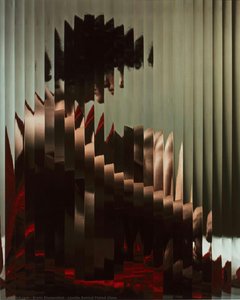
A Visionary of the Avant-Garde: Exploring the World of Erwin Blumenfeld
Erwin Blumenfeld, born in Berlin in 1897, wasn’t merely a photographer; he was a provocateur, a stylist, and ultimately, a pioneer who fundamentally altered the landscape of
fashion photography. His journey, spanning from the vibrant artistic circles of
early 20th-century Europe to the bustling studios of
New York City, reveals an artist deeply influenced by the currents of his time –
Dadaism,
Expressionism, and the burgeoning
Surrealist movement. Blumenfeld’s legacy isn't simply in the images he captured but in the audacious spirit with which he approached them, challenging conventional notions of beauty and representation within the world of high fashion.
Early Years and Parisian Beginnings
Blumenfeld’s early career unfolded against the backdrop of a rapidly changing Europe. Following his birth in Berlin, he quickly immersed himself in the artistic ferment of Paris during the 1920s. He began as a freelance photographer for *Vogue* France, honing his skills and developing an eye for capturing the ephemeral beauty of the era’s social elite. This period was crucial; it exposed him to the radical ideas circulating within the
Dada movement – a rejection of traditional artistic values in favor of absurdity, irony, and challenging established norms. These influences would later manifest powerfully in his photographic style. His work during this time showcased a burgeoning talent for
dramatic lighting and unconventional compositions, hinting at the groundbreaking approach he was about to embrace.
New York and the Rise of a Fashion Icon
A pivotal moment arrived when Blumenfeld relocated to
New York City in the 1930s. This shift marked a significant evolution in his career, solidifying his position as a leading figure in American
fashion photography. He quickly established himself as a sought-after collaborator for prestigious publications like *Harper’s Bazaar*, *Life*, and, most notably, *American Vogue*. It was within these magazines that he truly blossomed, developing a distinctive style characterized by bold experimentation with light, shadow, and perspective. Blumenfeld wasn't content to simply document fashion; he actively sculpted the image, employing techniques borrowed from
Expressionism – distorted forms, heightened colors, and an emphasis on emotional impact – to create arresting visual narratives.
A Surrealist Approach to Fashion
Blumenfeld’s approach to
fashion photography was profoundly influenced by
Surrealism, though he rarely identified with the movement explicitly. He utilized techniques reminiscent of dreamscapes and subconscious imagery, often juxtaposing unexpected elements within a single frame. His photographs frequently featured unconventional poses, distorted faces, and unsettling compositions that defied conventional beauty standards. Consider his iconic editorial featuring
Yves Saint Laurent – a study in stark contrasts, utilizing
dramatic lighting to sculpt the model’s features and create an almost sculptural effect. This wasn't simply a portrait; it was a carefully constructed visual statement, imbued with a sense of mystery and intrigue. He understood that
fashion photography could be more than just pretty pictures; it could be a vehicle for exploring deeper themes and challenging viewers’ perceptions.
Legacy and Influence
Erwin Blumenfeld's impact on the world of photography is undeniable. His work, now housed in collections like the Bernhard Koehler Collection in Berlin and exhibited at institutions such as the Instituto Moreira Salles in Rio de Janeiro, continues to inspire artists and designers today. He demonstrated that
fashion photography could be a powerful form of artistic expression, pushing boundaries and challenging conventions. His influence extends beyond his own photographs; he paved the way for future generations of avant-garde photographers who embraced experimentation and sought to redefine the relationship between art and commerce. The echoes of his daring vision can still be felt in contemporary fashion imagery, a testament to the enduring power of a truly original artist. His collaboration with James C. Darby and
John Heartfield further cemented his place as a key figure in the development of 20th-century visual culture.