The Vibrant Pulse of Warsaw: The Life and Legacy of Edward Dwurnik
Born amidst the resilient spirit of Warsaw on September 9, 1943, Edward Dwurnik emerged from the shadows of a rebuilding Poland to become one of the most recognizable figures in contemporary Polish art. His journey began in the heart of a nation finding its voice again, leading him to the prestigious Academy of Fine Arts in Warsaw. It was within these hallowed halls that Dwurnim refined a technique that would eventually captivate the international art community. His early years were marked by a profound connection to the urban fabric of his homeland, a fascination that would evolve into a lifelong obsession with the rhythmic, chaotic, and beautiful complexity of cityscapes.
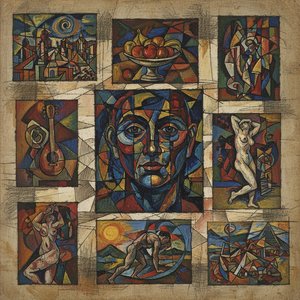
Dwurnik’s artistic evolution is a fascinating study in the marriage of tradition and modernity. While his foundations were rooted in classical training, his vision was propelled forward by the radical energies of Cubism and Impressionism. He did not merely observe the world; he reconstructed it through a lens of dynamic movement and geometric vitality. His canvases often feel alive, vibrating with a sense of spontaneous energy that mirrors the frantic pace of urban existence. By utilizing bold, saturated colors and intricate, almost frenetic compositions, he transformed the mundane streets and everyday scenes into theatrical stages of human drama.
A Tapestry of Urbanity and Human Emotion
The true magic of Dwurnik’s oeuvre lies in his ability to find poetry within the architectural density of the city. He became a master chronicler of the urban landscape, capturing not just the buildings and boulevards, but the very soul of the streets. His paintings are characterized by a unique sense of humor and a keen eye for the whimsical details of everyday life. Whether depicting a crowded Warsaw square or a quiet corner of a bustling metropolis, his work possesses an unmistakable narrative depth.
Beyond the architecture, Dwurnik’s exploration of portraiture and human interaction adds a layer of intimacy to his expansive landscapes. His subjects are often woven into the geometric tapestry of the city, becoming part of a larger, interconnected organism. This stylistic choice emphasizes the relationship between the individual and their environment, suggesting that we are all, in some way, shaped by the structures we inhabit. His work serves as both a historical record and an emotional exploration, capturing the zeitgeist of Polish contemporary art through:
- Dynamic Compositions: A mastery of movement that guides the viewer's eye through complex, layered scenes.
- Chromatic Intensity: The use of bright, unapologetic colors to evoke mood and energy.
- Narrative Depth: An ability to tell stories within a single frame, blending the monumental with the minute.
- Geometric Structure: A subtle nod to Cubist influences that provides stability to his energetic brushwork.
Global Recognition and Enduring Influence
The impact of Edward Dwurnik extends far beyond the borders of Poland. His works have graced the walls of some of the most prestigious institutions in the world, securing his place in the canon of modern masters. From the National Museum in Warsaw to the Centre Pompidou in Paris and the Museum of Modern Art in New York, his presence in global collections speaks to the universal resonance of his vision. His ability to translate local Polish experiences into a visual language that is globally understood is perhaps his greatest achievement.
As a member of the Polish Academy of Arts and Sciences, Dwurnik received numerous accolades that honored his profound contribution to the arts. Even after his passing on October 14, 2018, his legacy remains undiminished. He left behind a body of work that continues to inspire new generations of painters to look at their own surroundings with renewed wonder and curiosity. Through his vibrant colors and rhythmic lines, Dwurnik ensured that the pulse of the city—and the spirit of Poland—would continue to beat brightly within the halls of art history.