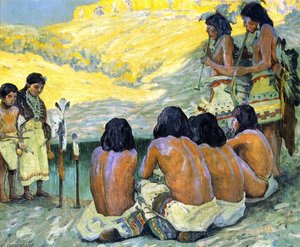
アーヴィング・カウスの肖像画

アーヴィング・カウスの絵画:ギャラリーの視点で選ぶ、最も有名な100作品

11月 2026 更新 · 当サイトの人気スコア(各作品の検索数、閲覧数、注文数)に基づくランキング · 152点の アーヴィング・カウスの作品がカタログにあります

要約すると

当ギャラリーの視点では、アーヴィング・カウスの最も有名な作品はTaos Indian and Pottery (1920)です。 The Harvest Song (1920)とIndian Brave Recording General MacKenzie's Fight with the Cheyenes (1902)が加わり、誰もが一度は目にしたことのある至高のトリオが完成します。 当カタログに含まれるアーヴィング・カウスの作品152点の中から、特に有名な100点を厳選してご紹介します。各作品は、制作年、所蔵美術館、そしてその作品ならではの魅力とともに、一点物のオリジナル作品として掲載されています。

1866 – 1936, サギノー 最多収蔵館: Reading Public Museum

ギャラリーが選ぶアーヴィング・カウスのトップ10作品

1
Taos Indian and Pottery (1920) による アーヴィング・カウス

Taos Indian and Pottery

1920 · Oil On Canvas

In 1920, E. Irving Couse captures a quiet moment of stillness in Taos Indian and Pottery. The scene unfolds within the intimate confines of an indoor space, perhaps a humble room or a traditional hut. A deep red wall provides a warm backdrop to the central figure, grounding the composition in a sense of place and purpose.
2
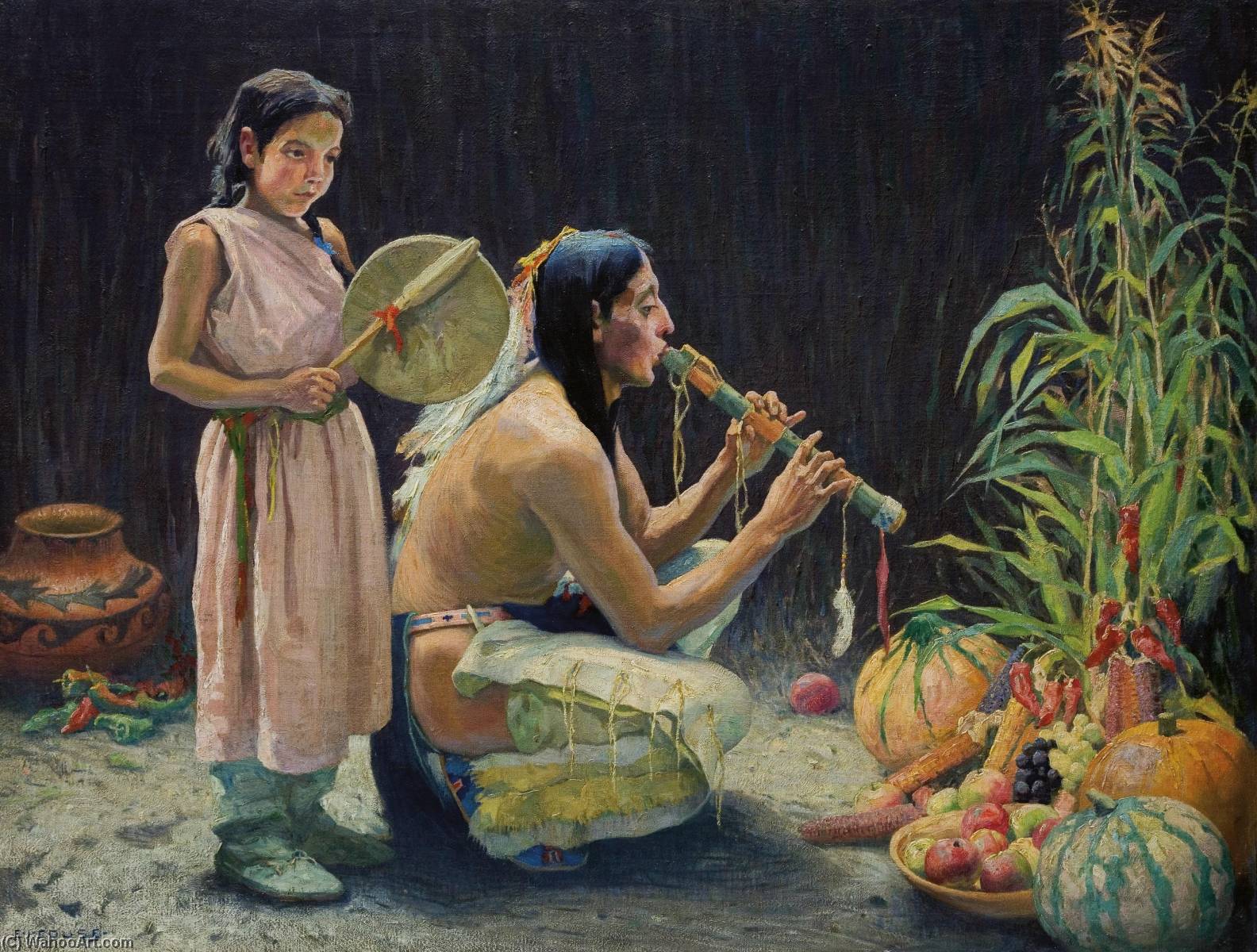
The Harvest Song (1920) による アーヴィング・カウス

The Harvest Song

1920 · Oil On Canvas

The air feels heavy with the scent of ripening produce in The Harvest Song, a work painted by E. Irving Couse in 1920. Within this sun-drenched field, a man sits amidst an abundance of nature, his breath steady as he plays a flute. Beside him, a woman holds a drum, her presence completing a rhythmic duet that seems to echo through the surrounding crops. They exist in a moment of…

3
Indian Brave Recording General MacKenzie's Fight with the Cheyenes (1902) による アーヴィング・カウス

Indian Brave Recording General MacKenzie's Fight with the Cheyenes

1902 · Oil

In "Indian Brave Recording General MacKenzie's Fight with the Cheyenes" by E. Irving Couse, a quiet moment of creation unfolds. Two Native American men lean into their task, focused entirely on the act of painting a mural. They work upon a large, stretched animal hide, perhaps deer or buffalo, which serves as the canvas for their story. This central activity anchors the entire scene, drawing the eye directly to the…

4
The Water Course (1910) による アーヴィング・カウス

The Water Course

1910 · Oil · Reading Public Museum, レディング

In The Water Course, E. Irving Couse presents a quiet moment of interaction with the natural world. Painted around 1910, the work focuses on two Native American figures positioned within a rugged, sunlit landscape. They are situated near a flowing stream, their presence integrated into the terrain rather than imposed upon it. The scene captures a sense of tranquility, focusing on the subtle connection between the individuals and the land…

5
The Sculptor (1914) による アーヴィング・カウス

The Sculptor

1914 · Oil On Canvas

The Sculptor is an oil painting by E. Irving Couse, executed in 1914. The work focuses on a Native American man engaged in the act of creating petroglyphs or drawings upon a textured surface. The subject is positioned in a central-right profile, kneeling as he works against a shallow, textured background suggesting a rock face or cave wall.

6
The Cooling Stream (1912) による アーヴィング・カウス

The Cooling Stream

1912 · Oil On Canvas

The air feels heavy and still under a blanket of overcast clouds. Near the edge of a flowing river, a group of indigenous figures gathers, their presence deeply woven into the natural landscape. There is a quiet, somber energy in the way they move, a sense of ritual or perhaps a shared moment of mourning that settles over the scene. The water of the stream ripples softly, catching subtle highlights…

7
The Mountain Stream (1914) による アーヴィング・カウス

The Mountain Stream

1914 · Oil On Canvas

In The Mountain Stream, E. Irving Couse positions a solitary Indigenous man in the foreground, seated along a riverbank. The figure is the central focus, rendered with a posture and gaze that suggest deep introspection. This quietude is framed by a landscape of flowing water and dense foliage, creating a scene centered on contemplation and a profound connection with the natural world.

9
Indian Hunter (1925) による アーヴィング・カウス

Indian Hunter

1925 · Oil · Reading Public Museum, レディング

In this 1925 oil painting, a Native American hunter moves through a sun-dappled grove of birch or aspen trees. The composition is oriented vertically, drawing the eye to the profile of the figure on the left as he moves toward the right. There is a stillness here, a sense of quiet tension as the subject navigates the forest floor. Light filters through the canopy in patches of pale yellow, creating…

10
The Blanket Mender (1934) による アーヴィング・カウス

The Blanket Mender

1934 · Oil · The Owings Gallery, Santa Fe

The Blanket Mender is an oil painting by E. Irving Couse. Created about 1934, this work captures a quiet moment of focused labor. The subject is a Native American figure, depicted in a state of stillness as they attend to a textile. There is a profound sense of patience in the way the figure engages with the fabric, a task requiring steady hands and a calm mind.

アーヴィング・カウスの絵画、ランキング11位から100位

11Flute Player (1931) による アーヴィング・カウスFlute Player1931 · Private collection 12Untitled (AQU5U9) (1899) による アーヴィング・カウスUntitled (AQU5U9)1899 13Indian Weaver (1914) による アーヴィング・カウスIndian Weaver1914 · American Museum of Western Art 14Untitled (AQU5U3) (1927) による アーヴィング・カウスUntitled (AQU5U3)1927 · El Paso Museum of Art 15Ambush (1897) による アーヴィング・カウスAmbush1897 · Briscoe Western Art Museum 16The Pictographs (1919) による アーヴィング・カウスThe Pictographs1919 17The Captive (1891) による アーヴィング・カウスThe Captive1891 18The Card Player (1897) による アーヴィング・カウスThe Card Player1897 19Klikitat Indian with Pony (1898) による アーヴィング・カウスKlikitat Indian with Pony1898 20Indian Seated by a Campfire (1898) による アーヴィング・カウスIndian Seated by a Campfire1898 21An Indian Hunter (1897) による アーヴィング・カウスAn Indian Hunter1897 22The Peace Pipe (1901) による アーヴィング・カウスThe Peace Pipe1901 · メトロポリタン美術館 23Indian Drinking (1903) による アーヴィング・カウスIndian Drinking1903 24Moki Snake Sance (1904) による アーヴィング・カウスMoki Snake Sance1904 · American Museum of Western Art 25Walpi Pueblo (1903) による アーヴィング・カウスWalpi Pueblo1903 · スミソニアン・アメリカン・アート・ミュージアム 26The Forest Pool による アーヴィング・カウスThe Forest PoolThe Owings Gallery 27Quail Hunters による アーヴィング・カウスQuail Hunters 28Sacred Waters による アーヴィング・カウスSacred Watersインディアナポリス美術館 29Woman in a White Dress による アーヴィング・カウスWoman in a White Dress 30The Speaker による アーヴィング・カウスThe Speaker 31Indian Portrait による アーヴィング・カウスIndian Portrait 32Evening Solitude による アーヴィング・カウスEvening Solitude 33Western Sunlight による アーヴィング・カウスWestern Sunlight 34Medicine Man による アーヴィング・カウスMedicine Man 35Hunting Cranes による アーヴィング・カウスHunting Cranes 36Klickitat Brave による アーヴィング・カウスKlickitat Brave 37The Sculptor による アーヴィング・カウスThe Sculptor 38Ute Waterbottle による アーヴィング・カウスUte Waterbottle 39Young Kibbey Whitman Couse による アーヴィング・カウスYoung Kibbey Whitman Couse 40The Thinker による アーヴィング・カウスThe Thinker 41The Setting Sun による アーヴィング・カウスThe Setting Sun 42John Concha, Taos Pueblo による アーヴィング・カウスJohn Concha, Taos Pueblo 43Resting による アーヴィング・カウスResting 44Moonlight Meditation による アーヴィング・カウスMoonlight Meditation 45The Master Workman による アーヴィング・カウスThe Master Workman 46The Evening Meal による アーヴィング・カウスThe Evening Meal 47Indian By A Stream による アーヴィング・カウスIndian By A Stream 48The Lovers による アーヴィング・カウスThe LoversBrigham Young University Museum of Art 49Lamb による アーヴィング・カウスLamb 50Young Hunter by a Stream による アーヴィング・カウスYoung Hunter by a Stream 51Portrait Of Kibbey Whitman Couse による アーヴィング・カウスPortrait Of Kibbey Whitman Couse 52Flute Player, Rio Lucero, Taos, NM による アーヴィング・カウスFlute Player, Rio Lucero, Taos, NM 53The Arrow Maker による アーヴィング・カウスThe Arrow Maker 54Indians in Moonlight による アーヴィング・カウスIndians in Moonlight 55The Tom Tom Lesson による アーヴィング・カウスThe Tom Tom Lesson 56The Lesson による アーヴィング・カウスThe Lesson 57Lovers (Indian Love Song) による アーヴィング・カウスLovers (Indian Love Song) 58The Peace Pipe による アーヴィング・カウスThe Peace Pipe 59Putting on the War Shoes による アーヴィング・カウスPutting on the War Shoes 60Indian Painter による アーヴィング・カウスIndian Painter 61The Drink による アーヴィング・カウスThe Drink 62Serenade による アーヴィング・カウスSerenade 63The Pottery Maker による アーヴィング・カウスThe Pottery Maker 64Indian by the Fire による アーヴィング・カウスIndian by the Fire 65Return of the War Party (1910) による アーヴィング・カウスReturn of the War Party1910 66The Beaded Tobacco Bag による アーヴィング・カウスThe Beaded Tobacco Bag 67By the Fire による アーヴィング・カウスBy the Fire 68Beaded Bag による アーヴィング・カウスBeaded Bag 69Evening Reverie (1911) による アーヴィング・カウスEvening Reverie1911 70The Love Call (1908) による アーヴィング・カウスThe Love Call1908 71The Pottery Decorator による アーヴィング・カウスThe Pottery Decorator 72New Rug (1917) による アーヴィング・カウスNew Rug1917 73Making Pottery (1912) による アーヴィング・カウスMaking Pottery1912 74Lone Hunter (1915) による アーヴィング・カウスLone Hunter1915 75The Sentinel (1912) による アーヴィング・カウスThe Sentinel1912 76The Successful Hunter (1913) による アーヴィング・カウスThe Successful Hunter1913 77Indian Girl in a Blanket (1921) による アーヴィング・カウスIndian Girl in a Blanket1921 78Crow Tent (1918) による アーヴィング・カウスCrow Tent1918 79The Evening Meal (1918) による アーヴィング・カウスThe Evening Meal1918 80The Magic Flute (also known as Flute Player at the Spring) (1918) による アーヴィング・カウスThe Magic Flute (also known as Flute Player at the Spring)1918 81The Flute Ceremony (1922) による アーヴィング・カウスThe Flute Ceremony1922 82Untitled (AQU5UF) (1921) による アーヴィング・カウスUntitled (AQU5UF)1921 · El Paso Museum of Art 83Indian Summer (1924) による アーヴィング・カウスIndian Summer1924 84Moonlight on the Hondo (1928) による アーヴィング・カウスMoonlight on the Hondo1928 85Hunting the Turkey in the Aspens (1926) による アーヴィング・カウスHunting the Turkey in the Aspens1926 86Flute Song, Moonlight (1927) による アーヴィング・カウスFlute Song, Moonlight1927 87Sheep At Sundown による アーヴィング・カウスSheep At Sundown 88Pottery Vendor (1916) による アーヴィング・カウスPottery Vendor1916 · Philbrook Museum of Art 89The Chief による アーヴィング・カウスThe Chief 90Chief David Shoppenegons (1911) による アーヴィング・カウスChief David Shoppenegons1911 · デトロイト美術館 91The Lesson (1902) による アーヴィング・カウスThe Lesson1902 92Indian Painter による アーヴィング・カウスIndian PainterMinneapolis Institute of Art 93Hidden House による アーヴィング・カウスHidden House 94Moving In Clouds による アーヴィング・カウスMoving In Clouds 95Purple Shore による アーヴィング・カウスPurple Shore 96Boat Alone による アーヴィング・カウスBoat Alone 97Trees In Snow による アーヴィング・カウスTrees In Snow 98Lillies による アーヴィング・カウスLillies 99At The Spring (Sheep In Field) による アーヴィング・カウスAt The Spring (Sheep In Field) 100Taos Canyon Creek による アーヴィング・カウスTaos Canyon Creek

アーヴィング・カウスが心を惹かれた主題

これらのオリジナル作品に繰り返し描かれている4つの主題と、それぞれの最高傑作。

アーヴィング・カウスの原画を所蔵する美術館

このページに掲載されている絵画を最も多く所蔵している 8 の美術館

美術館 都市 アーヴィング・カウスの作品 このリストの絵画
Reading Public Museum, レディングReading Public Museum レディング 2 The Water Course, Indian Hunter
The Owings Gallery Santa Fe 2 The Blanket Mender, The Forest Pool
American Museum of Western Art, ColoradoAmerican Museum of Western Art Colorado 2 Indian Weaver, Moki Snake Sance
El Paso Museum of Art, エルパソEl Paso Museum of Art エルパソ 2 Untitled (AQU5U3), Untitled (AQU5UF)
スミソニアン・アメリカン・アート・ミュージアム, Washington, D.C.スミソニアン・アメリカン・アート・ミュージアム Washington, D.C. 2 Walpi Pueblo
シンシナティ美術館, シンシナティシンシナティ美術館 シンシナティ 1 Indian Drinking from a Lake
Private collection, アクロンPrivate collection アクロン 1 Flute Player
Briscoe Western Art Museum, San AntonioBriscoe Western Art Museum San Antonio 1 Ambush

アーヴィング・カウス、10年ごとに1枚の代表作

年代別作品数

その時代を象徴する名作を見るために、年代を選択してください。

アーヴィング・カウスの絵画:ギャラリーの回答

アーヴィング・カウスの作品の中で、最も有名な絵画は何ですか?答えを見る

Taos Indian and Pottery (1920)。続いてThe Harvest Song (1920)、Indian Brave Recording General MacKenzie's Fight with the Cheyenes (1902)が続きます。

アーヴィング・カウスがTaos Indian and Potteryを完成させた時の年齢は?答えを見る

54歳:Taos Indian and Potteryは1920年の作品で、アーヴィング・カウスの生年は1866年です。

アーヴィング・カウスの代表的な絵画トップ10は?答えを見る

Taos Indian and Pottery, The Harvest Song, Indian Brave Recording General MacKenzie's Fight with the Cheyenes, The Water Course, The Sculptor, The Cooling Stream, The Mountain Stream, Indian Drinking from a Lake, Indian Hunter と The Blanket Mender。上記のランキングには、それぞれの制作年と所蔵美術館が記載されています。

アーヴィング・カウスの作品数は?答えを見る

当カタログには、1891年から1934年にかけて制作されたアーヴィング・カウスによる152点の作品が収められています。

アーヴィング・カウスの最も有名なオリジナル作品はどこに展示されていますか?答えを見る

主にReading Public Museum (レディング), The Owings Gallery (Santa Fe) と American Museum of Western Art (Colorado)に所蔵されています。上記の美術館一覧にすべて記載されています。

アーヴィング・カウスが最も有名な作品を描いたのはいつですか?答えを見る

1910s年:このページにある全100作品のうち、18作品がその時期に制作されました。そのうちThe Water Course作品が含まれます。

アーヴィング・カウスの初期および後期の代表作は何ですか?答えを見る

このページでは、最も古い作品はThe Captive (1891)、最新の作品はThe Blanket Mender (1934)です。

アーヴィング・カウス が最も多く描いた主題は何ですか?答えを見る

このページに掲載されている100点の作品におけるNative american (14), Native american culture (13) と Southwestern landscape (10)

アーヴィング・カウス が最も多く用いた技法は何ですか?答えを見る

このページに掲載されている全100作品のうち、10作品のOil On Canvas

Reading Public Museumが所蔵するアーヴィング・カウスのオリジナル作品は何ですか?答えを見る

The Water Course と Indian Hunter:Reading Public Museum, レディングには、このページに掲載されている作品のうち2点が所蔵されています。

アーヴィング・カウス:アーティスト

二つの世界の架け橋:エンジャー・アーヴィング・カウスの生涯と芸術

1866年、ミシガン州サギナスの発展しゆく工業地帯に生まれたエンジャー・アーヴィング・カウスは、アメリカ美術史において極めて重要な役割を担う運命にありました。彼の物語は、単なる芸術的な成長の記録ではありません。それは、ヨーロッパのアカデミックな絵画伝統と、ネイティブアメリカンの生活や南西部の魅惑的な風景に対する深く敬意に満ちた描写を融合させた、文化的な結びつきを描く感動的な叙事詩なのです。幼少期からカウスは、故郷の近くに暮らすチッペワ族に対して本能的な好奇心を抱いていました。その惹きつけられるような関心は、やがてもっとも繊細かつ尊厳を持って彼らの存在を描き出すという、生涯にわたる献身へと開花していきました。それは単なる観察眼ではなく、彼の芸術的旅路を根本から形作ることになる深い共感の種でした。彼は16歳で伝統的な教育の道を離れ、芸術への揺るぎない情熱に突き動かされるまま、シカゴ・アート・インスティテュート、そしてニューヨークのナショナル・アカデミー・オブ・デザインで学び、その後パリでの10年に及ぶ滞在へと踏み出しました。

パリのサロンからタオスの誘惑へ

パリでの経験は、彼にとって変革をもたらすものでした。エコール・デ・ボザールやアカデミー・ジュリアンにおいてウィリアム・アドルフ・ブーグローに師事したことで、カウスは精密な素描、繊細なモデリング、そして洗練された構図感覚といった古典的な技法を習得しました。ノルマンディー海岸の光と空気感を捉える技術を磨き上げた彼でしたが、こうしたヨーロッパの影響の中に身を置きながらも、アメリカ西部の呼び声に強く惹かれ続けていました。オレゴン州にある義父の牧場を訪れたことがネイティブアメリカンの主題への関心に火をつけ、1892年のパリ・サロンに出品された『捕虜(The Capt動)』という重要な初期作品へと結実します。ウィットマン虐殺事件の一場面を描いたこの作品は、妻のバージニアと地元のクリックタット族の人物をモデルとしており、彼の技術的な卓越性と、芽生えつつあった主題への探求心を見事に示していました。アメリカへ帰国後、カウスはニューヨークでのスタジオ活動と、次第に頻度を増していく西部への旅を両立させていきましたが、最終的に1902年、彼はニューメキシコ州タオスへと辿り着きます。これが彼の転換点となりました。彼はその土地特有の光、風景、そして文化に心を奪われ、後に永住の地となる夏の別荘を構えたのです。彼は単なる訪問者ではありませんでした。東海岸の喧騒から遠く離れた生活様式を理解し、表現しようと、自らをその文化へと深く没入させていったのです。

タオスの魂:決定的な芸術的ヴィジョン カウスにとって、タオスは単なる場所ではなく、一つの文化への没入そのものでした。彼はタオス族の人々の生活を、決してエキゾチックな対象としてではなく、固有の尊厳と気品を備えた個人として描き出すことに心血を注ぎました。劇的な物語やロマン主義的な描写に重きを置いた同時代の画家たちとは異なり、カウスは日々の生活の中にある静かな瞬間――瞑想、手仕事、そして家族の絆といった情景――を捉えようと努めました。彼のスタイルは、アカデミックな精密さと、光と色彩の情緒的な使い方が見事に融合した独自の境地へと進化し、技術的に完成されているだけでなく、感情に深く響く作品を生み出しました。彼は温かみのある土の色を好み、しばット火の柔らかな光や夕日の黄金色に包まれた被写体を描きました。また、ベン・ルジャンとジェリー・ミラベルという二人の主要なモデルを頻繁に起用することで、作品の中に連続性と親密さを表現することに成功しました。この献身的な姿勢は、1915年のタオス美術協会の創設メンバーおよび初代会長就任へと繋がり、タオスが重要な芸術拠点としての地位を確立する原動力となりました。彼の絵画は単なる再現ではなく、敬意と理解に満ちた「解釈」であり、ネイティブアメリカンの生活を真実味を持って伝えようとした彼の決意の証なのです。

評価、遺産、そして永続する影響力

カウスの才能は、決して見過ごされることはありませんでした。ナショナル・アカデミー・オブ・デザインからのアルトマン賞、サルマグンディ・クラブからのイシドール賞、ペンシルベニア・アカデミー・オブ・ファイン・アーツからのリッピンコット賞など、そのキャリアを通じて数多くの賞を受賞しました。特筆すべきは、1914年から1936年にかけてサンタフェ鉄道から広告キャンペーン用の絵画制作を依頼されたことです。これは、彼が南西部の魅力をより広い大衆へと伝える力を持っていたことの証左といえます。彼の最高傑作とされる『タオス族のエルクの足(Elk-foot of the Taos Tribe)』は、後にアメリカ国立美術コレクションに収蔵され、アメリカ美術の正典における彼の地位を不動のものにしました。こうした栄誉を超えて、カウスが残した真の遺産は、ネイティブアメリカンの生活に対する認識を形作り、タオス美術協会独自の芸術的アイデンティティを確立した点にあります。彼は、当時主流であったステレオタイプな表現とは一線を画し、共生とプエブロ文化の本質的な美しさを強調する視座を提示しました。彼の作品は、芸術における文化的感受性と敬意ある表現がいかに重要であるかを、今なお力強く物語っています。 現在、アメリカ国家歴史登録財に指定されている彼の旧居兼スタジオ(エンジャー・アーテル・カウス・ハウス&スタジオ)が保存されていることは、次世代の人々が彼の芸術的ヴィジョンに触れ、アメリカ美術史における彼の深い影響を再認識することを可能にしています。

作品の主な特徴

  • アカデミックな精密さ: ヨーロッパでのアカデミックな訓練に基づいた基礎は、人物や風景の細部まで緻密で写実的な描写に顕著に表れています。
  • 情緒的な光の活用: 光と影を巧みに操ることで、温かみのある黄金色のトーンに包まれた情景など、独特の雰囲気と感情的な深みを生み出しました。
  • 敬意ある表現: ネイティブアメリカンの描写は、ステレオタイプやロマン主義的な誇張を避け、尊厳と繊細さに満ちたものでした。
  • 日常生活への焦点: 劇的な物語よりも、日々の静かな営みに焦点を当て、プエブロ文化の伝統や日常の一端を垣間見せてくれました。
  • 限定されたパレット: 南西部の風景を反映した温かみのあるアースカラーを好み、調和と安らぎを感じさせる色彩設計を行いました。
エンジャー・アーヴィング・カウスの芸術は、その技術的な素晴らしさだけでなく、文化的な理解と尊重という永続的なメッセージによって、今日においても人々の心に響き続けています。彼はアメリカ美術史における重要な人物であり続け、分断を乗り越え、人間の精神を照らし出す芸術の力を証明する存在なのです。