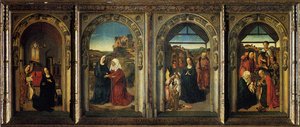
ディルク・バウツの肖像画

ディルク・バウツの絵画:ギャラリーの視点で選ぶ、最も有名な37作品

10月 2026 更新 · 当サイトの人気スコア(各作品の検索数、閲覧数、注文数)に基づくランキング · 51点の ディルク・バウツの作品がカタログにあります

要約すると

ギャラリーの視点では、ディルク・バウツの最も有名な作品はThe Last Supper (1467)であり、その原画はルーヴェンのSint-Jacobskerkに展示されています。 Justice of Emperor Otto III: Beheading of the Innocent Count and Ordeal by Fire (1475)とThe middle panel of The Pearl of Brabant: Adoration of the Magi (1445)が加わり、誰もが一度は目にしたことのある至高のトリオが完成します。 当カタログに含まれるディルク・バウツの作品51点の中から、特に有名な37点を厳選してご紹介します。各作品は、制作年、所蔵美術館、そしてその作品ならではの魅力とともに、一点物のオリジナル作品として掲載されています。

1410 – 1475, ハールレム Northern renaissance 最多収蔵館: ボイジャンズ・ヴァン・ビューニンゲン美術館

ギャラリーが選ぶディルク・バウツのトップ10作品

1
The Last Supper (1467) による ディルク・バウツ

The Last Supper

1467 · パネルに油彩 · Sint-Jacobskerk, ルーヴェン

In the quiet, hallowed halls of art history, few images command as much reverence as The Last Supper by the Early Netherlandish master Dieric Bouts. Created around 1467, this profound work serves as a window into a sacred moment, capturing the heavy atmosphere of Christ’s final meal with his apostles. Unlike the dramatic, sweeping gestures found in later Italian Renaissance works, Bouts invites us into a space of subtle solemnity…

2
Justice of Emperor Otto III: Beheading of the Innocent Count and Ordeal by Fire (1475) による ディルク・バウツ

Justice of Emperor Otto III: Beheading of the Innocent Count and Ordeal by Fire

1475 · Oil On Panel · ベルギー王立美術館, ブリュッセル

In the quiet, meditative realm of Early Netherlandish painting, few works capture the tension between earthly law and divine truth as poignantly as Dieric Bouts’s masterpiece, Justice of Emperor Otto III: Beheading of the Innocent Count and Ordeal by Fire. Created around 1475, this profound diptych serves as a visceral window into the medieval psyche, where the absolute power of the state meets the tragic vulnerability of the individual. The…

3
The middle panel of The Pearl of Brabant: Adoration of the Magi (1445) による ディルク・バウツ

The middle panel of The Pearl of Brabant: Adoration of the Magi

1445 · Oil On Panel

The middle panel of The Pearl of Brabant: Adoration of the Magi is a significant work by Dierec Bouts. Created in the Netherlands, this painting dates to about 1445. It occupies the central position of a larger triptych, a structure that traditionally allows for a focused, intimate viewing of the sacred scene presented here.

4
The Martyrdom of Saint Erasmus (1463) による ディルク・バウツ

The Martyrdom of Saint Erasmus

1463 · Oil On Panel

The triptych known as The Martyrdom of Saint Erasmus unfolds before the viewer as a heavy, three-paneled narrative. Painted by Dierec Bouts, this work captures a moment of profound religious significance. The scene focuses on the suffering of Saint Erasmus, an early Christian bishop, as he undergoes his final trials. The panels organize a sequence of events that surround his death, presenting a structured view of his sacrifice. It is…

5
The way to Paradise (1468) による ディルク・バウツ

The way to Paradise

1468 · Oil On Panel

The way to Paradise is a large-scale oil painting by Dierec Bouts. Created in 1468, the work captures a complex narrative through a series of figures arranged within a dramatic landscape. The scene unfolds across a rolling hillside under a stormy sky, where the light falls upon a central group of angelic and human figures. This composition draws the eye toward a prominent structure resembling a cathedral or temple.

6
The Entombment (1450) による ディルク・バウツ

The Entombment

1450

The Entombment is a renowned painting by the Flemish artist Dierec Bouts, created in 1450. This tempera on panel artwork is a significant example of Northern Renaissance art and is currently housed at the National Gallery in Greece. Composition and Symbolism The painting depicts a poignant scene from the New Testament, where Jesus is being taken down from the cross by his followers. The group of people surrounding him includes…

7
The Last Supper - from the Winged altar in St. Peter in Leuven (1465) による ディルク・バウツ

The Last Supper - from the Winged altar in St. Peter in Leuven

1465

The Last Supper by Dieric Bouts is a seminal work of the Northern Renaissance, showcasing the artist's mastery of composition, perspective, and emotional depth. Created between 1464 and 1468, this painting is a testament to the artistic innovations of the time. Artistic Innovations Bouts' Last Supper is characterized by its use of linear perspective, which creates a sense of depth and space. The orthogonal lines in the composition converge at…

ディルク・バウツの絵画、ランキング11位から37位

ディルク・バウツの代表作、時代別一覧

ディルク・バウツが心を惹かれた主題

これらのオリジナル作品に繰り返し描かれている4つの主題と、それぞれの最高傑作。

ディルク・バウツの原画を所蔵する美術館

このページに掲載されている絵画を最も多く所蔵している 8 の美術館

美術館 都市 ディルク・バウツの作品 このリストの絵画
ボイジャンズ・ヴァン・ビューニンゲン美術館, ロッテルダムボイジャンズ・ヴァン・ビューニンゲン美術館 ロッテルダム 2 Saint John the Evangelist on Patmos, Head of Christ
Sint-Jacobskerk, ルーヴェンSint-Jacobskerk ルーヴェン 1 The Last Supper
ベルギー王立美術館, ブリュッセルベルギー王立美術館 ブリュッセル 1 Justice of Emperor Otto III: Beheading of the Innocent Count and Ordeal by Fire
アルテ・ピナコテーク, ミュンヘンアルテ・ピナコテーク ミュンヘン 1 Ecce Agnus Dei
シンシナティ美術館, シンシナティシンシナティ美術館 シンシナティ 1 Virgin and Child
Rijksmuseum Twenthe, エンシェデRijksmuseum Twenthe エンシェデ 1 Madonna and Child on a grass bench
シュテデル美術館, フランクフルトシュテデル美術館 フランクフルト 1 Virgin and Child
プラド美術館, マドリードプラド美術館 マドリード 1 Polyptych Showing The Annunciation, The Visitation, The Adoration Of The Angels And The Adoration Of The Kings

ディルク・バウツ、10年ごとに1枚の代表作

年代別作品数

その時代を象徴する名作を見るために、年代を選択してください。

ディルク・バウツの絵画:ギャラリーの回答

ディルク・バウツの作品の中で、最も有名な絵画は何ですか?答えを見る

The Last Supper (1467)(Sint-Jacobskerk, ルーヴェン)。次いでJustice of Emperor Otto III: Beheading of the Innocent Count and Ordeal by Fire (1475)、The middle panel of The Pearl of Brabant: Adoration of the Magi (1445)が続きます。

ディルク・バウツがThe Last Supperを完成させた時の年齢は?答えを見る

57歳:The Last Supperは1467年の作品で、ディルク・バウツの生年は1410年です。

ディルク・バウツの代表的な絵画トップ10は?答えを見る

The Last Supper, Justice of Emperor Otto III: Beheading of the Innocent Count and Ordeal by Fire, The middle panel of The Pearl of Brabant: Adoration of the Magi, The Martyrdom of Saint Erasmus, The way to Paradise, The Entombment, The Last Supper - from the Winged altar in St. Peter in Leuven, Mater Dolorosa, The right wing of The Pearl of Brabant: Saint Christopher と The Feast of the Passover (lower left panel from the altarpiece of the Holy Sacrament)。上記のランキングには、それぞれの制作年と所蔵美術館が記載されています。

ディルク・バウツの作品数は?答えを見る

当カタログには、1445年から1475年にかけて制作されたディルク・バウツによる51点の作品が収められています。

ディルク・バウツの最も有名なオリジナル作品はどこに展示されていますか?答えを見る

主にボイジャンズ・ヴァン・ビューニンゲン美術館 (ロッテルダム), Sint-Jacobskerk (ルーヴェン) と ベルギー王立美術館 (ブリュッセル)に所蔵されています。上記の美術館一覧にすべて記載されています。

ディルク・バウツが最も有名な作品を描いたのはいつですか?答えを見る

1460s年:このページにある全37作品のうち、16作品がその時期に制作されました。そのうちThe Last Supper作品が含まれます。

ディルク・バウツの初期および後期の代表作は何ですか?答えを見る

このページでは、最も古い作品はThe middle panel of The Pearl of Brabant: Adoration of the Magi (1445)、最新の作品はJustice of Emperor Otto III: Beheading of the Innocent Count and Ordeal by Fire (1475)です。

ディルク・バウツ が最も多く描いた主題は何ですか?答えを見る

このページに掲載されている37点の作品におけるReligious (21), Virgin mary (9) と Saints (8)

ディルク・バウツ が最も多く用いた技法は何ですか?答えを見る

このページに掲載されている全37作品のうち、4作品のOil On Panel

ディルク・バウツはどの芸術運動に関連していますか?答えを見る

このページに掲載されているオリジナル作品から判断すると、Northern renaissance と Early netherlandishです。

ボイジャンズ・ヴァン・ビューニンゲン美術館が所蔵するディルク・バウツのオリジナル作品は何ですか?答えを見る

Saint John the Evangelist on Patmos と Head of Christ:ボイジャンズ・ヴァン・ビューニンゲン美術館, ロッテルダムには、このページに掲載されている作品のうち2点が所蔵されています。

ディルク・バウツ:アーティスト

ディルク・バウツ:初期ネーデルラント絵画における「沈黙の巨匠」

劇的な表現力と卓越した技術で人々を魅了したヤン・ファン・エイクやロヒール・ファン・デル・ウェイデンの作品が輝きを放っていた15世紀の活気あふれるネーデルラント。その喧騒の中で、それらとは異なる種類の「熟達」が存在していました。しばしば「沈黙の画家」と称されるディルク・バウツは、演劇的な感情の爆発ではなく、深く瞑想的な静寂を通じてその独自の遺産を築き上げたのです。1415年頃にハールレムで生まれたバウツは、北ネーデルラントから頭角を現し、初期ネーデルラント絵画期において最も尊敬される人物の一人となりました。彼の生涯と作品は、技術的な革新と精神的な内省が交差する稀有な地点を象徴しており、一筆一筆が観る者の神への観照を深めるための窓として機能しています。

バウツの歩みの初期は歴史の柔らかな霧の中に包まれていますが、彼が遺した傑作にはその芸術的な系譜が鮮明に刻み込まれています。彼は伝説的なロヒール・ファン・デル・ウェイデンのもとで形成期となる修行を受けたことが広く信じられており、その影響は細部への細心の注意や洗練された色彩感覚に現れています。しかし、バウツは単なる模倣者ではありませんでした。北方のルネサンスが抱いていたリアリズムへの執着を受け継ぎながらも、彼は同時代の画家たちが追求した過剰な感情表現からは一線を画しました。代わりに彼が確立したのは、抑制された表現と、建築的とも言える構成へのアプローチを特徴とする独自のスタイルでした。彼は空間を組織化する類まれな能力を備えており、単一の消失点を用いることで、当時の絵画としては革命的とも言える、深く構造化された遠近感を創り出したのです。

静寂と聖なる空間のヴィジョン

バウツのキャリアが最も重要な結実を見たのは、彼が少なくとも1457年から1475年の死に至るまで活動したルーヴェンの街でした。この地での彼の地位は極めて高く、1468年には街の公式画家に任命されました。これは、彼が市民社会や宗教的エリートの間でどれほど高い評価を得ていたかを物語っています。この時期、彼は最も不朽の名作の数々を世に送り出しました。それらの作品は、物語的な混沌を避け、緻密に構成された荘厳さを重んじる傾向にありました。例えば、記念碑的な祭壇画である『最後の晩餐』においては、狂乱する身振りや涙を流す人物像は見られません。むしろ、正確な空間関係と均衡の取れた形態を通じて、聖なる出来事の重みを強調するような、静かで重厚な空気が漂っています。

彼の技術的な卓越性は、光と質感の扱いにおいて特に顕著に現れています。パネルに描かれたテンペラであれ、台頭しつつあった油彩であれ、バウツは観る者が描かれた場面の中に身を置いているかのような明晰さを実現しました。彼の作品には、しばしば以下のような要素が見て取れます。

フランドル・プリミティヴの遺産

ディルク・バウツの歴史的な重要性は、初期フランドル派の巨匠たちが築いた基礎的なリアリズムと、後のルネサンスにおけるより複雑な空間探求との架け橋としての役割にあります。構図の中に数学的な秩序と単一の消失点を導入することで、彼は次世代の画家たちが平面上に三次元的な空間の錯覚を習得するための道を切り開きました。精神性と構造性を融合させた彼の能力は、彼の芸術を単なる装飾にとどめず、明晰さを通じて畏敬の念を呼び起こすための、深遠な神学的道具へと昇華させたのです。

たとえファン・エイクのような華々しい名声には及ばないとしても、バウツは北方のルネサンス美術を研究する上で欠かすことのできない存在であり続けています。彼は、力とは必ずしも音量や騒々しさを必要としないことを教えてくれました。時として、最も深遠な真理は、絵画の最も静かな片隅に、聖人の揺るぎない眼差しや、聖なるホールの静謐で構造的な影の中に宿るものなのです。ネーデルラントからルーヴェンの芸術界の頂点へと至る彼の生涯は、観照的な精神が持つ不朽の強さを証明し続けています。