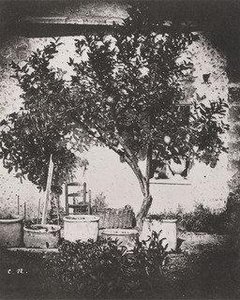
Charles Nègreの肖像画

Charles Nègreの絵画:ギャラリーの視点で選ぶ、最も有名な22作品

11月 2026 更新 · 当サイトの人気スコア(各作品の検索数、閲覧数、注文数)に基づくランキング · 22点の Charles Nègreの作品がカタログにあります

要約すると

ギャラリーの視点では、Charles Nègreの最も有名な作品はThe Barrel Organ Player (1852)であり、その原画はカールスルーエのシュタットリッヒェ・クンストハレ・カールスルーエに展示されています。 The Barrel Organ Player (1852)とLeda and the swan (1850)が加わり、誰もが一度は目にしたことのある至高のトリオが完成します。 当カタログに含まれるCharles Nègreの作品22点の中から、特に有名な22点を厳選してご紹介します。各作品は、制作年、所蔵美術館、そしてその作品ならではの魅力とともに、一点物のオリジナル作品として掲載されています。

1820 – 1880, Grasse 最多収蔵館: シュタットリッヒェ・クンストハレ・カールスルーエ

ギャラリーが選ぶCharles Nègreのトップ10作品

1
The Barrel Organ Player (1852) による Charles Nègre

The Barrel Organ Player

1852 · Oil On Canvas · シュタットリッヒェ・クンストハレ・カールスルーエ, カールスルーエ

The street scene unfolds in The Barrel Organ Player, a work by the artist Charles Nègre. This piece captures a quiet moment of urban life, centering on an elderly musician and his instrument. The scene feels immediate, as if the viewer is standing directly on the pavement, witnessing the interaction between the man and the small children gathered near him. It is a study of everyday existence, frozen in a…

2
The Barrel Organ Player (1852) による Charles Nègre

The Barrel Organ Player

1852 · Oil On Canvas · シュタットリッヒェ・クンストハレ・カールスルーエ, カールスルーエ

The composition centers on an elderly man seated on a stone ground, operating a wooden barrel organ. He is positioned in the middle ground, flanked by two small children on the left and large wooden barrels on the right. The scene is rendered in a palette of ochre, burnt sienna, and deep browns, with charcoal shadows defining the periphery. Light enters from an unseen source above and to the left,…

3
Leda and the swan (1850) による Charles Nègre

Leda and the swan

1850 · Oil On Canvas

This horizontal oil painting on canvas depicts a reclining nude female figure positioned diagonally across the foreground. To her right, a large white swan faces her, its form creating a visual counterpoint to the curves of the woman's body. The scene captures the mythological encounter between Leda and Zeus, who has taken the form of a swan. The lighting originates from the upper left, casting soft shadows that define the…

4
The Coconut Merchant (1852) による Charles Nègre

The Coconut Merchant

1852 · Photogravure

Captured in 1852, this work offers a glimpse into the daily rhythms of Paris. The composition focuses on a street vendor, a figure navigating the urban landscape of the mid-nineteenth century. Through a lens shaped by a background in painting, the scene moves beyond mere documentation to capture the specific atmosphere of the city's thoroughfares. The subject is positioned within a structured environment of stone and shadow, where the geometry…

5
The Mason Crouching (1854) による Charles Nègre

The Mason Crouching

1854 · Charcoal

A small-scale portrait from 1854 captures a figure in a moment of intense, quiet labor. The subject, Charles Nègre, is depicted in a seated, crouching position, absorbed in the act of stone carving. The composition is tightly cropped, pulling the viewer into the immediate, physical space of the artisan. Through a meticulous application of charcoal or graphite, the work achieves a profound sense of three-dimensionality, defining the musculature of the…

6
Women in a Courtyard (1852) による Charles Nègre

Women in a Courtyard

1852 · Photography · スタンフォード大学キャンター美術館, スタンフォード

In this 1852 photograph, we find ourselves observing a moment of stillness within a courtyard. Two women are seated outdoors, their figures positioned centrally against a backdrop of paving stones and the partial silhouette of a building. The scene is rendered in sepia tones, a characteristic of the photographic processes of the mid-nineteenth century. There is a certain softness to the light, a diffused quality that settles over the subjects…

7
Women in a Courtyard (1852) による Charles Nègre

Women in a Courtyard

1852 · Black and White Photography · スタンフォード大学キャンター美術館, スタンフォード

In this quiet photograph titled Women in a Courtyard, we encounter a moment captured by the French artist Charles Nègre. Created about 1852, the work offers a glimpse into a private, outdoor setting. Nègre, who was born in Grasse, France, brings a painterly sensibility to this early photographic study, bridging the gap between traditional fine art and the emerging technology of the mid-nineteenth century.

8
The Lumberjack (1853) による Charles Nègre

The Lumberjack

1853 · Drawing

In this 1853 drawing, we find ourselves drawn into a secluded woodland setting, where a solitary man stands amidst the trees. He is positioned in a way that suggests a moment of sudden, quiet observation, his gaze directed toward something just out of our sight to his left. The composition is anchored by a prominent, large tree in the foreground, its presence lending a sense of scale and depth to…

9
Leda (1850) による Charles Nègre

Leda

1850 · Lithograph

The scene unfolds in a quiet, intimate space where the boundaries between the human and the divine blur. A nude woman reclines upon a bed of soft pillows, her body caught in a moment of profound stillness. Perched atop the pile of cushions, a swan rests near her, its presence heavy with a silent, ancient significance. The lighting is dramatic, casting deep shadows that trace the curves of her form…

10
The Chimney Sweeps (1852) による Charles Nègre

The Chimney Sweeps

1852 · Black and White Photography

Three figures move through an urban landscape, their silhouettes etched against the pale architecture of a bygone era. The first man leads the way, a backpack weighing upon his shoulders, while two others follow in his wake. They wear ties, a formal detail that contrasts with the grit of their labor. The scene is captured in black and white, a study of light and shadow that turns a fleeting street…

Charles Nègreの絵画、ランキング11位から22位

Charles Nègreの代表作、時代別一覧

Charles Nègreが心を惹かれた主題

これらのオリジナル作品に繰り返し描かれている4つの主題と、それぞれの最高傑作。

Charles Nègreの原画を所蔵する美術館

このページに掲載されている絵画を最も多く所蔵している 3 の美術館

美術館 所在都市 Charles Nègreの作品 このリストの絵画
シュタットリッヒェ・クンストハレ・カールスルーエ, カールスルーエシュタットリッヒェ・クンストハレ・カールスルーエ カールスルーエ 2 The Barrel Organ Player, The Barrel Organ Player
スタンフォード大学キャンター美術館, スタンフォードスタンフォード大学キャンター美術館 スタンフォード 2 Women in a Courtyard, Women in a Courtyard
カナダ国立美術館, オタワカナダ国立美術館 オタワ 1 Chimney Sweeps Walking

Charles Nègre、各年の代表作

1850年から1858年までの10年余りの歳月は、Charles Nègreにとって非常に重要なものでした。ギャラリーでは、名作の原画を次々と辿りながら、その歩みを年ごとに振り返ります。

年別作品数

年代を選択して、当時のオリジナル作品を見る

Charles Nègreの絵画:ギャラリーの回答

Charles Nègreの作品の中で、最も有名な絵画は何ですか?答えを見る

The Barrel Organ Player (1852)(シュタットリッヒェ・クンストハレ・カールスルーエ, カールスルーエ)。次いでThe Barrel Organ Player (1852)、Leda and the swan (1850)が続きます。

Charles NègreがThe Barrel Organ Playerを完成させた時の年齢は?答えを見る

32歳:The Barrel Organ Playerは1852年の作品で、Charles Nègreの生年は1820年です。

Charles Nègreの代表的な絵画トップ10は?答えを見る

The Barrel Organ Player, The Barrel Organ Player, Leda and the swan, The Coconut Merchant, The Mason Crouching, Women in a Courtyard, Women in a Courtyard, The Lumberjack, Leda と The Chimney Sweeps。上記のランキングには、それぞれの制作年と所蔵美術館が記載されています。

Charles Nègreの作品数は?答えを見る

当カタログには、1850年から1858年にかけて制作されたCharles Nègreによる22点の作品が収められています。

Charles Nègreの最も有名なオリジナル作品はどこに展示されていますか?答えを見る

主にシュタットリッヒェ・クンストハレ・カールスルーエ (カールスルーエ), スタンフォード大学キャンター美術館 (スタンフォード) と カナダ国立美術館 (オタワ)に所蔵されています。上記の美術館一覧にすべて記載されています。

Charles Nègreが最も有名な作品を描いたのはいつですか?答えを見る

1852年:このページにある全22作品のうち、7作品がその時期に制作されました。そのうちThe Barrel Organ Player作品が含まれます。

Charles Nègreの初期および後期の代表作は何ですか?答えを見る

このページでは、最も古い作品はLeda and the swan (1850)、最新の作品はPortal Sculptures, Church of Saint Trophime, Arles (1858)です。

Charles Nègre が最も多く描いた主題は何ですか?答えを見る

このページに掲載されている22点の作品におけるMan (7), People (5) と Monochrome (4)

Charles Nègre が最も多く用いた技法は何ですか?答えを見る

このページに掲載されている全22作品のうち、12作品のBlack and White Photography

シュタットリッヒェ・クンストハレ・カールスルーエが所蔵するCharles Nègreのオリジナル作品は何ですか?答えを見る

The Barrel Organ Player と The Barrel Organ Player:シュタットリッヒェ・クンストハレ・カールスルーエ, カールスルーエには、このページに掲載されている作品のうち2点が所蔵されています。

Charles Nègre:アーティスト

Charles Nègre: A Pioneer of French Photography

Born in Grasse, France, in 1820, Charles Nègre’s life was a fascinating confluence of artistic pursuits and technological innovation. His early years were steeped in the traditions of painting, nurtured under the tutelage of renowned artists like Paul Delaroche, Ingres, and Drolling – masters who shaped his initial understanding of composition, light, and form. Yet, as the nascent field of photography emerged in the 1830s, Nègre’s keen eye recognized its potential not merely as a mechanical reproduction, but as a powerful tool for artistic exploration and documentation. This dual commitment—a foundation in painting combined with an unwavering fascination with the new medium—would define his unique contribution to the history of photography.

Nègre established his photographic studio at 21 Quai Bourbon on the Île Saint-Louis, Paris, a strategic location that placed him within the heart of artistic and intellectual life. Initially experimenting with the daguerreotype process – known for its exquisite detail but limited reproducibility – he soon transitioned to calotypes, a technique pioneered by William Henry Fox Talbot that utilized paper negatives, allowing for multiple prints. This shift marked a crucial turning point, opening up possibilities for experimentation and artistic manipulation previously unavailable. It’s believed that Delaroche encouraged Nègre to explore photography as a means of research for his paintings, a suggestion that profoundly influenced the artist's approach.

Early Photographic Innovations

Nègre’s early work is characterized by a remarkable sensitivity to movement and an innovative use of perspective. His 1851 photograph, “Chimney-Sweeps Walking,” exemplifies this talent. Often interpreted as a staged study for a painting – a theory supported by the composition's deliberate arrangement – it nonetheless stands as a landmark achievement in capturing fleeting moments with unprecedented realism. The image’s dynamic energy and detailed depiction of everyday life were revolutionary for their time, demonstrating Nègre’s ability to translate the visual experience into a photographic record.

Beyond his technical prowess, Nègre possessed an acute eye for architectural detail and a deep appreciation for the beauty of the French landscape. His 1861 gravure of “La Porte Royale de la Cathédrale de Chartres” showcases this skill with remarkable precision, capturing the cathedral’s intricate façade in stunning clarity. Similarly, his commission to photograph the Imperial Asylum in Bois de Vincennes for Empress Eugénie highlighted his ability to document significant institutions and convey their grandeur through a photographic lens. These commissions weren't merely exercises in documentation; they were opportunities for Nègre to refine his artistic vision and explore new techniques.

A Photographic Survey of Provence

Perhaps the most ambitious undertaking of Nègre’s career was his independent photographic survey of the Midi region of France, undertaken between 1852 and 1854. Driven by a desire to capture the essence of his native land – its landscapes, architecture, and people – he produced nearly two hundred negatives, documenting everything from bustling marketplaces to serene countryside scenes. This project, largely self-funded, stands as a testament to Nègre’s dedication and artistic vision. The resulting images, particularly those depicting the buildings of Grasse, are considered precursors to art photography, demonstrating his innovative approach to composition, lighting, and subject matter.

The series “Le Midi de la France” (over 100 views) became a significant publication, offering a visual record of the region’s diverse landscapes and architectural heritage. Nègre's meticulous attention to detail and his ability to capture the nuances of light and shadow were particularly noteworthy. His work wasn’t simply about recording reality; it was about interpreting it through the lens of an artist.

Technological Advancement and Legacy

Nègre’s photographic journey extended beyond mere documentation, encompassing a relentless pursuit of technical refinement. He mastered both albumen and salt print processes, experimenting with techniques like photogravure – a method he developed independently – to achieve greater tonal range and detail in his prints. His innovations were not merely aesthetic; they represented a significant advancement in the field of photographic printing.

Charles Nègre’s legacy is profound. He was a pioneer who bridged the gap between painting and photography, demonstrating that both mediums could be used to explore similar artistic concerns. His work influenced generations of photographers, and his images continue to captivate viewers with their beauty, detail, and evocative power. Today, his photographs are housed in museums across France and beyond, ensuring that his contributions to the history of art photography will be remembered for centuries to come. He died in Grasse in 1880, leaving behind a remarkable body of work that continues to inspire and challenge us.