1

11月 2026 更新 · 当サイトの人気スコア(各作品の検索数、閲覧数、注文数)に基づくランキング · 18点の Anton Refregierの作品がカタログにあります
要約すると
First Color Study, Exhibition Hall, Community Center, New York World's Fair (perspective sketch for mural, Cultural Activities in the WPA, WPA Building) (1938)はAnton Refregierの作品の中で最も注目を集めている絵画です。原画はWashington, D.C.のスミソニアン・アメリカン・アート・ミュージアムに所蔵されています。 その後、視線はUntitled (detail of figure historic survey panel, mural study, Cultural Activities of the WPA, WPA Building, New York World's Fair, 1939) (1939)とfor I say at the core of democracy, finally, is the religious element. All the religions, old and new, are there. Walt Whitman, Democratic Vistas, 1871. From the series Great Ideas of Western Man (1957)へと移ります。 当カタログに含まれるAnton Refregierの18点の作品のうち、これら18点は最も有名な作品です。制作年、所蔵美術館、そして時代を超えて愛される理由とともに、一点もののオリジナル作品をご紹介します。
 1. First Color Study, Exhibition Hall, Community Center, New York World's Fair (perspective sketch for mural, Cultural Activities in the WPA, WPA Building) 1938
 2. Untitled (detail of figure historic survey panel, mural study, Cultural Activities of the WPA, WPA Building, New York World's Fair, 1939) 1939
 3. for I say at the core of democracy, finally, is the religious element. All the religions, old and new, are there. Walt Whitman, Democratic Vistas, 1871. From the series Great Ideas of Western Man 1957


 Untitled (AQRPGF)2012 · アメリカ議会図書館
12
 Untitled (AQRPGP)2012 · アメリカ議会図書館
13
 Untitled (AQRPGZ)2012 · アメリカ議会図書館
14
 Untitled (AQRPGK)2012 · アメリカ議会図書館
15
 Untitled (AQRPGV)2012 · アメリカ議会図書館
16
 Untitled (AQRPGT)2012 · アメリカ議会図書館
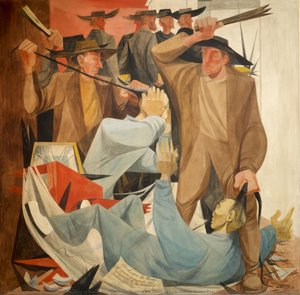
17History of San Francisco mural Beating the Chinese by at Rincon Annex Post Office located near the Embarcadero at 101 Spear Street, San Francisco, California2012 · アメリカ議会図書館
18
 History of San Francisco (Refregier murals)1941
これらのオリジナル作品に繰り返し描かれている4つの主題と、それぞれの最高傑作。
このページに掲載されている絵画を最も多く所蔵している 2 の美術館
| 美術館 | 都市 | Anton Refregierの作品 | このリストの絵画 |
|---|---|---|---|
 アメリカ議会図書館 |
Washington, D.C. | 14 | Untitled (AQRPH5), Untitled (AQRPH3), Untitled (AQRPGD) |
 スミソニアン・アメリカン・アート・ミュージアム |
Washington, D.C. | 2 | First Color Study, Exhibition Hall, Community Center, New York World's Fair (perspective sketch for mural, Cultural Activities in the WPA, WPA Building), Untitled (detail of figure historic survey panel, mural study, Cultural Activities of the WPA, WPA Building, New York World's Fair, 1939) |
その時代を象徴する名作を見るために、年代を選択してください。

First Color Study, Exhibition Hall, Community Center, New York World's Fair (perspective sketch for mural, Cultural Activities in the WPA, WPA Building) (1938)(スミソニアン・アメリカン・アート・ミュージアム, Washington, D.C.)。次いでUntitled (detail of figure historic survey panel, mural study, Cultural Activities of the WPA, WPA Building, New York World's Fair, 1939) (1939)、for I say at the core of democracy, finally, is the religious element. All the religions, old and new, are there. Walt Whitman, Democratic Vistas, 1871. From the series Great Ideas of Western Man (1957)が続きます。
33歳:First Color Study, Exhibition Hall, Community Center, New York World's Fair (perspective sketch for mural, Cultural Activities in the WPA, WPA Building)は1938年の作品で、Anton Refregierの生年は1905年です。
First Color Study, Exhibition Hall, Community Center, New York World's Fair (perspective sketch for mural, Cultural Activities in the WPA, WPA Building), Untitled (detail of figure historic survey panel, mural study, Cultural Activities of the WPA, WPA Building, New York World's Fair, 1939), for I say at the core of democracy, finally, is the religious element. All the religions, old and new, are there. Walt Whitman, Democratic Vistas, 1871. From the series Great Ideas of Western Man, Untitled (AQRPH5), Untitled (AQRPH3), Untitled (AQRPGD), Untitled (AQRPGR), Untitled (AQRPH7), Untitled (AQRPGM) と Untitled (AQRPGX)。上記のランキングには、それぞれの制作年と所蔵美術館が記載されています。
当カタログには、1938年から1957年にかけて制作されたAnton Refregierによる18点の作品が収められています。
主にアメリカ議会図書館 (Washington, D.C.) と スミソニアン・アメリカン・アート・ミュージアム (Washington, D.C.)に所蔵されています。上記の美術館一覧にすべて記載されています。
1930s年:このページにある全18作品のうち、2作品がその時期に制作されました。そのうちFirst Color Study, Exhibition Hall, Community Center, New York World's Fair (perspective sketch for mural, Cultural Activities in the WPA, WPA Building)作品が含まれます。
このページでは、最も古い作品はFirst Color Study, Exhibition Hall, Community Center, New York World's Fair (perspective sketch for mural, Cultural Activities in the WPA, WPA Building) (1938)、最新の作品はfor I say at the core of democracy, finally, is the religious element. All the religions, old and new, are there. Walt Whitman, Democratic Vistas, 1871. From the series Great Ideas of Western Man (1957)です。
このページに掲載されている18点の作品におけるAmerican history (2), Wpa art project (2) と Group portraiture (2)
このページに掲載されているオリジナル作品から判断すると、Social realismです。
Untitled (AQRPH5), Untitled (AQRPH3) と Untitled (AQRPGD):アメリカ議会図書館, Washington, D.C.には、このページに掲載されている作品のうち14点が所蔵されています。
Anton Refregier stands as a monumental figure in the tapestry of American art history, a painter whose brushstrokes captured the very soul and struggle of a nation in transition. Born in Moscow on March 20, 1905, Refregier’s journey was one of profound migration and cultural synthesis. Emigrating to the United States in 1920, he brought with him a perspective shaped by the vastness of his origins and a hunger for the artistic possibilities of his adopted home. His early years were defined by a rigorous pursuit of mastery, beginning with a transformative scholarship to the Rhode Island School of Design in 1921. This formal training provided him with a classical foundation, yet it was his later encounters with the avant-garde that would truly ignite his creative spirit.
The trajectory of Refregier’s career was marked by an extraordinary ability to blend meticulous craftsmanship with the raw, emotive power of modern movements. In New York City during the mid-1920s, he honed a delicate skill for replicating the works of masters such as François Boucher and Jean-Honoré Fragonard, an endeavor that instilled in him a deep reverence for artistic heritage. However, his 1927 travels to Munich introduced him to the burgeoning influences of Abstract Expressionism under the legendary mentorship of Hans Hofmann. This exposure to more fluid, expressive forms allowed Refregier to expand his stylistic horizons, ensuring that even his most grounded social realist works possessed a dynamic, modern vitality.
As the shadows of the Great Depression descended upon America, Refregier’s art found its true purpose. Living within the Mount Airy Artists' Colony in Croton-on-Hudson, he became a witness to the widespread hardships of the era. This period of economic upheaval deeply informed his humanist philosophy; he famously observed that as people grew poorer in possessions, they became poorer in their ability to enjoy life. This empathy for the common man became the heartbeat of his work. Through the auspices of the Works Progress Administration (WPA) Federal Art Project, Refregier found a platform to translate these societal struggles into large-scale narratives that demanded public attention.
His involvement with the WPA allowed him to move beyond the canvas and onto the walls of the American landscape. His work during this time was characterized by Social Realism, a movement dedicated to portraying everyday life and systemic injustices with unflinching accuracy. He eschewed the comforts of romanticized imagery, choosing instead to present scenes of labor, displacement, and community strength. This commitment to truth-telling through art solidified his reputation as an artist who did not merely observe history but actively participated in its documentation.
Perhaps Refregier’s most enduring achievement is the monumental mural series, The History of San Francisco. Commissioned in 1941 and executed between 1940 and 1948, this sprawling epic consists of twenty-seven panels located within the Rincon Annex Post Office. Using casein tempera on white gesso over plaster, Refregier created a visceral narrative that spans centuries of the city's complex evolution. The scale of the work—covering over 2,457 square feet—is matched only by its emotional depth and historical bravery.
The murals are celebrated for their stark honesty, particularly in their depiction of San Francisco’s fraught relationship with marginalized communities. One of the most poignant and unsettling panels portrays the 1877 anti-Chinese Sand Lot riots, capturing a moment of intense violence and injustice with a muted palette of browns, grays, and ochres. Yet, within this grit, Refregier utilized strategic bursts of red and yellow to punctuate moments of profound symbolic significance. This series was not without controversy; in the 1950s, it faced congressional scrutiny over themes deemed inconsistent with certain American ideals, yet the murals survived as a testament to the artist's courage.
Refregier’s life and work represent a bridge between the classical traditions of Europe and the gritty, democratic spirit of mid-century America. His ability to weave together personal experience, historical record, and social critique ensures that his legacy remains as vibrant and essential today as it was during the height of the WPA era.
