アドルフ・ホーエンシュタインの肖像画

世界的に有名なアドルフ・ホーエンシュタインの名作24点、そのすべてが唯一無二の芸術品

11月 2026 更新 · 当サイトの人気スコア(各作品の検索数、閲覧数、注文数)に基づくランキング · 25点の アドルフ・ホーエンシュタインの作品がカタログにあります

要約すると

Gnà Lola (mezzo soprano) (1890)は、アドルフ・ホーエンシュタインの作品の中で最も注目を集めている絵画です。 その後、視線はMimi's Costume For Act I Of La Boheme For The Premiere PerformanceとSet Design For Act 2 Of Puccini's Opera Toscaへと移ります。 当カタログに含まれるアドルフ・ホーエンシュタインの25点の作品のうち、これら24点は最も有名な作品です。制作年、所蔵美術館、そして時代を超えて愛される理由とともに、一点もののオリジナル作品をご紹介します。

1854 – 1928, サンクトペテルブルク Art nouveau 最多収蔵館: Teatro dell'Opera di Roma

ギャラリーの視点で選ぶ、アドルフ・ホーエンシュタインによるトップ10作品

1
Gnà Lola (mezzo soprano) (1890) による アドルフ・ホーエンシュタイン

Gnà Lola (mezzo soprano)

1890 · Watercolor

Gnà Lola (mezzo soprano) is a costume design sketch by Adolfo Hohenstein. Created about 1890, the work functions as a visual blueprint for the character of the same name, a mezzo soprano. The sketch provides a detailed study of the attire intended for the stage, specifically tailored to the requirements of theatrical performance.

2
Mimi's Costume For Act I Of La Boheme For The Premiere Performance による アドルフ・ホーエンシュタイン

Mimi's Costume For Act I Of La Boheme For The Premiere Performance

Painting

The scene unfolds through Mimi's Costume For Act I Of La Boheme For The Premiere Performance, a work that captures a specific moment of theatrical history. This piece is the creation of Adolfo Hohenstein, an artist whose life began in Saint Petersburg, Russia, in 1854. His creative spirit traveled through the cultural landscapes of Vienna and Milan, eventually leading him to become a central figure in the visual language of…

4
Tosca - Sketch of Act III (1899) による アドルフ・ホーエンシュタイン

Tosca - Sketch of Act III

1899 · Drawing · Teatro dell'Opera di Roma, ローマ

In the delicate, evocative strokes of Adolf Hohenstein’s 1899 sketch for Act III of Tosca, we are transported to a moment where theatrical drama meets the timeless majesty of the Eternal City. This piece is far more than a mere preparatory study; it is a window into the soul of Puccini’s operatic masterpiece. Hohenstein, a master of capturing the intersection between human emotion and architectural scale, presents a panoramic view…

アドルフ・ホーエンシュタインの名作、11〜24点目

アドルフ・ホーエンシュタインの代表作、時代別一覧

アドルフ・ホーエンシュタインが心を惹かれた主題

これらのオリジナル作品に繰り返し描かれている4つの主題と、それぞれの最高傑作。

アドルフ・ホーエンシュタインの原画を所蔵する美術館

このページに掲載されている絵画を最も多く所蔵している 1 の美術館

美術館 都市 アドルフ・ホーエンシュタインの作品 このリストの絵画
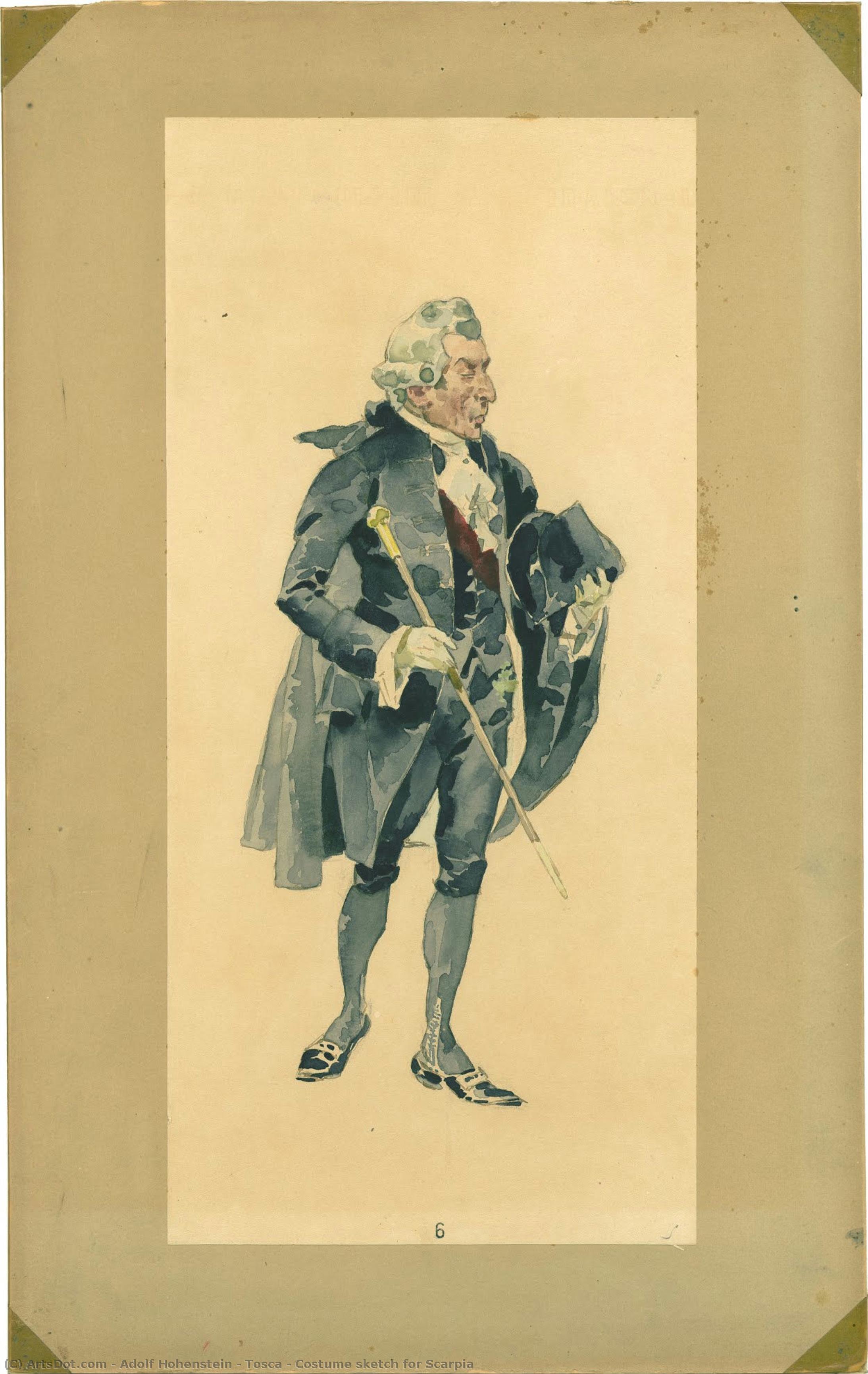
Teatro dell'Opera di Roma, ローマTeatro dell'Opera di Roma ローマ 3 Tosca - Sketch of Act III, Tosca - Costume sketch for Scarpia, Tosca - Costume sketch for Floria Tosca

アドルフ・ホーエンシュタインの歩み:それぞれの作品が持つ唯一無二のオリジナル

ここに掲載されているアドルフ・ホーエンシュタインの年代別のオリジナル作品は、1890年から1899年までの約10年間にわたるもので、その変遷を年を追うごとに辿ることができます。

年別作品数

年代を選択して、当時のオリジナル作品を見る

アドルフ・ホーエンシュタインの絵画:ギャラリーへの質問

アドルフ・ホーエンシュタインの最も有名な作品は何ですか?答えを見る

Gnà Lola (mezzo soprano) (1890)。続いてMimi's Costume For Act I Of La Boheme For The Premiere Performance、Set Design For Act 2 Of Puccini's Opera Toscaが続きます。

アドルフ・ホーエンシュタインがGnà Lola (mezzo soprano)を制作したのは何歳の時ですか?答えを見る

36歳:Gnà Lola (mezzo soprano)は1890年の作品で、アドルフ・ホーエンシュタインの生年は1854年です。

アドルフ・ホーエンシュタインの最も有名な10作品は何ですか?答えを見る

Gnà Lola (mezzo soprano), Mimi's Costume For Act I Of La Boheme For The Premiere Performance, Set Design For Act 2 Of Puccini's Opera Tosca, Tosca - Sketch of Act III, A Square, on the right the exterior of Osteria della Giarrettiera, Tosca - Costume sketch for Scarpia, Tosca - Costume sketch for Floria Tosca, Costume design for a servant girl from the Opera, The Image Describe A Poster Drawn By Adolf Hohenstein と Le Villi Act Ii。上記のランキングには、それぞれの制作年と所蔵美術館が記載されています。

アドルフ・ホーエンシュタインの既知の作品数は?答えを見る

当カタログには、1890年から1899年にかけて制作されたアドルフ・ホーエンシュタインによる25点の作品が収められています。

最も有名なアドルフ・ホーエンシュタインのオリジナル作品はどこで見ることができますか?答えを見る

主にTeatro dell'Opera di Roma (ローマ)に所蔵されています。上記の美術館一覧にすべて記載されています。

アドルフ・ホーエンシュタインが最も有名な作品を制作したのは、どの時期ですか?答えを見る

1899年:このページにある全24作品のうち、3作品がその時期に制作されました。そのうちTosca - Sketch of Act III作品が含まれます。

アドルフ・ホーエンシュタインの有名な絵画の中で、最も古い作品と最も新しい作品はどれですか?答えを見る

このページでは、最も古い作品はGnà Lola (mezzo soprano) (1890)、最新の作品はTosca - Sketch of Act III (1899)です。

アドルフ・ホーエンシュタインが好んだ主題は何ですか?答えを見る

このページに掲載されている24点の作品におけるPoster (4), Urban landscape (2) と Clothing (2)

アドルフ・ホーエンシュタインが最も多く使用した画材は何ですか?答えを見る

このページに掲載されている全24作品のうち、2作品のWatercolor

アドルフ・ホーエンシュタインの作品は、どの芸術運動に属していますか?答えを見る

このページに掲載されているオリジナル作品から判断すると、Art nouveauです。

Teatro dell'Opera di Romaでは、アドルフ・ホーエンシュタインのオリジナル作品を何点鑑賞できますか?答えを見る

Tosca - Sketch of Act III, Tosca - Costume sketch for Scarpia と Tosca - Costume sketch for Floria Tosca:Teatro dell'Opera di Roma, ローマには、このページに掲載されている作品のうち3点が所蔵されています。

アドルフ・ホーエンシュタイン:アーティストの肖像画

The Architect of Italian Elegance

Born in Saint Petersburg, Russia, to German parents, Adolf Hohenstein emerged as a transformative figure whose creative reach extended far beyond the boundaries of a single medium. Though his roots were in the Russian Empire, his artistic soul was forged in the vibrant cultural landscapes of Vienna and Milan. As a painter, illustrator, advertiser, and set designer, he possessed a rare ability to weave together the theatrical and the graphic, ultimately earning him the prestigious title of the father of Italian poster art. His journey from the imperial atmosphere of his birthplace to the heart of the Italian Stile Liberty—the local expression of Art Nouveau—is a testament to a life lived at the intersection of diverse European traditions.

Hohenstein’s career was defined by an extraordinary versatility that allowed him to command both the grand stage and the intimate printed page. His early years in Vienna provided a foundation of classical training, while his travels through India offered him unique perspectives on decoration and ornamentation. However, it was his move to Milan in 1879 that would forever alter the course of graphic design history. Settling in this burgeoning metropolis, he became an essential collaborator for the legendary musical publisher Giulio Ricordi. Within the Ricordi Graphical Workshops, Hohenstein acted as a visionary, translating the soaring emotions of opera into striking visual narratives. His hand was instrumental in creating the iconic posters for masterpieces such as Puccini’s Tosca and Madama Butterfly, works that required a delicate balance of dramatic tension and aesthetic grace.

A Legacy of Line and Light

The artistry of Hohenstein is characterized by a profound command over atmosphere and the evocative power of the line. Whether he was designing elaborate costumes and sets for La Scala or crafting advertisements for brands like Campari, his work breathed with a rhythmic vitality. In his poster designs, one finds a masterful use of flowing, organic shapes and a vibrant color palette that could capture the public's imagination instantly. He had a singular talent for world-building; even in a single sketch or a promotional print, he could evoke the heavy, cloud-swept skies of Rome or the glamorous allure of a modern cityscape.

His contributions to the visual language of his era cannot be overstated. Beyond the realm of fine art, his work as an advertiser and illustrator helped define the commercial aesthetic of the early 20th century. His achievements include:

  • Pioneering Graphic Design: Establishing the foundations of the Italian poster movement through highly decorative and emotionally resonant illustrations.
  • Theatrical Mastery: Creating immersive environments for opera through meticulous set and costume designs that complemented the musical drama of composers like Verdi and Puccini.
  • Art Nouveau Exponent: Serving as a leading figure of the Stile Liberty, integrating classical revivalism with the modern, flowing aesthetics of the period.

Ultimately, Adolf Hohenstein remains a seminal figure whose influence resonated through the evolution of graphic design in Italy and beyond. His ability to bridge the gap between high culture—the opera house and the theater—and the everyday experience of the public through posters and postcards ensures his place in the pantheon of great illustrators. He did not merely decorate the world; he redesigned how it was seen, leaving behind a legacy of elegance, drama, and enduring beauty.