The Philosophy of Intentionality: Moving Beyond Decoration to Narrative
 The Decorator's Eye: How to Integrate Masterpiece Art into Luxury Interiors
The Philosophy of Intentionality: Moving Beyond Decoration to Narrative Curating Elegance: The Connoisseur's Guide to Building a Bespoke Impressionist Collection for Luxury Interiors The Philosophy of Intentionality: Moving Beyond Decoration to Narra...
In the rarefied atmosphere of high-end residential and hospitality design, a profound shift is occurring—a movement away from the ostentatiously displayed wealth toward a more whispered, intentional form of expression known as quiet luxury. To the discerning collector and the visionary designer, a room is never merely a collection of expensive furnishings; it is a carefully composed narrative where every element serves to evoke emotion and reflect a deeper soul. True curation rejects the superfluous in favor of the exceptional, moving beyond the simple act of filling empty spaces toward the profound art of intentionality.
When we speak of curation within a luxury interior, we are not discussing mere ornaments, but rather the selection of pieces that possess both aesthetic beauty and historical weight. The modern connoisseur no longer seeks mere decoration but rather works that resonate with intellectual curiosity. To enter a space adorned with fine art is to step into a curated story, where every brushstroke and pigment choice whispers a tale of heritage and personal identity. This philosophy demands that we view art not as an afterthought to be placed at the end of a design project, but as the very point of origin—the heartbeat from which the entire room’s character flows.
The Silent Ambassador: Establishing Brand Heritage through Impressionist Narratives
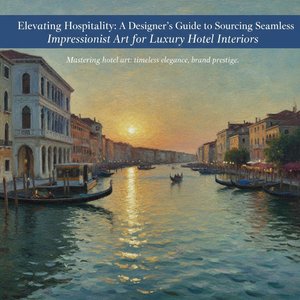 Elevating Hospitality: A Designer's Guide to Sourcing Seamless Impressionist Art for Luxury Hotel Interiors
The Silent Ambassador: Establishing Brand Heritage through Impressionist Narratives Timeless 19th Century Art Reproductions: A Strategic Procurement Guide for Hotel and Hospitality Interior Designers The Strategic Role of 19th Century Art in Hospital...
In the realm of luxury hospitality, a hotel's visual narrative is far more than a collection of decorative accents; it serves as a silent ambassador for the brand. The strategic use of 19th-century Impressionist narratives allows a property to establish an immediate sense of lineage and sophistication. By integrating works that evoke the vibrant, pulsing heart of the artistic revolution, designers can anchor a hotel's identity in a period defined by daring experimentation and a newfound obsession with the fleeting nature of light.
Choosing Impressionism is a deliberate act of storytelling. Whether it is the soft, sun-dappled gardens reminiscent of Renoir or the intimate domesticity found in the works of Berthe Morisot, these pieces invite guests to linger and savor the beauty of human connection. This approach transforms a transient space into a destination of emotional resonance, where the art does not just decorate the walls but communicates the hotel's commitment to elegance, tranquility, and the timeless pursuit of beauty.
Mastering Light and Atmosphere: The Strategic Role of 19th Century Art in Hospitality
 Mastering Light: The 25 Best Pierre-Auguste Renoir Paintings
Introduction To step into a collection of Pierre-Auguste Renoir’s finest works is to step into a world where the sun never sets on joy. There is a profound, rhythmic warmth in his brushwork—a sensory invitation to witness the fleeting magic of a Pari...
The mastery of light is perhaps the most potent tool in a designer's repertoire when defining modern space. Impressionist art offers an unparalleled way to manipulate the perceived atmosphere of a room through the depiction of luminous, changing qualities. Consider the works of Pierre-Auguste Renoir, where the sun never seems to set on joy; his ability to capture the feeling of light as it dances across a silk gown or settles upon a summer garden provides a sensory invitation that can warm even the most structured architectural environment.
Beyond the warmth of Renoir, one might look to the structural brilliance of Cézanne or the meditative, atmospheric depths of Monet’s Water Lilies to create zones of different emotional intensities. In a hotel lobby, large-scale works can evoke grandeur and movement, while in private suites, more intimate pieces—perhaps a quiet window scene by Morisot—can foster a sense of serenity and domestic peace. By utilizing the light-drenched techniques of these masters, designers can effectively define the mood of various architectural zones, using color and shadow to guide the guest's emotional journey through the property.
Curating Grandeur: Integrating Bespoke Collections into High-End Hotel Design
 Interior, Oak Manor
William Merritt Chase’s ‘Interior, Oak Manor’: A Window into American Impressionism William Merritt Chase's Interior, Oak Manor (1899) is more than just a depiction of a domestic scene; it’s a carefully constructed evocation of comfort, light, and th...
Building a bespoke Impressionist collection for luxury interiors requires the eye of a connoisseur. It is about more than just selecting beautiful images; it is about creating a cohesive visual language that complements the architectural bones of the building. For large-scale projects, such as grand staircases or expansive corridors, the multi-panel trend offers a sophisticated solution. Splitting a single masterpiece across three, four, or five panels allows the art to breathe within the architecture, ensuring that the colors and brushstrokes flow seamlessly across the space for a modern, integrated look.
For those seeking to push the boundaries of traditional design, the ability to "remix" history provides an extraordinary opportunity. A designer might commission a custom reproduction that transforms a contemporary photograph into a work of art rendered in the thick, expressive impasto style of Van Gogh. This level of customization ensures that the art is not merely placed within the design but is fundamentally part of its DNA, creating a bespoke environment that is entirely unique to the property's identity.
Technical Excellence: Sourcing Museum-Grade Reproductions for Large-Scale Projects
 Musee National d'Orsay
A Palace of Light Embracing Impressionism’s Soul The Musée d'Orsay is far more than a mere repository for canvas and pigment; it is a profound sensory experience, a journey back to the vibrant, pulsing heart of nineteenth-century artistic revolution....
For the professional designer, the challenge of sourcing art lies in balancing aesthetic vision with technical durability and authenticity. In luxury hospitality, the demand for museum-grade quality is non-negotiable. This is why the distinction between a mere print and a handmade oil reproduction is so critical. A true reproduction, painted by hand on 100% cotton canvas, offers a depth of tonal range and a tactile presence—visible brushstrokes and textured layers—that no digital print can replicate.
The technical integrity of these works ensures longevity and prestige. Using high-quality materials, such as flexible gesso to prevent cracking and specific oils like safflower to ensure whites remain pristine, protects the investment for generations. Furthermore, for large-scale architectural interventions, the availability of massive canvas rolls for murals and frescoes allows designers to recreate historical grandeur, such as breathtaking ceiling works, on a global scale. When executed with academic excellence, these hand-painted masterpieces become more than decor; they become permanent landmarks within the built environment.