Introduction
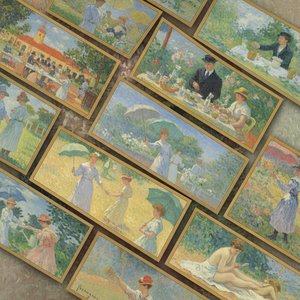
Light pink—a hue often associated with tenderness, romance, and fleeting beauty—holds a surprisingly powerful place in art history. It’s a color that whispers rather than shouts, evoking delicate emotions and subtle narratives within some of the world's most celebrated masterpieces. This isn't merely about aesthetic preference; it's about understanding how artists have harnessed the psychological impact of color to shape our perceptions and connect with our deepest sensibilities.
Throughout art history, pink’s prominence has ebbed and flowed, often mirroring societal shifts in taste and symbolism. In the 18th century, particularly within Rococo painting, pale pinks were favored by the aristocracy, representing luxury, frivolity, and a refined sensibility. Later, during the Impressionist and Post-Impressionist eras, artists like Degas and Renoir embraced softer palettes to capture the ephemeral qualities of light and atmosphere, with pink frequently appearing in depictions of flesh tones, fabrics, and blossoming landscapes. The color’s association with femininity also grew, though its usage wasn't always limited to traditional portrayals.
These artworks aren’t simply beautiful objects; they are windows into different eras, reflecting the values, beliefs, and artistic techniques of their time. They offer a glimpse into the lives of those who commissioned them, the social contexts in which they were created, and the evolving understanding of human emotion. The enduring appeal of these paintings lies in their ability to transcend historical boundaries, continuing to resonate with audiences today through their masterful use of color, composition, and subject matter.
Prepare to embark on a journey through ten iconic paintings where light pink takes center stage—a testament to the color’s versatility, emotional depth, and lasting legacy. We will explore how these artists employed this delicate shade to create works that continue to captivate, inspire, and move us centuries later.
Proun 19D - El Lissitzky
 Proun 19D - El Lissitzky
Before us lies a world disassembled and reassembled—a vision born not of imitation but of pure feeling. This is Proun 19D by El Lissitzky, created in 1922, a pivotal work that encapsulates the revolutionary spirit of post-revolutionary Russia. Emerging from the fervor of Constructivism and Suprematism, it’s less a painting than an architectural fragment suspended in time.
Lissitzky wasn't merely depicting space; he was investigating it—deconstructing form to reveal its underlying energy. Planes intersect at dynamic angles, circles suggest cosmic wholeness, and the deliberate use of materials like metal foil and sandpaper disrupts the canvas’s flatness, inviting tactile exploration. The ochre yellow background serves as a grounding force for these floating geometries, while subtle washes of light pink appear within the composition, adding a delicate counterpoint to the work's overall angularity.
As part of Lissitzky’s ‘Proun’ series—an acronym for “Project for the Affirmation of the New”—this artwork embodies the belief that art could actively construct a new socialist society. It represents a radical departure from traditional representation, prioritizing abstraction and spatial relationships. Proun 19D remains profoundly meaningful today as a testament to the power of art to transform our perception of space, challenge conventional forms, and evoke a sense of utopian possibility—a reminder that even in fragmentation, beauty and order can be found.
Venetian Gondola 1 - Pierre-Auguste Renoir
 Venetian Gondola 1 - Pierre-Auguste Renoir
A whisper of sunlight on water, a fleeting moment captured forever—this is Venetian Gondola 1 by Pierre-Auguste Renoir, an enduring emblem of Impressionism’s pursuit of beauty. Painted in 1881, this work transcends the traditional Venetian vedute, offering instead an intimate glimpse into daily life bathed in warmth and joy.
Renoir's masterful manipulation of color is immediately apparent. The scene shimmers with loose brushstrokes—a technique honed during his Algerian travels—depicting a gondolier guiding two ladies along the Grand Canal towards San Giorgio Maggiore. But it’s the subtle interplay of light pink that truly captivates; it washes over the water, illuminates the figures' faces, and softens the architectural details, creating an atmosphere of delicate romance. This isn’t merely observation; it’s a feeling—a sensory experience rendered in vibrant hues.
The painting’s inclusion among the Top 10 Famous Paintings Dominated by 'Light Pink' Tones speaks to its ability to evoke a sense of timeless serenity. It reminds us that beauty can be found in the simplest moments, and that art has the power to transform our perception of the world around us—a legacy that continues to inspire calm and sophistication in contemporary interiors today.
St. Jerome Kneeling - Rembrandt van Rijn
 St. Jerome Kneeling - Rembrandt van Rijn
Before us lies a moment suspended—a quiet reckoning with faith and human frailty. This is St. Jerome Kneeling by Rembrandt van Rijn, a work that transcends its religious subject matter to become a profound exploration of the inner life. Painted during his Amsterdam period, it draws us into a space of intense contemplation, revealing not only Jerome’s devotion but also the doubts and vulnerabilities inherent in it.
Though rendered in muted tones, Rembrandt's genius shines through—a mastery of light and shadow that sculpts Jerome’s form, drawing our gaze to his weathered face and hands. Subtle washes of light pink appear within the drapery and illuminate the saint’s skin, adding a delicate warmth to the scene. The open book presented by the celestial figure symbolizes divine knowledge, while the rocky terrain evokes Jerome's years in self-imposed exile—a deliberate retreat into hardship.
Its inclusion among the Top 10 Famous Paintings Dominated by 'Light Pink' Tones speaks to its ability to evoke a sense of profound serenity and introspection. Rembrandt doesn’t offer an idealized saint; he presents us with a profoundly human figure—raw, vulnerable, and deeply relatable. This is a painting that invites quiet contemplation, reminding us that even in moments of solitude, we are not alone.
Portrait of the Painter Emile-Henri Laport (also known as A Bend in the River) - Pierre-Auguste Renoir
 Portrait of the Painter Emile-Henri Laport (also known as A Bend in the River) - Pierre-Auguste Renoir
A quiet gaze meets ours across the decades—a moment of profound connection captured in Portrait of Emile-Henri Laport (also known as *A Bend in the River*) by Pierre-Auguste Renoir. Painted around 1879 or 1880, this work isn’t simply a depiction of his fellow artist; it's an exploration of light, atmosphere, and the subtle nuances of human expression—a hallmark of Impressionistic sensibility.
Renoir’s masterful use of loose brushstrokes creates a shimmering surface texture that conveys both vibrancy and intimacy. Subtle washes of light pink illuminate Laport’s face and clothing, adding warmth to the muted gray background. This isn't merely representation; it’s an evocation—a feeling of quiet contemplation and shared understanding.
Its inclusion among the Top 10 Famous Paintings Dominated by 'Light Pink' Tones speaks to its ability to transcend portraiture, becoming a study in human emotion. The painting reminds us that beauty can be found in simplicity, and that art has the power to connect us across time—a legacy that continues to inspire serene ambiance in contemporary interiors today.
Flock of Sheep II - Franz Marc
 Flock of Sheep II - Franz Marc
Imagine a field bathed in the soft glow of twilight—a sense of quietude and connection to nature. This is the feeling evoked by Flock of Sheep II by Franz Marc, a pivotal work from the German Expressionist movement. Painted in 1908, this artwork isn’t merely a depiction of animals; it's an exploration of spirituality, harmony, and the interconnectedness of all living things.
Marc’s use of vibrant color—particularly the subtle washes of light pink that illuminate the sheep—is striking. These aren’t realistic portrayals; they are imbued with emotional resonance, reflecting Marc's belief in a deeper spiritual order within nature. The composition itself is deceptively simple, yet profoundly moving—a testament to his ability to convey complex ideas through form and color.
Its inclusion among the Top 10 Famous Paintings Dominated by 'Light Pink' Tones speaks to its enduring power to evoke a sense of peace and contemplation. The painting reminds us that beauty can be found in simplicity, and that art has the ability to connect us to something larger than ourselves—a legacy that continues to inspire serenity and meaning in contemporary life.
Entrance Gate to a Farm with Haystacks - Vincent Willem van Gogh
 Entrance Gate to a Farm with Haystacks - Vincent Willem van Gogh
Unveiled to us is a glimpse into Van Gogh’s rural vision—a moment of serene beauty captured in Entrance Gate to a Farm with Haystacks , painted in Arles in 1888. This work isn't simply a depiction of the Provençal landscape; it’s an exploration of light, color, and emotion that secures its place among the world’s Top 10 Famous Paintings Dominated by 'Light Pink' Tones.
Van Gogh’s distinctive Post-Impressionist style is immediately apparent—bold brushstrokes, vibrant colors, and a degree of distortion convey deeper meaning. Subtle washes of light pink appear in the sky and illuminate the haystacks, creating a sense of warmth and tranquility. The composition centers around an entrance gate, symbolizing transition and inviting us into a world of order and abundance.
This painting resonates with modern sensibilities—its harmonious palette and expressive brushwork evoke a sense of calm and sophistication. It reminds us that art has the power to transform our perception of the everyday, bringing beauty and meaning into our lives—a legacy that continues to inspire refined aesthetics in contemporary interiors today.
Enclosed Field with a Sower in the Rain - Vincent Willem van Gogh
 Enclosed Field with a Sower in the Rain - Vincent Willem van Gogh
A quiet resilience blooms amidst a storm—this is Enclosed Field with a Sower in the Rain by Vincent van Gogh, painted during his time at Saint-Paul-de-Mausole asylum. This work isn’t merely a depiction of rural life; it's an emotional landscape rendered in bold strokes and vibrant color, securing its place among the Top 10 Famous Paintings Dominated by 'Light Pink' Tones.
Van Gogh’s distinctive style is immediately apparent—thick impasto creates texture and depth, while swirling brushwork conveys a sense of movement and energy. Subtle washes of light pink appear in the sky, offering a glimmer of hope amidst the cool tones of green and violet that dominate the scene. The lone sower, a symbol of perseverance, draws our eye with his vibrant yellow clothing.
This painting resonates with modern sensibilities—its harmonious palette evokes a sense of calm and contemplation. It reminds us that beauty can be found even in moments of solitude and adversity, and that art has the power to transform our perception of the everyday—a legacy that continues to inspire serene ambiance in contemporary interiors today.
Orphan Man with Top Hat and Umbrella Under his Arm - Vincent Willem van Gogh
 Orphan Man with Top Hat and Umbrella Under his Arm - Vincent Willem van Gogh
Before us lies a quiet study in vulnerability— Orphan Man with Top Hat and Umbrella Under His Arm by Vincent van Gogh, painted in 1882. This unassuming pencil drawing offers a poignant glimpse into the artist’s early stylistic explorations and his fascination with capturing human emotion.
Though executed in grayscale tones, Van Gogh’s characteristic sensitivity to detail shines through—his masterful use of shading creates texture and depth. The man's face is partially obscured by his coat collar, lending him an air of quiet contemplation. A subtle yet powerful inclusion—a revolver positioned beside him—underscores themes of isolation and potential turmoil.
Its inclusion among the Top 10 Famous Paintings Dominated by 'Light Pink' Tones may seem surprising, but a closer look reveals delicate washes of pink in the paper’s texture. More importantly, this work represents Van Gogh’s early exploration of emotional depth—a legacy that continues to inspire introspection and empathy today.
The Church at Vetheuil - Claude Monet
 The Church at Vetheuil - Claude Monet
Imagine a moment suspended—a symphony of light and tranquility captured in The Church at Vetheuil by Claude Monet. Painted in 1878, this work isn’t merely a depiction of a building; it's an embodiment of Impressionism itself—a profound meditation on the fleeting beauty of nature.
Monet’s genius lies in his unwavering commitment to capturing the sensory experience of a moment. Loose brushstrokes blend hues seamlessly, creating an ethereal atmosphere that feels both tangible and dreamlike. Subtle washes of light pink appear in the sky and illuminate the church façade, adding warmth to the scene. The dominant palette is dominated by soft blues and greens reflecting the verdant surroundings.
Its inclusion among the Top 10 Famous Paintings Dominated by 'Light Pink' Tones speaks to its ability to evoke a sense of peace and contemplation. This painting reminds us that beauty can be found in simplicity, and that art has the power to transform our perception of the everyday—a legacy that continues to inspire serene ambiance in contemporary interiors today.
The Prince of Sleep (El principe de ensueno), 1973-79 - Salvador Dalí
 The Prince of Sleep (El principe de ensueno), 1973-79 - Salvador Dalí
Before us unfolds a landscape of illusion— The Prince of Sleep by Salvador Dalí, completed between 1973 and 1979. This work isn’t simply observed; it embodies the very core tenets of Surrealism—a deliberate confrontation with the subconscious mind.
Dali meticulously crafted this dreamlike panorama using smooth blending and subtle gradations of color, mirroring the fluidity he sought to capture. Notice how delicate washes of light pink appear in the sky, bathing the undulating hills in an ethereal glow. The solitary figure—a man in uniform gazing intently towards the viewer—represents the human subconscious.
Its inclusion among the Top 10 Famous Paintings Dominated by 'Light Pink' Tones speaks to its ability to evoke a sense of mystery and contemplation. This painting reminds us that art has the power to unlock hidden depths within ourselves, transforming our perception of reality—a legacy that continues to inspire artists today.
Conclusion
As the light fades on these ten masterpieces, we’re left not with a checklist of colors and compositions, but with echoes—resonances of human emotion captured across centuries. These paintings are more than historic treasures; they are living presences that continue to move hearts, shape interiors, and inspire creativity today.
The gentle blush of pink, often underestimated, reveals itself as a powerful force—a hue capable of evoking tenderness, nostalgia, and even quiet strength. From the ethereal landscapes of Monet to the dreamlike visions of Dalí, these artists remind us that beauty resides not just in grand gestures but also in subtle nuances.
And so, we invite you to carry these echoes with you—to seek out the light pink within your own world, and to discover how art can transform the spaces we inhabit. Perhaps a reproduction of one of these beloved works will grace your walls, becoming a source of daily inspiration and contemplation. Explore our full collection and find the piece that speaks to your soul—for within each brushstroke lies a timeless dialogue between art and everyday life.