
 プレビュー
プレビュー
 シェアする
シェアする シェアする
シェアする
 詳細を見る
詳細を見る

 ダウンロード
 似ている作品
 X線調査
X線調査 スライドショー
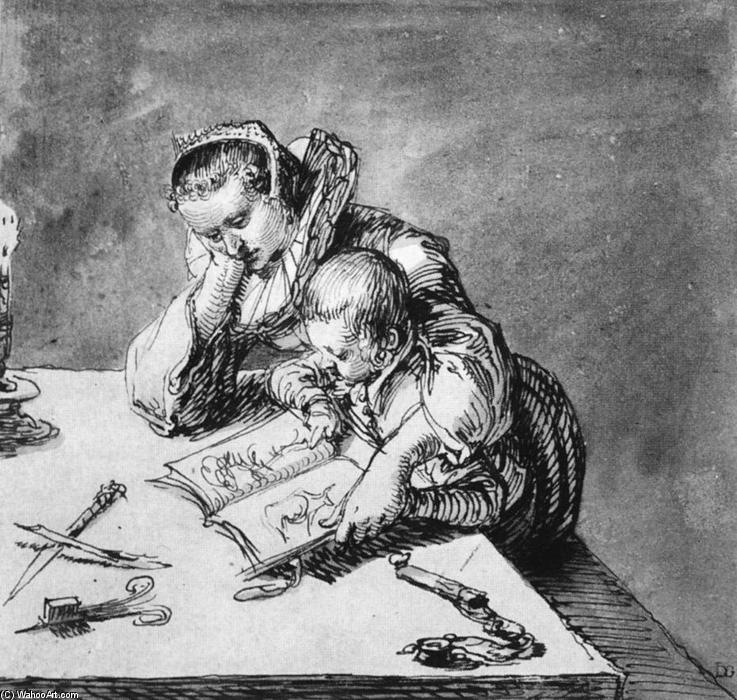
少女と絵本を眺める女性


 詳細を見る
詳細を見る
手描き油彩複製画
当社のアーティストが、お客様のご希望のサイズと額縁に合わせて、キャンバスに手描きで制作する油彩画です。 ( プリント版に切り替え 画像に切り替え)




P118B $10

P118H $10

P118W $10

P438Z $10

P508JH $12

P508YH $12

P805H $10

P805Z $10

P919BZ $10

P919G $10

P919XJ $10

P959ZH $10

P968JZ $12

W106C $8

W218G $10

W218JH $8

W218Y $10

W307PJ $10

W316G $10

W316PJ $8

W316Y $10

W398PJ $8

W4111J $10

W500HY $15

W500JH $15

W692G $12

W849H $8

W940BG $15

W953PJ $8




作品のオリジナル比率に合わせた、当店の規定サイズからお選びください。

特定のフレームやスペースに合わせて、ご希望のサイズをご入力いただけます。選択されたサイズが元の画像の比率と異なる場合、アートワークをトリミングするか、手描きで要素を追加して絵画を拡張いたします。デジタルモックアップ を制作し、制作開始前にご確認(承認)をいただきます。
画面上のプレビューは、実際のトリミングや拡張を正確に反映しているものではありません。最終的な構図は、モックアップによってのみ正確にご確認いただけます。
カスタムサイズもご利用いただけますが、元の比率を維持するためには、あらかじめ用意されたリストからサイズを選択することをお勧めいたします。
ご注文後、OriginalUniqueArt.com チームより詳細な指示をお送りするとともに、仕上がりイメージ(モックアップ)をご提供いたします。


 ガラスオプションは、110cm未満のサイズでのみご利用いただけます。

少女と絵本を眺める女性
複製技法
複製画のサイズ
-


合計金額
$ 300
作品解説
jacob (jacques)de gheyn ii と「少女と絵本」の魅力:ルネサンスの繊細さを現代に蘇らせる芸術家の一枚
jacob (jacques)de gheyn ii は、マニエリスムとバロックの融合を体現したフランドルの画家であり、特に銅版画における卓越した技術は後世に大きな影響を与えました。この作品「少女と絵本」は、その芸術家の個性と時代精神を凝縮した傑作と言えるでしょう。
- 作品の概要: この絵画は、白い背景に少女と母親が絵本を読む姿を描いた静謐な風景画です。繊細な線描と陰影技法によって、人物の表情や質感が生き生きと表現されています。
- 画家について: jacob de Gheyn II は、父親であるjacob de Gheyn I とともにアンヴァルで活躍した芸術家の一族に生まれました。彼は父親から受け継いだ優れた技術に加え、解剖学的な正確さを追求し、古典的な理想を表現することに情熱を注ぎました。彼の作品は、当時の美術界において高い評価を得ていました。
- スタイルと技法: この絵画の特徴は、マニエリスムの影響を受けた洗練された線描と陰影技法です。特に母親の表情には、深い思索や疲労が表現されており、当時の社会情勢を反映しています。銅版画における彼の技術は驚くほど精密で、細部まで描き込まれており、現代でも高い芸術的価値を持っています。
- 歴史的な背景: この作品が制作されたのは16世紀後半のフランドルであり、マニエリスムとバロックという二つの美術様式の間で揺れ動いていた時期です。マニエリスムは、誇張された表現や理想化された形態を特徴とし、一方バロコは、ダイナミックな動きと豪華さを追求しました。この絵画は、これらの様式の両方の要素を取り入れながらも、静謐さと優美さを表現しています。
- 絵本の象徴性: 絵本は、知識や教育の象徴であり、また子供への愛情を表現するモチーフとしても用いられます。「少女と絵本」というテーマは、当時の社会において重要な役割を果たしており、この絵画には深い意味が込められています。
この作品は、単なる風景画ではなく、人間の感情や精神性を表現した芸術作品です。繊細な線描と陰影技法によって、当時の美術家たちが追求した美意識が現代に蘇ります。「少女と絵本」は、jacob de Gheyn II の卓越した技術と芸術的センスを証明するとともに、ルネサンス美術の魅力を伝える貴重な遺産です。この作品を鑑賞することで、私たちは過去の芸術家の精神と感動を体験することができます。
アーティストの略歴
The Master of Precision: The Life and Legacy of Jacob de Gheyn II
In the vibrant, turbulent heart of Antwerp during the transition from the sixteenth to the seventeenth century, Jacob de Gheyn II emerged as a virtuoso of line and light. Born into an illustrious artistic dynasty around 1565, he was the son of the renowned printmaker Jacob de Gheyn I, a heritage that provided him with both the tools of the trade and a profound respect for the meticulous craft of engraving. His life unfolded during a transformative era in Northern Europe, a period where the stylized elegance of Mannerism began to yield to the dramatic, muscular energy of the Baroque. Within this shifting landscape, de Gheyn II carved out a unique identity, one defined by an almost scientific devotion to the natural world and an unparalleled mastery over the copperplate.
The foundation of his extraordinary skill was laid through rigorous training and high-profile associations. Most notably, his time under the influence of Peter Paul Rubens provided him with a window into the burgeoning Baroque sensibility. From the great Flemish master, de Gheyn II absorbed an understanding of dynamic composition and the expressive potential of form. Yet, where Rubens sought grandeur and movement, de Gheyn II found his passion in the minute and the anatomical. He was not merely a decorator of surfaces but a seeker of truth beneath the skin. His dedication to anatomical accuracy was legendary; he famously engaged in the study of human cadavers, a practice that allowed him to render musculature, bone structure, and the subtle tension of flesh with a precision that would later inspire even the likes of Rembrandt.
A Synthesis of Science and Artistry
The work of Jacob de Gheyn II is characterized by a breathtaking marriage of humanist scholarship and technical virtuosity. His engravings are far more than mere illustrations; they are profound explorations of the human condition and the classical ideal. Through his burin, he was able to translate the complexities of life into a language of stark contrasts and delicate textures. His notable engravings often focused on anatomical studies and classical scenes, where every vein, tendon, and fold of drapery was rendered with obsessive care. This commitment to realism served a higher purpose in his eyes—to illuminate the natural world through the lens of scientific observation, thereby elevating the human spirit through the appreciation of divine complexity.
Beyond his anatomical prowess, de Gheyn II’s oeuvre reflects the broader cultural currents of his time. His ability to blend the intricate, often elongated aesthetics of Mannerism with a burgeoning sense of Baroque realism allowed him to capture the zeitgeist of Antwerp. Whether depicting the stoic grace of a classical figure or the raw reality of a biological study, his work possesses an enduring clarity. This clarity was achieved through a sophisticated use of line, where varying depths of incision created a sense of volume and atmosphere that breathed life into the two-dimensional plane.
Historical Significance and Enduring Influence
The historical significance of Jacob de Gheyn II lies in his role as a bridge between eras. He stood at the crossroads of the Northern Renaissance and the Baroque, acting as a conduit through which the precision of the former informed the drama of the latter. His achievements were not limited to the singular creation of prints; rather, he contributed to a standard of excellence in printmaking that would influence generations of European artists. His work became a vital part of the visual vocabulary of the seventeenth century, providing a foundation of anatomical and classical knowledge that was disseminated across the continent through the medium of print.
Today, the legacy of de Gheyn II continues to resonate within the halls of art history. He remains a symbol of the artist as an observer—a creator who looks deeply into the mechanics of life to find beauty in its most fundamental forms. His ability to marry the intellectual rigor of anatomy with the aesthetic grace of fine art ensures that his name remains etched in the annals of Flemish greatness. To study his work is to witness the moment when the meticulous detail of the old world met the expressive power of the new, creating a timeless dialogue between the eye and the soul.

jacob (jacques)de gheyn ii
1565 - 1629 , Belgium
基本情報
- Artistic Movement Or Style: Northern Mannerism
- Artists Or Movements Influenced By This Artist: ['Baroque']
- Artists Who Influenced This Artist:
- Pieter Bruegel the Elder
- Hans Holbein the Younger
- Date Of Birth: c. 1565
- Date Of Death: 1629
- Full Name: Jacob de Gheyn II
- Nationality: Dutch
- Notable Artworks:
- Allegory of Transience
- Vanitas Still-Life
- Place Of Birth: Antwerp, Belgium
関連記事
Wilhelmus de Zwart: Capturing Dutch Life Through the Lens of Realism & Impressionism
Explore the captivating world of Wilhelmus de Zwart, a Dutch master bridging Realism & Impressionism. Discover his landscapes, cityscapes, and unique technique – a compelling study for art enthusiasts and collectors.
Jacob Henricus Maris: A Master of Dutch Atmospheric Realism & the Intimate Landscape
Explore the captivating world of Jacob Henricus Maris, a leading figure of the Dutch Hague School. Discover his atmospheric landscapes, signature brushstrokes & lasting influence on 19th-century art. Learn more at OriginalUniqueArt.
Pieter de Hooch: Illuminating Dutch Domestic Life & Golden Age Charm
Explore the captivating world of Pieter de Hooch, a master of Dutch Golden Age painting. Discover his innovative use of light, intimate domestic scenes, and lasting influence on art history. Learn more at OriginalUniqueArt.
The Enduring Portrait of Kinship: Family Representations Across Art History
Explore the rich history of family portraiture through art! Discover masterpieces from across centuries & learn how artists captured kinship, intimacy, and societal values. Expert insights for collectors & enthusiasts.
Proto-Renaissance Masters: 10 Artworks That Changed History | OriginalUniqueArt
Journey back to the dawn of Renaissance art! Explore 10 iconic Proto-Renaissance masterpieces by Giotto, Cimabue & Duccio. Discover their stories, techniques & lasting impact. Find museum-quality reproductions for your home at OriginalUniqueArt.com


