
 プレビュー
プレビュー
 プリントを購入
 シェアする
シェアする シェアする
シェアする
 詳細を見る
詳細を見る

 ダウンロード
 似ている作品
 X線調査
X線調査 スライドショー
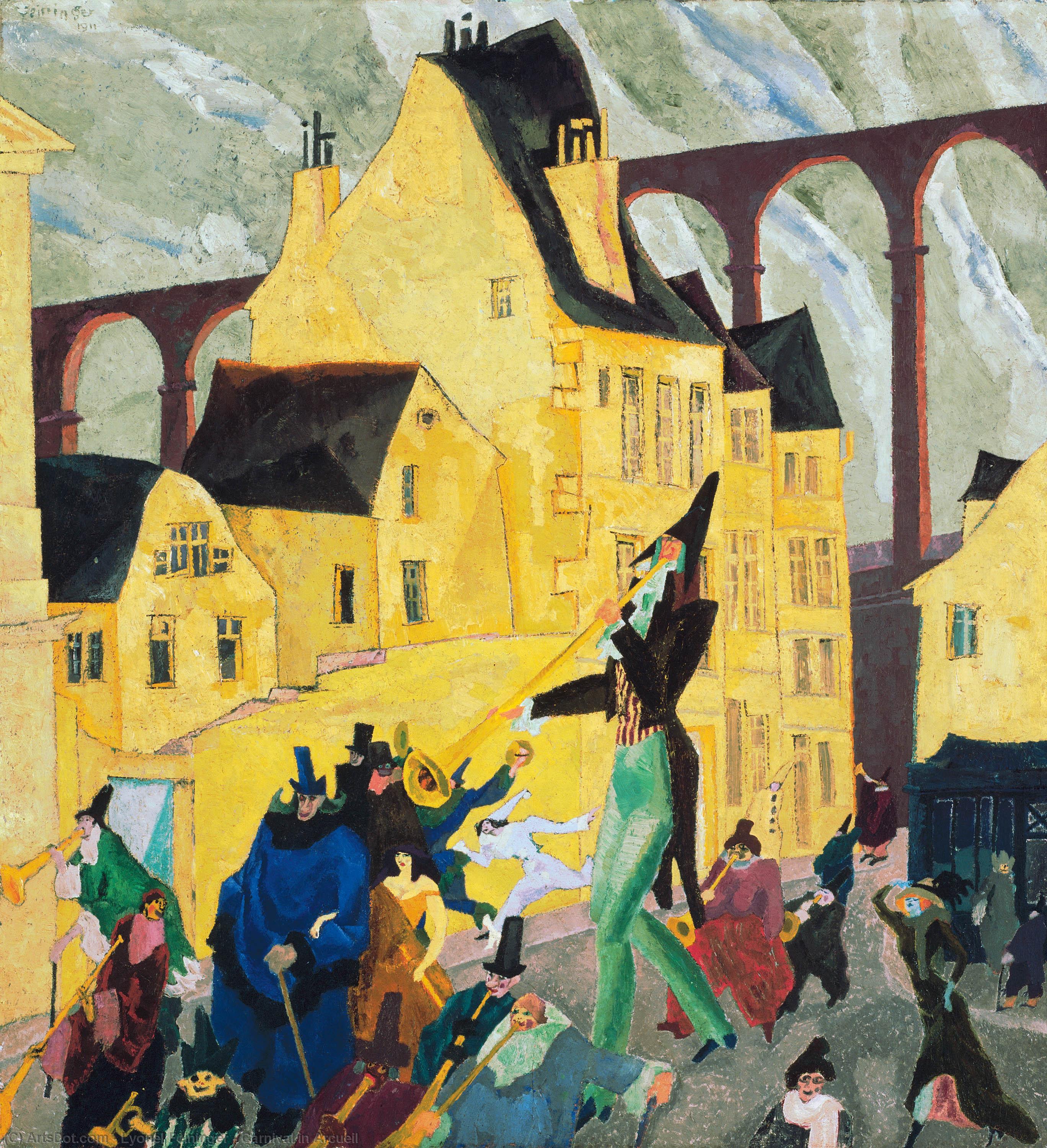
Carnival in Arcueil


 詳細を見る
詳細を見る




P118B $10

P118H $10

P118W $10

P438Z $10

P508JH $12

P508YH $12

P805H $10

P805Z $10

P919BZ $10

P919G $10

P919XJ $10

P959ZH $10

P968JZ $12

W106C $8

W218G $10

W218JH $8

W218Y $10

W307PJ $10

W316G $10

W316PJ $8

W316Y $10

W398PJ $8

W4111J $10

W500HY $15

W500JH $15

W692G $12

W849H $8

W940BG $15

W953PJ $8




作品のオリジナル比率に合わせた、当店の規定サイズからお選びください。

特定のフレームやスペースに合わせて、ご希望のサイズをご入力いただけます。選択されたサイズが元の画像の比率と異なる場合、アートワークをトリミングするか、手描きで要素を追加して絵画を拡張いたします。デジタルモックアップ を制作し、制作開始前にご確認(承認)をいただきます。
画面上のプレビューは、実際のトリミングや拡張を正確に反映しているものではありません。最終的な構図は、モックアップによってのみ正確にご確認いただけます。
カスタムサイズもご利用いただけますが、元の比率を維持するためには、あらかじめ用意されたリストからサイズを選択することをお勧めいたします。
ご注文後、OriginalUniqueArt.com チームより詳細な指示をお送りするとともに、仕上がりイメージ(モックアップ)をご提供いたします。


 ガラスオプションは、110cm未満のサイズでのみご利用いただけます。

Carnival in Arcueil
複製技法
複製画のサイズ
-


合計金額
$ 300
作品解説
A Burst of Joy: Lyonel Feininger’s “Carnival in Arcueil”
Lyonel Feininger's "Carnival in Arcueil," painted in 1911, isn’t merely a depiction of a festive street scene; it’s a vibrant distillation of Expressionist energy and a testament to the artist’s unique ability to imbue everyday life with an extraordinary sense of movement and emotion. Housed within the Art Institute of Chicago, this oil on canvas transports us to the heart of a Parisian carnival, capturing not just the visual spectacle but also the palpable excitement and slightly surreal atmosphere that defines the moment. Feininger, a German-American painter deeply rooted in both European artistic traditions and American popular culture, masterfully blends elements of Cubism with the passionate intensity of Expressionism, creating an image that is both familiar and strikingly original.
The painting immediately draws the eye to its central figure: a man in black, balancing precariously on one leg while juggling three balls. This dynamic pose isn’t simply illustrative; it embodies the spirit of the carnival itself – a celebration of skill, daring, and joyful abandon. Surrounding him is a throng of figures, rendered with a remarkable degree of detail despite the overall impression of movement. They are not portraits in the traditional sense, but rather archetypes of carnival revelers—a mix of faces, costumes, and gestures that collectively contribute to the painting’s lively energy. The artist's use of color is particularly noteworthy; bold yellows, reds, blues, and greens dominate the palette, creating a dazzling visual effect that mirrors the vibrancy of the event itself.
The Architectural Backdrop: Bridges and Parisian Identity
Beyond the figures, it’s crucial to consider the setting – two prominent bridges that frame the scene. These aren't merely architectural elements; they are integral to the painting’s narrative. Arcueil, a town just south of Paris, was a frequent subject for Feininger, and these bridges became recurring motifs in his work. They represent not only the physical connection between different parts of the city but also a sense of Parisian identity—a blend of urban dynamism and historical heritage. The bridges’ solid forms provide a grounding element to the swirling chaos of the carnival, anchoring the scene within a recognizable, yet subtly stylized, reality.
Feininger's fascination with architecture is evident throughout his oeuvre, reflecting a broader interest in geometric form and spatial relationships. He often depicted buildings not as static objects but as dynamic forces shaping the urban landscape. In “Carnival in Arcueil,” the bridges serve as both structural supports and visual anchors, guiding the viewer’s eye through the composition and contributing to the painting's overall sense of depth and movement.
Expressionist Techniques: Color, Form, and Emotion
The painting’s distinctive style is firmly rooted in Expressionism—a movement that sought to convey subjective emotions rather than objective reality. Feininger achieves this through a number of key techniques. His use of flattened perspective and fragmented forms creates a sense of disorientation and immediacy, as if the viewer is swept up in the carnival's frenetic energy. The colors are applied with thick impasto—a technique that adds texture and physicality to the surface of the canvas—further enhancing the painting’s emotional impact.
Furthermore, Feininger employs a masterful use of color theory. He utilizes contrasting hues to heighten visual interest and create a sense of dynamism. The vibrant yellows and reds of the carnival scene are juxtaposed with cooler blues and greens in the background, generating a powerful visual tension. This interplay of colors not only captures the sensory experience of the carnival but also reflects the artist’s own emotional response to it—a mixture of excitement, wonder, and perhaps even a touch of melancholy.
A Legacy of Modernity: Feininger's Place in Art History
“Carnival in Arcueil” stands as a pivotal work in Lyonel Feininger’s career and a significant example of early 20th-century art. His exploration of urban life, combined with his innovative use of color and form, foreshadowed many of the developments that would characterize modernism. The painting's influence can be seen in the works of later Expressionist artists such as Max Beckmann and Emil Nolde, while its stylistic elements also resonate with the Cubist explorations of Picasso and Braque.
Today, “Carnival in Arcueil” continues to captivate viewers with its vibrant energy and emotional depth. It’s a reminder of the power of art to capture not just what we see but also what we feel—a celebration of joy, movement, and the enduring spirit of human connection.
アーティストの略歴
初期の生涯とキャリア:風刺画家から純粋芸術家へ
- 誕生と家族: リオネル・チャールズ・アドリアン・ファイニンガーは、1871年7月17日、ニューヨークに生を受けました。ドイツ系アメリカ人のバイオリニストであり作曲家であった父カール・ファイニンガー、そしてアメリカ人歌手であった母エリザベス・ファイニンガーという芸術的な家庭環境は、彼の幼少期の感性を豊かに育む大きな糧となりました。
- 初期の教育とヨーロッパへの旅: 16歳になった1887年、音楽を学ぶためにヨーロッパへと渡った彼は、やがてその情熱を美術へと転換させます。ハンブルクやベルリンでのデッサン修行を通じて、彼の芸術的基盤は形作られていきました。
- 商業美術の時代: 1894年以降、ファイニンガーはドイツ、フランス、アメリカの様々な雑誌で風刺画家として成功を収めます。「The Kin-der-Kids」や「Wee Willie Winkie's World」といったコミック・ストリップは絶大な人気を博し、彼の独創的なグラフィック・スタイルを世に知らしめることとなりました。
- 純粋芸術への転身: 商業美術の世界で20年にわたるキャリアを積んだ後、36歳の時、彼は純粋芸術家としての道を歩み始めます。この決断は、彼の芸術的遍歴における決定的な転換点となりました。
表現主義とバウハウスの影響
- 表現主義グループへの参画: ファイニンガーは表現主義の旗手として頭角を現し、「ブリュッケ(橋)」、「ノヴェンベルグループ」、「グルッペ1919」といった影響力のある芸術運動に身を投じました。この時期の作品には、感情の表出と主観的な体験を重視する表現主義の精神が深く刻み込まれています。
- 初の個展: 1917年にベルリンのシュトゥルム・ギャラリーで開催された初の個展は、彼を美術界の重要人物として確立させる極めて重要な瞬間となりました。 意
- バウハウスのマスター: 1919年、ヴァルター・グロピウスによって、革新的なデザイン学校であるバウハウスの最初の教員に任命されました。彼は版画工房の責任者(マスター)として、数多くの学生たちに多大な影響を与えました。
- 芸術的スタイル: プリズムのように砕かれた形態、透き通るような色彩、そして建築や海への言及を特徴とする彼の作品は、古典的なモダニズムの系譜に連なるものとなりました。
主要作品と芸術的発展
- 初期の海洋画: 1909年から1918年にかけて、ウスドム島での夏季休暇中に描かれた数々の海洋画は、バルト海を舞台に彼の進化し続けるスタイルを見事に描き出しています。
- 代表作: 水彩画「Werder I」、紙に描かれた「Gaberndorf II」、そして油彩によるキュビスム作品「Boats」などは、表現主義的な技法と建築的テーマが融合した彼の唯一無二の美学を象徴しています。
- 写真作品: 1928年から1950年代半ばにかけて、彼は膨大な数の写真作品も残しており、芸術家としての多才な一面を証明しています。
- 音楽作曲: また、ピアノ曲やオルガンのフーガも作曲しており、視覚芸術のみならず音楽的才能においても豊かな表現力を発揮していました。
晩年と遺産
- アメリカへの移住: 1933年のナチス党の台頭を受け、ファイニンガーは妻と共にアメリカ合衆国へと亡命しました。
- 絶え間ない創作活動: 移住後も彼は生涯を通じて描き続け、独自のスタイルを維持しながら芸術への情熱を燃やし続けました。
- 逝去と評価: 1956年1月13日、リオネル・ファイニンガーはその生涯を閉じました。表現主義、グラフィックの実験性、そして建築的テーマが織りなす彼の作品は、美術界に消えることのない足跡を残し、今なお多くの芸術家や愛好家を魅了し続けています。
- 歴史的重要性: 表現主義とバウハウス運動の両方における重要人物として、ファイニンガーの貢献は近代美術の進展に決定的な役割を果たしました。色彩、形態、遠近法を用いた彼の革新的なアプローチは、時代を超えて現代の観る者の心に響き続けています。

リヨネル・ファイニンガー
1871 - 1956 , アメリカ合衆国
基本情報
- Artistic Movement Or Style: 表現主義、キュビスム
- Artists Or Movements Influenced By This Artist:
- バウハウス運動
- ルートヴィヒ・ヒルシュフェルト=マック
- Date Of Birth: 1871年7月17日
- Date Of Death: 1956年1月13日
- Full Name: リオネル・チャールズ・アドリアン・ファイニンガー
- Nationality: ドイツ系アメリカ人
- Notable Artworks:
- Werder I (水彩)
- Gaberndorf II (紙)
- Boats (油彩、キャンバス)
- Place Of Birth: アメリカ合衆国、ニューヨーク市
関連記事

Lyonel Feininger: Bridging Expressionism & Cubism – A Study of Spiritual Geometry
Explore the captivating world of Lyonel Feininger, a pivotal figure bridging Expressionism & Cubism. Discover his architectural visions, Bauhaus influence, and enduring legacy in modern art history. Learn more at OriginalUniqueArt.
Figurative Expressionism: Emotional Intensity & Subjective Reality in 20th-Century Art
Explore the powerful world of Figurative Expressionism with OriginalUniqueArt. Discover key artists like Kirchner & Beckmann, understand its emotional depth, and learn how to collect this influential 20th-century art movement.
The Raw Emotion of Expressionism: A Deep Dive into its History, Characteristics & Enduring Influence
Explore the raw emotion of Expressionism with OriginalUniqueArt. Discover its history, key artists like Kirchner & Munch, and lasting influence on modern art. Expert insights for collectors & enthusiasts.

Deconstructing Reality: Cubist Expressionism's Aesthetic & Philosophical Foundations
Explore the profound aesthetic & philosophical foundations of Cubist Expressionism. Discover key artists, movements, and lasting influence on modern art history. A guide for discerning collectors.

German Expressionism's 10 Defining Masterpieces | Art for Your Home
Explore 10 defining German Expressionism masterpieces – from Munch's 'The Scream' to Kandinsky’s abstracts. Discover the artists, stories & bold colors behind this powerful art movement. Find museum-quality reproductions at OriginalUniqueArt.com.

