Expressionism
Carnival (リオネル・ファイニンガー)
リオネル・ファイニンガー (1871–1956)による作品『Carnival』 Expressionism運動に属しています。 Oil On Canvasで制作されています。
- Oil On Canvas

 設置イメージを表示

 手描き油彩画
 シェアする
 シェアする
 解説シート


 ダウンロード
 似ている作品
 X線調査
 スライドショーを表示
 Q&A

 統計情報
Carnivalの概要
- 作品名
- Carnival
- 作家
- リオネル・ファイニンガー (1871–1956)
- 生年
- ニューヨーク, アメリカ合衆国
- 技法
- Oil On Canvas
- 制作年代
- Early Modern
- 主題
- people, figures, street scene, building, clock tower, umbrella
Carnivalには何が描かれていますか?
Identification of Carnival by Lyonel Feininger
The street comes alive in Carnival, a spirited oil on canvas work by Lyonel Feininger. Created in 1911, this piece captures a moment of public celebration. The scene unfolds with a sense of movement, as if the viewer has just stepped into the middle of a bustling procession. People move through the space, their presence adding a layer of human energy to the urban setting.
Lyonel Feininger brings this specific vision to life through his unique handling of the medium. The oil paint carries the weight of the figures and the architecture, grounding the festive atmosphere in a tangible reality. Every brushstroke contributes to the feeling of a city in motion, caught in the middle of a joyful, crowded event. It is a window into a specific time and place, preserved through the artist's hand.
Composition and Visual Elements
A lively street scene unfolds before the eyes, filled with the restless energy of a crowd in motion. At least nine individuals populate the thoroughfare, each caught in a private moment of transit. One figure carries an umbrella against the sky, while another relies on a cane to navigate the pavement. Some travelers shoulder handbags or backpacks, their bodies angled as they move through the urban space. The figures appear to drift past one another, creating a sense of constant, rhythmic movement through the heart of the city.
In the background, the architecture looms with a sense of permanence. A building with a prominent clock tower watches over the pedestrians, its structure anchoring the bustling activity below. The composition draws the eye through the layers of the street, where the interplay of people and buildings creates a complex, layered perspective. The arrangement of the crowd suggests a spontaneous gathering, a slice of daily life where every person contributes to the collective pulse of the scene.
Technique and Artistic Style
The oil on canvas pulses with a restless energy, capturing a moment of movement through a lens of Expressionism. Colors collide and dance across the surface, refusing to settle into quietude. There is a palpable sense of rhythm in the way the pigments are applied, mirroring the lively street scene unfolding before us. The brushwork feels alive, driven by a desire to translate the emotional heat of a public celebration into visible, tactile strokes.
A subtle tension exists between the emotional intensity of Expressionism and the structural discipline of Cubist influence. While the colors scream with life, the underlying forms suggest a more calculated, geometric arrangement. This intersection of styles creates a visual language where the chaos of a crowd meets the organized logic of modernism. The figures move through a space that feels both spontaneous and carefully constructed, as if the artist is balancing the raw feeling of the moment with a precise, architectural eye.
Where to See This Artwork Today
The lively energy of this scene remains preserved within the walls of the Art Institute of Chicago. Visitors traveling to Chicago, IL, US, find this piece held within the institution's permanent collection. It resides there as a part of the Joseph Winterbotham Collection, waiting for those who wander through the museum's galleries to encounter its movement.
The painting stays housed in the Art Institute of Chicago, Chicago. It exists in this specific space, allowing the colors and the figures to remain part of the city's cultural landscape. One can find it among the many works that populate the museum's halls, where the spirit of the carnival continues to exist in its physical form.
Carnivalの高解像度画像

リオネル・ファイニンガー, Carnival. パブリックドメイン
Carnivalに関するよくあるご質問
「Carnival」の制作技法は何ですか?
リオネル・ファイニンガー作「Carnival」の技法はOil On Canvasです。複製画は、この技法の質感や風合いを再現することを目指しています。
リオネル・ファイニンガー作「Carnival」には何が描かれていますか?
リオネル・ファイニンガー作「Carnival」の描画内容:people, figures, street scene, building, clock tower, umbrella, cane, handbags
「Carnival」はパブリックドメインですか?
著作権について、「Carnival」はパブリックドメイン(著作権消滅)です。
「Carnival」の作者は誰ですか?
「Carnival」はリオネル・ファイニンガーによる作品です。このページでは、リオネル・ファイニンガーのオリジナル作品についてご紹介しています。
リオネル・ファイニンガー作「Carnival」は、どの芸術流派に属していますか?
「Carnival」は、Expressionismの作品です。この様式は、その作品が属する芸術的伝統を示しています。
「Carnival」は、リオネル・ファイニンガーの画業におけるどの時期の作品にあたりますか?
「Carnival」は、リオネル・ファイニンガーのEarly Periodを象徴する作品です。
「Carnival」の著作権の状態は、なぜこのようなものになっているのでしょうか?
リオネル・ファイニンガー作「Carnival」はパブリックドメイン(著作権消滅)です。著作権の保護期間は、1956年に亡くなった作家の没年から起算されます。
「Carnival」は、リオネル・ファイニンガーのテーマやスタイルとどのように結びついているのでしょうか?
「Carnival」はリオネル・ファイニンガーによるExpressionismの作品であり、その描かれたテーマにはexpressionism and cubism influence, urban life exploration, pivotal early career work, transition to fine artが含まれます。
「Carnival」の主題は、リオネル・ファイニンガーが普段扱うテーマとどのように関連していますか?
リオネル・ファイニンガーの作品に繰り返し現れるテーマにはexpressionism and cubism influence, urban life exploration, pivotal early career work, transition to fine artがありますが、「Carnival」ではpeople, figures, street scene, building, clock tower, umbrella, cane, handbagsに焦点を当てています。
アーティスト リオネル・ファイニンガー について

1871–1956, アメリカ合衆国
リオネル・ファイニンガー
初期の生涯とキャリア:風刺画家から純粋芸術家へ 誕生と家族: リオネル・チャールズ・アドリアン・ファイニンガーは、1871年7月17日、ニューヨークに生を受けました。ドイツ系アメリカ人のバイオリニストであり作曲家であった父カール・ファイニンガー、そしてアメリカ人歌手であった母エリザベス・ファイニンガーという芸術的な家庭環境は、彼の幼少期の感性を豊かに育む大きな糧となりました。 初期の教育とヨーロッパへの旅: 16歳になった1887年、音楽を学ぶためにヨーロッパへと渡った彼は、やがてその情熱を美術へと転換させます。ハンブルクやベルリンでのデッサン修行を通じて、彼の芸術的基盤は形作られていきました。 商業美術の時代: 1894年以降、ファイニンガーはドイツ、フランス、アメリカの様々な雑誌で風刺画家として成功を収めます。「The Kin-der-Kids」や「Wee Willie Winkie's World」といったコミック・ストリップは絶大な人気を博し、彼の独創的なグラフィック・スタイルを世に知らしめることとなりました。 純粋芸術への転身: 商業美術の世界で20年にわたるキャリアを積んだ後、36歳の時、彼は純粋芸術家としての道を歩み始めます。この決断は、彼の芸術的遍歴における決定的な転換点となりました。 表現主義とバウハウスの影響 表現主義グループへの参画: ファイニンガーは表現主義の旗手として頭角を現し、「ブリュッケ(橋)」、「ノヴェンベルグループ」、「グルッペ1919」といった影響力のある芸術運動に身を投じました。この時期の作品には、感情の表出と主観的な体験を重視する表現主義の精神が深く刻み込まれています。 初の個展: 1917年にベルリンのシュトゥルム・ギャラリーで開催された初の個展は、彼を美術界の重要人物として確立させる極めて重要な瞬間となりました。 意バウハウスのマスター: 1919年、ヴァルター・グロピウスによって、革新的なデザイン学校であるバウハウスの最初の教員に任命されました。彼は版画工房の責任者(マスター)として、数多くの学生たちに多大な影響を与えました。 芸術的スタイル: プリズムのように砕かれた形態、透き通るような色彩、そして建築や海への言及を特徴とする彼の作品は、古典的なモダニズムの系譜に連なるものとなりました。 主要作品と芸術的発展 初期の海洋画: 1909年から1918年にかけて、ウスドム島での夏季休暇中に描かれた数々の海洋画は、バルト海を舞台に彼の進化し続けるスタイルを見事に描き出しています。 代表作: 水彩画「Werder I」、紙に描かれた「Gaberndorf II」、そして油彩によるキュビスム作品「Boats」などは、表現主義的な技法と建築的テーマが融合した彼の唯一無二の美学を象徴しています。 写真作品: 1928年から1950年代半ばにかけて、彼は膨大な数の写真作品も残しており、芸術家としての多才な一面を証明しています。 音楽作曲: また、ピアノ曲やオルガンのフーガも作曲しており、視覚芸術のみならず音楽的才能においても豊かな表現力を発揮していました。 晩年と遺産 アメリカへの移住: 1933年のナチス党の台頭を受け、ファイニンガーは妻と共にアメリカ合衆国へと亡命しました。 絶え間ない創作活動: 移住後も彼は生涯を通じて描き続け、独自のスタイルを維持しながら芸術への情熱を燃やし続けました。 逝去と評価: 1956年1月13日、リオネル・ファイニンガーはその生涯を閉じました。表現主義、グラフィックの実験性、そして建築的テーマが織りなす彼の作品は、美術界に消えることのない足跡を残し、今なお多くの芸術家や愛好家を魅了し続けています。 歴史的重要性: 表現主義とバウハウス運動の両方における重要人物として、ファイニンガーの貢献は近代美術の進展に決定的な役割を果たしました。色彩、形態、遠近法を用いた彼の革新的なアプローチは、時代を超えて現代の観る者の心に響き続けています。
リオネル・ファイニンガーのその他の作品
 The honeymooners
 Boats1917
 Sailing Boats
 Blue Coast

Carnivalに関するエッセイ
 Lyonel Feininger: Bridging Expressionism & Cubism – A Study of Spiritual GeometryExplore the captivating world of Lyonel Feininger, a pivotal figure bridging Expressionism & Cubism. Discover his architectural visions, Ba…
 The Architecture of the Crowd: Examining Human Presence in Urban CompositionsExplore the evolution of urban art from Caillebotte to modern street murals. Discover the pulse of the city through masterworks.
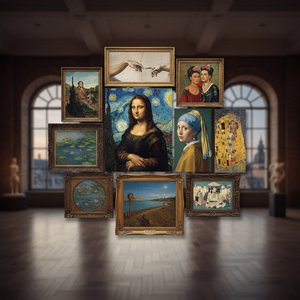 Oil on Canvas Masters: 10 Paintings That Redefined Art History |Journey through art history with our guide to 10 legendary oil on canvas masterpieces! Explore iconic works by Van Gogh, Monet & Rembrandt.…