Realism · 1861
Catacombes De Paris (ナダール, 1861)
ナダール (1820–1910)による作品『Catacombes De Paris』 制作年は1861年です。 Realism運動に属しています。 Photographyで制作されています。
- 1861
- Photography

 手描き油彩画
 シェアする
 シェアする
 解説シート


 ダウンロード
 似ている作品
 スライドショーを表示
 Q&A

 統計情報
Catacombes De Parisの概要
- 作品名
- Catacombes De Paris
- 作家
- ナダール (1820–1910)
- 生年
- サントノーレ通り, フランス
- 制作年
- 1861
- 技法
- Photography
- 技法
- Realism
- 制作年代
- 19th Century
- 主題
- skulls, bones, man, stone walls, monochrome, human remains
Catacombes De Parisには何が描かれていますか?
Identification of Catacombes De Paris by Nadar
The photograph titled Catacombes De Paris was captured by the artist Nadar about 1861. It presents a chamber within the Paris Catacombs in Paris, France. Inside this subterranean space, stacks of human skulls and bones are arranged in rows. The image documents a quiet, organized architecture of remains.
This work represents one of the earliest examples of underground photography. The lens captures a realm of bone and shadow. It records the stillness of the ossuary through a stark, monochrome view. A heavy silence resides within the frame.
Composition and Visual Elements of the Work
A high-contrast monochrome palette defines this subterranean space, where light and shadow engage in a stark struggle. On the left side of the frame, a man stands as a silent observer, a visual anchor amidst the stillness. The darkness is not empty; it is a heavy presence that shrouds the periphery, pushing the eye toward the central arrangement of remains. Artificial light, likely cast from a lantern or flash, strikes the surfaces of the bones, carving them out of the gloom.
Geometry emerges from the organic chaos of the ossuary. Strong vertical lines rise from the stacks of bones and skulls, while horizontal lines define the orderly rows of the display. These intersecting paths create a rigid structure within the cramped chamber. Amidst these straight edges, circular shapes dominate the view, repeated endlessly through the numerous skulls that populate the scene. The textures shift from the smooth, pale surfaces of the crania to the rough, grainy quality of the stone walls. Every shadow holds a secret of the dark.
Technique and Photographic Materials Used
The darkness of the subterranean chamber required a calculated conquest of light. To pierce the shadows, the photographer employed artificial lighting, utilizing Bunsen batteries to provide a steady, controlled glow. Mannequins were positioned within the scene to assist in managing the illumination. This deliberate use of light allowed the camera and lens to capture the stark geometry of the bone stacks where natural light could not reach.
The image was captured through the wet collodion process, a method demanding immediate action and chemical precision. Light-sensitive chemicals, likely silver nitrate, were applied to the plates while they remained damp. These records were fixed onto glass or paper plates, preserving the textures of the skulls and the grain of the stone. Each exposure was a struggle against the damp, heavy air of the underground.
The resulting monochrome print holds the shadows in place. The chemical reaction binds the light to the surface, turning a fleeting moment of artificial brightness into a permanent, silent record. The light remains trapped in the silver.
Historical Context and Subject Matter
The image captures a subterranean reality beneath the streets of Paris, France. It documents a chamber filled with stacks of human skulls and bones, an ossuary that holds the remains of millions of Parisians. These bones were moved here from overcrowded cemeteries during the late 18th and early 19th centuries. The photograph, made about 1861, emerged during a period of rapid urbanization and social change within the city.
The subject matter provides a visual record of a unique and somewhat macabre location. It reveals the scale of the remains held within the dark, stone-walled passages. This work documents the infrastructure of the Parisian underground, a space that remained hidden from the public eye during the mid-nineteenth century. The stillness of the bones contrasts with the shifting, growing city above.
Related Works by the Artist Nadar
The shadows of the Parisian underground extend into other captures from 1861. In Égouts De Paris, the lens turns toward the city's sewer system. Here, the darkness is not filled with bone, but with the damp stone walls and flowing water of the subterranean tunnels. It is a study of the hidden veins beneath the streets, where light struggles against the heavy gloom of the masonry.
This work belongs to the movements of Realism and Pictorialism of the 19th Century. It shares a certain monochrome gravity with the catacombs, focusing on the functional, shadowed passages that exist far below the surface. The image captures a specific, gritty reality of the urban environment. It remains a quiet record of the infrastructure that remains out of sight.
Catacombes De Parisの高解像度画像

ナダール, Catacombes De Paris (1861). パブリックドメイン
Catacombes De Parisに関するよくあるご質問
ナダール作「Catacombes De Paris」の制作年はいつですか?
ナダール作「Catacombes De Paris」の制作年は1861年です。
ナダール作「Catacombes De Paris」にはどのような技法が用いられていますか?
ナダール作「Catacombes De Paris」の技法はPhotographyです。複製画は、この技法の質感や風合いを再現することを目指しています。
「Catacombes De Paris」はどのような内容の作品ですか?
ナダール作「Catacombes De Paris」の描画内容:skulls, bones, man, stone walls, monochrome, human remains
ナダール作「Catacombes De Paris」はパブリックドメインですか?
ナダール作「Catacombes De Paris」 の著作権について:本作品はパブリックドメイン(著作権消滅)です。これにより、画像の複製が自由に行えるかどうかが決まります。
「Catacombes De Paris」の作者は誰ですか?
「Catacombes De Paris」はナダールによる作品です。このページでは、ナダールのオリジナル作品についてご紹介しています。
「Catacombes De Paris」はどの様式に属していますか?
ナダール作「Catacombes De Paris」はRealismに属しています。このムーブメントは、本作の様式的な背景を形作るものです。
Catacombes De Parisは、ナダールのキャリアにおけるどの時期の作品にあたりますか?
「Catacombes De Paris」は、ナダールのMature Periodを象徴する作品です。
ナダールは何歳の時に「Catacombes De Paris」を制作しましたか?
ナダールは41歳の時に「Catacombes De Paris」を制作しました。作家は1820年に生まれ、本作の制作年は1861年です。
ナダールによる「Catacombes De Paris」はパブリックドメインに含まれますか?また、その理由は何ですか?
ナダールによる「Catacombes De Paris」はパブリックドメイン(著作権消滅)です。著作権の保護期間は作者の没年から起算されますが、ナダールは1910年に亡くなっています。
アーティスト ナダール について
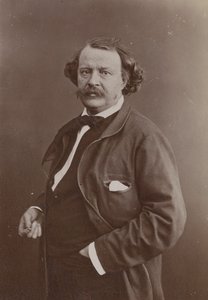
1820–1910, フランス
ナダール
フェリックス・ナダール:写真界の先駆者 生い立ちと黎明期 誕生:1820年4月5日、パリにてガスパール=フェリックス・トゥルナションとして生まれる(一説にはリヨン説もあり)。 父ヴィクトール・トゥルナションは、印刷業者であり書肆でもあった。 当初は医学を志していたが、父の死後、経済的な困難に直面し学業を断念する。 後にナダールの名で知られるようになる彼は、風刺画家や小説家としてキャリアをスタートさせ、様々な新聞への寄稿を通じてその才能を開花させた。 風刺画から写真の世界へ 1853年頃より、写真を用いた実験的な試みを始める。 1854年にはサン・ラザール通り113番地に最初の写真スタジオを開設し、1860年にはカピュシーヌ大通り35番地へと拠点を移した。 その鮮烈で、被写体の心理を深く洞察するポートレートは、瞬く間に高い評価を得ることとなる。 既成概念への挑戦:ナダールは、当時の肖像写真にありがちだった豪華絢爛な背景をあえて避け、自然光を重んじ、被写体そのものの個性に焦点を当てる独自のスタイルを確立した。 航空写真の先駆的試み 1858年、ナダールは気球を用いた航空写真撮影において、世界で初めての快挙を成し遂げた。 高高度における写真乾板の現像という技術的難題に対し、彼は気球のバスケットにガス遮断用の綿製カバーを発明することで、その壁を乗り越えたのである。 また、パリのカタコンベ(地下墓地)での撮影に見られるように、写真における人工照明の活用においても先駆的な役割を果たした。 ル・ジアン(巨神):1863年には、「ル・ジアン」と名付けられた巨大な気球の建造を依頼。この壮大な試みは、ジュール・ヴェルヌの傑作『五週間の気球』にインスピレーションを与えることとなった。 主要な業績と影響力 肖像画的価値:ヴィクトル・ユゴー、シャルル・ボードレール、サラ・ベルナール、ギュスターヴ・クールベといった、当時の著名な人物たちの数多くのポートレートを残している。 パリ包囲戦(1870-71年)の際には、気球を用いた世界初の航空郵便サービスを確立させた。 1874年には自身のスタジオで第1回印象派展を開催し、新進気鋭の芸術家たちに極めて重要な発表の場を提供した。 1886年には、化学者ミシェル=ウジェーヌ・シュヴルールを対象とした、世界初の「フォト・インタビュー」とされる作品を発表している。 晩年と遺されたレガシー 1895年から1909年にかけては、スタジオをマルセイユへと移した。 1910年3月20日、パリにて逝去。その遺志はペール・ラシェーズ墓地に眠っている。 彼の死後、息子のポール・ナダールがスタジオの運営を引き継いだ。 Quand j’étais photographe(私が写真家であった頃):自らの人生と仕事を振り返った回想録を出版し、19世紀の写真史における貴重な洞察を現代に伝えている。 歴史的意義:ナダールの革新的な技法と芸術的ビジョンは、芸術としての写真の発展に計り知れない影響を与えた。彼の肖像写真は、今なおパリの知的・芸術的社交界を象徴するアイコンとして輝き続けている。
ナダールのその他の作品
 Alexandre Dumas père (1802-1870)1855
 Sarah Bernhardt1864
 [Sarah Bernhardt as the Empress Theodora in Sardou1889
 Paul and His Dog1865

Catacombes De Parisに関するエッセイ
 Beyond the Portrait: Félix Nadar & the Psychological Depths of 19th-Century PhotographyExplore the revolutionary photography of Félix Nadar – pioneer of portraiture, aerial imaging & psychological depth. Discover his iconic po…
 Dreams on Canvas: Understanding Automatist and Veristic SurrealismMaster the differences between Automatist and Veristic Surrealism. Explore the works of Dali and Miro to decode the dreamscape today.
 Top 25 Masterpieces by Laurent Fabre: A Journey Through Neo-Abstract GeometryImmerse yourself in the luminous world of Laurent Fabre. Explore 25 iconic Neo-Abstract masterpieces defined by geometric precision and chr…