Art Nouveau Art Nouveau
(41) (アルフォンス・ミュシャ)
アルフォンス・ミュシャ (1860–1939)による作品『(41)』 Art Nouveau Art Nouveau運動に属しています。 Acrylic On Canvasで制作されています。
- Acrylic On Canvas

 設置イメージを表示

 手描き油彩画
 シェアする
 シェアする
 解説シート


 ダウンロード
 似ている作品
 X線調査
 スライドショーを表示
 Q&A

 統計情報
(41)の概要
- 作品名
- (41)
- 作家
- アルフォンス・ミュシャ (1860–1939)
- 生年
- イヴァンチツェ, チェコ共和国
- 技法
- Acrylic On Canvas
- 主題
- woman, hair, dress, baby, floral, organic
(41)には何が描かれていますか?
Alphonse Mucha: The Enchanting Symbolism of Art Nouveau
Alphonse Maria Mucha stands as one of the most recognizable figures of Art Nouveau, an artistic movement that flourished between 1890 and 1910 across Europe. Born in Brno, Czech Republic, in 1860, Mucha rejected the rigid academic traditions of his time, forging a path toward a uniquely expressive style that captivated audiences and continues to inspire artists today.
Much’s artistic vision centered around capturing ethereal beauty—primarily through idealized depictions of women—often presented in flowing robes adorned with intricate floral motifs. Influenced by Impressionism and Symbolism, he skillfully blended these influences into his distinctive Art Nouveau aesthetic. Unlike the prevailing stylistic trends of his era, Mucha prioritized organic forms and graceful curves, mirroring the natural world’s rhythms and conveying a sense of movement.
His breakthrough came with collaborations on decorative posters for Parisian theaters and exhibitions. These commissions demanded meticulous attention to detail—particularly in the rendering of textures and colors—resulting in stunning visual experiences that cemented Mucha's reputation as a master craftsman. He employed techniques such as cloisonné enamel, gilding, and lithography to achieve unparalleled luminosity and vibrancy, pushing the boundaries of printmaking.
The Slavonic Uprising: A Fusion of Tradition and Innovation
Perhaps Mucha’s most ambitious project was “The Slavonic Uprising,” a monumental mural commissioned for Prague’s National Theatre. This artwork exemplifies Mucha's ability to synthesize disparate elements into a cohesive narrative—combining traditional Czech folklore with the dynamism of Art Nouveau principles.
The mural depicts a stylized battle scene, featuring figures draped in flowing robes reminiscent of Slavic princesses and warriors. Mucha skillfully utilized bold colors and sweeping lines to convey the urgency and grandeur of the uprising, capturing both its heroic spirit and its underlying melancholy. The intricate floral ornamentation—particularly around the central figures—underscores the movement’s preoccupation with nature and symbolizes resilience amidst adversity.
Symbolism Rooted in Myth and Folklore
Throughout Mucha's oeuvre, symbolism played a crucial role in conveying deeper meanings beyond mere visual representation. Recurring motifs—such as lilies, roses, and peacocks—carried associations rooted in Slavic mythology and Christian iconography. These symbols served to elevate the artwork’s emotional impact, inviting viewers to contemplate themes of heroism, sacrifice, and spiritual transcendence.
Consider “La Ribambelle des Gobelins,” a collaborative project with Piero Dorazio that explored the concept of collective creativity. Mucha's contribution—a stylized depiction of women—embodied the movement’s belief in the transformative power of art to inspire social change and celebrate human beauty.
A Legacy Enduring Through Reproduction
Today, Alphonse Mucha’s artwork continues to resonate with audiences worldwide. High-quality reproductions offer a captivating glimpse into his artistic genius—allowing collectors and interior designers alike to experience the enchantment of Art Nouveau firsthand. His enduring influence testifies to the power of visionary art to transcend time and inspire generations of artists.
(41)の高解像度画像
アルフォンス・ミュシャ, (41). パブリックドメイン
(41)に関するよくあるご質問
アルフォンス・ミュシャ作「(41)」 の技法(画材)は何ですか?
アルフォンス・ミュシャ作「(41)」の技法はAcrylic On Canvasです。複製画は、この技法の質感や風合いを再現することを目指しています。
アルフォンス・ミュシャ作「(41)」には何が描かれていますか?
アルフォンス・ミュシャ作「(41)」の描画内容:woman, hair, dress, baby, floral, organic, flowing lines, symmetry
「(41)」はパブリックドメインですか?
アルフォンス・ミュシャ作「(41)」 の著作権について:本作品はパブリックドメイン(著作権消滅)です。これにより、画像の複製が自由に行えるかどうかが決まります。
「(41)」の作者は?
「(41)」の作者はアルフォンス・ミュシャです。この作品はアルフォンス・ミュシャの名でカタログに登録されています。
「(41)」はどの様式に属していますか?
「(41)」は、Art Nouveau Art Nouveauの作品です。この様式は、その作品が属する芸術的伝統を示しています。
「(41)」は、アルフォンス・ミュシャのキャリアにおけるどの時期の作品でしょうか?
「(41)」は、アルフォンス・ミュシャのMature Periodを象徴する作品です。
「(41)」の著作権の状態は、なぜこのようなものになっているのでしょうか?
アルフォンス・ミュシャによる「(41)」はパブリックドメイン(著作権消滅)です。著作権の保護期間は作者の没年から起算されますが、アルフォンス・ミュシャは1939年に亡くなっています。
「(41)」には、アルフォンス・ミュシャの他の作品群とどのような共通点が見られますか?
「(41)」はアルフォンス・ミュシャによるArt Nouveau Art Nouveauの作品であり、その描かれたテーマにはrenoir, moreau, czech motifs, modern art nouveau, idealized femininityが含まれます。
「(41)」の主題は、アルフォンス・ミュシャが普段扱うテーマとどのように関連していますか?
「(41)」はwoman, hair, dress, baby, floral, organic, flowing lines, symmetryを描いていますが、アルフォンス・ミュシャのこれまでの主要なテーマはrenoir, moreau, czech motifs, modern art nouveau, idealized femininityです。この二つを比較することで、本作が作家の恒常的な主題とどのように結びついているかが浮き彫りになります。
アーティスト アルフォンス・ミュシャ について

1860–1939, チェコ共和国
アルフォンス・ミュシャ
幼少期と教育 1860年7月15日、モラヴィア地方のイヴァニチツェ(現在のチェコ共和国)に生まれました。 幼い頃から芸術的な才能を示しました。 プラハ美術アカデミーに入学しましたが、伝統的な手法に幻滅感を抱きました。 1887年にパリに移り住み、独自のスタイルを追求しました。 アール・ヌーヴォー様式と代表作 流れるような線、有機的なフォルム、躍動感を持つ独特のアール・ヌーヴォー様式で知られています。 ピエール=オーギュスト・ルノワールやギュスターヴ・モローといった芸術家から影響を受けました。 代表作: スラヴの反乱 - 伝統的なチェコのモチーフとモダンなアール・ヌーヴォー要素を融合させた作品です。 サロン・ド・サン ギュスターヴ・モローの『テスピオの娘たち』やピエロ・ドラツィオの『ゴベランの乱れ者たち』にインスパイアされた絵画。 サー・ヒューバート・フォン・ヘルコマーの『亜麻を破る農夫たち』に基づいた挿絵。 流れるようなローブを身につけた理想化された女性を、豊かな花々に囲んで描くことがよくあります。 キャリアのハイライトと主要な依頼 サラ・ベルナールとのコラボレーション: 1894年に『ジスムンダ』のポスターを制作し、女優サラ・ベルナールのためにポスターやデザインを手がけ、キャリアをスタートさせました。 パリ万国博覧会(1900年): この博覧会でアール・ヌーヴォー様式が国際的に認められました。ボスニア・ヘルツェゴビナ館の装飾を担当し、オーストリア館にも協力しました。 チャールズ・リチャード・クレーンからのパトロン: チャールズ・リチャード・クレーンの支援を受け、記念碑的なシリーズ『スラヴ叙事詩』(1912-30) を制作することができました。 独立後のチェコスロバキア: 新しいチェコスロバキアのために切手、紙幣、政府の文書をデザインしました。 影響と遺産 チェコの芸術的伝統とヨーロッパ近代美術の影響を受けています。 彼のユニークなスタイルは、アール・ヌーヴォーやセセッション運動の次世代のアーティストへの道を開きました。 エヴァ・プロコプツォヴァのような他のアーティストに影響を与えました。 彼の遺産は芸術作品を超えてデザインと美学にまで及びます。スラヴ叙事詩 は、チェコの国民的アイデンティティを表現する重要な役割を果たしました。 晩年と死 1906年にマルシュカ(マリー/マリア)ヒティロヴァと結婚しました。 娘のヤロスラヴァが生まれた1906年から1910年までアメリカを訪問しました。 1939年7月14日、チェコスロバキアのプラハで亡くなりました。
アルフォンス・ミュシャのその他の作品
 The Moon
 Nude
 The Apotheosis of the Slavs1926
 Stained-Glass Window in St. Vitus Cathedral
(41)に関するエッセイ
 Resilience and Heritage: A Curated Journey Through the Soul of Ukrainian Art HistoryExplore the profound legacy of Ukrainian art from Baroque grandeur to Repin's realism. Discover this rich cultural journey now.
 手描きの贅沢:空間を豊かにする、深みと質感の芸術的価値手描きの油絵で空間を豊かに。OriginalUniqueArtは、高品質な複製画からカスタムオーダーまで、美術専門家が厳選したアート作品をご提供します。唯一無二の価値と深みのある芸術体験をお届けします。
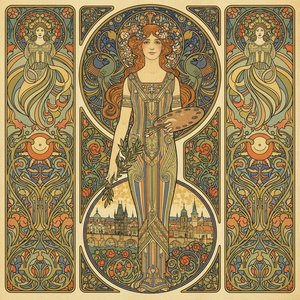 Alphonse Mucha: A Comprehensive Exploration of Art Nouveau's Master of Decorative SymbolismExplore the life & art of Alphonse Mucha, master of Art Nouveau! Discover his iconic posters, stunning illustrations, and the monumental Sl…