シニェイ・メルシェ・パールの肖像画

ギャラリー厳選、シニェイ・メルシェ・パールによる最も有名な43の絵画

11月 2026 更新 · 当サイトの人気スコア(各作品の検索数、閲覧数、注文数)に基づくランキング · 54点の シニェイ・メルシェ・パールの作品がカタログにあります

要約すると

シニェイ・メルシェ・パールが遺した数多くのオリジナル作品の中で、最も有名なものはBlooming Apple Trees (1902)です。 それに次いで、Mare azzuro (1902)とPoppies in the Field (1902)が続きます。 シニェイ・メルシェ・パールによる54点の作品をカタログに掲載しています。当ギャラリーでは、世界が称賛する43点を選定し、制作年、所蔵美術館、そしてその背景にある物語とともにご紹介しています。

1845 – 1920, シュニェイウイファル Impressionism 最多収蔵館: ハンガリー国立美術館

シニェイ・メルシェ・パールの代表作10選:ギャラリー厳選の作品集

1
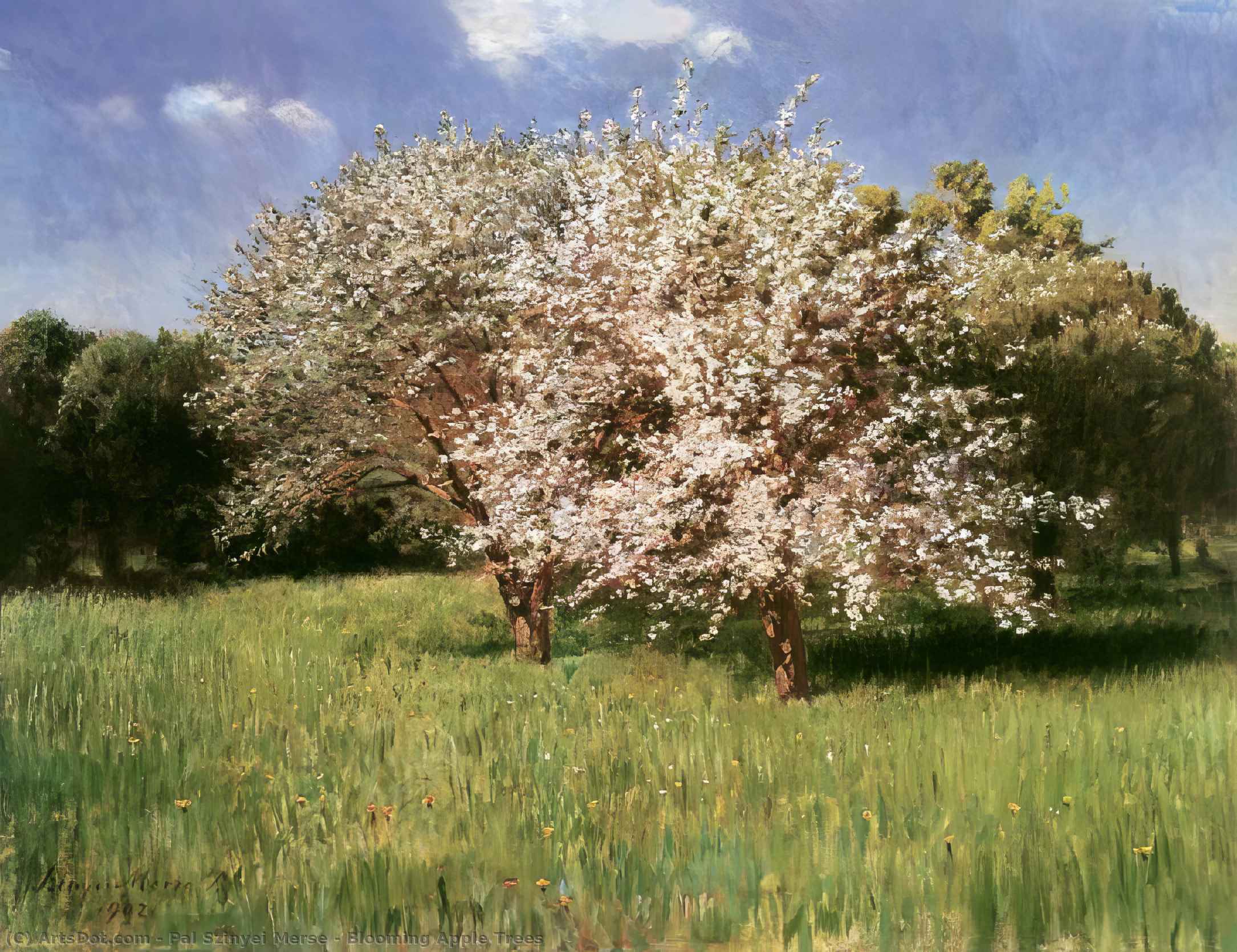
Blooming Apple Trees (1902) による シニェイ・メルシェ・パール

Blooming Apple Trees

1902 · Oil On Canvas

The scene unfolds through Blooming Apple Trees, a work that captures a specific moment of seasonal change. Pál Szinyei Merse brings this vision to life on an oil on canvas, where the textures of the blossoms and the weight of the branches feel immediate. The piece measures 50 x 65 cm, a scale that invites a close, intimate observation of the natural world.

2
Mare azzuro (1902) による シニェイ・メルシェ・パール

Mare azzuro

1902 · Oil On Canvas

In Mare azzuro, Pál Szinyei Merse captures a fleeting moment where the sky meets the sea during the quiet transition of a sunset. The ocean stretches out toward the horizon, its surface meeting a vast, cloudy sky that hangs heavy above the water. This celestial canopy holds the light of the setting sun, casting a specific glow across the expanse. The water carries the weight of the sky, reflecting the…

3
Poppies in the Field (1902) による シニェイ・メルシェ・パール

Poppies in the Field

1902 · Oil

In this 1902 oil painting, a woman occupies the center of a wide field. She wears a blue dress and a red scarf wrapped around her neck. Her gaze is directed toward the viewer. She holds a leash connected to a dog that walks closely at her side. The landscape consists of a path cutting through a meadow, where numerous red poppies are scattered across the greenery. The light appears…

4
Portrait of Ninon Szinyei Merse (1870) による シニェイ・メルシェ・パール

Portrait of Ninon Szinyei Merse

1870 · Oil On Canvas · ハンガリー国立美術館, ブダペスト

In this 1870 oil portrait, we encounter a young woman seated in a three-quarter profile, her gaze meeting ours with a calm and poised expression. The composition is vertical, centering her figure against a muted, atmospheric background that allows her presence to command the space. There is a certain stillness here, a sense of quiet dignity that emerges from the soft lighting and the careful arrangement of her form. She…

5
Portrait of László Szinyei Merse (1868) による シニェイ・メルシェ・パール

Portrait of László Szinyei Merse

1868 · Oil On Canvas · ハンガリー国立美術館, ブダペスト

A formal, full-length portrait captures a man in ornate military or ceremonial attire, his gaze directed upward and away toward the upper right. The composition utilizes a vertical three-quarter length perspective, positioning the subject slightly off-center to emphasize a sense of nobility. High-contrast primary colors define the figure: a bright white tunic, vibrant red trousers, and a deep royal blue cloak. These colors emerge from a muted, dark, and atmospheric…

6
Concert (1873) による シニェイ・メルシェ・パール

Concert

1873 · Oil · Ernest Zmeták Art Gallery, ノヴェー・ザームキ

In "Concert" by Pál Szinyei Merse, a crowded social gathering unfolds within the vastness of an elegant interior. The viewer looks into a large hall from a slightly elevated perspective, catching a fleeting moment of a formal event. In the foreground, a woman in a voluminous white dress sits with her back to the viewer, her form anchoring the composition. To the left, another woman in a white gown stands…

7
Spring (1873) による シニェイ・メルシェ・パール

Spring

1873 · Oil On Canvas · Ernest Zmeták Art Gallery, ノヴェー・ザームキ

In Spring, Pál Szinyei Merse places a single female figure within a lush, outdoor setting. The composition is dominated by the deep magenta of her dress, a crimson weight that anchors the scene. From a slightly elevated, close-up perspective, the viewer looks down upon her as she leans toward the flora. This intimate viewpoint creates a direct connection between the subject and the meadow. The woman moves through a landscape…

8
Woman on a Garden Seat (1873) による シニェイ・メルシェ・パール

Woman on a Garden Seat

1873 · Oil On Canvas · ハンガリー国立美術館, ブダペスト

In this 1873 oil on canvas, Pál Szinyei Merse turns his attention to a quiet, intimate moment within a lush setting. Titled Woman on a Garden Seat, the work is also recognized by the alternative title On a Garden Bench (sketch). It captures a solitary figure seated amidst the greenery, a scene that reflects the artist's growing interest in the interplay of light and natural surroundings.

9
Faun/on the other side Lovers/ (1867) による シニェイ・メルシェ・パール

Faun/on the other side Lovers/

1867 · Oil On Canvas · ハンガリー国立美術館, ブダペスト

The work titled Faun/on the other side Lovers/ by Pál Szinyei Merse captures a moment of ancient longing. Painted about 1867, this composition marks a significant chapter in the artist's early development. It precedes his 1868 mythological debut in Vienna and Pest, where he first presented a work titled 'Faun' to the public. The scene rests in the quiet tension between a solitary figure and a distant presence.

10
Drying the Clothes (1869) による シニェイ・メルシェ・パール

Drying the Clothes

1869 · Oil

The scene depicts several individuals engaged in the task of drying laundry under direct sunlight. On the left side of the canvas, a single figure stands near the edge of the frame, while two other people occupy the central area of the composition. To the right, another individual is positioned near the periphery. The figures are interspersed with several dogs; one dog is located in the bottom left corner, and…

シニェイ・メルシェ・パールのセレクションが続きます、11から43まで

シニェイ・メルシェ・パールの代表作、時代別一覧

Late Period

1902 · 3作品がこのリストに含まれています

シニェイ・メルシェ・パールが心を惹かれた主題

これらのオリジナル作品に繰り返し描かれている4つの主題と、それぞれの最高傑作。

シニェイ・メルシェ・パールの原画を所蔵する美術館

このページに掲載されている絵画を最も多く所蔵している 3 の美術館

美術館 都市 シニェイ・メルシェ・パールの作品 このリストの絵画
ハンガリー国立美術館, ブダペストハンガリー国立美術館 ブダペスト 14 Portrait of Ninon Szinyei Merse, Portrait of László Szinyei Merse, Woman on a Garden Seat
Ernest Zmeták Art Gallery ノヴェー・ザームキ 2 Concert, Spring
Kiscelli Museum, BudapestKiscelli Museum Budapest 1 Mallows

シニェイ・メルシェ・パールの年代別名作:各時代を象徴するオリジナル作品

年代別作品数

その時代を象徴する名作を見るために、年代を選択してください。

シニェイ・メルシェ・パールの絵画に関するコレクターからの質問

シニェイ・メルシェ・パールの代表作は何ですか?答えを見る

Blooming Apple Trees (1902)。続いてMare azzuro (1902)、Poppies in the Field (1902)が続きます。

Blooming Apple Treesが制作されたとき、シニェイ・メルシェ・パールは何歳でしたか?答えを見る

57歳:Blooming Apple Treesは1902年の作品で、シニェイ・メルシェ・パールの生年は1845年です。

シニェイ・メルシェ・パールの最も有名な10作品とは?答えを見る

Blooming Apple Trees, Mare azzuro, Poppies in the Field, Portrait of Ninon Szinyei Merse, Portrait of László Szinyei Merse, Concert, Spring, Woman on a Garden Seat, Faun/on the other side Lovers/ と Drying the Clothes。上記のランキングには、それぞれの制作年と所蔵美術館が記載されています。

シニェイ・メルシェ・パールが遺した作品数は?答えを見る

当カタログには、1866年から1911年にかけて制作されたシニェイ・メルシェ・パールによる54点の作品が収められています。

シニェイ・メルシェ・パールの名作は、どの美術館に収蔵されていますか?答えを見る

主にハンガリー国立美術館 (ブダペスト), Ernest Zmeták Art Gallery (ノヴェー・ザームキ) と Kiscelli Museum (Budapest)に所蔵されています。上記の美術館一覧にすべて記載されています。

シニェイ・メルシェ・パールが最も有名な作品を多く描いたのは何年ですか?答えを見る

1870s年:このページにある全43作品のうち、11作品がその時期に制作されました。そのうちPortrait of Ninon Szinyei Merse作品が含まれます。

シニェイ・メルシェ・パールによる最初と最後の代表的なオリジナル作品は何ですか?答えを見る

このページでは、最も古い作品はMan Smoking a Chibouk (also known as Zsigmond Szinyei Merse with a chibouk) (1866)、最新の作品はGuelder rose (1911)です。

シニェイ・メルシェ・パール が最も多く描いた主題は何ですか?答えを見る

このページに掲載されている43点の作品におけるWoman (12), Grass (7) と People (6)

シニェイ・メルシェ・パール が最も多く使用した技法は何ですか?答えを見る

このページに掲載されている全43作品のうち、17作品のOil On Canvas

シニェイ・メルシェ・パールはどの芸術運動に属していますか?答えを見る

このページに掲載されているオリジナル作品から判断すると、Impressionismです。

ハンガリー国立美術館にはどのシニェイ・メルシェ・パールの作品が展示されていますか?答えを見る

Portrait of Ninon Szinyei Merse, Portrait of László Szinyei Merse と Woman on a Garden Seat:ハンガリー国立美術館, ブダペストには、このページに掲載されている作品のうち14点が所蔵されています。

シニェイ・メルシェ・パール:生涯と作品

A Life Illuminated: Pál Szinyei Merse and the Pursuit of Light

Pál Szinyei Merse, a name perhaps less familiar than some of his contemporaries, stands as a pivotal figure in Hungarian art history, a painter who wrestled with self-doubt yet ultimately forged a unique path toward capturing the ephemeral beauty of light and color. Born on July 4, 1845, in Szinyeújfalu, Hungary, into an aristocratic family deeply involved in the nation’s turbulent political landscape—supporting the Hungarian Revolution—his early life was marked by both privilege and instability. This formative period, punctuated by private schooling due to unrest, instilled within him a sensitivity that would later permeate his artistic vision. His formal training began at the Academy of Fine Arts in Munich, where he studied under Alexander von Wagner and subsequently Karl von Piloty. While technically proficient, Szinyei Merse felt constrained by the academic rigidity of the institution. A pivotal encounter with Wilhelm Leibl proved transformative; Leibl introduced him to the revolutionary practice of plein-air painting—capturing landscapes directly from nature—a technique that would fundamentally shape his artistic identity and set him apart from many of his peers.

From Genoa to Nagybánya: Finding His Voice Amidst Struggle

The year 1870 saw Szinyei Merse relocate to Genoa, a vibrant port city brimming with Mediterranean light and color. Though initially inclined to remain there, the pull of family obligations ultimately led him back to Hungary in 1872. Establishing a studio near that of his friend Arnold Böcklin, he embarked on a period of intense creativity, yet financial anxieties and personal struggles soon began to overshadow his artistic pursuits. This era was characterized by a relentless self-criticism and periods of profound discouragement, leading him to abandon painting altogether for over a decade beginning in 1882. A painful divorce in 1887 further compounded these difficulties. His dedication to raising his son, Félix, during this time demonstrated a deep sense of responsibility, but it was the encouragement of friends and colleagues that eventually spurred him toward a remarkable artistic resurgence.

A Late Flowering: Recognition and Reform

The year 1894 marked a turning point in Szinyei Merse’s career. A retrospective exhibition, orchestrated by his devoted circle of friends, provided long-overdue recognition for his talent. The purchase of one of his works by Emperor Franz Joseph signaled the beginning of renewed acclaim and artistic productivity. He painted with an almost feverish intensity during this later period, despite remaining perpetually critical of his own efforts. Beyond his personal artistic journey, Szinyei Merse became a vocal advocate for reform within Hungarian art education. Elected to the Diet of Hungary in 1896, he championed significant changes aimed at modernizing and revitalizing the nation’s artistic institutions. His presidency of the Hungarian University of Fine Arts from 1905 further solidified his commitment to nurturing future generations of artists, actively supporting the influential Nagybánya artist colony—a hub for innovative experimentation and a vital force in shaping modern Hungarian art.

The Language of Light: Style and Legacy

Szinyei Merse’s artistic style is characterized by its luminous quality and masterful handling of color. Influenced by plein-air painting, he sought to capture the fleeting effects of light on landscapes and figures, imbuing his canvases with a sense of atmosphere and immediacy. His works often depict idyllic scenes—sun-drenched meadows, tranquil waterscapes, intimate portraits—rendered in a palette that ranges from vibrant hues to subtle, muted tones. While initially influenced by Romanticism, Szinyei Merse’s later work demonstrates an increasing sensitivity to Impressionistic principles, evident in his broken brushstrokes and emphasis on optical effects. His ability to convey emotion through color and light is particularly striking; a sense of melancholy or quiet contemplation often pervades his paintings, inviting viewers into a world of introspective beauty. Though he faced periods of obscurity and self-doubt, Pál Szinyei Merse’s legacy endures as that of a pioneering artist who championed the power of observation and the pursuit of light—a true innovator in Hungarian art.