Kawanabe Kyōsaiの肖像画

世界的に有名なKawanabe Kyōsaiの名作72点、そのすべてが唯一無二の芸術品

10月 2026 更新 · 当サイトの人気スコア(各作品の検索数、閲覧数、注文数)に基づくランキング · 72点の Kawanabe Kyōsaiの作品がカタログにあります

要約すると

Three Kyōgen Dancers (801)はKawanabe Kyōsaiの作品の中で最も注目を集めている絵画です。原画はニューヨークのメトロポリタン美術館に所蔵されています。 その後、視線はSketches of East Asian Legendary Figures (801)とYang Guifei Adjusting her Hair (1850)へと移ります。 当カタログに含まれるKawanabe Kyōsaiの72点の作品のうち、これら72点は最も有名な作品です。制作年、所蔵美術館、そして時代を超えて愛される理由とともに、一点もののオリジナル作品をご紹介します。

1831 – 1889, Koga Ukiyo-e 最多収蔵館: メトロポリタン美術館

ギャラリーの視点で選ぶ、Kawanabe Kyōsaiによるトップ10作品

1
Three Kyōgen Dancers (801) による Kawanabe Kyōsai

Three Kyōgen Dancers

801 · メトロポリタン美術館, ニューヨーク

This appears to be a preliminary drawing by Kyōsai for a painting of kyōgen (humorous dramatic) performance. The annotations are also in the artist’s hand, giving instructions how to color or finish off the drawings. The partial seal in the upper right corner is that of his pupil Mano Kyōtei (Yasokichi, 1874/5–1937) who assisted him on many projects and inherited many Kyōsai drawings.

Kawanabe Kyōsaiの名作、11〜72点目

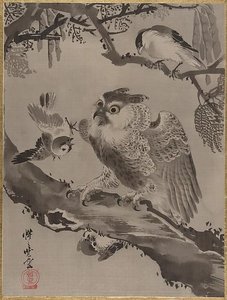
11Hell Courtesan (1880) による Kawanabe KyōsaiHell Courtesan1880 12Jurōjin [center of a triptych] (1884) による Kawanabe KyōsaiJurōjin [center of a triptych]1884 · Minneapolis Institute of Art 13Theatre Curtain of Shintomi-za, with an Impromputu Sketch Monster (1880) による Kawanabe KyōsaiTheatre Curtain of Shintomi-za, with an Impromputu Sketch Monster1880 14Squirrels Eating Chestnuts (1886) による Kawanabe KyōsaiSquirrels Eating Chestnuts1886 · ロサンゼルス・カウンティ・ミュージアム・オブ・アート 15A Beauty in Front of King Enma's Mirror (1887) による Kawanabe KyōsaiA Beauty in Front of King Enma's Mirror1887 16Urashima Tarō Riding on a Tortoise (1888) による Kawanabe KyōsaiUrashima Tarō Riding on a Tortoise1888 · メトロポリタン美術館 17Two Children Playing with Goldfish (1887) による Kawanabe KyōsaiTwo Children Playing with Goldfish1887 · メトロポリタン美術館 18Two Birds on a Branch (1887) による Kawanabe KyōsaiTwo Birds on a Branch1887 · メトロポリタン美術館 19Singing Bird on a Branch (1887) による Kawanabe KyōsaiSinging Bird on a Branch1887 · メトロポリタン美術館 20滝に燕図 Swallows by a Waterfall (1887) による Kawanabe Kyōsai滝に燕図 Swallows by a Waterfall1887 · メトロポリタン美術館 21Tale of the Tongue-cut Sparrow (1800) による Kawanabe KyōsaiTale of the Tongue-cut Sparrow1800 · ロサンゼルス・カウンティ・ミュージアム・オブ・アート 22Sketches of Birds and Animals (1870) による Kawanabe KyōsaiSketches of Birds and Animals1870 · メトロポリタン美術館 23Three Crossbills on a Leafless Tree (1878) による Kawanabe KyōsaiThree Crossbills on a Leafless Tree1878 · Minneapolis Institute of Art 24Chinese-style Landscape with Man Fishing from a Boat by Moonlight [right of a triptych] (1884) による Kawanabe KyōsaiChinese-style Landscape with Man Fishing from a Boat by Moonlight [right of a triptych]1884 · Minneapolis Institute of Art 25Landscape with River in Mountainous Country [left of a triptych] (1884) による Kawanabe KyōsaiLandscape with River in Mountainous Country [left of a triptych]1884 · Minneapolis Institute of Art 26猿を襲う鷲図 Eagle Attacking a Monkey (1885) による Kawanabe Kyōsai猿を襲う鷲図 Eagle Attacking a Monkey1885 · メトロポリタン美術館 27兎を追う鷲図 Eagle Pursuing Rabbit (1885) による Kawanabe Kyōsai兎を追う鷲図 Eagle Pursuing Rabbit1885 · メトロポリタン美術館 28Eagle Attacking a Mountain Lion (1885) による Kawanabe KyōsaiEagle Attacking a Mountain Lion1885 · メトロポリタン美術館 29White Eagle Eyeing a Mountain Lion (1885) による Kawanabe KyōsaiWhite Eagle Eyeing a Mountain Lion1885 · メトロポリタン美術館 30Rocky Landscape (1887) による Kawanabe KyōsaiRocky Landscape1887 · メトロポリタン美術館 31Crow on a Branch (1887) による Kawanabe KyōsaiCrow on a Branch1887 · メトロポリタン美術館 32Untitled (D2X7KF) (1887) による Kawanabe KyōsaiUntitled (D2X7KF)1887 · メトロポリタン美術館 33Fox Catching Bird (1887) による Kawanabe KyōsaiFox Catching Bird1887 · メトロポリタン美術館 34Bird and Frog (1887) による Kawanabe KyōsaiBird and Frog1887 · メトロポリタン美術館 35松に鴉図 Two Crows on a Pine Branch (1887) による Kawanabe Kyōsai松に鴉図 Two Crows on a Pine Branch1887 · メトロポリタン美術館 36Cranes in Marsh (1887) による Kawanabe KyōsaiCranes in Marsh1887 · メトロポリタン美術館 37Buffalo and Herdsman (1887) による Kawanabe KyōsaiBuffalo and Herdsman1887 · メトロポリタン美術館 38柳に鴉図 Crow and Willow Tree (1887) による Kawanabe Kyōsai柳に鴉図 Crow and Willow Tree1887 · メトロポリタン美術館 39岩に鴉図 Crow on a Rock (1887) による Kawanabe Kyōsai岩に鴉図 Crow on a Rock1887 · メトロポリタン美術館 40Owl Mocked by Small Birds (1887) による Kawanabe KyōsaiOwl Mocked by Small Birds1887 · メトロポリタン美術館 41木に鴉図 Crow on a Branch (1887) による Kawanabe Kyōsai木に鴉図 Crow on a Branch1887 · メトロポリタン美術館 42竹に鴉図 Crow on a Bamboo Branch (1887) による Kawanabe Kyōsai竹に鴉図 Crow on a Bamboo Branch1887 · メトロポリタン美術館 43旭に群鴉図 Flock of Crows at Dawn (1887) による Kawanabe Kyōsai旭に群鴉図 Flock of Crows at Dawn1887 · メトロポリタン美術館 44ムクドリ図 Starlings on a Branch (1887) による Kawanabe Kyōsaiムクドリ図 Starlings on a Branch1887 · メトロポリタン美術館 45Fish in a Whirlpool (1887) による Kawanabe KyōsaiFish in a Whirlpool1887 · メトロポリタン美術館 46富士図 Mount Fuji (1887) による Kawanabe Kyōsai富士図 Mount Fuji1887 · メトロポリタン美術館 47Rocky Landscape (1887) による Kawanabe KyōsaiRocky Landscape1887 · メトロポリタン美術館 48瓜に鼠図 Mice in a Melon (1887) による Kawanabe Kyōsai瓜に鼠図 Mice in a Melon1887 49Eagle Attacking Fish (1887) による Kawanabe KyōsaiEagle Attacking Fish1887 · メトロポリタン美術館 50Squirrels Gathering Chestnuts (1887) による Kawanabe KyōsaiSquirrels Gathering Chestnuts1887 · メトロポリタン美術館 51Monkey Hanging from Grapevines (1887) による Kawanabe KyōsaiMonkey Hanging from Grapevines1887 · メトロポリタン美術館 52雪中鴉図 Crow Flying in the Snow (1887) による Kawanabe Kyōsai雪中鴉図 Crow Flying in the Snow1887 · メトロポリタン美術館 53Waterfall, Eagle and Monkey (1887) による Kawanabe KyōsaiWaterfall, Eagle and Monkey1887 · メトロポリタン美術館 54月に鴉図 Crow and the Moon (1887) による Kawanabe Kyōsai月に鴉図 Crow and the Moon1887 · メトロポリタン美術館 55Pheasant Caught by a Snake (1887) による Kawanabe KyōsaiPheasant Caught by a Snake1887 · メトロポリタン美術館 56Shakyamuni Conquering the Demons (Shaka Gōma zu) (1888) による Kawanabe KyōsaiShakyamuni Conquering the Demons (Shaka Gōma zu)1888 · メトロポリタン美術館 57Eagle Holding Small Bird (1887) による Kawanabe KyōsaiEagle Holding Small Bird1887 · メトロポリタン美術館 58Monkeys (1888) による Kawanabe KyōsaiMonkeys1888 · メトロポリタン美術館 59Deer and Monkeys (1887) による Kawanabe KyōsaiDeer and Monkeys1887 · メトロポリタン美術館 60Rabbits (1887) による Kawanabe KyōsaiRabbits1887 · メトロポリタン美術館 61Cat Catching a Frog (1887) による Kawanabe KyōsaiCat Catching a Frog1887 · メトロポリタン美術館 62水辺に鴉図 Crow and Reeds by a Stream (1887) による Kawanabe Kyōsai水辺に鴉図 Crow and Reeds by a Stream1887 · メトロポリタン美術館 63白衣観音図 White Robed Kannon (1887) による Kawanabe Kyōsai白衣観音図 White Robed Kannon1887 · メトロポリタン美術館 64Playful Demon による Kawanabe KyōsaiPlayful DemonYale University Art Gallery 65Frolicking Animals, Nekomata and Tanuki Badger による Kawanabe KyōsaiFrolicking Animals, Nekomata and Tanuki Badger 66Long Arms [right of a pair of Long Legs and Long Arms] による Kawanabe KyōsaiLong Arms [right of a pair of Long Legs and Long Arms]Minneapolis Institute of Art 67Long Legs [left of a pair of Long Legs and Long Arms] による Kawanabe KyōsaiLong Legs [left of a pair of Long Legs and Long Arms]Minneapolis Institute of Art 68Seven Otafukus による Kawanabe KyōsaiSeven OtafukusMinneapolis Institute of Art 69Tanuki (Racoon Dog) Viewing Its Reflection in Water (801) による Kawanabe KyōsaiTanuki (Racoon Dog) Viewing Its Reflection in Water801 · メトロポリタン美術館 70Boy’s Day Carp Streamer and Shōki Banner (1870) による Kawanabe KyōsaiBoy’s Day Carp Streamer and Shōki Banner1870 · メトロポリタン美術館 71Figure Sketches による Kawanabe KyōsaiFigure Sketches 72Frolicking Figures and Animals による Kawanabe KyōsaiFrolicking Figures and Animals

Kawanabe Kyōsaiの代表作、時代別一覧

Kawanabe Kyōsaiが心を惹かれた主題

これらのオリジナル作品に繰り返し描かれている4つの主題と、それぞれの最高傑作。

Kawanabe Kyōsaiの原画を所蔵する美術館

このページに掲載されている絵画を最も多く所蔵している 5 の美術館

美術館 都市 Kawanabe Kyōsaiの作品 このリストの絵画
メトロポリタン美術館, ニューヨークメトロポリタン美術館 ニューヨーク 48 Three Kyōgen Dancers, Sketches of East Asian Legendary Figures, Frolicking Figures and Animals
Minneapolis Institute of Art, ミネアポリスMinneapolis Institute of Art ミネアポリス 8 Wisteria Maiden and Demon Priest, Jurōjin [center of a triptych], Three Crossbills on a Leafless Tree
ロサンゼルス・カウンティ・ミュージアム・オブ・アート, ロサンゼルスロサンゼルス・カウンティ・ミュージアム・オブ・アート ロサンゼルス 4 Yang Guifei Adjusting her Hair, Yamauba and Kintarō, Squirrels Eating Chestnuts
クリーブランド美術館, クリーブランドクリーブランド美術館 クリーブランド 2 Hell Courtesan, Painting Party
Yale University Art Gallery, ニューヘイブンYale University Art Gallery ニューヘイブン 1 Playful Demon

Kawanabe Kyōsaiの数十年にわたる軌跡:それぞれに唯一無二のオリジナル作品を

年代別作品数

その時代を象徴する名作を見るために、年代を選択してください。

Kawanabe Kyōsaiの絵画:ギャラリーへの質問

Kawanabe Kyōsaiの最も有名な作品は何ですか?答えを見る

Three Kyōgen Dancers (801)(メトロポリタン美術館, ニューヨーク)。次いでSketches of East Asian Legendary Figures (801)、Yang Guifei Adjusting her Hair (1850)が続きます。

Kawanabe Kyōsaiの最も有名な10作品は何ですか?答えを見る

Three Kyōgen Dancers, Sketches of East Asian Legendary Figures, Yang Guifei Adjusting her Hair, Yamauba and Kintarō, Hell Courtesan, Frolicking Figures and Animals, Calligraphy and Painting Party, Wisteria Maiden and Demon Priest, Painting Party と Night Procession of One Hundred Demons。上記のランキングには、それぞれの制作年と所蔵美術館が記載されています。

Kawanabe Kyōsaiの既知の作品数は?答えを見る

当カタログには、1850年から1888年にかけて制作されたKawanabe Kyōsaiによる72点の作品が収められています。

最も有名なKawanabe Kyōsaiのオリジナル作品はどこで見ることができますか?答えを見る

主にメトロポリタン美術館 (ニューヨーク), Minneapolis Institute of Art (ミネアポリス) と ロサンゼルス・カウンティ・ミュージアム・オブ・アート (ロサンゼルス)に所蔵されています。上記の美術館一覧にすべて記載されています。

Kawanabe Kyōsaiが最も有名な作品を制作したのは、どの時期ですか?答えを見る

1880s年:このページにある全72作品のうち、52作品がその時期に制作されました。そのうちPainting Party作品が含まれます。

Kawanabe Kyōsaiの有名な絵画の中で、最も古い作品と最も新しい作品はどれですか?答えを見る

このページでは、最も古い作品はYang Guifei Adjusting her Hair (1850)、最新の作品はUrashima Tarō Riding on a Tortoise (1888)です。

Kawanabe Kyōsaiが好んだ主題は何ですか?答えを見る

このページに掲載されている72点の作品におけるAnimals (9), Japanese folklore (3) と Ink wash painting (3)

Kawanabe Kyōsaiの作品は、どの芸術運動に属していますか?答えを見る

このページに掲載されているオリジナル作品から判断すると、Ukiyo-eです。

メトロポリタン美術館では、Kawanabe Kyōsaiのオリジナル作品を何点鑑賞できますか?答えを見る

Three Kyōgen Dancers, Sketches of East Asian Legendary Figures と Frolicking Figures and Animals:メトロポリタン美術館, ニューヨークには、このページに掲載されている作品のうち48点が所蔵されています。

Kawanabe Kyōsai:アーティストの肖像画

A Life of Ink and Rebellion

Kawanabe Kyōsai entered the world in 1831 in Koga, born into a samurai family. His early years were marked by a sudden, visceral encounter with mortality when, at age nine, he discovered a human head separated from a corpse in the Kanda river. This early shock preceded a formal education under the masters of the Kanō school and Utagawa Kuniyoshi. While he mastered the precise brushwork required by tradition, his spirit gravitated toward the more liberated styles of the popular schools. He moved to Edo, where his father joined the official firefighters of the Shogunate, and there, Kyōsai began to develop a persona that would define his career.

His path was never one of quiet conformity. During the political shifts from the Edo period to the Meiji era, he became a figure of both fascination and friction. He was arrested three times by the authorities of the Shogunate, often for the satirical nature of his work which mocked government officials and criticized prevailing policies. These brushes with the law did not dampen his output; instead, they reinforced his reputation as an independent thinker. His art reflected the chaos of a nation transforming from a feudal state into a modern power.

The Demon of the Brush

Kyōsai’s technical skill was matched by a wild, undisciplined energy. He earned the nickname Shuchu gaki, or "the Painting Demon," a title he embraced through his use of various seals in his work. His subject matter was vast and often strange, ranging from the religious to the grotesque. He populated his canvases with demons, skeletons, frogs, and animals, often imbuing them with human-like humor or political significance. One notable long painting on a handscroll, The battle of the farts, captured the political ferment of his era through sheer caricature.

His creative process was as legendary as his subjects. It was said that he could paint after an entire night of drinking, entering a state where the brush moved with instinctive speed. This spontaneous style, sometimes referred to as kyōga or "crazy pictures," allowed for a fluid draughtsmanship that felt alive. While he possessed the technical foundations of the Kanō school, his work leaned into chaos and comedy rather than quiet reverence. He was a skilled woodblock print artist, producing works like Kyōsai hyakuzu and various namazu-e prints that resonated with the public.

A Legacy in Lines

Beyond his individual paintings, Kyōsai contributed to the evolution of visual storytelling. In 1874, he helped create what is considered the first manga magazine, Eshinbun Nipponchi, alongside Kanagaki Robun. Though the publication lasted only three issues, it represented an early attempt at a new form of graphic media. His influence reached far beyond Japan, as his works found their way into collections such as the British Museum and the Guimet Museum in Paris. Even Western visitors, including architects like Josiah Conder, documented his extraordinary abilities.

The artist passed away in 1889 due to gastric cancer. He left behind an immense body of work, estimated at over 10,000 pieces, spanning prints, sketches, and albums. His life was a mirror of the era he inhabited—turbulent, transitioning, and deeply complex. Through his ink, the transition from the Middle Ages to a modern industrialized society found its most expressive voice.