


1

ウィク・ベイ・ドゥールステデの風車
「ウィク・ベイ・ドゥールステデの風車」は、油彩によるキャンバス画であり、ヤーコプ・ファン・ロイスダールの手によって生み出された傑作です。本作が描かれた1670年という時代は、オランダ黄金時代がこの国の視覚的な言語を定義づけていた時期にあたります。ハーレムに生を受けたこの芸術家は、静かなる情熱を湛えた眼差しを通して、オランダの風景の、ある特定の断片を鮮やかに切り取りました。

10月 2026 更新 · 当サイトの人気スコア(各作品の検索数、閲覧数、注文数)に基づくランキング · 530点の ヤーコプ・ファン・ロイスダールの作品がカタログにあります
要約すると
ギャラリーの視点では、ヤーコプ・ファン・ロイスダールの最も有名な作品はウィク・ベイ・ドゥールステデの風車であり、その原画はアムステルダムの国立美術館に展示されています。 巨木の森とThe Windmill at Wijk bij Duurstede (detail) (1670)が加わり、誰もが一度は目にしたことのある至高のトリオが完成します。 当カタログに含まれるヤーコプ・ファン・ロイスダールの作品530点の中から、特に有名な100点を厳選してご紹介します。各作品は、制作年、所蔵美術館、そしてその作品ならではの魅力とともに、一点物のオリジナル作品として掲載されています。
「ウィク・ベイ・ドゥールステデの風車」は、油彩によるキャンバス画であり、ヤーコプ・ファン・ロイスダールの手によって生み出された傑作です。本作が描かれた1670年という時代は、オランダ黄金時代がこの国の視覚的な言語を定義づけていた時期にあたります。ハーレムに生を受けたこの芸術家は、静かなる情熱を湛えた眼差しを通して、オランダの風景の、ある特定の断片を鮮やかに切り取りました。

ジャコブ・リュイスダール(Jacob van Ruisdael)の傑作『大林檎の森』(The Large Forest)は、単なる風景画を超えた、17世紀オランダの芸術的精神を体現した作品です。この絵画は、鬱蒼とした森と曇り空の下に佇む一人の人物を通して、自然に対する畏敬の念と、静寂な瞑想への誘いを表現しています。リュイスダールの筆から生み出されたこの作品は、その繊細な描写と、光と影の巧みな使いこなしによって、見る者に深い感動を与えます。

Jacob Isaackszoon van Ruysdael’s “The Windmill at Wijk bij Duurstede” isn't merely a depiction of a rural scene; it’s a profound meditation on light, space, and the enduring spirit of the Netherlands. Painted around 1670 during the height of the Dutch Golden Age, this iconic work transcends its subject matter to become a timeless emblem of tranquility, industry, and the subtle beauty of the natural world. It's a painting that…

In the heart of the seventeenth century, during the zenith of the Dutch Golden Age, Jacob van Ruisdael captured a moment of profound tranquility and industrious grace in his seminal work, “Two Watermills and an Open Sluice near Singraven.” This painting is far more than a mere topographical record of the Netherlands; it is a poetic meditation on the harmony between human endeavor and the untamed rhythms of nature. As…

To gaze upon Jacob Isaackszoon van Ruisdael's "Landscape with a Village in the Distance" is to step directly into the heart of the Dutch Golden Age. This painting, executed in 1646, is more than just a depiction of rolling hills and distant structures; it is a profound meditation on nature’s enduring tranquility set against the backdrop of burgeoning human civilization. Van Ruisdael, the pre-eminent landscape painter of his era, possessed…
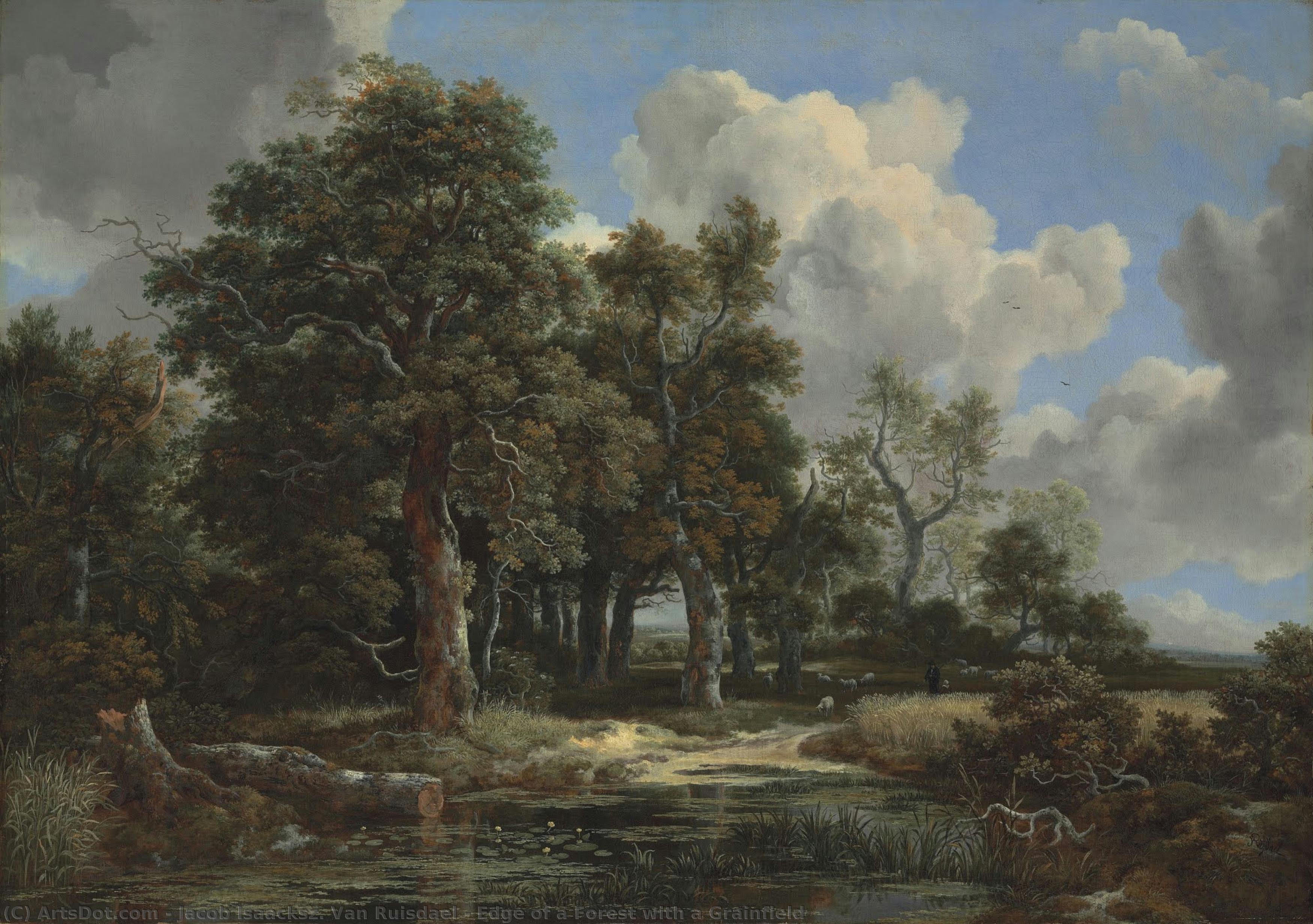
A Symphony of Light and Shadow: Exploring Jacob van Ruisdael’s “Edge of a Forest with a Grainfield” Jacob van Ruisdael's "Edge of a Forest with a Grainfield," painted around 1656, isn’t merely a landscape; it’s an immersive experience. Born in Haarlem and flourishing during the Dutch Golden Age, Ruisdael possessed a singular ability to capture not just the visual appearance of nature, but its very essence – its quiet power,…

Jacob Isaackszoon van Ruisdael produced Beach View about 1675. This oil on canvas work is categorized as marine art, focusing on a coastal landscape. The composition centers on a beach scene where the shoreline meets the sea under an overcast sky.

The sky occupies the majority of the canvas, a vast vault of white, gray, and soft blue. Voluminous clouds, rendered with thick, impasto-like textures, suggest a weather pattern in constant flux. Below this heavy atmosphere, a windmill rises with vertical strength, its white sails cutting sharp, diagonal lines against the shifting light. The farmhouse sits low to the earth, its reddish-brown roof providing a grounded contrast to the airy expanse…

To gaze upon Van Ruisdael's View of Haarlem with Bleaching Grounds is to step directly into the heart of the Dutch Golden Age, a time when the very land itself became a subject worthy of profound artistic contemplation. This painting is far more than a mere depiction of a town and its surrounding fields; it is an atmospheric meditation on light, industry, and the enduring relationship between humanity and nature.…

In this oil on wood composition from approximately 1655, we find ourselves standing before a scene of profound quietude and slow decay. The landscape is dominated by a sense of melancholy, where the natural world has begun to reclaim what was once built by human hands. On the left, a ruined, roofless nave—likely once a church—sits nestled at the foot of a hill. Its stone walls are broken, and gravestones…
 Landscape with Shepherds and Peasants1660 · ウフィツィ美術館
12
 The Cloister1650 · Gemäldegalerie Alte Meister
13
 A Waterfall1670 · ダルウィッチ・ピクチャーギャラリー
14
 Rocky landscape1660 · 国立美術館
15
 The Forest Stream1660 · メトロポリタン美術館
16
 Glade in a Wood1646 · Academy of Fine Arts Vienna
17
 Norwegian Landscape with Waterfall1650 · Residenzgalerie
18
 Winter Landscape1670 · 国立美術館
19
 Landscape with a Waterfall1660 · フィラデルフィア美術館
20
 Landscape with Ruined Castle and Church1670 · ナショナル・ギャラリー
21
 ユダヤ人の墓地(細部)デトロイト美術館
22
 Castle on a Mountain with a Waterfall and Pine trees1660 · Musée des Beaux-Arts de Lyon
23
 The Jewish Cemetery1
24
 Landscape with Church and Village1665 · アルテ・ピナコテーク
25
 Marine, oil on wood, Metropolitan Museum of A1650
26
 Wheat Fields1670 · メトロポリタン美術館
27
 Waterfall in a Rocky and Mountainous LandscapeMuseum of Fine Arts
28
 The Windmill at Wijk bij Duurstede1670 · 国立美術館
29
 Storm on the Dunes1648 · フィラデルフィア美術館
30
 Sloping Field1660 · フィラデルフィア美術館
31
 Ford in Wooded Landscape1655 · Calouste Gulbenkian Foundation
32
 Hilly wooded landscape with a half-timbered house by a water fall1655 · シュテデル美術館
33
 Landscape with a Hunting Scene1670 · Statens Museum For Kunst
34
 A Pool surrounded by Trees1665 · ナショナル・ギャラリー
35
 Landscape with Waterfall1
36
 View of a Forest1647 · ボイジャンズ・ヴァン・ビューニンゲン美術館
37
 Landscape with Waterfall (St. Louis)1665 · セントルイス美術館
38
 Landscape with a Waterfall and a Hut1660 · Statens Museum For Kunst
39
 Road through a Grove1660 · 国立美術館
40
 A Rocky Hill with Three Cottages, a Stream at its Foot1655 · ナショナル・ギャラリー
41
 Small Woodland Landscape1660 · 美術史美術館
42
 The Dam Square in Amsterdam (detail)1670 · ベルリン国立博物館群
43
 Landscape with Dunes1649 · ロサンゼルス・カウンティ・ミュージアム・オブ・アート
44
 Ruins of Brederode1655 · フィラデルフィア美術館
45
 Ruins in a Dune Landscape1652 · ナショナル・ギャラリー
46
 Mountain Landscape with Waterfall1670 · 美術史美術館
47
 Village in Winter by MoonlightStaatsgalerie Stuttgart
48
 Landscape with Waterfall1665 · ボルチモア美術館
49
 A Road leading into a Wood1657 · ナショナル・ギャラリー
50
 Sandy Road between Trees1662 · ボイジャンズ・ヴァン・ビューニンゲン美術館
51
 Landscape of a Forest with a Wooden Bridge1670 · フィラデルフィア美術館
52
 Wild Duck Shooting1655 · ウォレス・コレクション
53
 Landscape with river and cellar entrance1649 · 美術史美術館
54
 Dunes1650 · フィラデルフィア美術館
55
 A road through a wood1660 · ドレスデン州立美術館
56
 Winter Landscape with a Dead Tree1670 · エルミタージュ美術館
57
 Landscape with a Waterfall1655 · アシュモリアン美術館
58
 The Old Oak1648 · Musée Cognacq-Jay
59
 Dune Landscape with Fence, ca. 16471647 · シュテデル美術館
60
 The Watermill at the Edge of the Wood1650 · トレド美術館
61
 Forest scene1653 · 国立美術館
62
 A waterfall with a wooden bridge1670 · ドレスデン州立美術館
63
 Landscape with Tall Trees1670 · ハンブルク美術館
64
 Landscape with Mountain Stream1670 · 美術史美術館
65
 A Cottage and a Hayrick by a Riverナショナル・ギャラリー
66
 Wooded Landscape1660 · ボイジャンズ・ヴァン・ビューニンゲン美術館
67
 A Mountain Landscape with a Chapel1655 · ハンブルク美術館
68
 Rocky Landscape1650 · ウォレス・コレクション
69
 Ideal Landscape1655 · バイエルン州立絵画コレクション
70
 Landscape with a Church by a Torrent1670 · クリーブランド美術館
71
 Winter Landscape with Houses and Frozen Canal1670 · ハンブルク美術館
72
 Winter landscape with a harbour1660 · マウリッツハイス
73
 Landscape, ca. 16461646 · デトロイト美術館
74
 A hill with an oak wood and a little waterfall1654 · ドレスデン州立美術館
75
 Wooded mountainous landscape with fishermen and resting travellers near a waterfall1660 · Museum de Lakenhal
76
 Rough Sea at a Jetty1650 · キンベール美術館
77
 Wooded Landscape with a Stream1670 · デトロイト美術館
78
 Landscape with dead tree and an oncoming storm1649 · ミュゼ・ファーブル
79
 Stormy Sea1650 · 国立美術館
80
 View Of Ootmarsum
81
 Hilly Landscape
82
 The Waterfall1665 · Staatliche Museen
83
 Farm and Hayrick on a River1640 · デトロイト美術館
84
 Forest Path with People Strolling1646 · シュテデル美術館
85
 Landscape with a Blasted Tree near a House1645 · Fitzwilliam Museum
86
 A hunter in a wooded landscape1640
87
 Road in the Dunes1648 · フランツ・ハルス美術館
88
 Wooded Dune Landscape1648
89
 A Landscape with Two Figures on a Rise and a Stream at Right1647
90
 A Wooded Landscape with a Pond1648 · ヒューストン美術館
91
 Landscape with a Cottage and a Windmill1646
92
 Dune landscape with a man and a boy walking towards a town1647 · プーシキン美術館
93
 Dune Landscape near Haarlem1647
94
 Stone Bridge1648 · フィラデルフィア美術館
95
 Sandbank1647 · Nivaagaards Malerisamling
96
 Blasted Oak near a Pond1647 · ブダペスト美術館
97
 Cabin under high oaks1643 · ベルリン絵画館
98
 Oaks at a lake with Water Lilies1652 · ベルリン絵画館
99
 Landscape by a Lake1650 · Bratislava City Gallery
100
 Mountain Stream1655 · バイエルン州立絵画コレクション
これらのオリジナル作品に繰り返し描かれている4つの主題と、それぞれの最高傑作。
このページに掲載されている絵画を最も多く所蔵している 8 の美術館
| 美術館 | 都市 | ヤーコプ・ファン・ロイスダールの作品 | このリストの絵画 |
|---|---|---|---|
 ナショナル・ギャラリー |
ロンドン | 22 | Two Watermills and an Open Sluice near Singraven, A Landscape with a Ruined Building, Landscape with Ruined Castle and Church |
 フィラデルフィア美術館 |
フィラデルフィア | 10 | Landscape with a Waterfall, Storm on the Dunes, Sloping Field |
 国立美術館 |
アムステルダム | 17 | ウィク・ベイ・ドゥールステデの風車, The Windmill at Wijk bij Duurstede (detail), Rocky landscape |
 デトロイト美術館 |
デトロイト | 8 | Landscape with a Farm House and Windmill, ユダヤ人の墓地(細部), Landscape, ca. 1646 |
 美術史美術館 |
ウィーン | 5 | 巨木の森, Small Woodland Landscape, Mountain Landscape with Waterfall |
 ボイジャンズ・ヴァン・ビューニンゲン美術館 |
ロッテルダム | 11 | View of a Forest, Sandy Road between Trees, Wooded Landscape |
 ドレスデン州立美術館 |
ドレスデン | 8 | A road through a wood, A waterfall with a wooden bridge, A hill with an oak wood and a little waterfall |
 マウリッツハイス |
ハーグ | 7 | Beach View, View of Haarlem with Bleaching Grounds, Winter landscape with a harbour |
その時代を象徴する名作を見るために、年代を選択してください。
To gaze upon Jacob Isaackszoon van Ruisdael's "Landscape with a Village in the Distance" is to step directly into the heart of the Dutch Golden Age. This painting, executed in 1646, is more than just a depiction of rolling hills and distant structures; it is a profound meditation on nature’s enduring tranquility set against the backdrop of burgeoning human civilization. Van Ruisdael, the pre-eminent landscape painter of his era, possessed…
In the heart of the seventeenth century, during the zenith of the Dutch Golden Age, Jacob van Ruisdael captured a moment of profound tranquility and industrious grace in his seminal work, “Two Watermills and an Open Sluice near Singraven.” This painting is far more than a mere topographical record of the Netherlands; it is a poetic meditation on the harmony between human endeavor and the untamed rhythms of nature. As…

In this scene from 1660, we find ourselves observing a landscape that feels deeply settled, almost still. A solitary tree dominates the foreground, its branches bare and skeletal against the sky, suggesting a season of dormancy or perhaps the quiet transition of late autumn. Scattered throughout the composition, figures move with a slow, unhurried purpose. Some shepherds linger near the base of the tree, while peasants are positioned further into…
Jacob Isaackszoon van Ruysdael’s “The Windmill at Wijk bij Duurstede” isn't merely a depiction of a rural scene; it’s a profound meditation on light, space, and the enduring spirit of the Netherlands. Painted around 1670 during the height of the Dutch Golden Age, this iconic work transcends its subject matter to become a timeless emblem of tranquility, industry, and the subtle beauty of the natural world. It's a painting that…
The sky occupies the majority of the canvas, a vast vault of white, gray, and soft blue. Voluminous clouds, rendered with thick, impasto-like textures, suggest a weather pattern in constant flux. Below this heavy atmosphere, a windmill rises with vertical strength, its white sails cutting sharp, diagonal lines against the shifting light. The farmhouse sits low to the earth, its reddish-brown roof providing a grounded contrast to the airy expanse…
ウィク・ベイ・ドゥールステデの風車(国立美術館, アムステルダム)。次いで巨木の森、The Windmill at Wijk bij Duurstede (detail) (1670)が続きます。
ウィク・ベイ・ドゥールステデの風車, 巨木の森, The Windmill at Wijk bij Duurstede (detail), Two Watermills and an Open Sluice near Singraven, Landscape with a Village in the Distance, Edge of a Forest with a Grainfield, Beach View, Landscape with a Farm House and Windmill, View of Haarlem with Bleaching Grounds と A Landscape with a Ruined Building。上記のランキングには、それぞれの制作年と所蔵美術館が記載されています。
当カタログには、1640年から1680年にかけて制作されたヤーコプ・ファン・ロイスダールによる530点の作品が収められています。
主にナショナル・ギャラリー (ロンドン), フィラデルフィア美術館 (フィラデルフィア) と 国立美術館 (アムステルダム)に所蔵されています。上記の美術館一覧にすべて記載されています。
1650s年:このページにある全100作品のうち、26作品がその時期に制作されました。そのうちTwo Watermills and an Open Sluice near Singraven作品が含まれます。
このページでは、最も古い作品はFarm and Hayrick on a River (1640)、最新の作品はLandscape with a Farm House and Windmill (1680)です。
このページに掲載されている100点の作品におけるSky (50), Clouds (44) と Trees (42)
このページに掲載されている全100作品のうち、61作品のOil On Canvas
このページに掲載されているオリジナル作品から判断すると、Dutch golden ageです。
Two Watermills and an Open Sluice near Singraven, A Landscape with a Ruined Building と Landscape with Ruined Castle and Church:ナショナル・ギャラリー, ロンドンには、このページに掲載されている作品のうち8点が所蔵されています。
1628年、オランダのハーレムに生を受けたヤコブ・ファン・ルイスダールは、芸術が家族の家業として息づく世界に身を投じました。イサック・ファン・ルイスダールとメイケン・コルネリスドッヘルを両親に持つ彼は、熟練した職人たちの血筋の中で育ちました。家具職人であった祖父ヤコブ・デ・ゴーイエの影響もあり、その家庭環境は卓越した職人技と技術的な精密さによって形作られていました。こうした「ものづくり」の伝統こそが、後に視覚芸術に捧げられることになる彼の人生の揺るぎない礎となったのです。
彼の芸術的才能の軌跡は、身近な人々との関わりによって形作られたといえるでしょう。彼は、当時を代表する風景画家であったサロモン・ファン・ルイスダールの甥でもありました。ヤコブ・ファン・ルイスダールは叔父の指導のもとで正式な修行を積み、徒弟制度を通じてオランダの風景が持つ繊細なニュアンスを吸収していったと広く信じられています。この家族の絆は、単なる技術の伝承にとどまりませんでした。それは、ハーレム派の確立された伝統へと彼を直接結びつける、かけがえのない導きとなったのです。
1648年、彼はハーレムの画家ギルドの会員となり、その職業的な地位を確かなものにしました。このギルドへの加入は、彼が家族の技術を学ぶ徒弟から、一人の独立した芸術家へと脱皮した重要な転換点となりました。競争の激しい芸術の中心地であるハーレムにおいて、彼は自らの存在感を確立することに心血を注ぎ、やがて故郷を離れ、より広大な世界へと羽ばたいていくための準備を整えていったのです。
静謐な空気が流れるハーレムから、活気に満ちた商業都市アムステルダムへの移住は、ヤコブ・ファン・ルイスダールの人生における決定的な転換点となりました。1656年あるいは1657年頃、オランダ共和国の商業の中心地が提供する広大な市場を求め、彼はこの大都市へと足を踏み入れます。この移住の時期は、彼の人生における重要な節目とも重なっており、1657年6月17日にはナールデン近郊のアンケフェーンにて洗礼を受けています。一度アムステルダムに定住すると、彼は生涯をこの街で過ごし、自らが頻繁に描き出すことになる都市の風景の中に、確固たる地位を築き上げました。
都市における彼の画業は、広大な都市景観からダムラクの細密なディテールに至るまで、多種多様な主題を絶え間なく描き続けることで特徴づけられます。時を経て、彼の探求心はキャンバスの枠を超えて広がっていったようです。晩年には医師として活動していたとも伝えられており、その歩みは、視覚的な観察眼とともに、知的な多様性に満ちた人生であったことを物語っています。都市の中で繰り広げられたこの二重の生活は、オランダ黄金時代の社会・職業的な構造の中に深く根を下ろした、一人の人間としての多面的な性質を鮮やかに映し出しています。
ヤコブ・ファン・ルイスダールのキャンバスへのアプローチは、絶え間ない変幻自在な多才さによって定義されています。彼は一つの様式に安住することはありませんでした。静謐な田園風景から、より英雄的で広大な風景へと、その制作活動は驚くべき豊かさをもって変遷していきました。彼の卓越した技術的精密さは、油彩の薄いグレーズ(透明な層)を幾重にも重ねる技法に深く根ざしています。この手法によって、彼は色彩と音調の繊細な階調を見事に描き出し、単に描かれたものという枠を超え、そこに実在する生命感に満ちた奥行きを構築することに成功したのです。この忍耐強い筆致を通じて、彼は大気遠近法を極め、霞がかった空気の質感を利用することで、遠方の丘や森を柔らかく銀色に輝く彼方へと退行させて見せました。
彼の作品が湛える情緒は、単なる地形の描写を超えた、ある種の重みを常に孕んでいます。ヤコブ・ファン・ルイスダールは、その構図の中に詩的な、時には物憂げで、時には悲劇的な質感を吹き込む比類なき才能を持っていました。それは、光と影に対する熟練した支配によって成し遂げられたものです。彼は、目に刺さるような激しいコントラストに頼るのではなく、光を用いて場面の感情的な温度を形作りました。その構図はしばしば劇的であり、広大な空を用いることで、地上の要素を小さく、謙虚なものへと変貌させます。晩年の多くの作品において、空は画面の大部分を占めており、作品内部に潜む緊張感と情緒を司る主要な原動力として機能しています。
キャリアの初期における彼の作品群を紐解くと、すでにオランダの田園風景が持つ豊かな質感に深く魅了されていた画家の姿が浮かび上がります。1646年には、「森の空き地」や「遠くに村が見える風景」といった作品を生み出し、自然の諸要素を調和のとれた情緒的な情景へと構成する卓越した手腕を世に示しました。その後、1649年を迎えると、その関心は自身の故郷の地形へと移り変わり、「茂み(ハーレム砂丘の小道)」に見られるような、より地域性に根ざした表現へと進化を遂げます。この初期の歳月は、鬱蒼とした木々の中や広大な展望の中に、光と影が織りなす劇的な相互作用を自在に操る術を、彼が着実に習得していった時期でもありました。
技術的な熟練度が増すにつれ、描かれる主題はよりドラマチックで多様な環境へと広がっていきました。特に1650年は極めて多作な年となり、「修道院」や、より荒々しい自然の猛威を感じさせる「突堤の荒波」といった傑作が誕生しました。この時期、彼は「シングラーヴェン近郊の二つの水車小屋と開いた水門」において、人間の営みと自然との交錯を深く探求し、また「旅人を伴う風景」では、風景が湛える静かな孤独を見事に捉えました。これらの構図は、スケール感に対する洗練された理解と、光がいかにして特定の瞬間を定義するかという真理を、私たちに雄弁に語りかけてきます。
晩年の構図においては、自然界が持つ構造的な美しさがしばしば強調されるようになります。1656年に描かれた「穀物畑を伴う森の縁」では、森の重厚な存在感と、開けた農地の開放感を見事に調和させる彼独自の技量が光っています。こうした移ろいゆく視点を描き出す卓越した表現力こそが、オランダ黄金時代の視覚言語を決定づけるものとなったのです。
ヤコブ・ファン・ルイスダールの視座が持つ広がりは、オランダの国境を遥かに越え、後の風景画の伝統の礎となるほど深いものでした。彼はロマン主義が台頭する以前から、すでにロマン主義者であったと言えるでしょう。自然界に道徳的な重みを与え、後世の芸術が持つ感情的な激しさを予感させるような、物憂げで詩的な情緒を作品に吹き込んだのです。風景の中に特定の心理的な空気感を宿らせるこの卓越した能力により、彼の作品は死後長い年月を経てもなお、多くの芸術運動と共鳴し続けました。その影響はイギリスのロマン主義派やフランスのボビゾン派を形作る一助となり、さらには大西洋を越えてアメリカのハドソン川派にまで多大なインスピレーションを与えたのです。
母国オランダにおいても、彼は幾世代もの風景画家たちにインスピレーションを与え続け、光と影を通じて田園風景をいかに解釈すべきかという規範を打ち立てました。彼の自然へのアプローチは、単なる地形の記録に留まるものではありませんでした。彼は土地の本質を捉えようと試み、劇的な空や重厚な質感を用いることで、しばしば「崇高」とも言える感覚を表現したのです。自然が持つ大気的な質に焦点を当てた彼の様式美は、彼の足跡を辿る後継者たちにとって、揺るぎない礎となりました。
ヤコブ・ファン・ルイスダールの魂が宿るキャンバスは、今もなお、ヨーロッパやアメリカの主要な美術館に点在し、見る者を魅了し続けています。オランダでは、アムステルダムのライクスミュージアムが彼の膨大な作品群の重要なコレクションを所蔵しており、その芸術的発展の軌跡を深く辿ることを可能にしています。また、ほど近いハーグのマウリッツハイス美術館にも数々の傑作が収められており、彼のキャリアを決定づけた壮大な風景への窓口となっています。その名声は海を越え、ロンドンのナショナル・ギャラリーにも及んでおり、そこでは他の偉大なオランダの巨匠たちと共に、彼の作品が静かに、しかし力強く鎮座しています。
オランダの国境を越えれば、世界中の美術館の常設コレクションの中に、彼の芸術的足跡を見出すことができます。パリのルーヴル美術館やサンクトペテルブルクのエルミタージュ美術館には彼の作品が収蔵されており、彼の独自の視覚言語が世界の美術史における規範として生き続けていることを証明しています。さらにアメリカでは、ニューヨークのメトロポリタン美術館がその絵画を大切に保存しており、光と大気が織りなす彼の卓越した表現技法を、現代に生きる私たちが今なお研究し続けることを可能にしています。


