


1

悪夢 (あくむ)
ヘンリー・フュースリの「悪夢」は、ゴシック・ホラーとロマン主義の本質を見事に捉えた、美術史に燦然と輝く象徴的な作品です。1781年に制作されたこの油彩画は、潜在意識の深淵に対する深い探求であり、劇的な構図と豊かな象徴性を融合させることで、見る者に言いようのない不安感と抗いがたい魅惑を呼び起こします。

10月 2026 更新 · 当サイトの人気スコア(各作品の検索数、閲覧数、注文数)に基づくランキング · 161点の ヘンリー・フュースリーの作品がカタログにあります
要約すると
ギャラリーの視点では、ヘンリー・フュースリーの最も有名な作品は悪夢 (あくむ) (1781)であり、その原画はデトロイトのデトロイト美術館に展示されています。 ティターニアとボトム(アッスヘッド)とThe Nightmare (1790)が加わり、誰もが一度は目にしたことのある至高のトリオが完成します。 当カタログに含まれるヘンリー・フュースリーの作品161点の中から、特に有名な100点を厳選してご紹介します。各作品は、制作年、所蔵美術館、そしてその作品ならではの魅力とともに、一点物のオリジナル作品として掲載されています。
ヘンリー・フュースリの「悪夢」は、ゴシック・ホラーとロマン主義の本質を見事に捉えた、美術史に燦然と輝く象徴的な作品です。1781年に制作されたこの油彩画は、潜在意識の深淵に対する深い探求であり、劇的な構図と豊かな象徴性を融合させることで、見る者に言いようのない不安感と抗いがたい魅惑を呼び起こします。

月明かりに照らされた古の森、その影深い奥深くにおいて、ヨハン・ハインリヒ・フュースリーは、人間界と超自然界の境界が完全に溶け去る領域へと私たちを誘います。彼の傑作『ティターニアとボトム(アッスヘッド)』は、ウィリアム・シェイクスピアの戯曲『夏の夜の夢』における変容の決定的な瞬間を捉えています。その構図は、動きと神秘が渦巻く息を呑むような情景であり、羽ばたく妖精たちの海の中で横たわる、空想的な女王ティターニアを中心に据えています。彼女の傍らには、奇怪ながらも不思議な魅力を放つボトムの姿があります。その頭部はロバへと変貌を遂げており、神聖な領域に動物的な要素が入り込むという、不協和音でありながら喜劇的な侵入を描き出しています。この絵画は単に場面を写し取ったものではありません。精霊たちの繊細な羽から、筋肉質で影を帯びたサテュロスの姿に至るまで、キャンバスの隅々までが生命力に溢れ、観る者を濃密で混沌とした祝祭の中へと没入させるのです。

In the shadowy realm of Johann Heinrich Füssli, the boundaries between sleep and wakefulness dissolve into a haunting spectacle of terror and desire. His seminal work, The Nightmare, stands as a profound exploration of the human psyche, capturing that breathless moment when the terrors of the unconscious manifest in the physical world. The painting presents a woman lying prostrate in bed, her limbs cast downward in a state of vulnerable,…

To stand before this depiction of Lady Macbeth is to confront the very precipice of human ambition curdled by guilt. Johann Heinrich Friesli’s masterful rendering captures not merely a scene from Shakespeare, but the suffocating aftermath of moral transgression. The air in the painting feels thick, heavy with unspoken secrets and the metallic tang of spilled blood. It is an intensely dramatic tableau, steeped in the Romantic fascination with the…

The incubus leaving two young women is an oil on canvas painting by Henry Fuseli. Created about 1794, the work captures a moment of supernatural departure. It belongs to the realms of folklore and demons. The canvas holds a heavy, nocturnal stillness.

Johann Heinrich Fuseli’s “The Artist Moved by Antique Fragments,” completed in 1778-79, stands as a haunting testament to Romanticism's preoccupation with mortality and the sublime beauty found within decay. Executed in red chalk on sepia wash—a technique favored by Fuseli—the drawing captures an artist grappling with the overwhelming grandeur of ruined monuments, specifically those of the Colossus of Constantine at Rome’s Capitoline Museums.

In this drawing from 1785, we find ourselves drawn into a moment of profound psychological unrest. The scene captures a dramatic encounter, likely inspired by the tension of Shakespearean tragedy, where the boundary between the living and the supernatural dissolves. A central figure, arms outstretched, appears caught in a state of sudden, violent realization. Around this focal point, other figures react with a mixture of struggle and silent observation, their…

Henry Fuseli's "The Night-Hag Visiting Lapland Witches," painted in 1796, isn’t merely a depiction of a scene; it’s an immersion into the shadowed heart of human psychology. This arresting oil on canvas, currently residing within the hallowed halls of The Metropolitan Museum of Art in New York City, pulsates with a potent blend of gothic horror and nascent Romanticism – a visual embodiment of fear, superstition, and the unsettling allure…

Portrait of a Young Woman by Henry Fuseli: A Gothic Reverie The Portrait of a Young Woman by Johann Heinrich Füssli, painted in 1781, stands as an arresting emblem of the Romantic movement’s fascination with psychological depth and unsettling beauty. More than just a depiction of a female figure, it's a meticulously crafted tableau that delves into themes of dreams, fear, and the subconscious—a realm where reason yields to imagination…

In the shadowy corridors of art history, few names evoke as much intrigue and nocturnal wonder as Johann Heinrich Füssli. Known to the English-speaking world as Henry Fuseli, this Swiss master was a pioneer of the Romantic movement, a painter who dared to venture into the deepest recesses of the human psyche. His work, particularly his depictions of the supernatural, serves as a bridge between the rational Enlightenment and the…
 Head of a Damned Soul from Dante's "Inferno," (verso)1774 · シカゴ美術館
12
 The insane Kate1807
13
 Deutsch Titania liebkost den eselköpfigen Bottom1794 · チューリッヒ美術館
14
 Leonora Discovers Alonzo’s Dagger1792 · 国立美術館
15
 Celadon and Amelia1801 · シュタットリッヒェ・クンストハレ・カールスルーエ
16
 John Milton's Paradise Lost, Satan and the Birth of Sin (Book II, 746-758) Painting no. 6 from The Milton Gallery1785 · ダラス美術館
17
 Study for the three witches in Macbeth1783 · オークランド・アート・ギャラリー・トイ・オ・タマキ
18
 Euphrosyne before the Imagination and the Temperance1800 · Kurpfälzisches Museum
19
 Sketch for "Oath on the Rütli," Female Figure (verso)1779 · シカゴ美術館
20
 The Dream of Queen Katherine (from William Shakespeare's 'Henry VIII', Act IV, Scene 2)1781 · ヴィクトリア&アルバート博物館
21
 Prince Arthur and the Fairy Queen.1788 · バーゼル美術館
22
 Tekemessa and Eurysake1805 · イェール英国美術館
23
 Thetis asks Hephaistos to forge armor for her son Achilles1803 · チューリッヒ美術館
24
 Satan and Death with Sin Intervening1792 · バイエルン州立絵画コレクション
25
 Ariadne Watching the Struggle of Theseus with the Minotaur1820 · イェール英国美術館
26
 Erotic Scene with a man and three women
27
 Danaë and Perseus on Seriphos (?)1787 · Yale University Art Gallery
28
 The Erinyes Drive Alcmaeon from the Corpse of his Mother, Eriphyle, Whom He Has Killed.1821 · チューリッヒ美術館
29
 Satan Starting from the Touch of Ithuriels Spear
30
 The Weird Sisters -The Three Witches
31
 Christ Disappearing at Emmaus1792 · イェール英国美術館
32
 A Shakespearean Subject1785
33
 Psyche walks past the Fates undeterred1780
34
 Laying Nude and piano player1799 · バーゼル美術館
35
 Paolo Malatesta and Francesca da Polenta surprised by Gianciotto Malatesta1785 · Aargauer Kunsthaus
36
 The Three Conspirators Swear an Oath on the Rüthli Meadow1779 · チューリッヒ美術館
37
 Portrait of Joseph Priestley1783
38
 The Nightmare1781
39
 The nightmare, Detroit Institute of1781
40
 Selling of Cupids1776 · イェール英国美術館
41
 The Daughters of Pandareos1795 · チューリッヒ美術館
42
 The Vision of the Deluge1800
43
 The loneliness at dawn1796
44
 A Scene from 'The Wife of Bath's Tale' (from Geoffrey Chaucer's, 'Canterbury Tales') (recto); Falstaff in the Laundry Basket mocked by Five Women (?) (verso)1812 · Petworth House
45
 Puck1810
46
 Untitled (AQR9W9)1812
47
 Kriemhild sees the dead Siegfried in a dream1805
48
 Portrait of a Lady1781 · デトロイト美術館
49
 The Serpent tempting Eve (Satan's first address to Eve)1802 · オークランド・アート・ギャラリー・トイ・オ・タマキ
50
 Henry V' Act II Scene 2 Discovering the Conspirators1790 · Royal Shakespeare Company Collection
51
 The Infant Shakespeare Between Tragedy and Comedy1805 · University of London
52
 Ezzelin and Meduna1779 · Sir John Soane's Museum
53
 Silence1799 · チューリッヒ美術館
54
 Titania, Bottom and the Fairies1794 · チューリッヒ美術館
55
 The Shepherd's Dream1793 · テート・ギャラリー
56
 The Incubus Leaving Two Sleeping Women1793
57
 Macbeth' Act I Scene 3 The Weird Sisters1783 · Royal Shakespeare Company Collection
58
 Woman Sitting, Curled up1778 · National Gallery of Denmark
59
 The Shepherd1786 · アルベリナ美術館
60
 Portrait of the Artist1790 · ブダペスト美術館
61
 Dante and Virgil on the Ice of Kocythos1774 · チューリッヒ美術館
62
 Untitled (AQR9WB)2006
63
 The Death of Cardinal Beaufort
64
 Huon and Amanda with the Dead Alphonso
65
 Teiresias Foretells the Future to Odysseus, 1780-17851785 · アルベリナ美術館
66
 Bust Portrait of a Woman with Bonnetクーパーシュティヒカビネット
67
 Swiss; practiced in England, )1741
68
 Deutsch Der Feuerkönig English The Fire King Русский Король огня1810
69
 The Great Father and Ancient Night
70
 King Lear Banishing Cordelia1784
71
 Dispute between Hotspur, Glendower, Mortimer and Worcester (from Shakespeare's Henry IV Part 1)1784 · バーミンガム・ミュージアム&アートギャラリー
72
 The Italian Count (also known as Ezzelin Bracciaferro, Musing over Meduna, Destroyed by him for Disloyalty)1780
73
 Untitled (AQR9VM)1790 · Museum of All Saints
74
 Hagen and the Nymphs of the Danube1802 · メトロポリタン美術館
75
 German Gertrud, Hamlet und der Geist des Vaters1793
76
 Milton Dictating to His Daughter1794 · シカゴ美術館
77
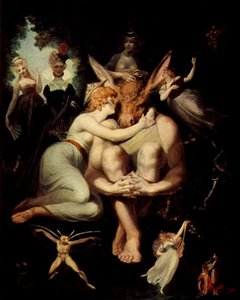 The Elf Queen Titania and labels, the weavers with donkey's head1794
78
 Macbeth, Banquo and the Witches ('Macbeth' Act I Scene 3)1794 · Petworth House
79
 Mamillius Conjuring up Sprites and Goblins for His Mother1786
80
 Deutsch Belindas Traum English Dream of Belinda Русский Сон Белинды1790
81
 Titania is leevtallig met Bottom met de daare Eselkopp1794
82
 Deutsch Das Erwachen der Elfenkönigin Titania English The Awakening of the Fairy Queen Titania1790
83
 Milton When a Boy Instructed by His Mother1799
84
 The Ladies of Hastings1800
85
 Horseman attacked by a giant snake1800
86
 Deutsch Das Schweigen English The Silence Русский Тишина1801
87
 Kriemhild is haunted by her remorse1805
88
 La débutante1807
89
 Brunhilde Observing Gunther, Whom She Has Tied to the Ceiling1807 · City Museum and Art Gallery
90
 Kriemhild zeigt Gunther im Gefängnis den Nibelungenring1807
91
 The fairy queen Titania finds the magic ring on the beach1805
92
 Kriemhild zeigt Hagen das Haupt Gunthers1805
93
 The Fire King1810
94
 Deutsch Cerasimus und Huon fliehen vor dem Elfenkönig Oberon1805
95
 Kriemhild throws herself on the dead Siegfried1817
96
 Leonore Discovering the Dagger Left by Alonzo
97
 Portrait of Magdalena Hess from Zurich
98
 The Enchanted Island. Before the Cell of Prospero
99
 PERSEUS RETURNING THE EYE OF THE GRAII
100
 Die Hexe
これらのオリジナル作品に繰り返し描かれている4つの主題と、それぞれの最高傑作。
このページに掲載されている絵画を最も多く所蔵している 8 の美術館
| 美術館 | 都市 | ヘンリー・フュースリーの作品 | このリストの絵画 |
|---|---|---|---|
 チューリッヒ美術館 |
チューリッヒ | 12 | The Artist Moved by the Grandeur of Antique Fragments, Deutsch Titania liebkost den eselköpfigen Bottom, Thetis asks Hephaistos to forge armor for her son Achilles |
 イェール英国美術館 |
ニューヘイブン | 7 | Scene of Witches, from The Masque of Queens by Ben Jonson, Tekemessa and Eurysake, Ariadne Watching the Struggle of Theseus with the Minotaur |
 デトロイト美術館 |
デトロイト | 3 | 悪夢 (あくむ), Portrait of a Young Woman, Portrait of a Lady |
 シカゴ美術館 |
シカゴ | 3 | Head of a Damned Soul from Dante's "Inferno," (verso), Sketch for "Oath on the Rütli," Female Figure (verso), Milton Dictating to His Daughter |
 メトロポリタン美術館 |
ニューヨーク | 3 | The Night-Hag Visiting Lapland Witches, Hagen and the Nymphs of the Danube |
 テート・ギャラリー |
ロンドン | 2 | Lady Macbeth with the Daggers, The Shepherd's Dream |
 オークランド・アート・ギャラリー・トイ・オ・タマキ |
オークランド | 2 | Study for the three witches in Macbeth, The Serpent tempting Eve (Satan's first address to Eve) |
 バーゼル美術館 |
バーゼル | 2 | Prince Arthur and the Fairy Queen., Laying Nude and piano player |
その時代を象徴する名作を見るために、年代を選択してください。
Johann Heinrich Fuseli’s “The Artist Moved by Antique Fragments,” completed in 1778-79, stands as a haunting testament to Romanticism's preoccupation with mortality and the sublime beauty found within decay. Executed in red chalk on sepia wash—a technique favored by Fuseli—the drawing captures an artist grappling with the overwhelming grandeur of ruined monuments, specifically those of the Colossus of Constantine at Rome’s Capitoline Museums.
In the shadowy realm of Johann Heinrich Füssli, the boundaries between sleep and wakefulness dissolve into a haunting spectacle of terror and desire. His seminal work, The Nightmare, stands as a profound exploration of the human psyche, capturing that breathless moment when the terrors of the unconscious manifest in the physical world. The painting presents a woman lying prostrate in bed, her limbs cast downward in a state of vulnerable,…

Created in 1807, this work reflects a period of intense interest in the irrational and the emotional. The painting moves away from the strict logic of the Enlightenment, leaning instead into the visceral. There is a palpable sense of the supernatural here, where the landscape becomes an extension of the mind. The woman's posture and the dramatic sky suggest a narrative that is felt rather than explicitly told. It is…
To stand before this depiction of Lady Macbeth is to confront the very precipice of human ambition curdled by guilt. Johann Heinrich Friesli’s masterful rendering captures not merely a scene from Shakespeare, but the suffocating aftermath of moral transgression. The air in the painting feels thick, heavy with unspoken secrets and the metallic tang of spilled blood. It is an intensely dramatic tableau, steeped in the Romantic fascination with the…

In the hauntingly beautiful masterpiece "Ariadne Watching the Struggle of Theseus with the Minotaur," completed in 1820, Johann Heinrich Füssli invites us into a realm where myth and nightmare converge. This work stands as a profound testament to the Romantic era’s obsession with the sublime—that intoxicating, unsettling intersection of breathtaking beauty and paralyzing terror. As we gaze upon this canvas, we are not merely spectators of a classical legend; we…
悪夢 (あくむ) (1781)(デトロイト美術館, デトロイト)。次いでティターニアとボトム(アッスヘッド)、The Nightmare (1790)が続きます。
40歳:悪夢 (あくむ)は1781年の作品で、ヘンリー・フュースリーの生年は1741年です。
悪夢 (あくむ), ティターニアとボトム(アッスヘッド), The Nightmare, Lady Macbeth with the Daggers, The incubus leaving two young women, The Artist Moved by the Grandeur of Antique Fragments, Hamlet and his father's Ghost, The Night-Hag Visiting Lapland Witches, Portrait of a Young Woman と Scene of Witches, from The Masque of Queens by Ben Jonson。上記のランキングには、それぞれの制作年と所蔵美術館が記載されています。
当カタログには、1774年から1821年にかけて制作されたヘンリー・フュースリーによる161点の作品が収められています。
主にチューリッヒ美術館 (チューリッヒ), イェール英国美術館 (ニューヘイブン) と デトロイト美術館 (デトロイト)に所蔵されています。上記の美術館一覧にすべて記載されています。
1790s年:このページにある全100作品のうち、25作品がその時期に制作されました。そのうちThe Nightmare作品が含まれます。
このページでは、最も古い作品はHead of a Damned Soul from Dante's "Inferno," (verso) (1774)、最新の作品はThe Erinyes Drive Alcmaeon from the Corpse of his Mother, Eriphyle, Whom He Has Killed. (1821)です。
このページに掲載されている100点の作品におけるWoman (15), Dark background (13) と Shadows (12)
このページに掲載されている全100作品のうち、29作品のOil On Canvas
このページに掲載されているオリジナル作品から判断すると、Romantic gothic horrorです。
The Artist Moved by the Grandeur of Antique Fragments, Deutsch Titania liebkost den eselköpfigen Bottom と Thetis asks Hephaistos to forge armor for her son Achilles:チューリッヒ美術館, チューリッヒには、このページに掲載されている作品のうち9点が所蔵されています。
1741年2月7日、スイスのチューリッヒに生まれたヨハン・ハインリヒ・フュースリーは、18人もの子供たちに囲まれた賑やかな家庭の中で、その次男として育ちました。彼の父ヨハン・カスパル・フュースリーは、肖像画や風景画の画家であると同時に、ヘルヴェティアの画家たちの生涯を綴る作家でもあり、筆とペンを自在に操る人物でした。このような芸術と学問が交錯する環境は、幼少期の彼にとって、賑やかでありながらも、芸術への情熱が自然と育まれる確かな背景となったのです。
チューリッヒのカロリヌム大学において、彼は古典教育という体系的な学びの道を歩み、言語や歴史に関する深い教養を身につけました。この人文主義的な素養は、後に彼が描く主題の深みや、物語性を帯びた表現スタイルに色濃く反映されることになります。しかし、彼の人生が最初からキャンバスに向かうものだったわけではありません。1761年、彼は聖職者としての道を志し、牧師として奉仕する日々を過ごしました。
しかし、聖職者としての歩みが彼の最終的な目的地となることはありませんでした。彼の青年期は、準備されていた宗教的な生活と、父が体現していた視覚的な芸術の世界との間で揺れ動く、一種の緊張感に満ちたものでした。この学問と奉仕に捧げられた時期は、後に彼が追求することになる、より劇的で超自然的な芸術的関心を支えるための、強固な知的基盤となったのです。
1765年、彼はイギリスへと渡り、さまざまな執筆活動を通じて生計を立てる日々を送っていました。そんな折、運命的な出会いが訪れます。それがサー・ジョシュア・レイノルズとの邂逅でした。レイノルズは彼の描いた素描を目の当たりにすると、他の活動をすべて捨て、絵画に専念すべきだと助言したのです。この言葉は、彼の人生の方向性を決定づける重大な転換点となりました。
その後、1770年に彼は芸術の聖地、イタリアへの巡礼へと旅立ち、1778年までその地に留まりました。ローマでの生活において、彼はミケランジェロの傑作やモンテ・カヴァッロに佇む大理石の彫像を深く観照することに、その情熱の多くを捧げました。イタリアでの研鑽を重ねる日々の中で、彼は自身の名を、よりイタリア的な響きを持つ「フュースリー」から「フュースリ」へと改める決意をしたのです。
1779年の初頭にイギリスへと帰国したヘンリー・フュースリーは、ジョン・ボイドール氏からの依頼をきっかけに、ロンドンの芸術界における確固たる地位を築き始めました。その活動の核となったのは、シェイクスピア・ギャラリーへの寄稿という壮大なプロジェクトでした。彼はこの仕事を通じて、劇的な文学の世界を鮮烈な視覚的形態へと昇華させていったのです。ロンドンでの存在感は、ロイヤル・アカデミーにおける地位の向上とともに、着実に、そして力強く増していきました。1788年には準会員に選出され、1790年には正会員へと昇進を遂げたのです。
アカデミーにおける彼の功績は、単にキャンバスに向かう画家としての枠に留まるものではありませんでした。彼は学芸員や、後に絵画教授といった重要な行政・教育職を歴任し、イギリスにおける芸術教育のまさに中心人物となりました。ロンドンでの生活は、こうした公的な責務と、かつてのモデルの一人であったソフィア・ローリンズとの結婚によって彩られました。ヘンリー・フュースリーは、長年にわたりアカデミーの構造を支える不可欠な存在であり続けたのです。
ヘンリー・フュースリーの作品の多くは、人間の精神が抱える「影」の部分へと深く分け入っています。例えば、1781年頃に描かれた『悪夢』は、夢や潜在意識がもたらす、重苦しくも不安を掻き立てる感覚を見事に描き出しています。また、彼は文学の中に潜む劇的な緊張感にも強い関心を寄せていました。ジョン・ボイドールが主宰したシェイクスピア・ギャラリーのために制作された数々の作品では、ウィリアム・シェイクスピアの戯曲に深く傾倒し、その世界観を鮮やかに表現しています。とりわけマクベスのような物語においては、登場人物たちが抱える心理的な葛藤や精神的な摩耗を、鋭い感性で捉えきっています。
彼の探求は、演劇の舞台を越えて、古代の神話や聖なる領域へとまで及びました。そのキャンバスには、神話や聖書の物語が頻繁に登場し、しばしば理想化されたスケール感を用いることで、幻想的な感覚をより一層高めています。また、ジョン・ミルトンの壮大な詩の世界を視覚化すべく、その作品群に基づいた一連の絵画制作にも情熱を注ぎました。こうした主題を通じて、彼は神聖な領域と、グロテスクなものとの間を自由に行き来する、独自の芸術世界を築き上げたのです。
ヘンリー・フュースリーは、単にロマン主義という運動に参加しただけではありません。彼はその火を燃え上がらせる先駆者でもあったのです。彼の作品は、啓蒙主義が重んじた厳格な論理から脱却し、代わりに人間の本能的な衝動や感情の深淵へと深く踏み込みました。この劇的な転換は、イギリスにおける新しい視覚言語の道を切り拓くこととなりました。潜在意識や非合理的なものへの彼の執着は、イギリス美術の風景に消えることのない足跡を残し、その後の数十年にわたり、多くの若き芸術家たちが歩むべき方向性に多大な影響を与えたのです。
その影は、ウィリアム・ブレイクのような、幻視的で強烈な表現に情熱を注いだ芸術家の作品の中にも見て取ることができます。夢の深淵や超自然的な領域からテーマを汲み上げるヘンリー・フュースリーの卓越した能力は、絵画を通じて人間の精神を探索するための雛形となりました。不穏で幻想的なものへの彼の眼差しは、今日においても人々を魅了して止みません。悪夢が「どのように見えるか」だけでなく、それが「どのように感じられるか」という感覚にまで踏み込んだ彼の探求心は、美術史における彼の存在を象徴する重要な要素として、今なお輝きを放っています。


