Gaspare Dizianiの肖像画

ギャラリー厳選、Gaspare Dizianiによる最も有名な27の絵画

10月 2026 更新 · 当サイトの人気スコア(各作品の検索数、閲覧数、注文数)に基づくランキング · 27点の Gaspare Dizianiの作品がカタログにあります

要約すると

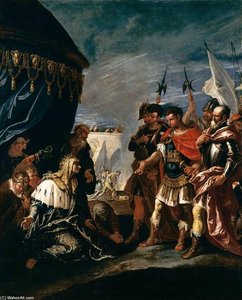
Gaspare Dizianiが遺したオリジナル作品の中で最も有名なものは、ニューヨークのメトロポリタン美術館に収蔵されているDawn (1738)です。 それに次いで、Laying Venus (1714)とThe Family of Darius before Alexander the Great (1728)が続きます。 Gaspare Dizianiによる27点の作品をカタログに掲載しています。当ギャラリーでは、世界が称賛する27点を選定し、制作年、所蔵美術館、そしてその背景にある物語とともにご紹介しています。

1689 – 1767, Belluno 最多収蔵館: バイエルン州立絵画コレクション

Gaspare Dizianiの代表作10選:ギャラリー厳選の作品集

1
Dawn (1738) による Gaspare Diziani

Dawn

1738 · Oil On Canvas · メトロポリタン美術館, ニューヨーク

Gaspare Diziani’s Dawn is an oil on canvas ceiling decoration created in 1738. The work functions as an allegorical representation of the morning, designed to crown the interior of a room. In this composition, the central figure of Dawn is surrounded by several cherubic putti. To the left, three putti engage in playful activities, including the carrying of a basket overflowing with flowers and foliage. On the right, a single…

2
Laying Venus (1714) による Gaspare Diziani

Laying Venus

1714 · Oil

The canvas presents a reclining female figure positioned slightly to the right of the center. This central subject is surrounded by several smaller figures, identified as cupids or putti, whose limbs and movements create a sense of rhythmic motion around the main body. The composition is asymmetrical, utilizing fluid and organic lines to define the soft contours of the human forms and the sweeping folds of the large fabric backdrop.…

Gaspare Dizianiのセレクションが続きます、11から27まで

Gaspare Dizianiが心を惹かれた主題

これらのオリジナル作品に繰り返し描かれている4つの主題と、それぞれの最高傑作。

Gaspare Dizianiの原画を所蔵する美術館

このページに掲載されている絵画を最も多く所蔵している 8 の美術館

美術館 都市 Gaspare Dizianiの作品 このリストの絵画
バイエルン州立絵画コレクション, ミュンヘンバイエルン州立絵画コレクション ミュンヘン 3 The Family of Darius before Alexander the Great, Joseph Is Sold by His Brothers, Joseph Interprets the Dreams of Pharaoh
Statens Museum For Kunst, コペンハーゲンStatens Museum For Kunst コペンハーゲン 2 Monk, Praying Monk
国立美術館, ストックホルム国立美術館 ストックホルム 2 The Family of Darius Pleading to Alexander, The Adoration of the Lamb. Study
ブダペスト美術館, ブダペストブダペスト美術館 ブダペスト 2 Adoration of the Magi, Adoration of the Magi
メトロポリタン美術館, ニューヨークメトロポリタン美術館 ニューヨーク 1 Dawn
ワルシャワ国立博物館, ワルシャワワルシャワ国立博物館 ワルシャワ 1 Moses trampling on the Pharaoh’s crown
ベルリン絵画館, ベルリンベルリン絵画館 ベルリン 1 Christ before Pilate
ロサンゼルス・カウンティ・ミュージアム・オブ・アート, ロサンゼルスロサンゼルス・カウンティ・ミュージアム・オブ・アート ロサンゼルス 1 The Assumption of the Virgin

Gaspare Dizianiの年代別名作:各時代を象徴するオリジナル作品

年代別作品数

その時代を象徴する名作を見るために、年代を選択してください。

Gaspare Dizianiの絵画に関するコレクターからの質問

Gaspare Dizianiの代表作は何ですか?答えを見る

Dawn (1738)(メトロポリタン美術館, ニューヨーク)。次いでLaying Venus (1714)、The Family of Darius before Alexander the Great (1728)が続きます。

Dawnが制作されたとき、Gaspare Dizianiは何歳でしたか?答えを見る

49歳:Dawnは1738年の作品で、Gaspare Dizianiの生年は1689年です。

Gaspare Dizianiの最も有名な10作品とは?答えを見る

Dawn, Laying Venus, The Family of Darius before Alexander the Great, Monk, Praying Monk, Moses trampling on the Pharaoh’s crown, Joseph Is Sold by His Brothers, Joseph Interprets the Dreams of Pharaoh, The Family of Darius Pleading to Alexander と sketch for a plafond - painting。上記のランキングには、それぞれの制作年と所蔵美術館が記載されています。

Gaspare Dizianiが遺した作品数は?答えを見る

当カタログには、1714年から1757年にかけて制作されたGaspare Dizianiによる27点の作品が収められています。

Gaspare Dizianiの名作は、どの美術館に収蔵されていますか?答えを見る

主にバイエルン州立絵画コレクション (ミュンヘン), Statens Museum For Kunst (コペンハーゲン) と 国立美術館 (ストックホルム)に所蔵されています。上記の美術館一覧にすべて記載されています。

Gaspare Dizianiが最も有名な作品を多く描いたのは何年ですか?答えを見る

1750s年:このページにある全27作品のうち、7作品がその時期に制作されました。そのうちJoseph Is Sold by His Brothers作品が含まれます。

Gaspare Dizianiによる最初と最後の代表的なオリジナル作品は何ですか?答えを見る

このページでは、最も古い作品はLaying Venus (1714)、最新の作品はChrist before Pilate (1757)です。

Gaspare Diziani が最も多く描いた主題は何ですか?答えを見る

このページに掲載されている27点の作品におけるReligious (4), Woman (3) と Clouds (2)

Gaspare Diziani が最も多く使用した技法は何ですか?答えを見る

このページに掲載されている全27作品のうち、3作品のOil

バイエルン州立絵画コレクションにはどのGaspare Dizianiの作品が展示されていますか?答えを見る

The Family of Darius before Alexander the Great, Joseph Is Sold by His Brothers と Joseph Interprets the Dreams of Pharaoh:バイエルン州立絵画コレクション, ミュンヘンには、このページに掲載されている作品のうち3点が所蔵されています。

Gaspare Diziani:生涯と作品

The Radiant Legacy of Gaspare Diziani

In the luminous era of the late Baroque and the burgeoning Rococo, Gaspare Diziani emerged as a painter of profound technical assurance and dramatic flair. Born in the serene town of Belluno, Italy, his artistic journey began under the guidance of Antonio Lazzarini, a foundation that would eventually lead him to the heart of the Venetian art world. As he moved toward Venice, Diziani immersed himself in the prestigious studios of Gregorio Lazzarini and the influential Sebastiano Ricci. These early mentors provided him with the tools to master the sweeping movements and emotional depth characteristic of his era, allowing him to develop a style that resonated with both religious fervor and aristocratic elegance.

Diziani’s career was marked by a remarkable ability to navigate the shifting tides of 18th-century aesthetics. While his work shared the stage with contemporaries like Giambattista Tiepolo, Diziani carved out a unique space through his versatility and command over both canvas and fresco. His early period, spanning roughly between 1710 and 1720, saw him contributing significant works to sacred spaces, such as the Mary Magdalene for the church of Santo Stefano in Belluno and the Entry into Jerusalem for San Teodoro in Venice. These religious commissions allowed him to explore the interplay of light and shadow, a hallmark of the late Baroque that would later soften into the more delicate, ornamental textures of the Rococo.

A Master of Light and Grandeur

The breadth of Diziani’s influence extended far beyond the borders of the Republic of Venice. His reputation for excellence carried him to the courts of Dresden and Munich, demonstrating a reach that transcended local boundaries and touched the great cultural centers of Europe. This international presence is perhaps best exemplified by the sheer scale of his ambition; one of his most monumental achievements remains the largest painting housed within the Hermitage Museum in St. Petersburg, a testament to his ability to command vast, immersive spaces.

Beyond his grand canvases, Diziani’s artistry was deeply rooted in the decorative traditions of his time. His skill in fresco painting is evident in his work on the Life of Saint Helena at the Scuola del Vin, where he transformed architectural surfaces into narrative windows of spiritual intensity. Whether working on a small-scale preparatory sketch or a massive ceiling piece, his hand was characterized by a certain celerity and technical confidence that captured the very essence of the Rococo spirit—a blend of grace, movement, and light.

The enduring significance of Gaspare Diziani lies in his role as a bridge between eras. He successfully synthesized the dramatic tension of the Baroque with the airy, ornamental beauty of the Rococo, leaving behind a body of work that continues to fascinate scholars and art lovers alike. Through his mastery of color and composition, he helped define the visual language of an age of splendor.