Eldzier Cortorの肖像画

世界的に有名なEldzier Cortorの名作15点、そのすべてが唯一無二の芸術品

11月 2026 更新 · 当サイトの人気スコア(各作品の検索数、閲覧数、注文数)に基づくランキング · 15点の Eldzier Cortorの作品がカタログにあります

要約すると

Figure Composition No. II (1982)は、Eldzier Cortorの作品の中で最も注目を集めている絵画です。 その後、視線はIn These Troubled Times (1937)とCompositional Study No. III, from the portfolio Impressions Our World, Volume I (1974)へと移ります。 当カタログに含まれるEldzier Cortorの15点の作品のうち、これら15点は最も有名な作品です。制作年、所蔵美術館、そして時代を超えて愛される理由とともに、一点もののオリジナル作品をご紹介します。

1916 – 2015, Richmond Surrealism 最多収蔵館: SCAD Museum of Art

ギャラリーの視点で選ぶ、Eldzier Cortorによるトップ10作品

4
The Night Letter (1938) による Eldzier Cortor

The Night Letter

1938 · Oil · SCAD Museum of Art, サバンナ

The painting depicts a quiet, indoor scene centered around a dining table. Two female figures occupy the space. On the left, an older woman sits in a chair, her attention directed toward a book held in her hands. Opposite her, a younger girl is seated, her gaze turned away from the reader and toward the periphery of the frame. A lamp sits upon the table, casting light across the surface…

Eldzier Cortorの名作、11〜15点目

Eldzier Cortorが心を惹かれた主題

これらのオリジナル作品に繰り返し描かれている4つの主題と、それぞれの最高傑作。

Eldzier Cortorの原画を所蔵する美術館

このページに掲載されている絵画を最も多く所蔵している 2 の美術館

美術館 都市 Eldzier Cortorの作品 このリストの絵画
SCAD Museum of Art, サバンナSCAD Museum of Art サバンナ 2 The Night Letter, Composition with Three Women
イスラエル博物館, エルサレムイスラエル博物館 エルサレム 1 Dance Composition No. 31

Eldzier Cortorの数十年にわたる軌跡:それぞれに唯一無二のオリジナル作品を

年代別作品数

その時代を象徴する名作を見るために、年代を選択してください。

Eldzier Cortorの絵画:ギャラリーへの質問

Eldzier Cortorの最も有名な作品は何ですか?答えを見る

Figure Composition No. II (1982)。続いてIn These Troubled Times (1937)、Compositional Study No. III, from the portfolio Impressions Our World, Volume I (1974)が続きます。

Eldzier CortorがFigure Composition No. IIを制作したのは何歳の時ですか?答えを見る

66歳:Figure Composition No. IIは1982年の作品で、Eldzier Cortorの生年は1916年です。

Eldzier Cortorの最も有名な10作品は何ですか?答えを見る

Figure Composition No. II, In These Troubled Times, Compositional Study No. III, from the portfolio Impressions Our World, Volume I, The Night Letter, Dance Composition No. 31, Trio Assemblage 1 Composition III, L'Abbatoire I, Figure Assemblage I, L'Abbatoire No. VI と Classical Study No. 34。上記のランキングには、それぞれの制作年と所蔵美術館が記載されています。

Eldzier Cortorの既知の作品数は?答えを見る

当カタログには、1937年から1982年にかけて制作されたEldzier Cortorによる15点の作品が収められています。

最も有名なEldzier Cortorのオリジナル作品はどこで見ることができますか?答えを見る

主にSCAD Museum of Art (サバンナ) と イスラエル博物館 (エルサレム)に所蔵されています。上記の美術館一覧にすべて記載されています。

Eldzier Cortorが最も有名な作品を制作したのは、どの時期ですか?答えを見る

1960s年:このページにある全15作品のうち、4作品がその時期に制作されました。そのうちL'Abbatoire I作品が含まれます。

Eldzier Cortorの有名な絵画の中で、最も古い作品と最も新しい作品はどれですか?答えを見る

このページでは、最も古い作品はIn These Troubled Times (1937)、最新の作品はFigure Composition No. II (1982)です。

Eldzier Cortorの作品は、どの芸術運動に属していますか?答えを見る

このページに掲載されているオリジナル作品から判断すると、Surrealismです。

SCAD Museum of Artでは、Eldzier Cortorのオリジナル作品を何点鑑賞できますか?答えを見る

The Night Letter と Composition with Three Women:SCAD Museum of Art, サバンナには、このページに掲載されている作品のうち2点が所蔵されています。
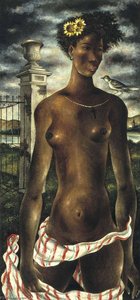
Eldzier Cortor:アーティストの肖像画

A Life Immersed in Form and Identity

Eldzier Cortor, born in Richmond, Virginia, in 1916, emerged as a pivotal figure in American art, dedicated to portraying the richness and complexity of Black life with both profound sensitivity and innovative artistic vision. His journey began with the Great Migration, his family relocating to Chicago seeking opportunity—a move that indelibly shaped his perspective and fueled his commitment to representing urban African American experiences. Cortor’s early education at Englewood High School in Chicago brought him into contact with fellow artists like Charles Wilbert White and Margaret Burroughs, fostering a creative community that would nurture his developing talent. He continued his studies at the Art Institute of Chicago, graduating in 1936, where he absorbed European artistic traditions but found himself profoundly moved by an encounter with African sculptures at the Field Museum. This discovery proved transformative, instilling within him a fascination with the cylindrical forms and lyrical qualities that would become hallmarks of his style.

The WPA Years and the Gullah Influence

The 1940s marked a crucial period in Cortor’s artistic development. His involvement with the Works Progress Administration (WPA) provided him with invaluable experience documenting scenes of Bronzeville, a vibrant Black neighborhood in Chicago during the Depression era. This work wasn't merely documentation; it was an act of affirmation, capturing the dignity and resilience of a community often overlooked or misrepresented. Simultaneously, Cortor’s dedication to positive portrayals of African Americans was nurtured by his avid readership of *The Chicago Defender*, a newspaper dedicated to celebrating Black achievements. However, it was through two Rosenwald Foundation Fellowships in 1944 and 1945 that Cortor embarked on an experience that would profoundly alter the course of his art. These fellowships allowed him to live among the Gullah people on the Sea Islands of Georgia and South Carolina—a relatively isolated African diasporic culture retaining strong ties to its ancestral roots. Immersing himself in their traditions, Cortor found a powerful source of inspiration, incorporating elements of traditional African aesthetics into his work and deepening his exploration of Black identity.

Blending Surrealism with Ancestral Echoes

Cortor’s artistic style was characterized by a compelling fusion of realism and surrealist influences. He often distorted perspective not as an end in itself, but to emphasize the subject's role within society and to imbue his work with a sense of fantasy and symbolic depth. Central to his oeuvre was the representation of the Black female figure—a motif he considered embodying the essence of the Black race, conveying a feeling of eternity and continuity. He challenged prevailing beauty standards by portraying Black women with dignity, strength, and an unapologetic celebration of their unique features and cultural significance. This wasn’t simply portraiture; it was an act of reclaiming representation and asserting the inherent beauty within the Black community. His exploration extended beyond painting to encompass printmaking—lithography and etching becoming favored mediums—and assemblage, demonstrating a remarkable versatility in his artistic practice. The 1949 Guggenheim Fellowship further broadened his horizons, enabling him to travel to Jamaica, Cuba, and Haiti, where he studied Caribbean art and culture and taught at the Centre d’Art in Port-au-Prince.

Legacy of Representation and Resilience

Throughout his long and distinguished career, Eldzier Cortor received significant recognition for his contributions to American art. His work has been exhibited extensively, including solo shows at the Boston Psychoanalytic Society and Institute and the Indiana University Art Museum. Today, his paintings and prints are held in prestigious collections such as the Howard University Gallery of Art, the Smithsonian American Art Museum, and The Art Institute of Chicago—testaments to his enduring artistic legacy. Cortor’s historical significance lies not only in his technical skill but also in his pioneering role in challenging stereotypes and celebrating Black identity. He was among the first African American artists to consistently depict nude Black women as central subjects, a bold act that defied societal norms and paved the way for subsequent generations of artists exploring themes of race, gender, and cultural heritage. His ability to synthesize European surrealism with African artistic traditions created a unique aesthetic—a powerful visual language that continues to resonate today, reminding us of the enduring strength, beauty, and resilience of the Black spirit.