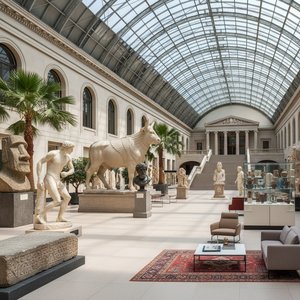
A Legacy of Scholarship and Artistic Inspiration: St Cross College’s Collection
St Cross College, Oxford stands as a testament to enduring intellectual curiosity and the transformative power of art—a harmonious blend that defines its identity and distinguishes it from many other Oxford colleges. Founded in 1965 with a singular focus on graduate research—a pioneering approach for Oxford—the college's ethos has fostered an environment where scholarly pursuits intertwine seamlessly with aesthetic appreciation. This remarkable synergy is beautifully reflected in its carefully curated collection, which showcases artworks spanning centuries and continents, offering visitors a glimpse into the minds of influential thinkers and artists who shaped Western culture.
Architectural Grandeur: The Blackwell Quadrangle and Beyond
The college’s campus embodies Oxford’s architectural heritage. Dominating the landscape is the Richard Blackwell Quadrangle, named in honor of a generous benefactor whose vision ensured St Cross's continued prosperity. Constructed primarily between 1884 and 1926, this impressive space exemplifies Victorian grandeur, featuring soaring ceilings adorned with intricate plasterwork—a masterful demonstration of craftsmanship. Adjacent to it is the newer West Quad, designed to accommodate expanding research facilities and reflecting a more contemporary aesthetic. Notably, the Four Colleges Arch commemorates the collaborative spirit of Oxford’s elite institutions, symbolizing unity and shared ambition. Its stately presence serves as a constant reminder of Oxford's rich architectural tradition.
A Window into Artistic Expression: Collection Highlights
The college’s collection isn't merely decorative; it serves as a conduit for understanding artistic movements and intellectual currents. Among its treasures are pieces from diverse periods—ranging from Renaissance prints to Impressionist landscapes—each selected for its aesthetic merit and historical significance. Particularly noteworthy is Gilbert Rogers’ 1919 oil painting, “A British Red Cross Society and Order of St John Barge on the Tigris at Amara,” capturing the spirit of WWI maritime life in Mesopotamia with vibrant colors and textured brushstrokes. This artwork exemplifies Impressionistic technique—a deliberate departure from academic realism—emphasizing light and atmosphere to convey emotion. Furthermore, Merton College and St Alban Hall’s architectural masterpiece by John Fulleylove is a stunning example of Victorian Gothic Revival style, showcasing intricate stonework and stained glass windows that illuminate the courtyard with ethereal hues. The collection's diversity speaks volumes about the college’s commitment to fostering intellectual exploration across disciplines.
Celebrating Artistic Dialogue: Notable Exhibitions
St Cross College actively engages its community through exhibitions that explore connections between art and scholarship. These events invite dialogue between artists and researchers, fostering new perspectives on cultural history. Recent exhibitions have tackled themes of identity, memory, and visual storytelling—demonstrating the college’s commitment to stimulating intellectual curiosity and promoting artistic appreciation. Collaborations with renowned curators and artists alike enrich the visitor experience and solidify St Cross College's position as a center for artistic discourse.
A Singular Institution: Graduate Focus and Enduring Patronage
What distinguishes St Cross College is its unwavering dedication to graduate education and the generosity of its benefactors. The Master of St Cross is appointed by the University Council, ensuring independence and fostering a scholarly environment unlike many Oxford colleges. The Blackwell benefaction—a pivotal moment in the college’s history—secured its future and enabled ambitious expansion projects. Visiting St Cross College offers an opportunity to immerse oneself in this unique institution—a place where artistic beauty inspires intellectual exploration and where tradition meets innovation, cementing its legacy as a beacon of learning and aesthetic excellence within Oxford's venerable collegiate landscape.