


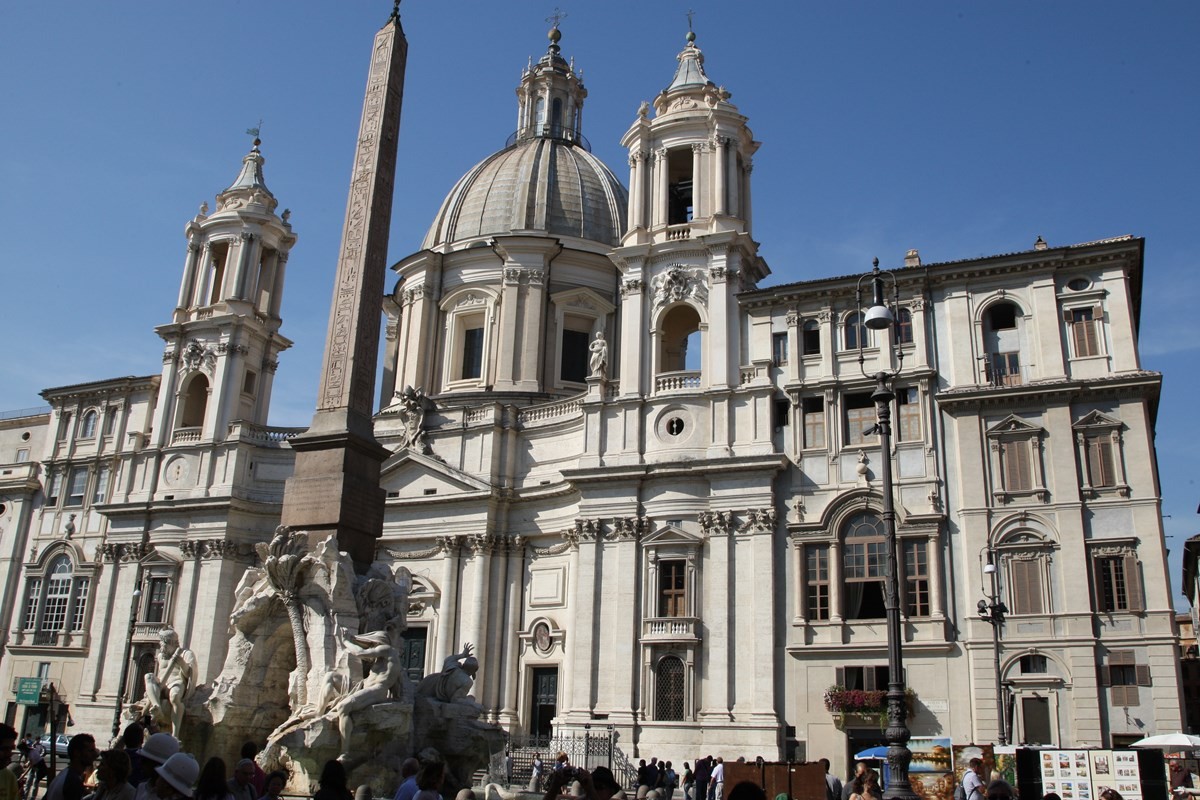
Una testimonianza di fede e forma: Sant'Agnese in Agone
Sant’Agnese in Agone, che si erge maestosa in Piazza Navona a Roma, non è semplicemente una chiesa; è una narrazione stratificata, incisa nella pietra, nell'affresco e nello spirito stesso del Barocco. Fermarsi dinanzi alla sua facciata significa lasciarsi immediatamente avvolgere da un senso di tensione drammatica – un gioco deliberato tra forme concave e convesse, progettato per catturare lo sguardo e condurlo in un mondo dove la grandezza terrena incontra l'aspirazione divina. La storia della chiesa non inizia con la sua costruzione nel XVII secolo, ma molto prima, affondando le radici nell'antico Stadio di Domiziano, un luogo intriso di storia romana e infine consacrato dal martirio della stessa Sant'Agnese.
Le origini di questo spazio sacro sono profondamente evocative. All'inizio del IV secolo d.C., Agnese, una giovane donna rinomata per la sua fede incrollabile, fu giustiziata tra le mura dello stadio. Secoli dopo, Papa Innocenzo X Pamphilj immaginò una chiesa che non solo onorasse la sua memoria, ma servisse anche come potente simbolo dell'autorità papale e del rinnovamento cattolico. Egli incaricò Girolamo Rainaldi di iniziare i lavori, dando il via a un progetto che sarebbe diventato un capolavoro collettivo, coinvolgendo infine il genio di Carlo Rainaldi e, in modo ancora più significativo, quello di Francesco Borromini.
La visione rivoluzionaria di Borromini
Sebbene Carlo Rainaldi abbia gettato le basi con una facciata sapientemente progettata per completare la curvatura della piazza, fu Borromini a trasformare veramente Sant’Agnese in un'icona dell'architettura barocca. La sua cupola è a dir poco mozzafiato – un'audace impresa di ingegneria strutturale e innovazione estetica. Otto colonne si irradiano dall'asse centrale, creando un dinamico intreccio di luci e ombre che sembra sfidare la gravità. Non si trattava solo di costruire una struttura bella; l'obiettivo era manipolare lo spazio stesso, elevando l'interno a altezze vertiginose ed evocando un senso di perfezione divina.
L'impegno di Borromini nel superare i confini artistici è palpabile in ogni dettaglio. La complessa geometria della cupola, meticolosamente calcolata sia per la stabilità che per l'impatto visivo, riflette la sua profonda comprensione della matematica e dell'ottica. Egli non cercava solo la simmetria, ma un equilibrio dinamico, una tensione armoniosa che attira lo spettatore verso il cielo. Questo approccio innovativo ha stabilito Sant’Agnese come pietra miliare dell'eccellenza architettonica barocca, influenzando generazioni di architetti a venire.
Un interno ardente di tesori artistici
Entrare in Sant'Agnese è come accedere a un regno celeste. L'interno della chiesa è adornato da magnifici affreschi di Ciro Ferri, tra cui spicca l'*Apoteosi di Sant'Agnese*. Queste tele vibranti ritraggono l'ascesa della santa al cielo in un vortice di angeli e santi, trasmettendo un profondo senso di spiritualità e virtuosismo artistico. La maestria di Ferri nel colore e nella composizione crea uno spettacolo drammatico che immerge il visitatore nel significato teologico del martirio di Agnese e della sua trionfante glorificazione.
A completare gli affreschi di Ferri sono le sculture di Bernini e di altri maestri del Barocco, che esaltano l'attrattiva estetica della chiesa e commemorano la santità di Sant'Agnese. L'altare stesso è una testimonianza del fervore artistico dell'epoca, ornato con intagli intricati e materiali preziosi. Sotto il pavimento principale si trova la cripta, una cappella sotterranea che custodisce le reliquie di Sant'Agnese – uno spazio contemplativo per la riflessione e la preghiera, che preserva i resti fisici della santa come simbolo tangibile di fede.
Un'eredità viva: concerti e restauri continui
Sant'Agnese in Agone non è solo un reperto del passato; continua a prosperare come vibrante centro culturale. Oggi, la Sacrestia di Borromini – rinomata per la sua eccezionale acustica – ospita concerti classici che celebrano l'eredità artistica della chiesa. Queste esecuzioni offrono ai visitatori un'esperienza immersiva, permettendo loro di connettersi con lo spazio su un livello profondamente emotivo.
Gli sforzi di restauro in corso assicurano che questo capolavoro barocco rimanga accessibile alle generazioni future, salvaguardandone lo splendore e preservando il suo ruolo di simbolo dell'eterno patrimonio culturale di Roma. Visitare Sant'Agnese non significa semplicemente ammirare l'arte; significa intraprendere un viaggio attraverso la storia romana – un pellegrinaggio nel cuore della grandezza barocca, dove fede, forma e innovazione artistica convergono in una bellezza mozzafiato.


