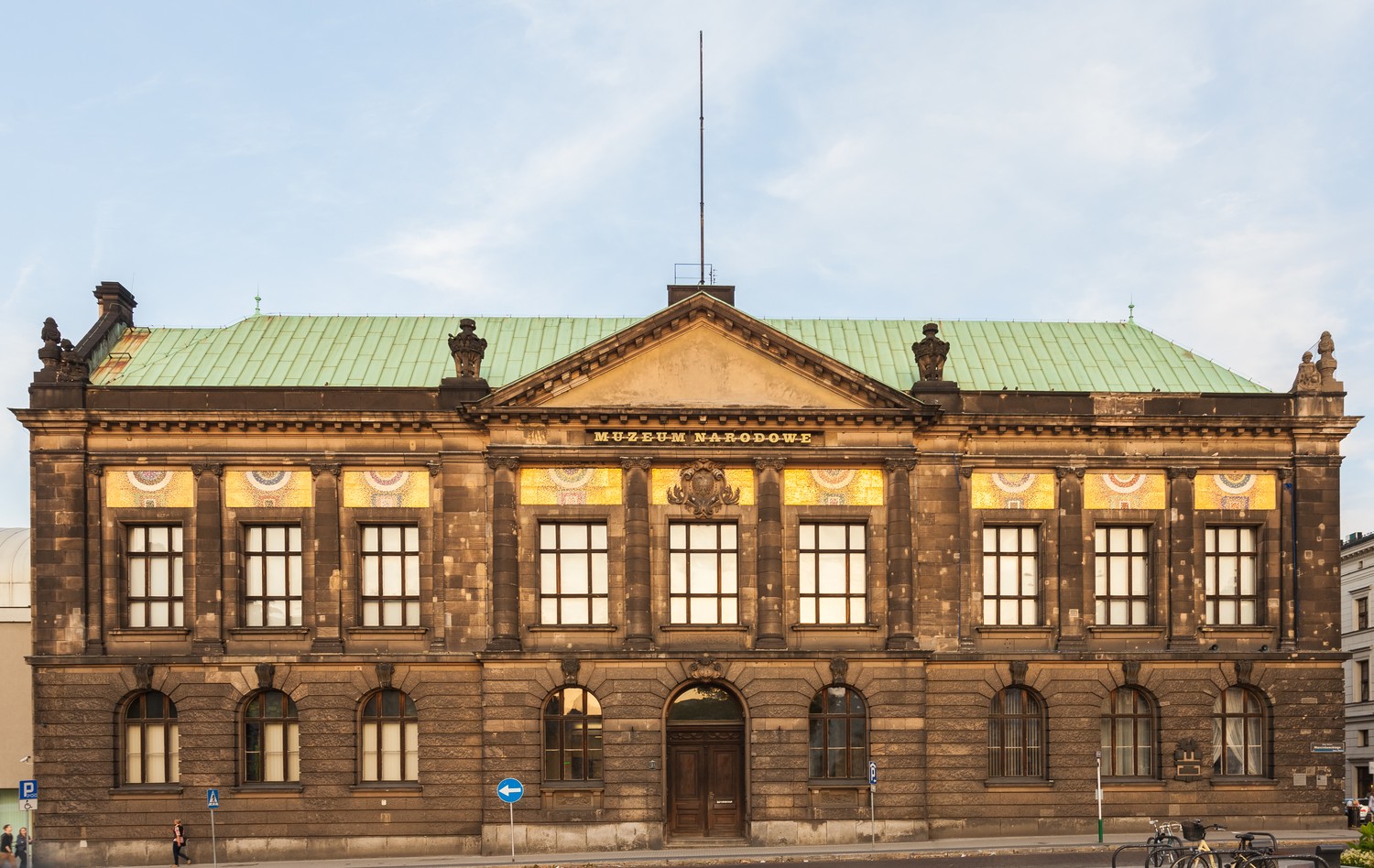
A Legacy of Polish Artistry: Exploring Poznań’s National Museum
The National Museum in Poznań (Muzeum Narodowe w Poznaniu) stands as a testament to Poland's artistic heritage, nestled within the vibrant city of Poznań and its surrounding Wielkopolska region. Established in 1857 with the ambitious goal of preserving Polish cultural treasures, it has evolved into one of the nation’s foremost institutions for visual arts scholarship and public engagement—a place where history breathes alongside breathtaking masterpieces. Its architectural grandeur, rooted in a fascinating narrative spanning centuries, continues to inspire visitors eager to delve into Poland's artistic soul.
A Building Shaped by History: Carl Hinckeldyen’s Vision
The museum’s current edifice was conceived by the renowned architect Carl Hinckeldyen and inaugurated in 1904. Initially designed as “The Museum of Polish and Slavic Antiquities,” it quickly absorbed influences from various artistic movements, reflecting Poland's shifting political landscape during its formative years. The building itself embodies a Beaux-Arts style—characterized by symmetrical facades adorned with sculptures and classical ornamentation—a deliberate choice intended to convey prestige and intellectual seriousness. Tragically, World War II inflicted devastating damage upon the museum, resulting in looting and destruction of irreplaceable artworks. Following the war, extensive restoration efforts spearheaded by Marian Trzaska and later Witold Gyurkovich ensured its survival and expanded its footprint, incorporating a modern wing that houses contemporary exhibitions alongside the museum’s core collections. The meticulous reconstruction project honored the original design while embracing innovation to safeguard Poland's artistic legacy for future generations.
Treasures Within Walls: Polish Art's Radiant Showcase
The museum’s primary focus is undeniably on Polish art from the sixteenth century to the present day—a panorama of artistic expression encompassing painting, sculpture, and decorative arts. Visitors can marvel at iconic works by luminaries such as Jan Matejko, whose monumental canvases depict pivotal moments in Polish history – scenes of battles, coronations, and national celebrations rendered with unparalleled detail and dramatic flair. Olga Boznańska’s portraits capture the essence of Belle Époque Poland, portraying women with grace and psychological depth—a reflection of the era's fascination with portraiture and human emotion. Jacek Malczewski’s canvases delve into Slavic mythology and folklore, exploring themes of heroism and spiritual symbolism with bold colors and expressive brushstrokes. Stanisław Wyspiański, a pioneer of Polish Symbolism, pushed artistic boundaries through theatrical productions and visual art alike—his works embodying the spirit of intellectual rebellion and poetic imagination. Leon Wyczółkowski’s landscapes celebrate the beauty of Wielkopolska's countryside, capturing the subtle nuances of light and color with meticulous observation and masterful technique. And Władysław Czachórski’s canvases explore themes of faith and national identity—his paintings imbued with solemn grandeur and conveying profound spiritual contemplation. The Gallery of Foreign Painting houses an extraordinary collection amassed by Count Raczyński—one of Europe's largest repositories of European paintings—featuring masterpieces from Italy, Spain, the Netherlands, and Germany.
Beyond Paintings: Expanding Horizons
However, Poznań’s National Museum transcends mere painting exhibitions. Its collections extend to numismatic treasures—coins and medals documenting Poland’s rich past—and a captivating Gallery of Applied Arts showcasing ceramics, textiles, furniture, and decorative crafts. These diverse holdings illuminate not only artistic creativity but also the broader cultural context in which Polish art flourished. Furthermore, exploring Poznań's museum network is an experience in itself: The Museum of Applied Arts, Museum of the History of Poznań, Military Museum of Wielkopolska, Museum of Musical Instruments, Ethnography Museum, Rogalin Palace and Gołuchów Castle offer complementary perspectives on Polish culture and heritage. Each branch contributes to a richer understanding of Poland’s artistic traditions and its engagement with global influences.
What Sets Poznań Apart: A Synthesis of Tradition and Innovation
Ultimately, what distinguishes Poznań’s National Museum is its holistic representation of Polish artistic tradition alongside an impressive international collection—a harmonious blend housed within a network of historically significant branch museums. It invites visitors to embark on a journey through time, encountering both celebrated Polish artists and influential European masters, fostering a deeper understanding of art history and inspiring appreciation for the enduring beauty of creative expression. Its commitment to preserving cultural heritage while embracing contemporary artistic dialogue ensures that Poznań’s National Museum remains a beacon of Polish culture—a place where past meets present in an unforgettable celebration of artistry.




