A Sanctuary of Renaissance Splendor: Exploring Foligno’s Convent of the Tertiary Franciscans
Nestled in the Umbrian hills, Foligno holds a secret – a breathtaking testament to artistic devotion and architectural grandeur: The Convent of the Tertiary Franciscans. More than just a building, it's an immersive experience into the heart of Renaissance Italy and the enduring legacy of Saint Angelina of Foligno. Its unassuming exterior belies the extraordinary treasures housed within its walls, making it a pilgrimage for anyone captivated by art history and spiritual contemplation.
Collection Highlights:
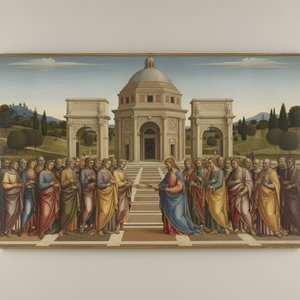
The convent’s artistic soul resides in its remarkable assemblage of fifteenth-century paintings and sculptures. Among these masterpieces is Pietro Perugino's monumental fresco depicting *The Last Supper*, arguably the most celebrated depiction of this pivotal biblical narrative. Examining Perugino’s masterful use of sfumato—a technique characterized by subtle gradations of tone—reveals a profound understanding of light and shadow, capturing the emotional intensity of Jesus’ final meal with his disciples. The fresco's composition adheres to classical principles of perspective and proportion, reflecting the humanist ideals that permeated Renaissance artistic thought. Scholars have analyzed Perugino’s brushstrokes and pigment choices, uncovering insights into the artist’s workshop practices and the broader context of Florentine painting during the Quattrocento.
Architectural Marvel:
Constructed originally as a residence for Franciscan Third Order monks, the convent underwent significant transformations throughout centuries. Its monumental refectory stands as an exemplar of Renaissance architectural design, featuring soaring ceilings adorned with frescoes and intricate carvings that evoke a sense of solemn reverence. The building’s harmonious proportions and masterful craftsmanship underscore its importance as a cultural landmark. Constructed in the mid-fifteenth century, the refectory embodies the stylistic innovations championed by Andrea Vinci (1743 – 1817), who skillfully blended Gothic elements with classical influences—a hallmark of Umbrian Baroque architecture. Detailed architectural plans reveal meticulous attention to structural integrity and decorative embellishment, demonstrating the skill of Renaissance builders and artisans.
History & Patron Saint:
Founded around 1255 as a home for Franciscan monks, Foligno’s Convent has witnessed centuries of religious fervor and artistic patronage. The Order's commitment to simplicity and contemplation profoundly shaped its ethos—and consequently, its artistic output. Notably, the convent is venerated as the sanctuary of Saint Angelina of Foligno (1286 – 1348), a revered Franciscan saint who championed the sanctity of marriage and devoted her life to charitable works. Her unwavering faith inspired generations of monks and fostered an atmosphere of piety that permeated the convent’s artistic endeavors, resulting in a collection of devotional artworks reflecting Saint Angelina's spiritual influence.
Notable Exhibitions & Scholarly Interpretations:
Recent exhibitions have illuminated Foligno’s Convent’s significance as a pivotal site for understanding Renaissance artistic conventions and theological perspectives. Experts have scrutinized Perugino’s fresco alongside comparative studies of similar depictions across Europe, analyzing stylistic similarities and divergences to trace the evolution of artistic ideas during the Quattrocento. Furthermore, researchers have explored the convent's role in preserving Umbrian cultural heritage—highlighting its contribution to the dissemination of humanist scholarship and artistic innovation throughout Italy.
What Makes Foligno’s Convent Unique:
Unlike many grand palaces or opulent churches, Foligno’s Convent offers a contemplative space where art breathes life into faith. Visitors are invited to immerse themselves in the serene grandeur of the refectory—a testament to Renaissance architectural prowess—and contemplate the profound beauty of Pietro Perugino's *The Last Supper*, capturing the essence of artistic devotion and historical legacy. Its unassuming charm, combined with its rich artistic heritage, distinguishes Foligno’s Convent as a singular destination for art enthusiasts seeking inspiration and spiritual enrichment.