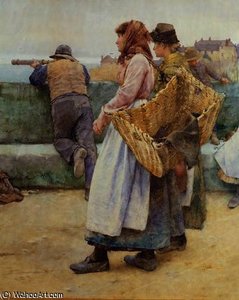
Ritratto di Walter Langley

I 59 dipinti più famosi di Walter Langley, ognuno unico nel suo genere

Aggiornato Novembre 2026 · classificato in base al nostro punteggio di popolarità (ricerche, visite e ordini per ogni opera) · 59 opere di Walter Langley nel nostro catalogo

In breve

Old Market Hall and Fountain, Birmingham (1880) è il dipinto di Walter Langley che attira più sguardi; l'originale è conservato presso il Birmingham Museum and Art Gallery, Birmingham. Successivamente, lo sguardo si sposta su Memories (1885) e But Men Must Work and Women Must Weep (1883). Tra i 59 opere di Walter Langley nel nostro catalogo, queste 59 sono le più famose, ognuna un originale unico presentato con il suo anno, il suo museo e il motivo per cui è eterna.

1852 – 1922, Birmingham Social realism Più opere: Birmingham Museum and Art Gallery

Le 10 migliori opere di Walter Langley, attraverso lo sguardo della galleria

1
Old Market Hall and Fountain, Birmingham (1880) di Walter Langley

Old Market Hall and Fountain, Birmingham

1880 · Watercolor · Birmingham Museum and Art Gallery, Birmingham

The interior of the Old Market Hall in Birmingham stretches upward, a vast shell of iron and glass. High above, a skylight filters the daylight, casting a soft, diffused glow over the architecture. At the heart of this space sits an ornate bronze fountain, its presence anchored by a heavy base of Yorkshire sandstone. A solitary woman, draped in dark, Victorian-era clothing, moves past the basin. Her silhouette provides a…

2
Memories (1885) di Walter Langley

Memories

1885 · Oil On Canvas · Birmingham Museum and Art Gallery, Birmingham

In this 1885 oil on canvas, three generations of women occupy a rustic interior, their presence anchored by a heavy visual weight on the left. A seated elderly woman and a young girl reading create a focal point of stillness, while a third figure stands near a window on the right. The composition relies on an asymmetrical balance, using the verticality of the standing figure to counter the seated group.…

3
But Men Must Work and Women Must Weep (1883) di Walter Langley

But Men Must Work and Women Must Weep

1883 · Oil On Canvas · Birmingham Museum and Art Gallery, Birmingham

The composition centers on two female figures within a dimly lit, enclosed interior. A younger woman sits slumped forward, her head resting heavily in her hands. Her posture suggests a state of profound exhaustion or sorrow. Standing behind her, an older woman observes the scene, her features weathered and her expression somber. The lighting originates from a single source to the left, casting soft shadows across the heavy folds of…

4
In Memoriam (1882) di Walter Langley

In Memoriam

1882 · Oil · Birmingham Museum and Art Gallery, Birmingham

In In Memoriam, Walter Langley presents an oil painting of an elderly woman captured in a moment of profound grief or exhaustion. The subject is seated slightly to the left of the center, her head resting heavily upon her hand near a table. This posture, combined with the stillness of the figure, suggests themes of mourning, loss, or weary reflection. The work, dating from about 1882, focuses on the quietude…

5
Disaster Scene in a Cornish Fishing Village (1889) di Walter Langley

Disaster Scene in a Cornish Fishing Village

1889 · Oil · Birmingham Museum and Art Gallery, Birmingham

In this oil painting, titled Disaster Scene in a Cornish Fishing Village, the artist Walter Langley explores the heavy emotional toll of life on the coast. Created about 1889, the work focuses on the immediate human impact of a maritime disaster. Rather than focusing on the sea itself, the subject matter centers on the communal grief found within the village. It is a quiet, somber study of how a single…

6
Study of an Old Fisherwoman (1889) di Walter Langley

Study of an Old Fisherwoman

1889 · Watercolor · Birmingham Museum and Art Gallery, Birmingham

A single figure sits anchored in the dim light of an interior. She is an old fisherwoman, her body slumped in a posture of heavy, settled weariness. The light enters from a window to the left, a soft and diffused glow that traces the deep folds of her clothing and the weathered topography of her skin. She does not look at the viewer. Her gaze is turned inward, lost in…

7
But O For the Touch of a Vanished Hand (1888) di Walter Langley

But O For the Touch of a Vanished Hand

1888 · Oil · Birmingham Museum and Art Gallery, Birmingham

In this 1888 work, titled But O For the Touch of a Vanished Hand, we encounter the quiet, observational style of Walter Langley. Born in Birmingham, United Kingdom, Langley developed a perspective deeply rooted in the realities of the working class, a focus that would define much of his career. This piece emerged during a period when he was establishing himself as a significant figure within the Newlyn School of…

8
An Old Cornish Woman (1891) di Walter Langley

An Old Cornish Woman

1891 · Oil On Canvas · Birmingham Museum and Art Gallery, Birmingham

An Old Cornish Woman is a portrait by Walter Langley, executed about 1891. The subject is an elderly woman seated within a dimly lit interior. This portrait utilizes a vertical orientation to emphasize her presence against the sparse surroundings of the room. The depiction follows the conventions of late 19th-century realism, focusing on a truthful and unidealized representation of everyday life and character.

9
Never Morning Wore to Evening but Some Heart Did Break (1894) di Walter Langley

Never Morning Wore to Evening but Some Heart Did Break

1894 · Oil · Birmingham Museum and Art Gallery, Birmingham

Painted in 1894, this work reflects the social realism that defined much of the period's interest in the working class. The subject matter avoids embellishment, choosing instead to honor the humanity found within quiet struggles. There is a palpable sense of shared sorrow in the way the figures interact, suggesting a narrative of loss that extends beyond the frame. The composition uses the receding perspective of the coastline to provide…

10
Expert Opinion (1905) di Walter Langley

Expert Opinion

1905 · Oil On Canvas · Birmingham Museum and Art Gallery, Birmingham

In Expert Opinion by Walter Langley, a quiet moment unfolds by the seaside. Painted about 1905, this genre scene captures a pause in the rhythm of coastal life. Three figures occupy the space, arranged in a way that draws the eye across their silent interaction. An older man sits on the left, his presence grounded and steady. In the center, a young boy becomes the focal point of the group,…

I dipinti più famosi di Walter Langley, dal numero 11 al 59

I dipinti più famosi di Walter Langley, periodo per periodo

I soggetti che hanno catturato lo sguardo di Walter Langley

I quattro soggetti che ricorrono più spesso in questi originali, ognuno con il suo esempio più raffinato.

I musei che conservano gli originali di Walter Langley

Il museo che custodisce la maggior parte dei dipinti presenti in questa pagina.

Musei Città Opere di Walter Langley Dipinti di questo elenco
Birmingham Museum and Art Gallery, BirminghamBirmingham Museum and Art Gallery Birmingham 10 Old Market Hall and Fountain, Birmingham, Memories, But Men Must Work and Women Must Weep

Walter Langley attraverso i decenni: un originale unico per ognuno

Opere per decennio

Scegli un decennio per scoprire l'opera originale che lo ha definito.

I dipinti di Walter Langley: domande per la galleria

Qual è l'opera più famosa di Walter Langley?Scopri la risposta

Old Market Hall and Fountain, Birmingham (1880), Birmingham Museum and Art Gallery, Birmingham. Seguono Memories (1885) e But Men Must Work and Women Must Weep (1883).

A che età Walter Langley ha creato Old Market Hall and Fountain, Birmingham?Scopri la risposta

28 anni: Old Market Hall and Fountain, Birmingham risale al 1880, e Walter Langley è nato/a nel 1852.

Quali sono i dieci dipinti più famosi di Walter Langley?Scopri la risposta

Old Market Hall and Fountain, Birmingham, Memories, But Men Must Work and Women Must Weep, In Memoriam, Disaster Scene in a Cornish Fishing Village, Study of an Old Fisherwoman, But O For the Touch of a Vanished Hand, An Old Cornish Woman, Never Morning Wore to Evening but Some Heart Did Break e Expert Opinion. La classifica sopra riporta l'anno e il museo di ciascuna opera.

Quante opere di Walter Langley sono conosciute?Scopri la risposta

Il nostro catalogo comprende 59 opere di Walter Langley, datate da 1880 a 1905.

Dove si possono ammirare gli originali più famosi di Walter Langley?Scopri la risposta

Principalmente in Birmingham Museum and Art Gallery (Birmingham). La tabella dei musei sopra li elenca tutti.

In quale periodo Walter Langley ha realizzato i suoi dipinti più famosi?Scopri la risposta

In 1880s: 7 delle 59 opere in questa pagina sono state realizzate in quel periodo, tra cui Old Market Hall and Fountain, Birmingham.

Qual è il dipinto più antico di Walter Langley e quale il più recente?Scopri la risposta

In questa pagina, il più antico risale al Old Market Hall and Fountain, Birmingham (1880) e il più recente al Expert Opinion (1905).

Quali soggetti preferiva Walter Langley?Scopri la risposta

Woman (9), Elderly woman (5) e Interior (4), tra le 59 opere in questa pagina.

Con quali materiali ha dipinto più spesso Walter Langley?Scopri la risposta

Oil, per 5 delle 59 opere in questa pagina.

A quale movimento appartiene l'opera di Walter Langley?Scopri la risposta

Social realism e Newlyn school, a giudicare dagli originali presenti in questa pagina.

Quali opere originali di Walter Langley posso vedere al Birmingham Museum and Art Gallery?Scopri la risposta

Old Market Hall and Fountain, Birmingham, Memories e But Men Must Work and Women Must Weep: il Birmingham Museum and Art Gallery, Birmingham custodisce 10 delle opere presenti in questa pagina.

Walter Langley: un ritratto dell'artista

Una Voce Cornica nel Realismo Vittoriano

Walter Langley (1852–1922) si erge come una figura cardine all'interno della Newlyn School di pittori en plein air, rappresentando un filone significativo della storia dell'arte britannica al volgere del secolo. Nato a Birmingham, la sua educazione gli instillò un legame profondo con la classe operaia, un'influenza formativa che avrebbe permeato la sua visione artistica e plasmato profondamente le sue rappresentazioni della vita cornica. Suo padre era un sarto itinerante, e questo gli fornì una precoce comprensione dell'artigianato e del lavoro manuale, valori che portò con sé per tutta la vita e che successivamente tradusse nelle sue tele. Questo rispetto fondamentale per la dignità del lavoro divenne il cuore pulsante della sua produzione creativa.

A quindici anni, Langley intraprese un apprendistato con un litografo, affinando competenze cruciali per catturare dettagli e texture, doti che si sarebbero rivelate inestimabili nelle sue successive opere ad acquerello. All'età di ventuno anni, ottenne una borsa di studio presso la South Kensington Art School, dove studiò il design insieme ad altri artisti come Frederic Leighton, assorbendo le convenzioni stilistiche dell'arte accademica e, contemporaneamente, coltivando le sue nascenti sensibilità artistiche. Questa doppia esposizione favorì un connubio distintivo tra perizia tecnica ed esplorazione immaginativa, permettendogli di colmare il divario tra la formazione formale e la nuda verità dell'osservazione.

L'Anima di Newlyn

La svolta artistica di Langley arrivò nel 1881, quando gli furono assegnati 500 sterline per un anno di lavoro dal signor Thrupp, un fotografo di Birmingham: un generoso mecenatismo che gli permise di trasferire la propria famiglia a Newlyn, in Cornovaglia. Questo spostamento cementò l'impegno di Langley nel documentare la vita quotidiana dei pescatori della Cornovaglia e delle loro famiglie, stabilendolo come uno dei primi artisti a insediarsi in questa fiorente comunità artistica. La sua decisione di dare priorità alla pittura rispetto alla fotografia riflette una dedizione nel catturare l'essenza dell'esperienza umana attraverso l'arte visiva piuttosto che attraverso la riproduzione fotografica.

In quanto acquerellista consumato, Langley possedeva un'abilità insuperabile nel catturare la forma umana e le sottili sfumature della luce all'interno di questo medium. La sua opera andava spesso oltre il semplice paesaggio, concentrandosi invece sull'intimità domestica e sulle silenziose lotte degli abitanti costieri. Che fosse attraverso i toni smorzati di In The Firelight o le toccanti narrazioni presenti in The Letter, la sua pennellata trasmetteva una profonda empatia per i suoi soggetti. Non era un semplice osservatore della costa di Newlyn; ne era il cronista, intrecciando il tessuto sociale del villaggio di pescatori in ogni lavata di colore.

Realismo Sociale e un'Eredità Duratura

Politicamente allineato con gli ideali socialisti — sostenendo in particolare Charles Bradlaugh, un politico radicale — l'opera di Langley ha costantemente promosso il realismo sociale. Egli ritrasse con maestria le difficoltà e la silenziosa resilienza della classe operaia, rendendo la sua arte un vece per l'osservazione sociale. Questo impegno verso la verità gli valse il riconoscimento internazionale; in particolare, il grande scrittore Lev Tolstoj citò l'opera di Langley come un esempio eccellente di arte buona e significativa. I suoi dipinti non cercavano di abbellire la povertà, ma di onorare l'umanità che vi risiede.

L'importanza storica di Walter Langley risiede nel suo ruolo di fondatore della comunità artistica di Newlyn e nella sua capacità di elevare le lotte quotidiane della vita rurale al livello della grande arte. La sua eredità è definita da diversi contributi chiave:

  • Realismo Sociale Pionieristico: Portò una profondità politica ed empatica alla Newlyn School, andando oltre la pura estetica per affrontare la condizione umana.
  • Maestria dell'Acquerello: È ricordato come uno dei più grandi acquerellisti che il Regno Unito abbia mai prodotto, in particolare per la sua capacità di rendere texture ed emozione in un medium così delicato.
  • Documentazione Culturale: La sua opera funge da vitale registro visivo dell'industria della pesca cornica e delle strutture sociali della Gran Bretagna tardo-vittoriana ed edoardiana.

Attraverso la sua dedizione alla pittura en plein air e il suo incrollabile focus sulla dignità del lavoro, Walter Langley ha assicurato che le voci dei pescatori della Cornovaglia risuonassero ben oltre le coste di Newlyn, lasciando un segno indelebile nel panorama del Realismo Britannico.