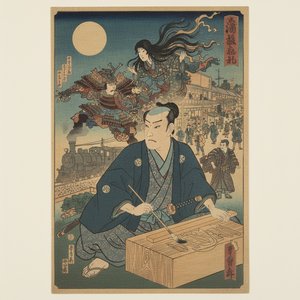
Un Visionario dell'Era Meiji: La Vita e l'Eredità di Toyohara Chikanobu
Nel crepuscolo del periodo Edo e all'alba di un Giappone in via di modernizzazione, pochi artisti sono riusciti a catturare la profonda tensione tra tradizione e trasformazione con la maestria di Toyohara Chikanobu. Nato nel 1838, in un'epoca di radicali mutamenti culturali, Chikanobu — spesso riconosciuto con il suo nome d'arte Yōshū Chikanobu — emerse come una figura monumentale nel mondo della stampa xilografica giapponese. La sua vita fu un ponte tra due mondi: l'estetica antica e raffinata della classe samurai e l'energia nascente, influenzata dall'Occidente, dell'era Meiji. Mentre il suo vero nome, Hashimoto Naoyoshi, suggeriva un'esistenza più privata, la sua persona artistica catturò l'attenzione di una nazione impegnata in una rapida metamorfosi.
Le fondamenta giovanili di Chikanobu erano profondamente radicate nella meticolosa maestria del patrimonio giapponese. Cresciuto con un apprezzamento per il dettaglio che probabilmente derivava dal legame della sua famiglia con le arti, si sottopose a un rigoroso addestramento nella pittura e nella stampa. Questa base classica gli permise di padroneggiare le delicate sfumature dell'ukiyo-e, eppure non fu mai un semplice imitatore del passato. Al contrario, divenne un pioniere del movimento Shin-hanga, una forza rivitalizzante che cercava di infondere nuova vita alle tecniche tradizionali della xilografia integrando concetti occidentali come la prospettiva realistica e l'accuratezza anatomica. Questa sintesi unica permise alla sua opera di possedere una profondità e una vitalità che apparivano allo stesso tempo senza tempo e sorprendentemente contemporanee ai suoi contemporanei.
L'Arte della Trasformazione: Temi e Tecniche
La brillantezza dell'opera di Chikanobu risiede nella sua incredibile ampiezza tematica, che spazia dall'eterea bellezza dei bijinga (ritratti di donne bellissime) alla viscerale intensità delle guerre storiche. Egli possedeva una rara capacità di oscillare tra il sereno e lo spettacolare. Nelle sue raffigurazioni femminili, si ritrova una grazia poetica; le sue linee sono fluide, catturando i complessi motivi dei kimono e le atmosfere morbide ed evocative della vita quotidiana. Eppure, in netto contrasto, Chikanobu era altrettanto celebrato per i suoi drammatici trittici di battaglia. Queste opere, come i suoi vividi resoconti dell'esercito giapponese ad Asan, utilizzano colori ricchi e composizioni dinamiche per trasmettere la fatica, il movimento e il peso storico di una nazione in conflitto.
Oltre la figura umana, i paesaggi e le scene culturali di Chikanobu funsero da archivio visivo di un Giappone che stava scomparendo. Egli catturò l'effimera bellezza dei fiori di ciliegio e la grandezza delle cerimonie imperiali con uno sguardo attento sia allo splendore naturale che alla rilevanza sociale. La sua maestria tecnica era evidente nell'uso del colore e della luce, impiegando spesso sfumature sottili che suggerivano profondità e atmosfera — un marchio di fabbrica del suo impegno con le influenze artistiche occidentali. Attraverso le sue stampe, lo spettatore non si limita a osservare una scena, ma viene trasportato nel cuore pulsante delle celebrazioni dell'era Meiji, dei trionfi militari e dei momenti silenziosi di devozione.
Un'Impressione Duratura sull'Arte Giapponese
L'importanza storica di Toyohara Chikanobu si estende ben oltre i confini del Giappone. Come uno degli ultimi grandi maestri della tradizione ukiyo-e, egli fornì un legame vitale nell'evoluzione della stampa giapponese. La sua opera non si limita a documentare la storia; essa interpreta l'anima di un'epoca. Abbracciando l'innovazione senza sacrificare l'essenza dell'artigianato giapponese, egli assicurò che il mezzo tradizionale della xilografia rimanesse rilevante in un mondo in rapida globalizzazione. Oggi, le sue stampe sono amate dai collezionisti di tutto il mondo, ponendosi al fianco di leggende come Hokusai e Hiroshige come pilastri essenziali della storia dell'arte giapponese.
Riflettendo sul suo immenso contributo, diversi elementi chiave definiscono il suo impatto duraturo:
- Sintesi Culturale: La sua capacità di fondere le sensibilità orientali con la prospettiva occidentale ha rivoluzionato il linguaggio visivo delle stampe dell'era Meiji.
- Documentazione Storica: Le sue opere fungono da profonda finestra sulla vita sociale, militare e imperiale del Giappone del XIX secolo.
- Versatilità del Soggetto: Dalla delicata eleganza dei bijinga alle potenti narrazioni della guerra, la sua gamma rimane senza pari.
- Preservazione della Tradizione: Attraverso la sua dedizione alla xilografia, ha contribuito a sostenere una forma d'arte classica durante un periodo di intensa modernizzazione.
Domande e risposte
Quante opere di Toyohara Chikanobu sono disponibili nel catalogo?
Puoi sfogliare 21 opere d'arte opere di Toyohara Chikanobu nella pagina Tutte le opere.
A quale periodo storico appartiene l'opera di Toyohara Chikanobu?
Toyohara Chikanobu ha operato nel periodo XIX secolo, collocando storicamente la sua attività.
Dove posso vedere tutte le opere di Toyohara Chikanobu?
Tutte le opere di Toyohara Chikanobu presenti su questo sito web sono consultabili nella pagina Tutte le opere dell'artista.