


1


Updated Ottobre 2026 · ranked by our popularity score (searches, visits and orders for each work) · 33 works by Konrad Witz in our catalogue
In short
Mary with child (1430) is the Konrad Witz painting that draws the most eyes; the original belongs to the Kunstmuseum Basel, Basilea. After it, the eye goes to Antipater before Julius Caesar (1435) and Abraham before Melchizedek (1435). Among the 33 works of Konrad Witz in our catalog, these 33 are the most famous, each a unique original presented with its year, its museum and the reason it endures.


 Saint Christopher1435 · Kunstmuseum Basel
12
 Esther before Ahasuerus1435 · Kunstmuseum Basel
13
 St. Christopher1435
14
 Re Salomone e la Regina di Saba1435 · Staatliche Museen zu Berlin
15
 Cristo in croce1430 · Staatliche Museen zu Berlin
16
 Angel of Annunciation1435 · Kunstmuseum Basel
17
 Ecclesia1440 · Kunstmuseum Basel
18
 Madonna and Saints in a Church1443
19
 Sabobai and Benaiah1435 · Kunstmuseum Basel
20
 The Adoration of the Magi1444
21
 Joachim and Anna in front of the Golden Gate1435 · Kunstmuseum Basel
22
 Annunciation1440
23
 The Liberation of St Peter1443 · Museo di Arte e Storia
24
 Annunciation1440 · Germanisches Nationalmuseum
25
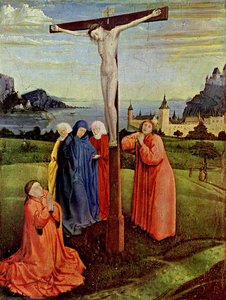 Crucifixion1444 · Gemäldegalerie
26
 The Miraculous Draught of Fishes1443 · Museo di Arte e Storia
27
 Presentation of Cardinal de Mies to the Virgin1443
28
 The Synagoge1435 · Kunstmuseum Basel
29
 L'imperatore Augusto e la Sibilla di Tibur
30
 St. Catherine Of Alexandria
31
 The Miraculous Draught of Fishes (Peter's altar table)1444 · Musée d’Art et d’Histoire de Genève
32
 St. Catherine and Mary Magdalene1440 · Musée Des Beaux
33
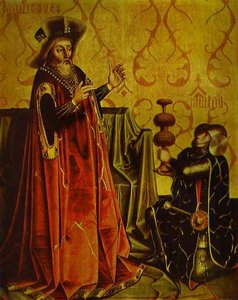 Abishai Kneeling before David1435 · Kunstmuseum Basel
The four subjects that come back most often in these originals, each with its finest example.
The 8 museums that hold the most of the paintings on this page.
| Museum | City | Works by Konrad Witz | Paintings from this list |
|---|---|---|---|
 Kunstmuseum Basel |
Basilea | 9 | Mary with child, Antipater before Julius Caesar, Abraham before Melchizedek |
 Gemäldegalerie |
Berlino | 3 | Saint Christopher (Berlin), The Council of Salvation, Crucifixion |
 Kunstmuseum Basel |
Basilea | 3 | St Bartholomew, Saint Christopher, The Synagoge |
 Musée Des Beaux |
Dijon | 2 | St Augustine, Heilsspiegelaltar - Augustus and Sibyl of Tibur |
 Staatliche Museen zu Berlin |
Berlino | 2 | Re Salomone e la Regina di Saba, Cristo in croce |
 Museo di Arte e Storia |
Ginevra | 2 | The Liberation of St Peter, The Miraculous Draught of Fishes |
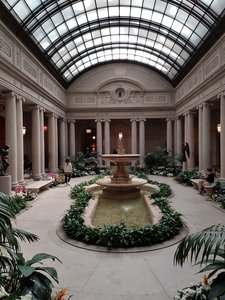 The Frick Collection |
New York City | 1 | Pietà |
 Glasgow Museums Resource Centre |
1 | Byblis Writing to Caunus |
A long career of 16 years, 1430 to 1445: Konrad Witz's most famous originals, shown year by year.
Pick a year to see its originals.


Mary with child (1430), Kunstmuseum Basel, Basilea. Antipater before Julius Caesar (1435) and Abraham before Melchizedek (1435) come next.
30 years old: Mary with child dates from 1430, and Konrad Witz was born in 1400.
Mary with child, Antipater before Julius Caesar, Abraham before Melchizedek, St Augustine, Heilsspiegelaltar - Augustus and Sibyl of Tibur, Pietà, Byblis Writing to Caunus, Saint Christopher (Berlin), The Council of Salvation and St Bartholomew. The ranking above gives each one's year and museum.
Our catalog holds 33 works by Konrad Witz, dated from 1430 to 1445.
Mostly in Kunstmuseum Basel (Basilea), Gemäldegalerie (Berlino) and Kunstmuseum Basel (Basilea). The museum table above lists them all.
In 1435: 14 of the 33 works on this page were made then, Antipater before Julius Caesar among them.
On this page, the earliest is Mary with child (1430) and the latest Saint Christopher (Berlin) (1445).
Religious (8), Saints (6) and Medieval art (3), across the 33 works on this page.
Rinascimento nordico, judging by the originals on this page.
Mary with child, Antipater before Julius Caesar and Abraham before Melchizedek: the Kunstmuseum Basel, Basilea holds 9 of the works on this page.
Yes, as a reproduction: the original stays in its museum, but any painting on this page can be painted by hand for you, made to order one at a time, from the painting's own page.
Nel panorama mutevole dell'arte europea del XV secolo, poche figure hanno proiettato un'ombra così lunga sulla transizione dalla tradizione gotica al naturalismo rinascimentale come Konrad Witz. Nato intorno al 1400 nella regione tedesca di Rottenburg am Neckar, Witz emerse come un visionario la cui pennellata iniziò a scrostare le astrazioni stilizzate del Medioevo per rivelare il mondo vibrante e materico sottostante. Sebbene gran parte della sua giovinezza rimanga avvolta nelle nebbie della storia, la sua presenza a Basilea, in Svizzello, è ampiamente documentata, consacrandolo come un maestro che fiorì all'interno dei prestigiosi sistemi di corporazione dell'epoca. Il suo percorso fu caratterizzato da una profonda evoluzione tecnica, muovendosi dalle rigide formalità dell'arte tardogotica verso una devozione senza precedenti per l'accuratezza topografica e la profondità emotiva.
Il vero genio di Witz risiede nella sua capacità di coniugare la narrazione sacra con la realtà tangibile del mondo fisico. È celebre soprattutto per il suo ruolo pionieristico nella pittura di paesaggio, un traguardo esemplificato dal suo capolavoro, La miracolosa pesca. In quest'opera, gli studiosチidentificano uno dei primi esempi di una scena topografica fedele e identificabile nella storia dell'arte occidentale. Invece di presentare uno sfondo generico e simbolico, Witz catturò l'essenza specifica di un luogo, invitando lo spettatore a immergersi in un ambiente riconoscibile. Questa innovazione trasformò il paesaggio da semplice palcoscenico per il dramma religioso in un protagonista vivo, capace di trasmettere atmosfera, luce e profondità.
L'opera di Witz è caratterizzata da una dualità mozzafiato: la capacità di eseguire monumentali e complessi altari mantenendo al contempo un tocco intimo e struggente nelle scene devozionali più piccole. Il suo Altare della Heilspiegel si erge come un traguardo straordinario della sua carriera, mostrando la meticolosa maestria richiesta per le commissioni ecclesiasticamente di alto livello. Attraverso pannelli finemente intagliati e affreschi vibranti, Witz intrecciò narrazioni bibliche e figure di santi con un livello di dettaglio che incuteva reverenza. Quest'opera funge da testimonianza della sua padronanza dello stile tardogotico, proprio mentre iniziava a sperimentare con quel nascente realismo che avrebbe definito il secolo a venire.
Oltre alla grande scala degli altari, il talento di Witz nel catturare l'emozione umana è profondamente evidente in opere come Cristo in croce. Qui, l'artista fonde il dramma gotico con un realismo primordiale, utilizzando ombreggiature sottili e gesti espressivi per evocare un profondo senso di pathos. Allo stesso modo, la sua rappresentazione del Re Salomone e la Regina di Saba dimostra la sua capacità di narrazione attraverso ricchi dettagli e innovazione paesaggistica, illustrando la grandezza biblica attraverso una lente di arte rinascimentale. Che dipingesse il silenzioso dolore di un santo o l'incontro maestoso tra sovrani, Witz utilizzò la luce e la forma per colmare il divario tra il divino e l'esperienza umana.
L'importanza storica di Konrad Witz non può essere sopravvalutata; egli agì come un vitale condotto tra due ere. Il suo sviluppo rappresenta il lento e deliberato allontanamento dal linguaggio simbolico del XIV secolo verso la scienza dell'osservazione tipica del Rinascimento. Integrando paesaggi riconoscibili e texture naturalistiche nell'iconografia religiosa, egli aprì la strada alle generazioni future di pittori dell'Europa settentrionale per esplorare la bellezza del mondo naturale.
La sua eredità duratura si ritrova nelle seguenti pietre miliari artistiche:
Sebbene la sua vita sia stata relativamente breve, terminando intorno al 1446, l'impatto di Konrad Witz rimane inciso nelle fondamenta della pittura occidentale. Egli ha insegnato all'occhio a guardare più da vicino la terra e il cielo, trovando il sacro proprio nei dettagli del mondo che abitiamo.


