Ritratto di Thomas Webster

I 89 dipinti più famosi di Thomas Webster, ognuno unico nel suo genere

Aggiornato Novembre 2026 · classificato in base al nostro punteggio di popolarità (ricerche, visite e ordini per ogni opera) · 89 opere di Thomas Webster nel nostro catalogo

In breve

La sala di Dotheboy (1848) è il dipinto di Thomas Webster che attira più sguardi; l'originale è conservato presso il Harvard Art Museums, Cambridge. Successivamente, lo sguardo si sposta su The Card Players e Football -. Tra i 89 opere di Thomas Webster nel nostro catalogo, queste 89 sono le più famose, ognuna un originale unico presentato con il suo anno, il suo museo e il motivo per cui è eterna.

1800 – 1886, Londra Più opere: Harvard Art Museums

Le 10 migliori opere di Thomas Webster, attraverso lo sguardo della galleria

1
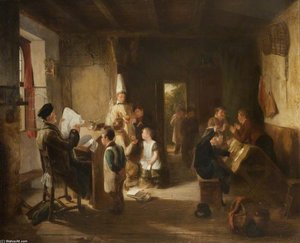
La sala di Dotheboy (1848) di Thomas Webster

La sala di Dotheboy

1848 · Acquerello · Harvard Art Museums, Cambridge

Il dipinto La sala di Dotheboy è un'opera del pittore britannico Thomas Webster. Nato in Ranelagh Street, a Pimlico, Londra, Webster trascorse gli anni della formazione muovendosi tra i rigidi percorsi dell'addestramento artistico. Entrò nella Royal Academy come studente nel 1821, un periodo che avrebbe definito le sue basi tecniche e il suo posto all'interno della tradizione inglese della pittura di genere.

2
The Card Players di Thomas Webster

The Card Players

Oil

The air in the room feels heavy with the scent of old wood and the quiet tension of a game in progress. Sunlight streams through a window, cutting through the dimness of the rustic interior to illuminate a wooden table where life unfolds in small, deliberate movements. Six figures occupy this space, their presence felt through the textures of their working-class attire—the heavy fabric of jackets, the crispness of lace…

I dipinti più famosi di Thomas Webster, dal numero 11 al 89

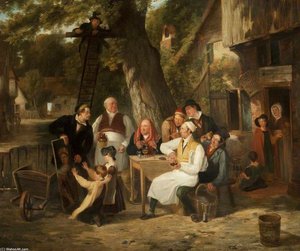
11A Village Choir - di Thomas WebsterA Village Choir - 12Tussle Outside The Schoolroom di Thomas WebsterTussle Outside The Schoolroom 13The Artist's Father And Mother di Thomas WebsterThe Artist's Father And Mother 14Beating For Recruits (rocking The Cradle) di Thomas WebsterBeating For Recruits (rocking The Cradle) 15The Gypsy di Thomas WebsterThe Gypsy 16Late At School di Thomas WebsterLate At School 17The New Sign di Thomas WebsterThe New Sign 18The New Recruit di Thomas WebsterThe New RecruitTe Whare O Rehua Sarjeant Gallery 19Hop Garden di Thomas WebsterHop Garden 20Goodnight di Thomas WebsterGoodnight 21Contrary Winds di Thomas WebsterContrary Winds 22Sunday Evening di Thomas WebsterSunday Evening 23Study For 'the Village Choir' di Thomas WebsterStudy For 'the Village Choir' 24An Impressive Still Life Of Flowers On A Stone Ledge di Thomas WebsterAn Impressive Still Life Of Flowers On A Stone Ledge 25William Miles di Thomas WebsterWilliam Miles 26The Jewelry Seller di Thomas WebsterThe Jewelry Seller 27Going To The Fair di Thomas WebsterGoing To The Fair 28A Dame's School di Thomas WebsterA Dame's School 29Youth And Age di Thomas WebsterYouth And Age 30The Sewing Lesson di Thomas WebsterThe Sewing Lesson 31Sickness And Health; A Sketch di Thomas WebsterSickness And Health; A Sketch 32The Young Volunteer di Thomas WebsterThe Young Volunteer 33A musical evening di Thomas WebsterA musical evening 34Reading The News di Thomas WebsterReading The News 35A school playground di Thomas WebsterA school playground 36Sickness And Health di Thomas WebsterSickness And Health 37Maternal Affection di Thomas WebsterMaternal Affection 38Returning From The Fair di Thomas WebsterReturning From The Fair 39Roses, Tulips, Daisies, Chrysanthemums And Other Flowers In A Glass Vase On A Stone Ledge di Thomas WebsterRoses, Tulips, Daisies, Chrysanthemums And Other Flowers In A Glass Vase On A Stone Ledge 40Chasing the cat di Thomas WebsterChasing the cat 41The Smile di Thomas WebsterThe Smile 42Roast Pig di Thomas WebsterRoast Pig 43Good Night di Thomas WebsterGood Night 44Football di Thomas WebsterFootball 45Peonies, Roses, Delphiniums, Poppies And Other Flowers, On A Ledge di Thomas WebsterPeonies, Roses, Delphiniums, Poppies And Other Flowers, On A LedgeNiedersächsisches Landesmuseum Hannover 46The Frown di Thomas WebsterThe Frown 47Summer Flowers And Fruit In A Wicker Basket, An Extensive Landscape Beyond di Thomas WebsterSummer Flowers And Fruit In A Wicker Basket, An Extensive Landscape Beyond 48Robbing The Orchard di Thomas WebsterRobbing The Orchard 49Parrot Tulips, Roses, Snow Drops And Alstroemeria Arranged Around An Alcove, di Thomas WebsterParrot Tulips, Roses, Snow Drops And Alstroemeria Arranged Around An Alcove, 50Hollyhocks, Roses And Other Flowers In A Vase di Thomas WebsterHollyhocks, Roses And Other Flowers In A Vase 51Pink Peonies, Morning Glory, Hollyhocks, Plums And Grapes di Thomas WebsterPink Peonies, Morning Glory, Hollyhocks, Plums And Grapes 52Sickness And Health - di Thomas WebsterSickness And Health - 53The Battle Of The Nile di Thomas WebsterThe Battle Of The Nile 54The Letter di Thomas WebsterThe Letter 55The Early Lesson di Thomas WebsterThe Early Lesson 56The Market Cart di Thomas WebsterThe Market Cart 57Study For 'the Connoisseurs' di Thomas WebsterStudy For 'the Connoisseurs' 58The Artist's Father And Mothe di Thomas WebsterThe Artist's Father And Mothe 59Roses, Parrot Tulips, Plums, Pumpkins, And Butterflies In A Landscape di Thomas WebsterRoses, Parrot Tulips, Plums, Pumpkins, And Butterflies In A Landscape 60The Lesson di Thomas WebsterThe Lesson 61A Study Of 'the Schoolroom' di Thomas WebsterA Study Of 'the Schoolroom' 62Tulips, Peonies, Roses And Other Flowers In An Urn, An Extensive Landscape Beyond di Thomas WebsterTulips, Peonies, Roses And Other Flowers In An Urn, An Extensive Landscape Beyond 63Roses, Camellia, Iris, Parrot Tulips And Morning Glory In A Glass Vase, With Peaches di Thomas WebsterRoses, Camellia, Iris, Parrot Tulips And Morning Glory In A Glass Vase, With Peaches 64Parrot Tulips, Narcissus, Peonies, Chrysanthemums, Carnations, Lilies And Roses In An Urn With Fruit To The Side, On A Stone Ledge di Thomas WebsterParrot Tulips, Narcissus, Peonies, Chrysanthemums, Carnations, Lilies And Roses In An Urn With Fruit To The Side, On A Stone Ledge 65Study For 'a Letter From The Colonies' di Thomas WebsterStudy For 'a Letter From The Colonies' 66First Steps di Thomas WebsterFirst Steps 67The Playground di Thomas WebsterThe Playground 68The Boy With Many Friends di Thomas WebsterThe Boy With Many Friends 69'in Sickness And Health di Thomas Webster'in Sickness And Health 70Genius di Thomas WebsterGenius 71A Letter From The Colonies di Thomas WebsterA Letter From The Colonies 72Roses, Crysanthemums, Parrot Tulips, Carnations, Larkspur, And Butterlies On A Stone Ledge di Thomas WebsterRoses, Crysanthemums, Parrot Tulips, Carnations, Larkspur, And Butterlies On A Stone Ledge 73Roses, Irises, Morning Glory, Narcissi, Chrysanthemums And Two Butterflies, Under A Stone Fountain di Thomas WebsterRoses, Irises, Morning Glory, Narcissi, Chrysanthemums And Two Butterflies, Under A Stone Fountain 74Returning From The Fair di Thomas WebsterReturning From The Fair 75The School Room di Thomas WebsterThe School Room 76The Post Office (hope Deferred Makes The Heart Sick) di Thomas WebsterThe Post Office (hope Deferred Makes The Heart Sick) 77Beating For Recruits di Thomas WebsterBeating For Recruits 78A Tea Party di Thomas WebsterA Tea Party 79A Village Choir di Thomas WebsterA Village ChoirVictoria and Albert Museum 80Portrait Of George Goldney, Small Full-length, In Montem Costume, Eton College Beyond di Thomas WebsterPortrait Of George Goldney, Small Full-length, In Montem Costume, Eton College Beyond 81Saying Grace di Thomas WebsterSaying Grace 82Contrary Winds di Thomas WebsterContrary Winds 83Parrot Tulips, Chrysanthemums, Roses, Corn Flowers, Lilies And Narcissus In An Urn, With Fruit In Wicker Baskets And On A Platter To The Side, On A Stone Ledge di Thomas WebsterParrot Tulips, Chrysanthemums, Roses, Corn Flowers, Lilies And Narcissus In An Urn, With Fruit In Wicker Baskets And On A Platter To The Side, On A Stone Ledge 84A Crucifix Paperweight, Quill, Lilies, Roses, Morning Glory, Parrot Tulips, Grapes, Plumbs, With A Tazza And Some Glasses, On A Stone Ledge di Thomas WebsterA Crucifix Paperweight, Quill, Lilies, Roses, Morning Glory, Parrot Tulips, Grapes, Plumbs, With A Tazza And Some Glasses, On A Stone Ledge 85Reading The Scriptures di Thomas WebsterReading The Scriptures 86Roses, Tulips, Peonies, Grapes, Lemons And Butterflies, With A Roemer On A Ledge; And Roses, Grapes, Peaches, Thistles And Corn, With A Roemer On A Ledge di Thomas WebsterRoses, Tulips, Peonies, Grapes, Lemons And Butterflies, With A Roemer On A Ledge; And Roses, Grapes, Peaches, Thistles And Corn, With A Roemer On A Ledge 87Sunday Afternoon di Thomas WebsterSunday Afternoon 88Summer Flowers, Including Tulips, Poppies, Peonies And Petunia's In A Vase; And Roses, Tulips, Poppies, Narcissi And Other Flowers In A Vase di Thomas WebsterSummer Flowers, Including Tulips, Poppies, Peonies And Petunia's In A Vase; And Roses, Tulips, Poppies, Narcissi And Other Flowers In A Vase 89A Pinch Of Snuff di Thomas WebsterA Pinch Of Snuff

I dipinti più famosi di Thomas Webster, periodo per periodo

I soggetti che hanno catturato lo sguardo di Thomas Webster

I quattro soggetti che ricorrono più spesso in questi originali, ognuno con il suo esempio più raffinato.

I musei che conservano gli originali di Thomas Webster

I 6 musei che ospitano la maggior parte dei dipinti presenti in questa pagina.

Musei Città Opere di Thomas Webster Dipinti di questo elenco
Harvard Art Museums, CambridgeHarvard Art Museums Cambridge 1 La sala di Dotheboy
Royal Collection, LondraRoyal Collection Londra 1 Roses, Peonies, Daisies And Other Flowers In A Basket, On A Ledge, A Landscape Beyond
Yale Center for British Art, New HavenYale Center for British Art New Haven 1 Ring O' Roses
Te Whare O Rehua Sarjeant GalleryTe Whare O Rehua Sarjeant Gallery 1 The New Recruit
Niedersächsisches Landesmuseum Hannover, HannoverNiedersächsisches Landesmuseum Hannover Hannover 1 Peonies, Roses, Delphiniums, Poppies And Other Flowers, On A Ledge
Victoria and Albert Museum, LondraVictoria and Albert Museum Londra 1 A Village Choir

Thomas Webster nel corso degli anni: gli originali unici di ciascuno

Tutti gli originali datati di Thomas Webster qui mostrati appartengono a un unico anno, il 1848: sono presentati in ordine di fama.

Opere per anno

Scegli un anno per vedere gli originali.

I dipinti di Thomas Webster: domande per la galleria

Qual è l'opera più famosa di Thomas Webster?Scopri la risposta

La sala di Dotheboy (1848), Harvard Art Museums, Cambridge. Seguono The Card Players e Football -.

A che età Thomas Webster ha creato La sala di Dotheboy?Scopri la risposta

48 anni: La sala di Dotheboy risale al 1848, e Thomas Webster è nato/a nel 1800.

Quali sono i dieci dipinti più famosi di Thomas Webster?Scopri la risposta

La sala di Dotheboy, The Card Players, Football -, Children At Prayer, Roses, Peonies, Daisies And Other Flowers In A Basket, On A Ledge, A Landscape Beyond, Ring O' Roses, A Football Game, Feeding Time, A Village Choir e The See-saw. La classifica sopra riporta l'anno e il museo di ciascuna opera.

Quante opere di Thomas Webster sono conosciute?Scopri la risposta

Il nostro catalogo contiene 89 opere di Thomas Webster.

Dove si possono ammirare gli originali più famosi di Thomas Webster?Scopri la risposta

Principalmente in Harvard Art Museums (Cambridge), Royal Collection (Londra) e Yale Center for British Art (New Haven). La tabella dei musei sopra li elenca tutti.

Quali soggetti preferiva Thomas Webster?Scopri la risposta

Flowers (13), 19th century life (7) e Domestic scene (6), tra le 89 opere in questa pagina.

Thomas Webster: un ritratto dell'artista

L'Ombra dell'Industria: Esplorando l'Arte di William Frederick Lutkin (1800-1886)

William Frederick Lutkin, nato nel 1800 e scomparso nel 1886, rappresentò una figura cardine nella transizione dal Neoclassicismo al Romanticismo all'interno dell'arte britannica. La sua carriera, estesa per quasi otto decenni, fu testimone di profondi mutamenti nelle sensibilità artistiche e rifletté il paesaggio industriale in espansione dell'Inghilterra vittoriana. Sebbene non godesse della medesima fama di alcuni suoi contemporanei — come Turner, Constable o persino David — il meticoloso realismo di Lutkin, unito a una acuta osservazione della vita quotidiana e a un sottile impegno nel commento sociale, lo consacra come un cronista fondamentale della sua epoca. La sua opera offre una finestra unica sulle vite e sui paesaggi della Gran Bretagna del XIX secolo, rivelandone sia la bellezza che le crescenti complessità.

Gli Anni Formativi e l'Addestramento Artistico I primi anni di vita di Lutkin rimangono in parte avvolti nel mistero, sebbene sia noto che ricevette la sua formazione artistica iniziale da suo padre, William Lutkin Sr., un ritrattista che gestiva anche una scuola d'arte a Londra. Questo legame familiare gli fornì basi solide nelle tecniche tradizionali e nei soggetti classici, principalmente ritratti e scene storiche. Tuttavia, il giovane William dimostrò presto una distinta inclinazione verso la pittura di paesaggio, un genere che stava guadagnando crescente popolarità in quel periodo. Trascorse diversi anni studiando sotto la guida di John Brett presso la Suffolk School of Art, un'istituzione rinomata che promuoveva un approccio più naturalistico alla rappresentazione del paesaggio, allontanandosi dalle forme idealizzate predilette dalle generazioni precedenti. L'esposizione alle opere di Brett influenzò profondamente lo stile di Lutkin, incoraggiandolo a dare priorità alla rappresentazione accurata e all'osservazione dettagliata rispetto agli elementi puramente decorativi.

Un Approccio Realista: Catturare l'Effimero Quotidiano

Lutkin si distinse per il suo impegno verso il realismo, una caratteristica che lo differenziò da molti dei suoi contemporanei romantici, i quali spesso privilegiavano l'espressione emotiva o vedute drammatiche. Egli evitò i paesaggi grandiosi e sconfinati a favore di scene meticolosamente rese della vita rurale, dell'attività industriale e degli ambienti urbani. I suoi dipinti sono caratterizzati da una precisione quasi fotografica, capace di catturare le trame della muratura, la lucentezza del metallo e la fatica delle mani lavoratrici con un dettaglio straordinario. Non era interessato a glorificare la natura o a romanticizzare la sofferenza; al contrario, presentava una visione diretta e senza filtri del mondo circostante. Questo realismo fu ulteriormente alimentato dai suoi viaggi in tutta l'Inghilterra, durante i quali documentò diversi paesaggi regionali e centri industriali. La sua opera nel Yorkshire, ad esempio, mostra la bellezza aspra delle brughiere accanto alle dure realtà delle comunità minerarie.

Temi e Commento Sociale

Sebbene il focus primario di Lutkin rimanesse la rappresentazione di scene di vita quotidiana, i suoi dipinti portavano spesso con sé un sottile commento sociale. Egli ritrasse frequentemente individui della classe operaia — minatori, operai di fabbrica e braccianti agricoli — catturando il loro lavoro fisico e le privazioni che dovevano sopportare. Le sue raffigurazioni di paesaggi industriali, come quelle presenti nella sua serie di dipinti sulla fonderia di Leeds, offrono una riflessione toccante sui rapidi cambiamenti portati dalla Rivoluzione Industriale. Queste opere non sono apertamente critiche, ma invitano piuttosto lo spettatore a contemplare il costo umano del progresso. Le sue opere tardive si concentrarono sempre più sugli effetti dell'urbanizzazione e dello spostamento delle comunità rurali, riflettendo le ansie prevalenti durante questo periodo di significativo sconvolgimento sociale.

Eredità e Significato Storico

Il contributo di William Frederick Lutkin all'arte britannica risiede nella sua capacità di colmare il divario tra Neoclassicismo e Romanticismo, mantenendo al contempo un approccio distintamente realista. Non fu un innovatore stravagante, ma piuttosto un osservatore diligente e un abile cronista del suo tempo. Il suo dettaglio meticoloso e l'onesto ritratto della vita operaia forniscono preziosi spunti sulla Inghilterra vittoriana — un periodo spesso romanticizzato nell'arte, ma raramente rappresentato con un realismo così incrollabile. Sebbene possa non essere riconosciuto quanto i suoi più celebri contemporanei, il lavoro di Lutkin rimane una testimonianza importante delle trasformazioni sociali e artistiche avvenute nel XIX secolo, offrendo un registro visivo coinvolgente di una nazione che lottava con l'industrializzazione e le sue conseguenze. I suoi dipinti sono oggi conservati in diverse importanti collezioni, tra cui la Tate Britain e la National Gallery, garantendo che la sua prospettiva unica continui a essere apprezzata da appassionati d'arte e storici.