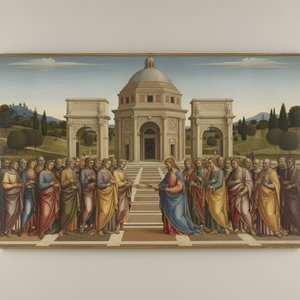
Un Visionario dell'Anima Gotica di Siena
Sano di Pietro, nato intorno al 1405/06, rimane un nome che risuona con la grandezza e l'eterea bellezza caratteristiche della pittura senese durante il Quattrocento. Mentre gran parte del mondo artistico italiano stava iniziando a convergere verso il nascente Rinascimento fiorentino—un movimento definito da un rigoroso realismo e da ideali umanistici—la visione artistica di Sano rimase fedele alle tradizioni dell'eredità gotica di Siena. Questo impegno gli permise di infondere nelle sue tele una profondità spirituale e una qualità luminosa che lo distinguono come una delle voci più originali e durature della sua epoca. La sua vita era profondamente intrecciata con il tessuto civile e spirituale di Siena; al di fuori dello studio, servì come capo del distretto di San Donato e agì persino come arbitro nelle dispute tra i suoi colleghi maestri, dimostrando di essere un uomo di notevole prestigio sociale e integrità.
La bottega fondata da Sano fu un prolifico motore di creatività, capace di produrre una straordinaria gamma di opere d'arte che spaziavano in vari media. Non era soltanto un pittore di pale d'altare; la sua maestria si estendeva alla delicata arte delle miniature, alla scala monumentale degli affreschi e persino all'intricato mestiere della legatura di libri. Il suo stile distintivo è immediatamente riconoscibile a qualsiasi ammiratore della scuola senese, caratterizzato da colori vibranti e sontuosi accostati a drappeggi eleganti e fluenti. Questi elementi lavorano in armonia per creare composizioni che sembrano brillare di una luce interiore. Gran parte di questa sensibilità estetica può essere ricondotta all'influenza di Sassetta, il cui uso innovativo del colore e della prospettiva fornì le fondamenta su cui Sano costruì il proprio linguaggio devozionale unico.
Capolavori di Devozione e Narrazione
L'ampiezza dell'opera di Sano offre una finestra sulle profonde narrazioni religiose che hanno definito il XV secolo. La sua capacità di tradurre complesse storie bibliche in immagini accessibili ed emotive è forse meglio visibile nelle sue varie raffigurazioni di figure sacre. Tra i suoi traguardi più notevoli si annoverano:
- San Girolamo: Uno splendido ritratto della figura biblica nel suo studio, dove Sano utilizza colori ricchi e dettagli intricati per creare un capolavoro d'arte devozionale che invita alla quieta contemplazione.
- Assunzione della Vergine: Una visione celeste del 1448, quest'opera cattura la Vergine Maria in ascensione tra una moltitudine di angeli, incarnando perfettamente la bellezza eterea e la grazia divina dell'era gotica.
- Scene della Vita di San Girolamo: Questi pannelli a tempera mostrano la sua abilità nel tessere complesse narrazioni religiose attraverso figure vibranti e una maestria della tradizione senese.
- Martirio di Sant'Agata: Una rappresentazione toccante e luminosa all'interno di una lettera iniziale, che dimostra la sua abilità nel delicato regno dell'illuminazione manoscritta.
Attraverso queste opere, Sano di Pietro raggiunse un raro equilibrio tra la bellezza ornamentale dello stile gotico e una profonda risonanza emotiva. La sua morte, avvenuta nel 1481, fu segnata da un commovente tributo, che lo descriveva come "un famoso pittore e un uomo interamente dedicato a Dio." Questo epitafio funge da degno riassunto della sua eredità: un artista la cui vita e il cui lavoro erano inseparabili dalla devozione spirituale di Siena, lasciando dietro di sé una scia luminosa d'arte che continua ad incantare l'occhio moderno.
Domande e risposte
Posso esplorare le opere di Sano Di Pietro per soggetto?
Le opere di Sano Di Pietro possono essere esplorate per soggetto nella pagina Catalogo per soggetti dell'artista.
È disponibile un elenco completo delle opere di Sano Di Pietro?
Tutte le opere di Sano Di Pietro presenti su questo sito web sono consultabili nella pagina Tutte le opere dell'artista.
A quale periodo storico appartiene l'opera di Sano Di Pietro?
Sano Di Pietro ha operato nel periodo Rinascimento, collocando storicamente la sua attività.