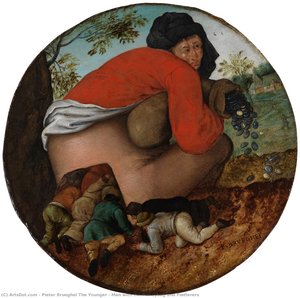
Pieter Brueghel the Younger: A Master of Genre Painting and Flemish Landscape
Pieter Brueghel the Younger (BROY-gəl, US: BROO-gəl; between 23 May and 10 October 1564 – between March and May 1638) stands as a towering figure in sixteenth-century Flemish art, renowned for his prolific output of landscape paintings infused with meticulous detail and imbued with symbolic narratives reflecting the realities of peasant life. Often nicknamed “the hellish Brueghel” due to depictions of fire and grotesque imagery—a moniker initially attributed to his brother Jan Brueghel—Pieter’s artistic legacy extends far beyond mere visual spectacle; he fundamentally reshaped the genre of landscape painting, establishing a distinctive style that captivated audiences across Europe.
Early Life & Family Legacy: Born in Brussels around 1564, Pieter Brueghel was the eldest son of Pieter Bruegel the Elder (known as “peasant Brueghel”), a celebrated painter who pioneered the depiction of rural life with unparalleled realism and psychological insight. His father’s influence was profound, shaping Pieter's artistic sensibilities from a young age. Mayken Coecke van Aelst, Pieter’s mother, herself an accomplished artist specializing in miniature paintings, fostered a creative environment within their household. Notably, Mayken Verhulst, his grandmother and the widow of Pieter Coecke van Aelst—a fellow artist—is believed to have been Pieter’s first teacher, imparting foundational artistic skills.
Training & Antwerp Workshop: Following his father's untimely death in 1569, Pieter, alongside Jan Brueghel the Elder and Marie, relocated to Antwerp, a vibrant hub of artistic activity during the Habsburg Netherlands. There, he apprenticed under Gillis van Coninxloo, honing his skills in landscape painting and mastering techniques crucial for achieving textural depth and atmospheric perspective—skills that would become hallmarks of his distinctive style. He diligently studied the works of Jan van Eyck and Hieronymus Bosch, absorbing their innovative approaches to realism and symbolism.
Marriage & Family Life: In 1588, Pieter married Elisabeth Goddelet, establishing a family life marked by both joy and sorrow. They had seven children, tragically many succumbed to illness during their formative years, leaving Pieter heartbroken. Despite these hardships, he persevered in his artistic pursuits, continuing to develop his craft and expand his workshop’s output—a testament to his unwavering dedication to art amidst personal tragedy.
Style & Technique: Brueghel's artistic style evolved from his father's pioneering approach to genre painting—characterized by detailed depictions of peasant life and infused with moral commentary—towards a more refined Baroque aesthetic. However, he steadfastly maintained the core principles of realism and psychological observation that defined his father’s oeuvre. His masterful use of color palettes, particularly earthy tones reflecting the Flemish countryside, combined with meticulous attention to textural detail—evident in his depictions of foliage, buildings, and figures—created canvases brimming with atmospheric richness. He employed innovative techniques for capturing light and shadow, achieving dramatic effects that conveyed both beauty and unease.
Notable Achievements & Legacy: Pieter Brueghel’s workshop produced approximately 1,400 paintings bearing plausible links to him and his studio, cementing his position as one of the most prolific artists of his era. His works gained international acclaim, influencing generations of painters and establishing a lasting tradition of landscape painting imbued with symbolic meaning. Paintings like “Winter Landscape with a Bird Trap,” “The Harvesters,” and “Peasant Wedding” remain iconic representations of Flemish Baroque art, celebrated for their visual splendor and profound engagement with humanist themes—a testament to Brueghel’s enduring contribution to the artistic canon. He is remembered as a visionary artist who captured the spirit of his time while elevating landscape painting to new heights of expressive power.