Il Maestro della Luce e dell'Ombra: La Vita di Philipp Hieronymus Brinckmann
Nel cuore della metà del XVIII secolo, nel fiorire del panorama Barocco tedesco, il nome di Philipp Hieronymus Brinckmann emerse come un simbolo di grandezza artistica e maestria tecnica. Nato nel 1709 nella storica città di Speyer, Brinckmann era destinato a diventare molto più di un semplice pittore; fu un poliedrico esponente delle arti visive—fratello gesuita, architetto, scenografo e teorico dell'arte, la cui opera colmò il divario tra la bellezza terrena della natura e la divina teatralità dei cieli. Il suo viaggio ebbe inizio sotto lo sguardo attento di Johann Georg Dathan, figura di spicco nella vibrante scena artistica di Mannheim, il cui tutoraggio fornì a Brinckmann gli strumenti fondamentali per navigare nelle complesse estetiche dell'epoca barocca.
L'evoluzione artistica di Brinckmann fu segnata da una profonda capacità di ricoprire molteplici ruoli all'interno del tessuto culturale del suo tempo. Mentre molti artisti della sua epoca rimanevano legati a un unico medium, lui si muoveva senza soluzione di continuità tra la delicata precisione dell'incisione e la scala monumentale e maestosa dell'affresco. La sua formazione precoce gli instillò un profondo rispetto per il chiaroscuro, una tecnica che avrebbe successivamente perfezionato per evocare l'intensità emotiva e drammatica che ricorda Rembrandt. Questa ricerca della luce e dell'ombra gli permise di infondere vita ai suoi soggetti, che si trattasse delle silenziose figure pastorali di un paesaggio o delle imponenti figure storiche di una commissione di corte.
Un'Eredità Scritta tra Paesaggio e Luce
La vera essenza del genio di Brinckmann è forse più visibile nel suo dominio sul mondo naturale. Egli possedeva un'incredibile capacità di catturare la profondità atmosferica della natura selvaggia europea, in particolare attraverso i suoi celebri paesaggi. Le sue opere, come il 'Paesaggio Svizzero' eseguito nel 1745, fungono da finestre su un mondo in cui il bagliore etereo delle viste alpine incontra la realtà concreta del terreno. In queste tele, si può osservare una meticolosa stratificazione di pigmenti, una tecnica utilizzata per ottenere texture luminose che sembrano vibrare con l'umidità dell'aria e il calore del sole.
Oltre alla serena bellezza dei suoi paesaggi, il repertorio di Brinckmann comprendeva ambiziose narrazioni storiche e ritratti che catturavano la sfumatura psicologica dei suoi soggetti. La sua abilità tecnica si estese al campo della stampa, dove utilizzò l'acquatinta e la tecnica della barba per creare variazioni tonali che rispecchiavano gli effetti drammatici di luce presenti nei suoi dipinti a olio. Questa dedizione alla versatilità assicurò che la sua influenza venisse percepita non solo sulla tela, ma anche all'interno dell'architettura stessa delle chiese e dei palazzi che decorò.
Grandiosità Architettonica e Spirito Gesuitico
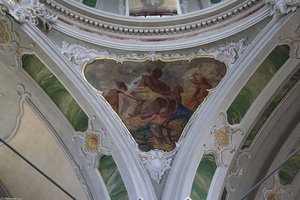
Uno dei capitoli più mozzafiato della carriera di Brinckmann risiede nei suoi contributi agli spazi sacri, specificamente il suo lavoro all'interno della Chiesa Gesuita di Mannheim. Qui, egli dimostrò la sua maestria nella quadratura—una tecnica illusionistica progettata per dissolvere i confini fisici dell'architettura e sostituirli con un cielo teatrale e infinito. La sua Pittura di Pennacchio (Spandrel Painting) rimane una testimonianza di questo periodo, in cui utilizzò i pannelli laterali dei trittici per creare un senso di espansione divina, fondendo la precisione architettonica con immagini celestiali e fantastiche.
La sua ascesa nelle gerarchie sociali e politiche del tempo consolidò ulteriormente la sua importanza storica. Servendo come Pittore della Corte di Mannheim sotto l'Elettore Carlo Filippo, Brinckmann ottenne un accesso senza precedenti ai tesori culturali dell'epoca. La sua nomina a Direttore del Malereikabinett e il suo ruolo di consulente per la biblioteca dell'Elettrice Elisabetta Augusta lo posizionarono al centro stesso del discorso intellettuale e artistico del Palatinato elettorale. Attraverso questi ruoli, Brinckmann non si limitò ad osservare il movimento Barocco; egli ne plasmò attivamente la direzione, lasciando un'eredità di luce, ombra e meraviglia architettonica che continua a affascinare l'occhio moderno.
Domande e risposte
Quante opere di Philipp Hieronymus Brinckmann sono disponibili nel catalogo?
Puoi sfogliare 27 opere d'arte opere di Philipp Hieronymus Brinckmann nella pagina Tutte le opere.
Dove si possono trovare le opere di Philipp Hieronymus Brinckmann raggruppate per tecnica?
Per trovare tutte le opere di Philipp Hieronymus Brinckmann suddivise per tecnica, consulta la pagina Per tecnica dell'artista.
Dove posso esplorare le opere di Philipp Hieronymus Brinckmann suddivise per soggetto?
Le opere di Philipp Hieronymus Brinckmann possono essere esplorate per soggetto nella pagina Catalogo per soggetti dell'artista.