L'eredità luminosa di Peter Hemmel von Andlau
Nella luce tremula dell'epoca tardogotica, pochi artisti catturarono l'essenza divina con tanta vivacità come Peter Hemmel von Andlau. Maestro delle vetrate istoriate, la cui bottega a Strasburgo fiorì tra il 1447 e il 1501, Hemmel era molto più di un semplice artigiano; era un tessitore di luce e colore. La sua opera, sebbene frammentata dal passaggio implacabile dei secoli, continua a illuminare la nostra comprensione delle ambizioni spirituali ed estetiche del XV secolo. Sebbene le sue origini risalgano a Landau in der Pfalz, in Francia, fu nell'atmosfera vivace e cosmopolita di Strasburgo che la sua identità artistica si cristallizzò veramente, permettendogli di dirigere una bottega che riforniva istituzioni religiose in gran parte delle odierne Germania, Austria e Italia settentrionale.
La vita di Hemmel von Andlau fu caratterizzata sia da passione artistica che da distinzione civica. Oltre al bagliore della fornace vetraria, era riconosciuto come proprietario terriero e consigliere, posizioni che suggeriscono un uomo di significativo prestigio sociale e profondità intellettuale. La sua storia personale è intrecciata con la trama stessa della scena artistica di Strasburgo; sposando la vedova del pittore Hans Hirtz, entrò in una stirpe collaborativa che probabilmente espanse il suo repertorio tecnico e l'influenza della sua bottega. Questo spirito di collaborazione fu centrale per il suo successo, poiché lavorava spesso al fianco di altri abili artigiani per realizzare grandiose visioni ecclesiastiche, assicurando che le sue impronte stilistiche si diffondessero tra le cattedrali e le cappelle più prestigiose del Sacro Romano Impero.
Una sinfonia di vetro e tecnica
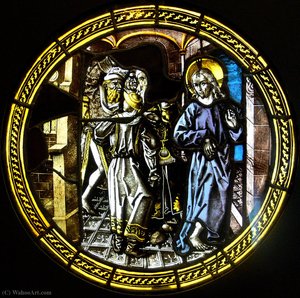
Contemplare un frammento superstite dell'opera di Hemmel significa assistere a un profondo dialogo tra meticoloso realismo e splendore ornamentale. La sua tecnica era un sofisticato connubio tra tradizione e innovazione, fortemente influenzata dal disegno espressivo di maestri come Martin Schongauer e dalla profondità emotiva di Rogier van der Weyden. Possedeva una singolare capacità di manipolare il vetro come se fosse seta pregiata o pesante broccato, utilizzando il vetro bicolore insieme all'enamel nero e al giallo d'argento per creare trame che sembravano quasi tattili. Attraverso l'uso sapiente dei sali d'argento, riusciva a ottenere una brillantezza luminosa che dava vita ai volti e riproduceva i complessi motivi dei paramenti liturgici con una fedeltà sorprendente.
La sua firma artistica è forse più evidente nel suo approccio alla composizione e al dettaglio:
- Cornici intricate: Uno dei suoi tratti più riconoscibili era l'uso di forme di cornice altamente decorative e complesse che fungevano da finestre dentro altre finestre, guidando l'occhio dell'osservatore verso la narrazione sacra.
- Dettaglio naturalistico: Oltre alle figure umane, Hemmel mostrava una profonda riverenza per il mondo naturale, raffigurando meticolosamente flora e fauna, una caratteristica celebre visibile nella vetrata della corporazione dell'Ulm Münster.
- Vibrazione cromatica: L'uso strategico di brillanti rossi ferrosi e blu profondi permetteva alle sue vetrate di trasformare l'atmosfera interna delle chiese, trasformando la luce solare in un mezzo per la narrazione teologica.
Significato storico e influenza duratura
Sebbene sia una toccante tragedia storica che così poche delle sue vetrate complete siano sopravvissute oggi, l'impatto di Peter Hemmel von Andlau rimane innegabile. Egli si trovò a un crocevia trasformativo nella storia dell'arte, colmando il divario tra le rigide strutture del Medioevo e il nascente naturalismo del Rinascimento. La sua bottega servì come vitale condotto per lo scambio stilistico, portando i valori estetici della Renania nel cuore dell'Europa. Integrando i dettagli raffinati delle incisioni contemporanee nel mezzo del vetro, elevò la vetrata istoriata da elemento architettonico decorativo a forma sofisticata di alta arte.
Oggi, i frammenti rimasti — che si trovino nelle mani di musei come il Getty o nascosti negli angoli silenziosi delle cattedrali europee — fungono da testimonianze durature del suo genio. Resta una figura fondamentale la cui maestria della luce e del colore ha contribuito a definire il linguaggio visivo della devozione tardogotica, lasciando un'eredità che continua a ispirare meraviglia in chiunque contempli la brillantezza delle sue visioni ricostruite.
Domande e risposte
A quale periodo storico appartiene l'opera di Peter Hemmel Von Andlau?
Peter Hemmel Von Andlau ha operato nel periodo Rinascimento, collocando storicamente la sua attività.
Posso sfogliare le opere di Peter Hemmel Von Andlau per movimento artistico?
Le opere di Peter Hemmel Von Andlau possono essere consultate per movimento nella pagina Tutti i movimenti dell'artista.
Dove si possono trovare le opere di Peter Hemmel Von Andlau raggruppate per parole chiave?
Le opere di Peter Hemmel Von Andlau possono essere esplorate tramite parole chiave nella pagina Per parole chiave dell'artista. Ogni parola chiave raggruppa le opere correlate.