Ritratto di Paul Jouve

I 2 dipinti più famosi di Paul Jouve, ognuno unico nel suo genere

Aggiornato Novembre 2026 · classificato in base al nostro punteggio di popolarità (ricerche, visite e ordini per ogni opera) · 2 opere di Paul Jouve nel nostro catalogo

In breve

Pantera nera e serpente (Pitone) (1920) è il dipinto di Paul Jouve che attira più sguardi; l'originale è conservato presso il Fondazione Calouste Gulbenkian, Lisbona. Tra i 2 opere di Paul Jouve nel nostro catalogo, queste 2 sono le più famose, ognuna un originale unico presentato con il suo anno, il suo museo e il motivo per cui è eterna.

1878 – 1973, Bourron-Marlotte Più opere: Fondazione Calouste Gulbenkian

Le 10 migliori opere di Paul Jouve, attraverso lo sguardo della galleria

1
Pantera nera e serpente (Pitone) (1920) di Paul Jouve

Pantera nera e serpente (Pitone)

1920 · Pittura a olio · Fondazione Calouste Gulbenkian, Lisbona

Il dipinto ritrae una pantera nera posizionata sopra un ammasso di pesanti catene di metallo. La bocca del felino è spalancata, rivelando i denti mentre mantiene una presa ferocissima su un serpente. Il corpo del rettile si snoda attraverso la scena, creando un senso di tensione fisica tra i due animali. Sulla sinistra, due figure umane osservano l'incontro dalla periferia. Sullo sfondo, una bicicletta è visibile, fornendo un dettaglio specifico…

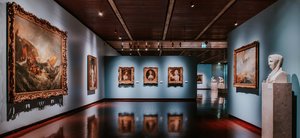
I musei che conservano gli originali di Paul Jouve

I 2 musei che ospitano la maggior parte dei dipinti presenti in questa pagina.

Musei Città Opere di Paul Jouve Dipinti di questo elenco
Fondazione Calouste Gulbenkian, LisbonaFondazione Calouste Gulbenkian Lisbona 1 Pantera nera e serpente (Pitone)
Galleria Nazionale, AteneGalleria Nazionale Atene 1 Monastery of Stavronikita

Paul Jouve nel corso degli anni: gli originali unici di ciascuno

Tra il 1917 e il 1920, in un arco di 4 anni, Paul Jouve ha realizzato ogni originale datato qui esposto: un breve periodo, anno dopo anno.

Opere per anno

Scegli un anno per vedere gli originali.

I dipinti di Paul Jouve: domande per la galleria

Qual è l'opera più famosa di Paul Jouve?Scopri la risposta

Pantera nera e serpente (Pitone) (1920)

A che età Paul Jouve ha creato Pantera nera e serpente (Pitone)?Scopri la risposta

42 anni: Pantera nera e serpente (Pitone) risale al 1920, e Paul Jouve è nato/a nel 1878.

Quante opere di Paul Jouve sono conosciute?Scopri la risposta

Il nostro catalogo comprende 2 opere di Paul Jouve, datate da 1917 a 1920.

Dove si possono ammirare gli originali più famosi di Paul Jouve?Scopri la risposta

Principalmente in Fondazione Calouste Gulbenkian (Lisbona) e Galleria Nazionale (Atene). La tabella dei musei sopra li elenca tutti.

Qual è il dipinto più antico di Paul Jouve e quale il più recente?Scopri la risposta

In questa pagina, il più antico risale al Monastery of Stavronikita (1917) e il più recente al Pantera nera e serpente (Pitone) (1920).

Paul Jouve: un ritratto dell'artista

Pierre-Paul Jouve: A Pioneer of African Wildlife Art

Pierre-Paul Jouve (1878-1973) stands as a singular figure in the realm of French art, recognized primarily for his captivating depictions of Africa’s animal kingdom. Born in Marlotte, France, he possessed an innate fascination with wildlife from a young age—a passion nurtured by his father's ceramic workshop and instilled with a deep appreciation for artistic expression. This formative influence would profoundly shape his artistic trajectory, propelling him to become one of the foremost sculptors and painters specializing in portraying African fauna during the Art Deco era.

Early Life and Artistic Formation

Jouve’s upbringing fostered an environment rich in creative pursuits. His father's ceramic artistry served as a constant reminder of the transformative power of craftmanship and artistic vision. Recognizing his son’s burgeoning talent for drawing, he encouraged Jouve to hone his skills—a decision that would prove pivotal in shaping his future career. Notably, Jouve’s fascination with big cats – lions, tigers, leopards – became an enduring motif throughout his oeuvre, reflecting not only aesthetic preference but also a genuine empathy for the animal world. He attended courses at the Beaux Arts School on the rue Bonaparte as an “independent student”, but still preferred drawing from life. To perfect his anatomical knowledge he frequented the museum of Natural History and the veterinary school in Maisons Alfort. Very early Jouve was interested in the different reproduction techniques. He became initiated in lithography in the studio of one of his fathers friends: the lithographer Henry Patrice Dillon. His whole life Jouve would hold a limitless admiration for Flemish engravers, whose works he would go see and see again in museums each time he visited Holland and Germany.

Recognition and Early Career Achievements

Jouve's artistic journey commenced with significant acclaim in 1907 when he received a prestigious scholarship from the General Government of Algeria—a recognition that opened doors to invaluable opportunities for study and exploration. This grant enabled him to relocate to Villa Abd-el-Tif in Algiers, where he established himself as a resident artist and embarked on a prolific artistic endeavor. His involvement in the Universal Exposition of 1900 culminated in the commission of a monumental frieze featuring stylized representations of wild animals—a project that cemented his reputation as a visionary sculptor and solidified his position within the avant-garde artistic circles of Paris. Bigot will edit and commercialise the different bas relief making up this frieze, first life size, then in miniature, up until 1914. The 1900 Exposition Universelle marks the beginning of his renown. He was awarded a gold medal at the Salon des Artistes français in 1899. The Mnlik lions he drew at the Jardin des Plantes, with their academic construct, are of excellent quality.

Notable Works and Artistic Style

Jouve’s artistic style is characterized by a harmonious blend of realism and Art Deco influences, resulting in dynamic compositions imbued with elegance and sophistication. He meticulously studied animal anatomy and behavior, translating his observations into sculptural forms that captured both anatomical accuracy and expressive dynamism. His paintings—particularly those depicting lions and tigers—demonstrate an exceptional command of color and texture, conveying a palpable sense of movement and vitality. Among his most celebrated works include “Black Panther and Serpent (Python),” currently housed in Musée des Beaux-Arts de Bordeaux, showcasing Jouve’s masterful technique and artistic vision. He collaborated to the decoration of the prestigious ocean liner the Normandie in 1935 and was, at this occasion, commissioned two paintings for the first classes’ lounge, Elephant in Hue and Tigers drinking, soon reproduced and promoted by the lithograph medium in 1937.

Legacy and Influence

Pierre-Paul Jouve's contribution to the art world extends beyond his individual creations; he profoundly impacted subsequent generations of artists interested in portraying wildlife subjects. His pioneering approach—combining scientific observation with artistic creativity—established a precedent for depicting animals with both anatomical precision and emotional resonance. Furthermore, his involvement in illustrating Rudyard Kipling’s “The Jungle Book” showcased his versatility as an illustrator and cemented his place within the literary landscape of his time. Jouve's enduring legacy resides not only in his artworks but also in his unwavering dedication to capturing the beauty and majesty of Africa’s animal inhabitants—a testament to his artistic genius and a celebration of the natural world.