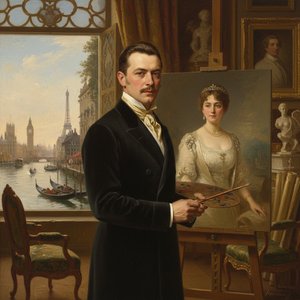
L'Illustre Eredità di Sir Oswald Birley
Sir Oswald Hornby Joseph Birley si erge come una figura monumentale nella storia della ritrattistica britannica, un artista il cui pennello seppe catturare l'essenza stessa di un'epoca definita dal cambiamento e dalla grandezza. Nato il 31 marzo 1880 da una stirpe intrisa di rilevanza militare — suo padre, Hugh Francis Birley, era un uomo di notevole peso storico — la giovinezza di Birley fu plasmata dalle disciplinate tradizioni dell'alta classe britannica. Gli anni formativi presso la Harrow School e il Trinity College di Cambridge gli fornirono molto più di un'istruzione d'élite; infondono in lui un profondo apprezzamento per l'erudizione classica e un occhio meticoloso per il dettaglio che sarebbe in seguito diventato il marchio di fabbrica della sua maestria artistica. Questa base intellettuale gli permise di approcciarsi al ritratto non come un semplice esercizio tecnico, ma come una profonda esplorazione psicologica dei suoi soggetti.
La traiettoria della vita di Birley fu irrevocabilmente alterata dall'inizio della Grande Guerra. Servendo con distinzione nei Royal Fusiliers e successivamente all'interno dell'Intelligence Corps, dimostrò un coraggio che gli valse la Military Cross nel 1919. Questo periodo di intenso conflitto e servizio conferì una profondità unica al suo carattere, infondendo nelle sue opere successive una profonda comprensola della resilienza umana, della leadership e del peso della responsabilità. Le ombre della guerra e la gravità del lavoro nell'intelligence bellica contribuirono probabilmente a quel realismo sottile e vibrante che si ritrova nelle sue raffigurazioni delle figure più influenti del mondo, permettendogli di guardare oltre la superficie della fama per scorgere l'umanità sottostante.
Un Maestro della Ritrattistica Reale e Globale
L'ascesa di Birley verso la vetta del mondo dell'arte fu consolidata attraverso il suo straordinario rapporto con la Monarchia Britannica. Ottenendo il patrocinio di Re Giorgio V e della Regina Mary, divenne il preminente cronista dei periodi edoardiano e dell'interguerra. Il suo stile, caratterizzato da un comando squisito della luce, sottili sfumature tonali e una meticolosa attenzione alla consistenza delle superfici, gli permise di rendere i paramenti reali con una precisione mozzafiato, mantenendo al contempo un legame intimo con lo spirito del modello. Egli non dipingeva semplicemente corone e ermellino; dipingeva la dignità e il peso della sovranità.
Al di là delle mura del palazzo, l'influenza di Birley fu veramente globale, poiché il suo talento attirò i leader più significativi del XX secolo. Il suo portfolio funge da registro visivo della storia, presentando ritratti iconici di figure quali:
- Winston Churchill, catturando lo spirito risoluto della leadership britannica.
- Mahatma Gandhi, ritraendo la profonda semplicità e la forza del movimento per l'indipendenza indiana.
- Membri della Famiglia Reale Britannica, documentando la continuità della tradizione attraverso i decenni.
La sua capacità di oscillare tra gli opulenti ambienti dell'aristocrazia e la presenza cruda e potente dei rivoluzionari politici dimostra un genio versatile. Attraverso le sue opere, le trame della seta e del velluto si bilanciano con l'intensità psicologica e pura degli sguardi dei suoi soggetti, creando un corpo di opere che parla tanto del carattere quanto della composizione.
Tecnica Artistica e Significato Storico
L'importanza duratura di Sir Oswald Birley risiede nella sua capacità di colmare il divario tra la ritrattistica accademica tradizionale e un realismo psicologico più moderno. Sebbene la sua tecnica rimanesse radicata nelle tradizioni classiche del dettaglio fine e dell'eleganza formale, il suo focus sulla vita interiore dei suoi soggetti anticipò gran parte della profondità emotiva visibile nei ritrattisti successivi. Egli possedeva una rara capacità di usare la luce non solo per definire la forma, ma per suggerire l'umore e il peso storico. Ogni pennellata era deliberata, contribuendo a un'atmosfera di permanenza e memoria.
Guardando indietro alla sua vita e alla sua opera, Birley rimane molto più di un semplice pittore dell'élite; fu uno storico del volto umano. I suoi ritratti fungono da finestre su un mondo scomparso, preservando le sembianze di coloro che hanno plasmato l'era moderna. Attraverso la sua maestria nel mezzo pittorico, Sir Oswald Biriente ha assicurato che la dignità, la lotta e i trionfi dei suoi soggetti rimangano incisi per sempre nella memoria collettiva del mondo dell'arte.