Ritratto di Nikolai Johannes Astrup

I 96 dipinti più famosi di Nikolai Johannes Astrup, una selezione della galleria

Aggiornato Novembre 2026 · classificato in base al nostro punteggio di popolarità (ricerche, visite e ordini per ogni opera) · 96 opere di Nikolai Johannes Astrup nel nostro catalogo

In breve

Tra tutti gli originali lasciati da Nikolai Johannes Astrup, il più famoso è Prima Neve (1926), nella collezione del Bergen Kunstmuseum, Bergen. Subito dopo troviamo Digitale (1920) e Landscape with Seated Woman (1892). Il nostro catalogo contiene 96 opere di Nikolai Johannes Astrup; la galleria ha conservato le 96 che il mondo ammira di più, ognuna presentata con la sua data, il suo museo e la sua storia.

1880 – 1928, Bremanger Neoromanticismo Più opere: Bergen Kunstmuseum

I 10 migliori dipinti di Nikolai Johannes Astrup: la scelta della galleria

1
Prima Neve (1926) di Nikolai Johannes Astrup

Prima Neve

1926 · Olio su tela · Bergen Kunstmuseum, Bergen

In Prima Neve, Nikolai Astrup cattura un momento di quiete all'interno di un paesaggio invernale. La scena si concentra su un rustico chalet di legno, immerso in un ambiente innevato, dove il peso della stagione inizia a posarsi sul terreno. Si tratta di una rappresentazione della vita rurale, che mostra un profondo legame con il mondo naturale attraverso la presenza di un semplice rifugio tra gli elementi. Il soggetto suggerisce…

2
Digitale (1920) di Nikolai Johannes Astrup

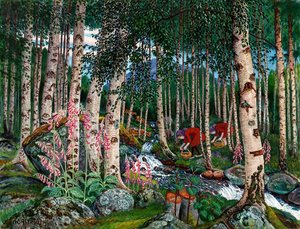
Digitale

1920 · Pittura · Bergen Kunstmuseum, Bergen

Nel cuore del paesaggio norvegese, dove la nebbia si aggrappa alle valli del Vestlandet, Nikolai Astrup ha catturato un mondo che appare simultaneamente radicato nella realtà e toccato dalla magia. Il suo capolavoro del 1920, Digitale, è molto più di un semplice studio botanico; è un viaggio immersivo in un ecosistema rigoglioso e pulsante. La tela si svela come un lussureggiante santuario forestale, dove la fitta chioma di foglie verdi…

3
Landscape with Seated Woman (1892) di Nikolai Johannes Astrup

Landscape with Seated Woman

1892 · Oil On Panel · Sogn og Fjordane Kunstmuseum, Førde

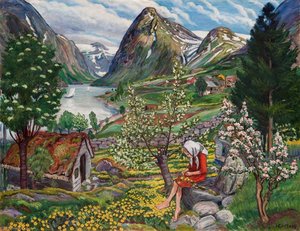
In Landscape with Seated Woman, Nikolai Astrup presents a serene rural scene that invites a quiet contemplation of the Norwegian countryside. Painted in 1892, the work captures a moment of stillness within the natural world. The landscape unfolds with a sense of calm, focusing on the quietude of a remote setting. It is a scene that feels lived-in and deeply connected to the earth.

5
Cowshed Courting (1903) di Nikolai Johannes Astrup

Cowshed Courting

In this oil painting, Cowshed Courting by Nikolai Astrup, we find ourselves drawn into a private, dimly lit space. Created about 1903, the work captures a romantic encounter held within the rustic confines of a cowshed. On the left side of the foreground, a young man and woman are locked in an embrace. Their figures form a quiet, vertical focal point amidst the shadows of the barn. The man is…

6
The Artist's Father (1900) di Nikolai Johannes Astrup

The Artist's Father

1900 · Oil On Canvas · Sogn og Fjordane Kunstmuseum, Førde

In this intimate oil portrait, Nikolai Astrup turns his gaze toward a deeply personal subject: his father. Painted about 1900, the work captures an older man in a moment of quiet presence. It is a study of character and lineage, rendered with a focus on the individual's physical presence and the weight of years. The portrait moves beyond a mere likeness to offer a glimpse into the artist's own domestic…

10
Sandalstrand (1926) di Nikolai Johannes Astrup

Sandalstrand

1926 · Oil On Canvas · KODE Art museums and composer homes, Bergen

Executed in 1926, Sandalstrand by Nikolai Astrup presents a serene rural scene in Norway. The work captures a specific moment of pastoral life, focusing on the quietude of the Norwegian countryside. It reflects the artist's deep connection to the landscape of Vestlandet, specifically the area around Jølster.

La selezione di Nikolai Johannes Astrup continua, da 11 a 96

11In Paradise di Nikolai Johannes AstrupIn ParadiseBergen Kunstmuseum 12Job di Nikolai Johannes AstrupJobBergen Kunstmuseum 13Da Sunde (1921) di Nikolai Johannes AstrupDa Sunde1921 · Bergen Kunstmuseum 14Notte di giugno e il vecchio cortile rurale dell'Ovest (1908) di Nikolai Johannes AstrupNotte di giugno e il vecchio cortile rurale dell'Ovest1908 · Bergen Kunstmuseum 15Getsemani (1926) di Nikolai Johannes AstrupGetsemani1926 · Bergen Kunstmuseum 16Svanøybukta (1905) di Nikolai Johannes AstrupSvanøybukta1905 · KODE Art museums and composer homes 17Landscape with Children (1903) di Nikolai Johannes AstrupLandscape with Children1903 · National Museum of Art, Architecture and Design 18Autumnrain in the Mountain Valley (1899) di Nikolai Johannes AstrupAutumnrain in the Mountain Valley1899 · National Museum of Art, Architecture and Design 19Night (1902) di Nikolai Johannes AstrupNight1902 · Sogn og Fjordane Kunstmuseum 20Going to the Mill (1905) di Nikolai Johannes AstrupGoing to the Mill1905 · Bergen Kunstmuseum 21Landscape in Spring (1908) di Nikolai Johannes AstrupLandscape in Spring1908 · National Museum of Art, Architecture and Design 22Mountainlandscape (1908) di Nikolai Johannes AstrupMountainlandscape1908 · National Museum of Art, Architecture and Design 23Foxgloves (1909) di Nikolai Johannes AstrupFoxgloves1909 · National Museum of Art, Architecture and Design 24Landscape in Moonlight (1907) di Nikolai Johannes AstrupLandscape in Moonlight1907 · National Museum of Art, Architecture and Design 25Landscape with Figures di Nikolai Johannes AstrupLandscape with FiguresNational Museum of Art, Architecture and Design 26The white Horse in Spring (1910) di Nikolai Johannes AstrupThe white Horse in Spring1910 · National Museum of Art, Architecture and Design 27Warmth Enters the Earth (1908) di Nikolai Johannes AstrupWarmth Enters the Earth1908 · Lillehammer Art Museum 28Rhubarb di Nikolai Johannes AstrupRhubarbKODE Art museums and composer homes 29Spring night in the garden (1909) di Nikolai Johannes AstrupSpring night in the garden1909 · KODE Art museums and composer homes 30Midsummer Eve Bonfire by Lake Jølstravatnet (1909) di Nikolai Johannes AstrupMidsummer Eve Bonfire by Lake Jølstravatnet1909 31Night in Spring (1909) di Nikolai Johannes AstrupNight in Spring1909 · Bergen Kunstmuseum 32Old Man with Beard di Nikolai Johannes AstrupOld Man with BeardSogn og Fjordane Kunstmuseum 33The Farewell di Nikolai Johannes AstrupThe FarewellBergen Kunstmuseum 34Head, Old Man with Beard di Nikolai Johannes AstrupHead, Old Man with BeardBergen Kunstmuseum 35Man Plowing (also known as Ploughman) di Nikolai Johannes AstrupMan Plowing (also known as Ploughman)Bergen Kunstmuseum 36The Fisherman di Nikolai Johannes AstrupThe FishermanBergen Kunstmuseum 37Bird on Stone (1912) di Nikolai Johannes AstrupBird on Stone1912 · KODE Art museums and composer homes 38Downy Night (1912) di Nikolai Johannes AstrupDowny Night1912 · Bergen Kunstmuseum 39Mill Water (1916) di Nikolai Johannes AstrupMill Water1916 · Bergen Kunstmuseum 40Midsummer Night Bonfire (1915) di Nikolai Johannes AstrupMidsummer Night Bonfire1915 · Bergen Kunstmuseum 41Corn Store (1920) di Nikolai Johannes AstrupCorn Store1920 · KODE Art museums and composer homes 42March Morning (1920) di Nikolai Johannes AstrupMarch Morning1920 · Bergen Kunstmuseum 43Kari Motif from Sunde (1918) di Nikolai Johannes AstrupKari Motif from Sunde1918 · Bergen Kunstmuseum 44Spring in Jølster (1925) di Nikolai Johannes AstrupSpring in Jølster1925 · National Museum of Art, Architecture and Design 45Interior with Cradle (1925) di Nikolai Johannes AstrupInterior with Cradle1925 · Bergen Kunstmuseum 46The Goose (1926) di Nikolai Johannes AstrupThe Goose1926 · Bergen Kunstmuseum 47Clear June Night di Nikolai Johannes AstrupClear June NightKODE Art museums and composer homes 48The Parsonage Garden di Nikolai Johannes AstrupThe Parsonage GardenKODE Art museums and composer homes 49At 2 PM July 14th di Nikolai Johannes AstrupAt 2 PM July 14th 50The Old Woman with the Lantern di Nikolai Johannes AstrupThe Old Woman with the LanternKODE Art museums and composer homes 51Grain Stacks di Nikolai Johannes AstrupGrain StacksSogn og Fjordane Kunstmuseum 52Storehouse in Jølster di Nikolai Johannes AstrupStorehouse in JølsterNational Museum of Art, Architecture and Design 53Wood in Winter di Nikolai Johannes AstrupWood in WinterNational Museum of Art, Architecture and Design 54Myklebust di Nikolai Johannes AstrupMyklebustSogn og Fjordane Kunstmuseum 55Fisherman di Nikolai Johannes AstrupFisherman 56Landscape from Ålhus di Nikolai Johannes AstrupLandscape from ÅlhusBergen Kunstmuseum 57Naked Trees di Nikolai Johannes AstrupNaked TreesBergen Kunstmuseum 58The Farmer di Nikolai Johannes AstrupThe FarmerBergen Kunstmuseum 59Girl Spinning di Nikolai Johannes AstrupGirl SpinningBergen Kunstmuseum 60Marigold Night (also known as Soleienatt) di Nikolai Johannes AstrupMarigold Night (also known as Soleienatt) 61Menu 9 7.22 di Nikolai Johannes AstrupMenu 9 7.22Bergen Kunstmuseum 62Jølster Woman with Hood di Nikolai Johannes AstrupJølster Woman with HoodBergen Kunstmuseum 63Juninatt i haven (A Night in June in the Garden) di Nikolai Johannes AstrupJuninatt i haven (A Night in June in the Garden) 64Man's Head with Cap di Nikolai Johannes AstrupMan's Head with CapBergen Kunstmuseum 65Ålhustunet, Jølster di Nikolai Johannes AstrupÅlhustunet, Jølster 66Landscape Ålhusdalen di Nikolai Johannes AstrupLandscape ÅlhusdalenBergen Kunstmuseum 67Landscape with Pine di Nikolai Johannes AstrupLandscape with PineBergen Kunstmuseum 68Men Binding Hay Racks di Nikolai Johannes AstrupMen Binding Hay RacksBergen Kunstmuseum 69Kari paa Sunde di Nikolai Johannes AstrupKari paa Sunde 70Inger Grimsbø, Old Jølster Girl di Nikolai Johannes AstrupInger Grimsbø, Old Jølster GirlBergen Kunstmuseum 71The Hat Thief di Nikolai Johannes AstrupThe Hat ThiefBergen Kunstmuseum 72May Moon di Nikolai Johannes AstrupMay MoonBergen Kunstmuseum 73Man Cutting Branches from Sallow di Nikolai Johannes AstrupMan Cutting Branches from SallowBergen Kunstmuseum 74Landscape with Hay Rack and House di Nikolai Johannes AstrupLandscape with Hay Rack and HouseBergen Kunstmuseum 75Elements from Spring and Will di Nikolai Johannes AstrupElements from Spring and WillBergen Kunstmuseum 76The Godly Cobbler di Nikolai Johannes AstrupThe Godly CobblerBergen Kunstmuseum 77Landscape with White House di Nikolai Johannes AstrupLandscape with White HouseBergen Kunstmuseum 78Knitting Woman di Nikolai Johannes AstrupKnitting WomanBergen Kunstmuseum 79Great Grandfather of Half the Village di Nikolai Johannes AstrupGreat Grandfather of Half the VillageBergen Kunstmuseum 80The Eager Suitor di Nikolai Johannes AstrupThe Eager SuitorBergen Kunstmuseum 81June Night di Nikolai Johannes AstrupJune NightBergen Kunstmuseum 82Jølster Tale di Nikolai Johannes AstrupJølster TaleBergen Kunstmuseum 83Early Summer in Jølster di Nikolai Johannes AstrupEarly Summer in JølsterBergen Kunstmuseum 84Home from Work di Nikolai Johannes AstrupHome from WorkBergen Kunstmuseum 85Marigold Night di Nikolai Johannes AstrupMarigold NightBergen Kunstmuseum 86Growing Weather in Sandalstrand di Nikolai Johannes AstrupGrowing Weather in SandalstrandBergen Kunstmuseum 87Large Stook di Nikolai Johannes AstrupLarge StookBergen Kunstmuseum 88Midsummer Night Bonfire (sketch) di Nikolai Johannes AstrupMidsummer Night Bonfire (sketch)Bergen Kunstmuseum 89Mill Water (woodcut) di Nikolai Johannes AstrupMill Water (woodcut)Bergen Kunstmuseum 90The Gypsy Girl di Nikolai Johannes AstrupThe Gypsy GirlBergen Kunstmuseum 91May Moon, Winter Night di Nikolai Johannes AstrupMay Moon, Winter NightBergen Kunstmuseum 92Haymaking di Nikolai Johannes AstrupHaymakingBergen Kunstmuseum 93Midsummer Night Bonfire (woodcut) di Nikolai Johannes AstrupMidsummer Night Bonfire (woodcut)Bergen Kunstmuseum 94The Doll House di Nikolai Johannes AstrupThe Doll HouseBergen Kunstmuseum 95Mother and Child(ren ) by the Garden Table di Nikolai Johannes AstrupMother and Child(ren ) by the Garden TableBergen Kunstmuseum 96Bonfire celebrating Midsummer Night (1912) di Nikolai Johannes AstrupBonfire celebrating Midsummer Night1912 · National Museum of Art, Architecture and Design

I dipinti più famosi di Nikolai Johannes Astrup, periodo per periodo

I soggetti che hanno catturato lo sguardo di Nikolai Johannes Astrup

I quattro soggetti che ricorrono più spesso in questi originali, ognuno con il suo esempio più raffinato.

I musei che conservano gli originali di Nikolai Johannes Astrup

I 5 musei che ospitano la maggior parte dei dipinti presenti in questa pagina.

Musei Città Opere di Nikolai Johannes Astrup Dipinti di questo elenco
Bergen Kunstmuseum, BergenBergen Kunstmuseum Bergen 56 Prima Neve, Digitale, In Paradise
National Museum of Art, Architecture and Design, OsloNational Museum of Art, Architecture and Design Oslo 15 Portrait of a young Girl, Landscape with Figures, Spring Evening in Jølster
KODE Art museums and composer homes Bergen 10 Cowshed Courting, Sandalstrand, Svanøybukta
Sogn og Fjordane Kunstmuseum, FørdeSogn og Fjordane Kunstmuseum Førde 7 Landscape with Seated Woman, The Artist's Father, The Artist's Mother
Lillehammer Art Museum, LillehammerLillehammer Art Museum Lillehammer 1 Warmth Enters the Earth

Nikolai Johannes Astrup decennio per decennio: l'originale che definisce ogni epoca

Opere per decennio

Scegli un decennio per scoprire l'opera originale che lo ha definito.

Domande dei collezionisti sulle opere di Nikolai Johannes Astrup

Per quale opera è più famoso Nikolai Johannes Astrup?Scopri la risposta

Prima Neve (1926), Bergen Kunstmuseum, Bergen. Seguono Digitale (1920) e Landscape with Seated Woman (1892).

Che età aveva Nikolai Johannes Astrup quando è stata realizzata Prima Neve?Scopri la risposta

46 anni: Prima Neve risale al 1926, e Nikolai Johannes Astrup è nato/a nel 1880.

Quali sono i dieci dipinti più famosi di Nikolai Johannes Astrup?Scopri la risposta

Prima Neve, Digitale, Landscape with Seated Woman, Portrait of a young Girl, Cowshed Courting, The Artist's Father, The Artist's Mother, Landscape with Figures, Spring Evening in Jølster e Sandalstrand. La classifica sopra riporta l'anno e il museo di ciascuna opera.

Quante opere ha lasciato Nikolai Johannes Astrup?Scopri la risposta

Il nostro catalogo comprende 96 opere di Nikolai Johannes Astrup, datate da 1892 a 1926.

In quali musei sono esposti i capolavori di Nikolai Johannes Astrup?Scopri la risposta

Principalmente in Bergen Kunstmuseum (Bergen), National Museum of Art, Architecture and Design (Oslo) e KODE Art museums and composer homes (Bergen). La tabella dei musei sopra li elenca tutti.

In quali anni Nikolai Johannes Astrup ha dipinto le sue opere più famose?Scopri la risposta

In 1900s: 18 delle 96 opere in questa pagina sono state realizzate in quel periodo, tra cui Portrait of a young Girl.

Quali sono le prime e le ultime opere originali famose di Nikolai Johannes Astrup?Scopri la risposta

In questa pagina, il più antico risale al Landscape with Seated Woman (1892) e il più recente al Prima Neve (1926).

Quali soggetti ha scelto più spesso Nikolai Johannes Astrup?Scopri la risposta

Woman (5), Trees (4) e Man (4), tra le 96 opere in questa pagina.

Quale tecnica ha utilizzato maggiormente Nikolai Johannes Astrup?Scopri la risposta

Oil On Canvas, per 6 delle 96 opere in questa pagina.

A quale movimento artistico appartiene Nikolai Johannes Astrup?Scopri la risposta

Neoromanticismo, a giudicare dagli originali presenti in questa pagina.

Quali opere di Nikolai Johannes Astrup sono esposte al Bergen Kunstmuseum?Scopri la risposta

Prima Neve, Digitale e In Paradise: il Bergen Kunstmuseum, Bergen custodisce 56 delle opere presenti in questa pagina.

Nikolai Johannes Astrup: vita e opera

Un Visionario delle Terre Selvagge Norvegesi

Nikolai Astrup si staglia come una figura singolare nella storia dell'arte norvegese: un pittore il cui profondo legame con i paesaggi e le tradizioni del Vestlandet gli ha assicurato un posto tra gli artisti neo-romantici più distintivi della sua epoca. Nato il 30 agosto 1880, nel villaggio costiero di Kalvåg, nella selvaggia regione di Bremanger, la giovinezza di Astrup fu immersa nella bellezza atmosferica dei fiordi e delle montagne. Come primogenito di un parroco, la sua educazione fu segnata da una certa pietà familiare, eppure il suo cuore fu irrevocabilmente attratto dal pulsare vibrante e vitale del mondo naturale. Questo profondo legame con le sue radici ancestrali lo avrebbe infine spinto verso uno stile caratterizzato da palette di colori intensi e da una dedizione incrollabile alla rappresentazione della vita quotidiana e del folklore della Norvegia rurale.

Il suo percorso verso la maestria artistica non fu una linea retta, ma piuttosto un'esplorazione dell'anima tra tradizione e modernità. Sebbene le inclinazioni iniziali suggerissero una vita dedicata agli studi teologici, la passione di Astrup per il disegno lo allontanò dalla Trondheim Cathedral School per condurlo verso la fiorente scena artistica di Kristiania (Oslo). Fu qui, sotto l'infliente tutela di Harriet Backer, che iniziò a perfezionare le sue abilità tecniche. Un breve ma trasformativo soggiorno a Parigi arricchì ulteriormente la sua visione, esponendolo ai movimenti d'avanguardia dell'epoca e favorendo legami con colleghi artisti come Christian Krohg. Questi incontri con le tecniche impressioniste e una prospettiva europea più ampia gli fornirono gli strumenti per intrecciare, infine, tradizione e innovazione in un linguaggio artistico unico e coeso.

L'Anima di Jølster e la Magia del Realismo

Nel 1902, Astrup prese la decisione cruciale di tornare nella sua terra d'infanzia a Jølster, stabilendosi nella proprietà di Sandalstrand. Questo ritorno fu molto più di un semplice rientro a casa; fu un'immersione in una musa che lo avrebbe accompagnato per tutta la vita. Insieme alla moglie, Engel Sunde, allevò otto figli tra le dure realtà economiche della vita rurale, eppure fu proprio questa fatica ad alimentare la sua spinta creativa. Egli divenne un maestro nel catturare il realismo magico del paesaggio norvegese, dove il verde lussureggiante dell'estate e la nuda e silenziosa solitudine dell'inverno venivano resi con un'intensità quasi soprannaturale. La sua opera trascende spesso la mera rappresentazione, utilizzando una tavolozza vibrante e colorata per evocare l'atmosfera mistica delle montagne e i mutamenti stagionali dei fiordi.

La tecnica di Astrup era tanto legata all'emozione quanto all'osservazione. Era un abile incisore e orticoltore, qualità che influenzarono il suo complesso approccio alla composizione. Nelle sue xilografie e nei suoi dipinti, si può osservare come egli modificasse gli stati d'anello attraverso sottili cambiamenti di colore e l'aggiunta o la sottrazione strategica di motivi. La sua opera è celebrata per la capacità di catturare il sublime—quell'intersezione mozzafiato tra bellezza e stupore. Che stia ritraendo una serena scena invernale come Mill Water o i paesaggi monocromatici dall'incantevole inquietudine di Naked Trees, l'opera di Astrup invita lo spettatore in un mondo dove i confini tra il paesaggio fisico e la dimensione spirituale si sfumano magnificamente.

L'Eredità di un Linguaggio Visivo Nazionale

Al di là delle sue singole tele, l'importanza storica di Nikolai Astrup risiede nel suo sforzo pionieristico di catturare un linguaggio visivo nazionale. Non si limitava a dipingere scenari; egli documentò l'essenza stessa dell'identità norvegese, celebrando lo stile di vita tradizionale e il folklore che definivano la regione del Vestlandet. La sua capacità di fondere il locale con l'universale permise alla sua opera di risuonare ben oltre i confini della Norvegia, anche se rimase in gran parte sconosciuto a gran parte della comunità internazionale durante la sua vita. Egli rimane una pietra miliare del modernismo norvegese, un artista che ha saputo trovare l'infinito nell'intimo.

L'impatto duraturo della sua vita e della sua opera può essere riassunto attraverso questi elementi distintivi:

  • Innovazione Artistica: L'integrazione fluida della pennellata impressionista con temi neo-romantici.
  • Preservazione Culturale: Un impegno dedicato alle tradizioni, ai costumi e ai paesaggi della regione di Jølster.
  • Maestria Tecnica: Un controllo straordinario del colore e dell'incisione che ha permesso una profonda risonanza emotiva.
  • Connessione Ecologica: La sua vita a Sandalstrand è stata una manifestazione precoce di un profondo rispetto per l'ambiente naturale e la conservazione.

Sebbene la sua vita sia stata tragicamente breve, concludendosi nel 1928 all'età di quarantasette anni, l'eredità di Nikolai Astrup continua a fiorire. I suoi dipinti rimangono finestre vibranti su un'epoca perduta, offrendo uno sguardo senza tempo nel cuore della natura selvaggia norvegese.