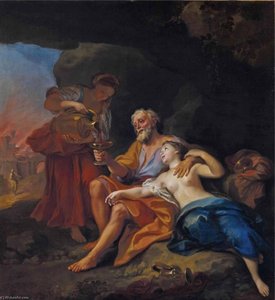
Louis de Boullogne the Younger (1654–1733): Bridging Baroque and Rococo Sensibility
Louis de Boullogne the Younger (1654-1733) stands as a pivotal figure in French art history, skillfully navigating the transition between the grandeur of Baroque aesthetics and the burgeoning elegance of Rococo style. Born in Paris, he was apprenticed to his father, Louis Boullogne the Elder, a respected artist who instilled in him a foundational understanding of classical principles alongside the expressive dynamism favored by the Baroque masters. This dual influence shaped Boullogne’s artistic vision—a harmonious blend of meticulous detail and graceful movement that distinguishes his oeuvre from both preceding and succeeding generations.
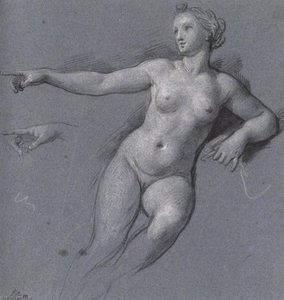
- Early Life & Training: Boullogne's formative years were marked by rigorous academic training under his father, emphasizing anatomical accuracy and compositional balance. This dedication to classical ideals would become a hallmark of his artistic style throughout his career.
- Academic Career & Patronage: He ascended to prominence as Director of the Académie Royale de Peinture et Sculpture in Paris—a position he held until his death—solidifying his role as a champion of artistic excellence and shaping the stylistic trends of the era. Royal patronage fueled numerous commissions, allowing him to explore ambitious projects and contribute significantly to the decorative arts of Versailles and elsewhere.
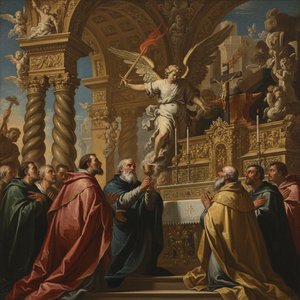
Boullogne’s artistic output spanned a remarkable range of subjects, reflecting the intellectual currents of his time. Religious paintings dominated his early years, showcasing masterful depictions of biblical narratives imbued with profound spiritual contemplation—particularly notable is “Earth,” a serene portrayal capturing the Virgin Mary cradling Jesus Christ. Simultaneously, he embraced mythological themes, interpreting classical myths with imaginative flair and technical virtuosity, as evidenced by "Minerva and the Arts," where Boullogne skillfully captures the goddess’s regal composure amidst a richly ornamented setting.
- Notable Paintings: Among his most celebrated works are “The Infancy of Bacchus,” demonstrating his ability to convey emotion through dynamic figures and expressive gestures, and numerous portraits reflecting the aristocratic tastes of the period.
His influence extended beyond individual masterpieces; Boullogne’s pedagogical role at the Académie Royale ensured that his stylistic precepts—characterized by precise drawing, subtle color palettes, and a commitment to idealized beauty—were disseminated throughout French artistic circles. He championed the revival of classical sculpture and architecture, advocating for harmonious proportions and sculptural grace – principles which profoundly impacted the aesthetic sensibilities of subsequent artists. Boullogne’s legacy resides not merely in his artworks themselves but also in his contribution to establishing a unified artistic language that bridged the Baroque and Rococo eras, securing his place as one of France's foremost painters of the 18th century.
- Legacy & Influence: Boullogne’s meticulous technique and humanist vision continue to inspire artists today, demonstrating the enduring power of classical ideals within a broader artistic context.
Further exploration can be found on
Louis de Boullogne’s Artist Database Page and
Louis de Boullogne’s Artist Database Page. You can also delve into the history of
Chapel of the Salpêtrière Hospital and
Salon de l'Abondance to appreciate Boullogne’s artistic environment. Finally, discover more about him on
Wikipedia.