Menu
CONSULENZA D'ARTE GRATUITA

José María Casado Del Alisal

1830 - 1886

Brevi note biografiche

  • Works on APS: 3
  • Copyright status: Public domain
  • Also known as:
    • José Casado Del Alisal
    • Jose Maria Casado Del Alisal
    • Jose Casado Del Alisal
  • Lifespan: 56 years
  • Nationality: Spagna
  • Art period: XIX Secolo
  • Espandi dettagli…
  • Born: 1830, Villada, Spagna
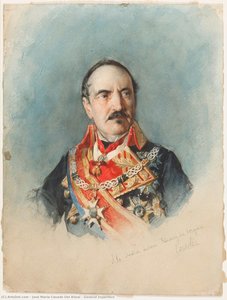
  • Top-ranked work: General Espartero
  • Museums on APS:
    • Museo Nacional del Romanticismo
    • Museo Nacional del Romanticismo
    • Museo Nacional del Romanticismo
    • Museo Nacional del Romanticismo
    • Museo Nacional del Romanticismo
  • Top 3 works:
    • General Espartero
    • The Bell of Huesca
    • The Bell of Huesca
  • Died: 1886

Quiz d'arte

Per ogni domanda è presente una sola risposta corretta.

Domanda 1:
Qual istituzione ha svolto un ruolo fondamentale nello sviluppo artistico precoce di José María Casado del Alisal?
Domanda 2:
In quale città José María Casado del Alisal studiò sotto Federico de Madrazo?
Domanda 3:
Quale significato aveva la partecipazione di José María Casado del Alisal all'Esposizione Universale di Parigi nel 1862?
Domanda 4:
Quale medaglia José María Casado del Alisal ricevette per i suoi contributi alle Esposizioni Nazionali del 1860 e 1864?
Domanda 5:
Che ruolo ricoprì José María Casado del Alisal alla Real Academia Española?

José María Casado del Alisal (1830–1886)

José María Casado del Alisal, a prominent spanish painter, was born in Villada, Spain, between 1830 and 1832. He initiated his artistic journey at the Escuela Municipal de Dibujo de Palencia, which played a pivotal role in shaping many notable spanish artists. Real Academia de Bellas Artes de San Fernando, under the tutelage of Federico de Madrazo, further honed his skills.

Early Life and Education

He began his artistic education at the Escuela Municipal de Dibujo de Palencia, which fostered talent and nurtured a deep appreciation for artistic tradition. This formative experience instilled in him a foundational understanding of technique and composition—elements that would permeate his subsequent oeuvre. Subsequently, he enrolled at the Real Academia de Bellas Artes de San Fernando, where he studied under Federico de Madrazo, absorbing the stylistic precepts of the Escuela Nacional de Pintura en París and establishing himself as a student of one of Spain’s most influential painters.

Artistic Career and Achievements

Casado del Alisal's artistic trajectory unfolded primarily in Rome, Naples, Milan, and Venice—cities renowned for their vibrant artistic milieu during the Romantic era. His magnum opus, “The Resurrection of Lazarus” (1855), secured him a fellowship to study in Rome, marking the commencement of his international artistic exploration. This pilgrimage allowed him to immerse himself in the humanist spirit of the Vatican and engage with the legacy of Michelangelo Buonarroti and Raffaello Sanzio—influences that profoundly shaped his stylistic sensibilities. He continued his studies in Naples and Milan, absorbing the nuances of Neoclassical and Romantic aesthetics alike. His work “The Oath of the Cortes of Cádiz” (1862) was exhibited at the Congress of Deputies, demonstrating his commitment to portraying historical narratives with meticulous detail and expressive dynamism. Casado del Alisal’s dedication to capturing pivotal moments in Spanish history cemented his reputation as a masterful storyteller through visual media. He received medals for his contributions to the National Exhibitions of 1860 and 1864—a testament to his artistic excellence and recognition within the spanish art scene.

Leadership and Later Life

In January 1881, Casado del Alisal assumed the role of Director of the Spanish Academy in Rome, succeeding Eduardo Rosales who had been nominated but never occupied the position due to poor health. This appointment underscored his leadership qualities and intellectual curiosity—traits that would characterize his subsequent endeavors. However, he resigned from this prestigious position after “The Bell of Huesca” (1885) garnered only an honorable mention at the exhibition, prompting him to reconsider his professional path. He returned to Spain and died there in Madrid in 1886—leaving behind a legacy of artistic innovation and unwavering devotion to his craft.

Notable Works and Legacy

Casado del Alisal’s artistic output encompassed portraits of prominent figures—including Baldomero Espartero, Isabel II, Alfonso XII, and Emilio Castelar y Ripoll—each rendered with remarkable accuracy and psychological insight. He captured the solemn beauty of Gustavo Adolfo Bécquer's deathbed engraving, skillfully employing chiaroscuro to convey the poignant atmosphere of a total solar eclipse. His brother, Carlos Casado del Alisal, was a spanish-argentine businessman and economic advisor. Casado del Alisal’s artistic legacy resides in his masterful execution of historical paintings—particularly “The Resurrection of Lazarus” and “The Oath of the Cortes of Cádiz”—which exemplify the stylistic conventions of Romanticism and Neoclassicism. His canvases continue to inspire admiration for their compositional elegance, meticulous detail, and evocative portrayal of human emotion—solidifying his place as one of Spain’s most celebrated painters of the XIX century.