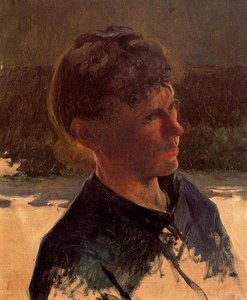
Ritratto di José Jiménez Aranda

I 76 dipinti più famosi di José Jiménez Aranda, ognuno unico nel suo genere

Aggiornato Novembre 2026 · classificato in base al nostro punteggio di popolarità (ricerche, visite e ordini per ogni opera) · 76 opere di José Jiménez Aranda nel nostro catalogo

In breve

Una desgracia (1890) è il dipinto di José Jiménez Aranda che attira più sguardi. Successivamente, lo sguardo si sposta su Il Quijote 4 e Piccoli naturalisti. Tra i 76 opere di José Jiménez Aranda nel nostro catalogo, queste 76 sono le più famose, ognuna un originale unico presentato con il suo anno, il suo museo e il motivo per cui è eterna.

1837 – 1903, Siviglia Costumbrista Più opere: Museo del Prado

Le 10 migliori opere di José Jiménez Aranda, attraverso lo sguardo della galleria

1
Una desgracia (1890) di José Jiménez Aranda

Una desgracia

1890 · Pittura a olio

Ci troviamo di fronte a Una desgracia, un'opera del 1890 realizzata dal pittore spagnolo José Jiménez Aranda. Questo pezzo rappresenta un momento significativo nella carriera dell'artista, segnando una transizione verso lo stile costumbrismo che avrebbe definito gran parte della sua produzione successiva. Si tratta di una cupa rappresentazione in bianco e nero di un gruppo di persone radunate davanti a un edificio in costruzione. La scena, ambientata nel XIX secolo,…

2
Il Quijote 4 di José Jiménez Aranda

Il Quijote 4

Pittura a olio

L'opera intitolata Il Quijote 4 è una creazione del pittore spagnolo José Jiménez Aranda. Essa cattura un momento specifico e inquieto, tratto dal mondo letterario di Miguel de Cervantes. All'interno dell'inquadratura, il cavaliere Don Quixote e il suo compagno Sancho Panza sono a cavallo. Si muovono attraverso un paesaggio di improvvisa mobilità, colti nel mezzo di un incontro o di uno scontro che coinvolge diverse altre figure. La scena è…

3
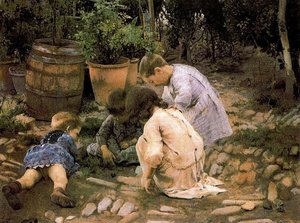
Piccoli naturalisti di José Jiménez Aranda

Piccoli naturalisti

Olio su tela

Tre bambini sono accovacciati sulla terra, i loro corpi che formano un morbido triangolo di curiosità. Sono chinati verso il basso, con gli occhi fissi sulle piccole vite in movimento, nascoste tra pietre e terra. Una grande botte e diversi vasi in terracotta si trovano sullo sfondo, radicando la scena in uno spazio vissuto e naturale. La luce è diffusa, come se filtrata attraverso un pesante cielo coperto, senza proiettare…

4
Figaro's Shop (1875) di José Jiménez Aranda

Figaro's Shop

1875 · Oil On Canvas · Walters Art Museum, Baltimora

The afternoon sun spills across a dusty street, casting soft shadows that dance against the weathered plaster of a building. In front of a doorway, life unfolds in a quiet, rhythmic pulse. A man sits with a guitar, his fingers coaxing melodies from the strings, while others gather around a table, lost in the easy gravity of conversation. There is a sense of a world caught in mid-breath. A woman’s…

5
The old naturalist (1880) di José Jiménez Aranda

The old naturalist

1880 · Oil

A single man stands amidst a silent assembly of taxidermied birds. He is dressed in the heavy, structured attire of the 18th century, wearing a tricorne hat and a long frock coat that anchors him to the floorboards. His mouth is open, caught in a sudden gasp or a sharp intake of breath. Around him, the stillness of the museum room is broken only by the presence of these preserved…

6
The Hato (1896) di José Jiménez Aranda

The Hato

1896 · Oil On Canvas

The Hato emerges from the brush of José Jiménez Aranda, a painter who carries the spirit of Seville, Spain, within his work. Born in 1837, Aranda brings a deep understanding of light and shadow to this scene. The painting, created about 1896, captures a quiet, suspended moment in a sun-dappled woodland. It is a scene of rest where a large, reclining hunting dog and a sleeping infant share a peaceful…

7
Spring in Seville (1903) di José Jiménez Aranda

Spring in Seville

1903 · Oil On Canvas · Fundación Banco Santander, Madrid

Spring in Seville by José Jiménez Aranda presents a large-scale oil on canvas composition created about 1903. The subject matter focuses on the various festivities and traditions associated with the season in Seville, Spain. The painting incorporates specific cultural references, including elements of bullfighting, known as corridas de toros. These elements are integrated into a dense arrangement of figures and objects that characterize the local customs of the period.

I dipinti più famosi di José Jiménez Aranda, dal numero 11 al 76

11Un lance en la Plaza de Toros (1880) di José Jiménez ArandaUn lance en la Plaza de Toros1880 12Holy Week in Seville (1879) di José Jiménez ArandaHoly Week in Seville1879 · Fine Arts Museums of San Francisco 13The Dancing Lesson (1888) di José Jiménez ArandaThe Dancing Lesson1888 14The painter's family di José Jiménez ArandaThe painter's family 15Couple di José Jiménez ArandaCouple 16Study for ''La murga'' di José Jiménez ArandaStudy for ''La murga'' 17Sketch illustration for''Captain Montoya di José Jiménez ArandaSketch illustration for''Captain Montoya 18Study for ''Un sermón en el patio de los naranjos'' di José Jiménez ArandaStudy for ''Un sermón en el patio de los naranjos'' 19El Quijote di José Jiménez ArandaEl Quijote 20Academical study 1 di José Jiménez ArandaAcademical study 1 21the drunk di José Jiménez Arandathe drunk 22El Quijote 1 di José Jiménez ArandaEl Quijote 1 23El Quijote 6 di José Jiménez ArandaEl Quijote 6 24Preparatory drawing for a painting di José Jiménez ArandaPreparatory drawing for a painting 25The jump of the bull di José Jiménez ArandaThe jump of the bull 26El Quijote 7 di José Jiménez ArandaEl Quijote 7 27Figure di José Jiménez ArandaFigure 28El Quijote 9 di José Jiménez ArandaEl Quijote 9 29Study for ''Los dulces del santo'' di José Jiménez ArandaStudy for ''Los dulces del santo'' 30Portrait of the artist's father di José Jiménez ArandaPortrait of the artist's father 31Study of dogs di José Jiménez ArandaStudy of dogs 32El Quijote 5 di José Jiménez ArandaEl Quijote 5 33Fruit seller di José Jiménez ArandaFruit seller 34Study for ''Tartarín sur les Alpes'' di José Jiménez ArandaStudy for ''Tartarín sur les Alpes'' 35El Quijote 3 di José Jiménez ArandaEl Quijote 3 36Study of a soldier di José Jiménez ArandaStudy of a soldier 37Nude di José Jiménez ArandaNude 38Study of a soldier 1 di José Jiménez ArandaStudy of a soldier 1 39Study for ''Galanterías'' di José Jiménez ArandaStudy for ''Galanterías'' 40small talk di José Jiménez Arandasmall talk 41El Quijote 2 di José Jiménez ArandaEl Quijote 2 42Retrato de Emilio Sala di José Jiménez ArandaRetrato de Emilio Sala 43El Quijote 8 di José Jiménez ArandaEl Quijote 8 44Retrato de Mujer di José Jiménez ArandaRetrato de Mujer 45Juez di José Jiménez ArandaJuez 46Good night di José Jiménez ArandaGood night 47Fugure studies di José Jiménez ArandaFugure studies 48The old canary di José Jiménez ArandaThe old canary 49Study di José Jiménez ArandaStudy 50The sweet saint di José Jiménez ArandaThe sweet saint 51Portrait (Studio) di José Jiménez ArandaPortrait (Studio) 52A gourmet di José Jiménez ArandaA gourmet 53Retrato di José Jiménez ArandaRetrato 54Portrait of the artists mother di José Jiménez ArandaPortrait of the artists mother 55Tocando il violino di José Jiménez ArandaTocando il violino 56Study of horses di José Jiménez ArandaStudy of horses 57Study of horses 1 di José Jiménez ArandaStudy of horses 1 58Paisaje boscoso di José Jiménez ArandaPaisaje boscoso 59Study of a horse di José Jiménez ArandaStudy of a horse 60Paisaje di José Jiménez ArandaPaisaje 61Landscape in Alcalá de Guadaira di José Jiménez ArandaLandscape in Alcalá de Guadaira 62Academical study di José Jiménez ArandaAcademical study 63Landscape with rocks di José Jiménez ArandaLandscape with rocks 64En la iglesia di José Jiménez ArandaEn la iglesiaMuseo del Prado 65Birds Corner di José Jiménez ArandaBirds Corner 66Hombre de color di José Jiménez ArandaHombre de color 67Hombre Sentado di José Jiménez ArandaHombre Sentado 68Woman turning off the light (Good Night) di José Jiménez ArandaWoman turning off the light (Good Night) 69Study for ''Un concierto ante su Eminencia'' di José Jiménez ArandaStudy for ''Un concierto ante su Eminencia'' 70Dos Mujeres di José Jiménez ArandaDos Mujeres 71Retrato de Sorolla di José Jiménez ArandaRetrato de SorollaMuseo del Prado 72The morning in Alcalá de Guadaira di José Jiménez ArandaThe morning in Alcalá de Guadaira 73The departure of Christ's Passion during Holy Week in Seville di José Jiménez ArandaThe departure of Christ's Passion during Holy Week in Seville 74El violinista di José Jiménez ArandaEl violinista 75Pine-trees at Alcalá de Guadaira di José Jiménez ArandaPine-trees at Alcalá de Guadaira 76La esclava di José Jiménez ArandaLa esclavaMuseo del Prado

I dipinti più famosi di José Jiménez Aranda, periodo per periodo

I soggetti che hanno catturato lo sguardo di José Jiménez Aranda

I quattro soggetti che ricorrono più spesso in questi originali, ognuno con il suo esempio più raffinato.

I musei che conservano gli originali di José Jiménez Aranda

I 5 musei che ospitano la maggior parte dei dipinti presenti in questa pagina.

Musei Città Opere di José Jiménez Aranda Dipinti di questo elenco
Museo del Prado, MadridMuseo del Prado Madrid 3 En la iglesia, Retrato de Sorolla, La esclava
Walters Art Museum, BaltimoraWalters Art Museum Baltimora 1 Figaro's Shop
Fundación Banco Santander, MadridFundación Banco Santander Madrid 1 Spring in Seville
Museo Carmen Thyssen Málaga, MalagaMuseo Carmen Thyssen Málaga Malaga 1 A Pass in the Bullring
Fine Arts Museums of San Francisco, San FranciscoFine Arts Museums of San Francisco San Francisco 1 Holy Week in Seville

José Jiménez Aranda attraverso i decenni: un originale unico per ognuno

Opere per decennio

Scegli un decennio per scoprire l'opera originale che lo ha definito.

I dipinti di José Jiménez Aranda: domande per la galleria

Qual è l'opera più famosa di José Jiménez Aranda?Scopri la risposta

Una desgracia (1890). Seguono Il Quijote 4 e Piccoli naturalisti.

A che età José Jiménez Aranda ha creato Una desgracia?Scopri la risposta

53 anni: Una desgracia risale al 1890, e José Jiménez Aranda è nato/a nel 1837.

Quali sono i dieci dipinti più famosi di José Jiménez Aranda?Scopri la risposta

Una desgracia, Il Quijote 4, Piccoli naturalisti, Figaro's Shop, The old naturalist, The Hato, Spring in Seville, The first child, Don Quixote and Sancho Panza e A Pass in the Bullring. La classifica sopra riporta l'anno e il museo di ciascuna opera.

Quante opere di José Jiménez Aranda sono conosciute?Scopri la risposta

Il nostro catalogo comprende 76 opere di José Jiménez Aranda, datate da 1870 a 1903.

Dove si possono ammirare gli originali più famosi di José Jiménez Aranda?Scopri la risposta

Principalmente in Museo del Prado (Madrid), Walters Art Museum (Baltimora) e Fundación Banco Santander (Madrid). La tabella dei musei sopra li elenca tutti.

In quale periodo José Jiménez Aranda ha realizzato i suoi dipinti più famosi?Scopri la risposta

In 1870s: 3 delle 76 opere in questa pagina sono state realizzate in quel periodo, tra cui Figaro's Shop.

Qual è il dipinto più antico di José Jiménez Aranda e quale il più recente?Scopri la risposta

In questa pagina, il più antico risale al A Pass in the Bullring (1870) e il più recente al Spring in Seville (1903).

Quali soggetti preferiva José Jiménez Aranda?Scopri la risposta

Portrait (5), Melancholy (4) e Woman (3), tra le 76 opere in questa pagina.

Con quali materiali ha dipinto più spesso José Jiménez Aranda?Scopri la risposta

Oil On Canvas, per 3 delle 76 opere in questa pagina.

A quale movimento appartiene l'opera di José Jiménez Aranda?Scopri la risposta

Costumbrista e Contemporary realism, a giudicare dagli originali presenti in questa pagina.

Quali opere originali di José Jiménez Aranda posso vedere al Museo del Prado?Scopri la risposta

En la iglesia, Retrato de Sorolla e La esclava: il Museo del Prado, Madrid custodisce 3 delle opere presenti in questa pagina.

José Jiménez Aranda: un ritratto dell'artista

José Jiménez Aranda (1837–1903): A Painter's Journey Through Light and Shadow

José Jiménez Aranda, born in Seville in 1837, was a painter who navigated the complexities of Spanish art history with remarkable grace and innovation. His life coincided with a period of significant cultural change—the rise of Romanticism, the burgeoning influence of Impressionism, and the growing awareness of social realities—and his artistic output reflects this dynamic landscape. From formative years steeped in classical training to embracing the luminous vision championed by Mariano Fortuny and culminating in monumental illustrations for Cervantes’ *Don Quijote*, Aranda’s career was marked by a constant striving for excellence and an unwavering commitment to capturing the spirit of his time. He wasn't merely documenting scenes; he was interpreting them, imbuing them with emotion and intellect—a distinction that distinguishes him from many of his contemporaries.

Early Influences and Artistic Formation

Aranda’s artistic inclinations were nurtured from a young age by Manuel Cabral and Eduardo Cano de la Peña. These early instructors instilled in him a foundational understanding of classical techniques, preparing him for the rigorous demands of the Real Academia de Bellas Artes de Santa Isabel de Hungría in Seville. It was here that he honed his skills under luminaries like Francisco Zurbarán and José Luzena, absorbing their stylistic precepts and developing a keen eye for composition and color. However, it was his subsequent travels—particularly to Rome between 1871 and 1878—that truly propelled him toward artistic maturity. During this pilgrimage, he encountered the groundbreaking work of Mariano Fortuny, whose luminous palette and masterful use of light profoundly impacted Aranda’s aesthetic sensibilities. Fortuny’s influence is palpable in paintings from this period—a shared fascination with capturing atmospheric effects and portraying elegant scenes imbued with psychological depth. Before Rome, Aranda immersed himself in the masterpieces of Spanish art at the Museo del Prado in Madrid, studying the works of Goya and Velázquez with a discerning gaze. These masters instilled in him an appreciation for dramatic lighting, expressive brushwork, and the ability to convey profound emotion—qualities that would become central to Aranda’s artistic style. He also undertook significant restoration projects, gaining invaluable experience in pigment analysis and conservation techniques.

Parisian Engagement and Costumbrismo

Between 1881 and 1890, Aranda resided in Paris, where he cultivated connections with fellow artists and embraced the burgeoning Impressionist movement. Although he didn’t fully adopt Impressionistic principles—preferring a more restrained palette and meticulous detail—he nonetheless absorbed its spirit of observation and responsiveness to fleeting moments of light. This engagement broadened his artistic horizons and exposed him to new influences from across Europe. Simultaneously, Aranda began to explore *costumbrismo*, a distinctly Spanish genre that focused on depicting the customs, traditions, and everyday life of the people. Paintings like “Una Desgracia” exemplify this stylistic shift—a poignant portrayal of human suffering rendered with both realism and emotional sensitivity. This work garnered him considerable acclaim at the Nacional exhibition in Madrid, establishing his reputation as a skilled artist capable of conveying complex psychological states. He skillfully blended classical technique with Impressionistic observation, creating images that captured not only visual beauty but also the essence of Spanish culture.

The Triumph of Don Quijote Illustrations

Aranda’s most ambitious undertaking—and arguably his greatest achievement—was his monumental illustration project for a tercentenary edition of Miguel Cervantes’ *Don Quijote*. He produced an astonishing 689 highlighted drawings for this endeavor, transforming Cervantes’ epic tale into a visual spectacle that captivated audiences and cemented Aranda’s legacy as one of Spain’s foremost artists. These illustrations are more than mere decorative embellishments; they are interpretations—vibrant renderings imbued with emotion and psychological insight—that capture the spirit of Cervantes’ masterpiece. His meticulous attention to detail, combined with his masterful use of color and composition, elevated *Don Quijote* into a visual experience that transcended the written word. The project demonstrated Aranda's extraordinary technical prowess and cemented his place as a pivotal figure in Spanish art history.

Legacy and Influence

José Jiménez Aranda died in Seville in 1903, leaving behind a prolific artistic output that continues to inspire admiration and scholarly study. His paintings—ranging from luminous landscapes influenced by Fortuny to poignant depictions of human suffering rooted in *costumbrismo*—stand as testament to his unwavering commitment to artistic excellence and his profound engagement with the cultural landscape of his time. He fostered a new generation of Spanish artists at the Academia de Bellas Artes de Sevilla, shaping the trajectory of Spanish painting for decades to come. His enduring influence resides not only in his stylistic innovations but also in his ability to convey emotion and intellect—qualities that distinguish him from many of his contemporaries and ensure that his work will continue to resonate with audiences for generations ahead. His meticulous technique and expressive vision secured his place as a cornerstone of Spanish artistic heritage