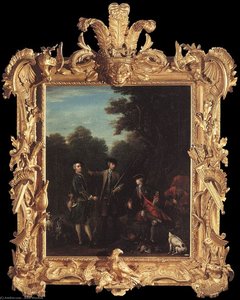
Ritratto di John Wootton

Dipinti di John Wootton: i 91 più famosi, attraverso lo sguardo di una galleria

Aggiornato Ottobre 2026 · classificato in base al nostro punteggio di popolarità (ricerche, visite e ordini per ogni opera) · 91 opere di John Wootton nel nostro catalogo

In breve

Per la critica, il dipinto più famoso di John Wootton è La morte della lepre (1735), l'originale del quale è esposto al Yale Center for British Art, New Haven. Ritratto di un uomo a cavallo (1720) e The Meet of a Hunt with Henry II Hoare (1705 - 1785) (1729) completano il trio che ogni occhio riconosce. Dei 91 lavori di John Wootton nel nostro catalogo, la galleria presenta di seguito i 91 più famosi, ognuno originale con il proprio anno, il proprio museo e ciò che lo rende unico.

1682 – 1764, Snitterfield Baroque Più opere: Yale Center for British Art

I 10 migliori dipinti di John Wootton nella galleria

1
La morte della lepre (1735) di John Wootton

La morte della lepre

1735 · Olio su tela · Yale Center for British Art, New Haven

In questo olio su tela, ci immergiamo nell'atmosfera silenziosa e densa di un paesaggio post-caccia. La scena è ambientata nella luce morbida e diffusa del tardo pomeriggio, dove il cielo accoglie azzurri pallidi e le calde tonalità cremose di un sole che tramonta. Grandi alberi scuri incorniciano la composizione su entrambi i lati, creando una vignetta naturale che attira lo sguardo verso il dramma centrale. Si percepisce un profondo senso…

2
Ritratto di un uomo a cavallo (1720) di John Wootton

Ritratto di un uomo a cavallo

1720 · Olio su tela · Yale Center for British Art, New Haven

In "Ritratto di un uomo a cavallo" di John Wootton, un gentiluomo siede in sella a un cavallo baio scuro. La composizione è verticale e centrata, fissando lo sguardo dello spettatore direttamente sul cavaliere. Egli è vestito con un regale abbigliamento da equitazione, la cui presenza è definita da una giacca di un rosso saturo. Questo colore audace squarcia i toni terrosi e smorzati dello sfondo. Il soggetto incontra la…

3
The Meet of a Hunt with Henry II Hoare (1705 - 1785) (1729) di John Wootton

The Meet of a Hunt with Henry II Hoare (1705 - 1785)

1729 · Oil On Canvas

The composition centers on a group of horsemen and hounds assembled in a wide, rolling landscape. On the left, a tall stone obelisk rises vertically, providing a fixed point against the horizontal expanse of the countryside. The scene depicts a specific social gathering, identified by inscriptions as involving Henry Hoare and Benjamin Hoare. Henry Hoare is mounted on a horse, wearing a grey coat, while a groom leads a second…

4
The Hampton Court Chestnut Arabian (1726) di John Wootton

The Hampton Court Chestnut Arabian

1726 · Oil On Canvas · Royal Collection, Londra

The air feels heavy with the quiet dignity of the 18th century as a chestnut Arabian horse commands the center of the scene. Its sleek, muscular form catches the light from the upper left, casting soft shadows that define every curve of its powerful body. This is a portrait of poise and breeding. To the left, a man in classical attire holds the reins with a steady hand, his presence…

5
The Duke of Hamilton's Grey Racehorse, 'Victorious,' at Newmarket (1725) di John Wootton

The Duke of Hamilton's Grey Racehorse, 'Victorious,' at Newmarket

1725 · Oil On Canvas · Yale Center for British Art, New Haven

We are looking at The Duke of Hamilton's Grey Racehorse, 'Victorious,' at Newmarket, a significant work by the English painter John Wootton. Created about 1725, this oil painting captures a grey racehorse positioned within a vast, open landscape. The subject is presented with a sense of quiet dignity, set against an expansive backdrop that emphasizes the scale of the environment.

6
Lamprey at Newmarket, with a Group of Figures Including Sir William Morgan and Girolamo Bardoletti (1723) di John Wootton

Lamprey at Newmarket, with a Group of Figures Including Sir William Morgan and Girolamo Bardoletti

1723 · Oil · Yale Center for British Art, New Haven

In this oil painting from about 1723, the viewer enters a moment of high social ritual. Lamprey at Newmarket, with a Group of Figures Including Sir William Morgan and Girolamo Bardoletti presents a formal presentation of a grey horse to a gathering of gentlemen. The scene unfolds in an outdoor setting, where the quiet tension of the assembly meets the presence of the animal. The artist, John Wootton, captures a…

7
Two Stallions Fighting (1734) di John Wootton

Two Stallions Fighting

1734 · Oil

A white stallion and a black stallion collide in a moment of intense physical struggle. The composition relies on a sharp diagonal tension, driving the eye from the bright, muscular form of the white horse on the left toward the deep, dark tones of its opponent on the right. Arched necks and outstretched limbs create a sense of chaotic movement, framed by the intervention of handlers and the sharp line…

8
The Shooting Party: Frederick, Prince of Wales with John Spencer and Charles Douglas, 3rd Duke of Queensberry (1740) di John Wootton

The Shooting Party: Frederick, Prince of Wales with John Spencer and Charles Douglas, 3rd Duke of Queensberry

1740 · Oil On Canvas · Royal Collection, Londra

The Shooting Party: Frederick, Prince of Wales with John Spencer and Charles Douglas, 3rd Duke of Queensberry is an oil on canvas executed by the English painter John Wootton. Dated 1740, the work belongs to the genre of Georgian Sporting Art. It captures a specific moment of aristocratic leisure, centering on a group of prominent figures engaged in a hunting scene.

9
The Death of the Stag (1737) di John Wootton

The Death of the Stag

1737 · Oil On Canvas · Royal Collection, Londra

The scene unfolds across a wide, panoramic landscape under a vast sky of blue and white. In the foreground, the immediate focus is a fallen stag, its body positioned amidst a group of hunting dogs that scatter around the carcass. Some of these animals actively engage with the animal, their forms creating a sense of movement against the earth. Beyond this central action, the midground contains a group of hunters,…

10
The Return from the Chase (1737) di John Wootton

The Return from the Chase

1737 · Oil On Canvas · Royal Collection, Londra

An expansive 18th-century landscape captures a group of aristocratic figures and their horses returning from a hunt. The composition utilizes a wide format to emphasize the scale of the estate, leading the eye from a detailed foreground of riders and attendants toward a distant, imposing stone manor situated on a slight rise. To the right, a dense cluster of mature trees provides verticality, framing the scene and adding depth to…

Dipinti di John Wootton, classificati dal 11 all' 91

11The Siege of Tournay (1742) di John WoottonThe Siege of Tournay1742 · Royal Collection 12William Augustus, Duke of Cumberland (1721-65) at the Battle of Dettingen (1744) di John WoottonWilliam Augustus, Duke of Cumberland (1721-65) at the Battle of Dettingen1744 · Royal Collection 13Frederick, Prince of Wales (1707-1751) in the Hunting Field (1734) di John WoottonFrederick, Prince of Wales (1707-1751) in the Hunting Field1734 · Royal Collection 14A Fox Hunt (1735) di John WoottonA Fox Hunt1735 · Yale Center for British Art 15Lord Portmore Watching Racehorses at Exercise on Newmarket Heath (1735) di John WoottonLord Portmore Watching Racehorses at Exercise on Newmarket Heath1735 · Yale Center for British Art 16William Augustus, Duke of Cumberland (1721-1765) (1745) di John WoottonWilliam Augustus, Duke of Cumberland (1721-1765)1745 · Royal Collection 17Haycart Passing a Ruined Abbey (1745) di John WoottonHaycart Passing a Ruined Abbey1745 · Yale Center for British Art 18Preparativi per la caccia (1745) di John WoottonPreparativi per la caccia1745 · Yale Center for British Art 19Abbazia di Rievaulx (1745) di John WoottonAbbazia di Rievaulx1745 · Yale Center for British Art 20Paesaggio Classico: Mattino (1740) di John WoottonPaesaggio Classico: Mattino1740 · Yale Center for British Art 21Paesaggio Classico (1725) di John WoottonPaesaggio Classico1725 · Yale Center for British Art 22The Battle of Blenheim, 13 August (1704) di John WoottonThe Battle of Blenheim, 13 August (1704) 23Horse Race at Newmarket di John WoottonHorse Race at NewmarketPetworth House 24Battle Scene on Bridge (1706) di John WoottonBattle Scene on Bridge1706 · Antony House 25George I at Newmarket, 4 or 5 October, 1717 (1717) di John WoottonGeorge I at Newmarket, 4 or 5 October, 17171717 · Yale Center for British Art 26Il Duca di Rutland (1715) di John WoottonIl Duca di Rutland1715 · Yale Center for British Art 27Sketch for ‘A prospect of Dover Castle’, Warmer Castle (1727) di John WoottonSketch for ‘A prospect of Dover Castle’, Warmer Castle1727 28Park Place, Henley (1742) di John WoottonPark Place, Henley1742 · Royal Collection 29A Distant View of Henley-on-Thames (1742) di John WoottonA Distant View of Henley-on-Thames1742 · Royal Collection 30The Siege of Lille (1742) di John WoottonThe Siege of Lille1742 · Royal Collection 31A Grey Spotted Hound (1738) di John WoottonA Grey Spotted Hound1738 · Yale Center for British Art 32Two of the Duchess of Marlborough's Dogs (1736) di John WoottonTwo of the Duchess of Marlborough's Dogs1736 33Classical Landscape (1754) di John WoottonClassical Landscape1754 · Yale Center for British Art 34Classical Landscape with Figures and Animals: Sunset (1754) di John WoottonClassical Landscape with Figures and Animals: Sunset1754 · Yale Center for British Art 35Releasing the Hound (1745) di John WoottonReleasing the Hound1745 · Yale Center for British Art 36Racing Scene at Newmarket (1750) di John WoottonRacing Scene at Newmarket1750 · Minneapolis Institute of Art 37La Parte di Caccia (1740) di John WoottonLa Parte di Caccia1740 · Royal Collection 38Segugi e una gazza (1740) di John WoottonSegugi e una gazza1740 · Museo dell'Ermitage 39Classical Landscape di John WoottonClassical LandscapeSzépművészeti Múzeum 40Paesaggio classico: Sera (1740) di John WoottonPaesaggio classico: Sera1740 · Yale Center for British Art 41A Dark Bay Stallion, Possibly the Byerley Turk di John WoottonA Dark Bay Stallion, Possibly the Byerley Turk 42Bowater Vernon (1683–1735), with Hanbury Hall and Its Formal Garden di John WoottonBowater Vernon (1683–1735), with Hanbury Hall and Its Formal GardenHanbury Hall 43The Beauchamp-Proctor Family and Friends at Langley Park, Norfolk di John WoottonThe Beauchamp-Proctor Family and Friends at Langley Park, Norfolk 44The Bloody-Shouldered Arabian di John WoottonThe Bloody-Shouldered Arabian 45Viscount Weymouth's Hunt The Hon. John Spencer beside a Hunter held by a Young Boy di John WoottonViscount Weymouth's Hunt The Hon. John Spencer beside a Hunter held by a Young Boy 46Landscape with Angelica and Medoro di John WoottonLandscape with Angelica and Medoro 47The Duke of Rutland di John WoottonThe Duke of Rutland 48Classical Landscape with a Grecian Temple di John WoottonClassical Landscape with a Grecian Temple 49Before the hunt di John WoottonBefore the hunt 50Paesaggio Classico con Zingari (1748) di John WoottonPaesaggio Classico con Zingari1748 · Metropolitan Museum of Art 51Ritratto di Coplestone Warre Bampfylde (1720-96) davanti a Hestercombe House con il suo cacciatore c. 1740 di John WoottonRitratto di Coplestone Warre Bampfylde (1720-96) davanti a Hestercombe House con il suo cacciatore c. 1740Hestercombe House - Giardini 52Rome from the Aventine Hill di John WoottonRome from the Aventine HillBirmingham Museum and Art Gallery 53Classical landscape di John WoottonClassical landscapeFitzwilliam Museum 54Stag hunt di John WoottonStag hunt 55Horses Exercising on Newmarket Heath di John WoottonHorses Exercising on Newmarket Heath 56'Lamprey' (A Racehorse) di John Wootton'Lamprey' (A Racehorse) 57A Race on the Round Course at Newmarket di John WoottonA Race on the Round Course at NewmarketFitzwilliam Museum 58Life-Size Horse with Huntsman Blowing a Horn di John WoottonLife-Size Horse with Huntsman Blowing a Horn 59Landscape with Cattle di John WoottonLandscape with Cattle 60Lady Mary Churchill at the Death of the Hare di John WoottonLady Mary Churchill at the Death of the Hare 61A View of Cassiobury Park di John WoottonA View of Cassiobury Park 62Coastal Scene with Shipping at Dawn di John WoottonCoastal Scene with Shipping at DawnHartwell House 63Muff, a Black and White Dog di John WoottonMuff, a Black and White Dog 64A Turkey in a Landscape di John WoottonA Turkey in a Landscape 65Drovers at a Harbour di John WoottonDrovers at a Harbour 66A Stag Hunt in Full Cry di John WoottonA Stag Hunt in Full CryWimpole Hall 67George II (1683–1760), on Horseback di John WoottonGeorge II (1683–1760), on HorsebackBlickling Hall 68View of the Severn Valley with Haymaking and Figures di John WoottonView of the Severn Valley with Haymaking and Figures 69Landscape of a River Valley at Sunset di John WoottonLandscape of a River Valley at SunsetHartwell House 70Landscape with Fishermen di John WoottonLandscape with Fishermen 71A Stag Hunt at Chirk di John WoottonA Stag Hunt at Chirk 72A Grey Horse and Jockey in Red Colours, before a Stable di John WoottonA Grey Horse and Jockey in Red Colours, before a StableClandon Park 73Lionel Sackville, 1st Duke of Dorset, Lord Warden of the Cinque Ports, Returning in Procession to Dover Castle di John WoottonLionel Sackville, 1st Duke of Dorset, Lord Warden of the Cinque Ports, Returning in Procession to Dover CastleKnole 74Italianate landscape di John WoottonItalianate landscape 75Equestrian Portrait of Sir Richard Hoare II (1709–1754), as Lord Mayor of London, at Temple Bar di John WoottonEquestrian Portrait of Sir Richard Hoare II (1709–1754), as Lord Mayor of London, at Temple Bar 76William tregonwell frampton di John WoottonWilliam tregonwell frampton 77Wooded Landscape and Coastal Town di John WoottonWooded Landscape and Coastal Town 78A Bay Racehorse and Attendants di John WoottonA Bay Racehorse and Attendants 79Sir Robert Walpole, 1st Earl of Orford, as a Ranger of Richmond Park di John WoottonSir Robert Walpole, 1st Earl of Orford, as a Ranger of Richmond Park 80George II at the Battle of Dettingen, with the Duke of Cumberland and Robert, 4th Earl of Holderness, 27 June (1743) di John WoottonGeorge II at the Battle of Dettingen, with the Duke of Cumberland and Robert, 4th Earl of Holderness, 27 June (1743) 81Henry Hoare II (1705–1785), on Horseback di John WoottonHenry Hoare II (1705–1785), on Horseback 82George Henry Lee, 3rd Earl of Litchfield, and his Uncle the Hon. Robert Lee, Subsequently 4th Earl of Litchfield, Shooting in 'True Blue' Frock Coats di John WoottonGeorge Henry Lee, 3rd Earl of Litchfield, and his Uncle the Hon. Robert Lee, Subsequently 4th Earl of Litchfield, Shooting in 'True Blue' Frock Coats 83A Classical Landscape with Animals di John WoottonA Classical Landscape with AnimalsUpton House 84Dancing Dogs 'Lusette', 'Madore', 'Rosette' and 'Moucheby' di John WoottonDancing Dogs 'Lusette', 'Madore', 'Rosette' and 'Moucheby'Wallington Hall 85Viscount Weymouth's Hunt A Groom holding a Saddled Grey Hunter with Hounds and Terriers di John WoottonViscount Weymouth's Hunt A Groom holding a Saddled Grey Hunter with Hounds and Terriers 86Viscount Weymouth's Hunt Two Hunt Servants on Hunters beside a Cottage di John WoottonViscount Weymouth's Hunt Two Hunt Servants on Hunters beside a Cottage 87Gilbert Coventry (c.1688–1719), 4th Earl of Coventry, with Two Huntsmen in a Landscape di John WoottonGilbert Coventry (c.1688–1719), 4th Earl of Coventry, with Two Huntsmen in a LandscapeAntony House 88A favorite poodle and monkey belonging to thomas osborn di John WoottonA favorite poodle and monkey belonging to thomas osborn 89Viscount Weymouth's Hunt Mr Jackson, the Hon. Henry Villiers and the Hon. Thomas Villiers, with Hunters and Hounds di John WoottonViscount Weymouth's Hunt Mr Jackson, the Hon. Henry Villiers and the Hon. Thomas Villiers, with Hunters and Hounds 90Viscount Weymouth's Hunt Thomas, 2nd Viscount Weymouth, with a Black Page and other Huntsmen at the Kill di John WoottonViscount Weymouth's Hunt Thomas, 2nd Viscount Weymouth, with a Black Page and other Huntsmen at the Kill 91A View of Henley-on-Thames (1742) di John WoottonA View of Henley-on-Thames1742 · Royal Collection

I dipinti più famosi di John Wootton, periodo per periodo

I soggetti che hanno catturato lo sguardo di John Wootton

I quattro soggetti che ricorrono più spesso in questi originali, ognuno con il suo esempio più raffinato.

I musei che conservano gli originali di John Wootton

I 8 musei che ospitano la maggior parte dei dipinti presenti in questa pagina.

Musei Città Opere di John Wootton Dipinti di questo elenco
Yale Center for British Art, New HavenYale Center for British Art New Haven 18 La morte della lepre, Ritratto di un uomo a cavallo, The Duke of Hamilton's Grey Racehorse, 'Victorious,' at Newmarket
Royal Collection, LondraRoyal Collection Londra 13 The Hampton Court Chestnut Arabian, The Shooting Party: Frederick, Prince of Wales with John Spencer and Charles Douglas, 3rd Duke of Queensberry, The Death of the Stag
Antony HouseAntony House 2 Battle Scene on Bridge, Gilbert Coventry (c.1688–1719), 4th Earl of Coventry, with Two Huntsmen in a Landscape
Fitzwilliam MuseumFitzwilliam Museum 2 Classical landscape, A Race on the Round Course at Newmarket
Hartwell House, AylesburyHartwell House Aylesbury 2 Coastal Scene with Shipping at Dawn, Landscape of a River Valley at Sunset
Petworth House, PetworthPetworth House Petworth 1 Horse Race at Newmarket
Minneapolis Institute of Art, MinneapolisMinneapolis Institute of Art Minneapolis 1 Racing Scene at Newmarket
Museo dell'Ermitage, San PietroburgoMuseo dell'Ermitage San Pietroburgo 1 Segugi e una gazza

John Wootton, un dipinto iconico per ogni decennio

Opere per decennio

Scegli un decennio per scoprire l'opera originale che lo ha definito.

I dipinti di John Wootton: le risposte della galleria

Quale dipinto di John Wootton è il più famoso di tutti?Scopri la risposta

La morte della lepre (1735), Yale Center for British Art, New Haven. Seguono Ritratto di un uomo a cavallo (1720) e The Meet of a Hunt with Henry II Hoare (1705 - 1785) (1729).

Che età aveva John Wootton quando ha completato La morte della lepre?Scopri la risposta

53 anni: La morte della lepre risale al 1735, e John Wootton è nato/a nel 1682.

Quali sono i 10 dipinti più famosi di John Wootton?Scopri la risposta

La morte della lepre, Ritratto di un uomo a cavallo, The Meet of a Hunt with Henry II Hoare (1705 - 1785), The Hampton Court Chestnut Arabian, The Duke of Hamilton's Grey Racehorse, 'Victorious,' at Newmarket, Lamprey at Newmarket, with a Group of Figures Including Sir William Morgan and Girolamo Bardoletti, Two Stallions Fighting, The Shooting Party: Frederick, Prince of Wales with John Spencer and Charles Douglas, 3rd Duke of Queensberry, The Death of the Stag e The Return from the Chase. La classifica sopra riporta l'anno e il museo di ciascuna opera.

Quante opere ha creato John Wootton?Scopri la risposta

Il nostro catalogo comprende 91 opere di John Wootton, datate da 1706 a 1754.

Dove sono esposti gli originali più famosi di John Wootton?Scopri la risposta

Principalmente in Yale Center for British Art (New Haven), Royal Collection (Londra) e Antony House. La tabella dei musei sopra li elenca tutti.

Quando ha realizzato i suoi dipinti più famosi John Wootton?Scopri la risposta

In 1740s: 17 delle 91 opere in questa pagina sono state realizzate in quel periodo, tra cui The Shooting Party: Frederick, Prince of Wales with John Spencer and Charles Douglas, 3rd Duke of Queensberry.

Quali sono le prime e le ultime opere celebri di John Wootton?Scopri la risposta

In questa pagina, il più antico risale al Battle Scene on Bridge (1706) e il più recente al Classical Landscape (1754).

Quali soggetti ha trattato più spesso John Wootton?Scopri la risposta

Landscape (23), Hunting (10) e Horse (9), tra le 91 opere in questa pagina.

Qual è la tecnica che John Wootton ha utilizzato più spesso?Scopri la risposta

Oil On Canvas, per 12 delle 91 opere in questa pagina.

A quale movimento è associato John Wootton?Scopri la risposta

Baroque, a giudicare dagli originali presenti in questa pagina.

Quali opere originali di John Wootton sono conservate al Yale Center for British Art?Scopri la risposta

La morte della lepre, Ritratto di un uomo a cavallo e The Duke of Hamilton's Grey Racehorse, 'Victorious,' at Newmarket: il Yale Center for British Art, New Haven custodisce 18 delle opere presenti in questa pagina.

John Wootton: l'artista

John Wootton: Un Pioniere dell'Arte Sportiva

  • Nato: c. 1686, Snitterfield, Warwickshire, Regno Unito
  • Morto: 13 novembre 1764, Londra, Inghilterra
  • Conosciuto per: Dipinti di cavalli, paesaggi, scene sportive, illustrazioni

Primi Anni e Formazione

  • John Wootton nacque a Snitterfield, vicino a Stratford-upon-Avon, Warwickshire. Si ritiene che possa aver servito come paggio della famiglia Beaufort fin dalla giovane età.
  • Probabilmente ricevette la sua formazione artistica iniziale sotto Jan Wyck durante gli anni '90 del 1600. Questa istruzione fondamentale gli fornì abilità essenziali nel disegno e nelle tecniche di pittura.
  • La sua opera datata più antica conosciuta, "Bonny Black" (1711), dimostra una precoce attitudine per il ritratto equino, mostrando un'abilità in via di sviluppo nella cattura del somiglianza e del carattere dei cavalli.

Carriera e Sviluppo Artistico

  • Wootton si stabilì a Londra nel 1706, ottenendo rapidamente riconoscimento per le sue raffigurazioni di cavalli, in particolare quelli associati alla scena delle corse di Newmarket.
  • Divenne una figura importante all'interno dei circoli artistici del suo tempo, iscrivendosi alla prima English Academy of Painting and Drawing nel 1711 e successivamente ricoprendo la carica di amministratore del Virtuosi Club of St Lukes nel 1717.
  • La sua specializzazione in soggetti equini gli portò un notevole successo e il patrocinio di membri di alto rango della società britannica, tra cui Giorgio II e Federico, Principe di Galles.
  • Oltre ai ritratti equini, Wootton contribuì significativamente alla pittura britannica attraverso l'introduzione del paesaggio ideale. Influenzato da artisti come Gaspard Dughet (noto anche come Gaspar van Wittel), incorporò elementi classici nei suoi paesaggi, offrendo un'alternativa agli stili prevalenti olandesi e fiamminghi. Questa influenza si estese a successivi artisti britannici come Thomas Gainsborough.

Opere Principali e Stile Artistico

  • Ritratti Equini: Wootton è ricordato soprattutto per i suoi ritratti dettagliati ed espressivi di cavalli, catturando le loro individualità e caratteristiche fisiche con notevole accuratezza. "Bonny Black" esemplifica questa abilità.
  • Scene Sportive: I suoi dipinti spesso raffiguravano scene di caccia e attività equestri, riflettendo la popolarità di questi passatempi tra l'aristocrazia britannica. Queste opere includevano frequentemente "conversation pieces" con cavalieri e cani da caccia in ambientazioni pittoresche.
  • Paesaggi: I paesaggi di Wootton, sebbene a volte oscurati dai suoi dipinti di animali, dimostrano una raffinata comprensione della prospettiva e della composizione, incorporando elementi classici ed effetti atmosferici.
  • Stile: Il suo stile è caratterizzato da un meticoloso dettaglio, un rendering realistico degli animali e una miscela armoniosa di pittura di paesaggi e figure. Combinava abilmente l'osservazione con la rappresentazione idealizzata, creando opere che erano sia esteticamente gradevoli che riflettevano la cultura sportiva del suo tempo.

Eredità e Significato Storico

  • Sebbene in seguito eclissato in popolarità da George Stubbs, che possedeva una maggiore padronanza tecnica dell'anatomia animale, John Wootton rimane una figura significativa nella storia dell'arte britannica.
  • È riconosciuto come un pioniere dell'arte sportiva, stabilendo un genere che sarebbe stato ulteriormente sviluppato da artisti successivi.
  • La sua introduzione dello stile paesaggistico ideale ebbe un impatto duraturo sulla pittura britannica, influenzando generazioni di artisti e contribuendo allo sviluppo di un'estetica distintamente britannica.
  • Le opere di Wootton sono conservate in prestigiose collezioni in tutto il mondo, tra cui la Tate Gallery (Londra), il Virginia Museum of Fine Arts (Richmond) e il Yale Center for British Art, garantendo che la sua eredità continui ad essere apprezzata dagli appassionati d'arte oggi.