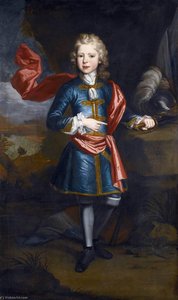
Ritratto di Johann Closterman

Dipinti di Johann Closterman: i 62 più famosi, attraverso lo sguardo di una galleria

Aggiornato Novembre 2026 · classificato in base al nostro punteggio di popolarità (ricerche, visite e ordini per ogni opera) · 68 opere di Johann Closterman nel nostro catalogo

In breve

Per la galleria, il dipinto più famoso di Johann Closterman è Robert Constable (1651–1714), 3° Visconte Dunbar (1690). Ritratto di una figura con un cacatua (1685) e Henry Purcell (1695) completano il trio che ogni occhio riconosce. Dei 68 lavori di Johann Closterman nel nostro catalogo, la galleria presenta di seguito i 62 più famosi, ognuno originale con il proprio anno, il proprio museo e ciò che lo rende unico.

1660 – 1711, Osnabrück Barocco Più opere: National Portrait Gallery

I 10 migliori dipinti di Johann Closterman nella galleria

1
Robert Constable (1651–1714), 3° Visconte Dunbar (1690) di Johann Closterman

Robert Constable (1651–1714), 3° Visconte Dunbar

1690 · Olio su tela

Un uomo si appoggia a un tavolo, il suo corpo ancorato in uno spazio interiore e silenzioso. Indossa la pesante e lucida armatura di un nobile, il metallo che cattura una luce netta proveniente dall'alto a sinistra. Questa luce scolpisce i contorni del suo volto e le linee rigide della sua corazza, proiettando ombre profonde che conferiscono alla sua figura una presenza fisica e imponente. Una sciarpa blu gli avvolge…

2
Ritratto di una figura con un cacatua (1685) di Johann Closterman

Ritratto di una figura con un cacatua

1685 · Pittura a olio · Museo del Prado, Madrid

Un giovane uomo occupa il centro di questa composizione verticale, la cui presenza è ancorata da un pesante soprabito in velluto blu navy. Egli si staglia in un paesaggio aspro, dove la terra incontra un cielo nuvoloso e plumbeo. I suoi capelli scuri e ondulati ricadono lunghi contro il colletto strutturato di una cravatta bianca a volant. Sulla sua mano destra riposa un cacatua bianco, le cui piume catturano la…

3
Henry Purcell (1695) di Johann Closterman

Henry Purcell

1695 · Olio su tela · National Portrait Gallery, Londra

In questo ritratto di Henry Purcell realizzato da Johann Closterman, incontriamo un uomo che ha plasmato le fondamenta stesse della musica inglese. Dipinta intorno al 1695, l'opera cattura le sembianze di una figura ampiamente celebrata come il padre della musica moderna in Inghilterra. Purcell fu una presenza di grande influenza durante il periodo della Restaurazione, un'epoca di profonda trasformazione musicale. La sua carriera fu segnata da un'ascesa precoce e straordinaria…

4
Sir Richard Haddock (1629–1715) (1700) di Johann Closterman

Sir Richard Haddock (1629–1715)

1700 · Olio su tela · Museo del Ministero della Difesa, Londra

In questo ritratto del 1700, incontriamo lo sguardo fermo di Sir Richard Haddock. Il soggetto ci rivolge i suoi occhi con un'espressione severa e incrollabile, che suggerisce una vita definita dalla disciplina e dal comando. I suoi lineamenti sono resi con una meticolosa attenzione ai dettagli, dalla consistenza densa dei suoi baffi ai singoli ciuffi dei suoi lunghi capelli. Vi è un certo peso nella sua presenza, una gravità che…

5
John Churchill, I Duca di Marlborough (1687) di Johann Closterman

John Churchill, I Duca di Marlborough

1687 · Olio su tela · National Portrait Gallery, Londra

Questo ritratto a mezzo busto raffigura John Churchill, I Duca di Marlborough. Dipinto da Johann Closterman nel 1687, l'opera presenta il soggetto con estrema solennità. La figura è posizionata secondo una leggera angolazione, con lo sguardo rivolto direttamente verso lo spettatore. Il protagonista indossa un'armatura in acciaio lucidato che riflette la luce, completata da una candida cravatta al collo.

6
Maggior generale Thomas Fairfax ) (1633) di Johann Closterman

Maggior generale Thomas Fairfax )

1633 · Olio su tela

In questo ritratto formale, Johann Closterman posiziona il Maggior generale Thomas Fairfax ) in una posa di tre quarti. La composizione è ancorata dalla statura del soggetto, definita da forti linee verticali che dominano lo spazio. Una voluminosa parrucca poggia sulla sua testa, aggiungendo un peso scultoreo e imponente alla sua silhouette. Sulla destra, un elemento paesaggistico appare debolmente sullo sfondo, come il fantasma di un mondo situato oltre l'ombra…

7
John Poulett, primo conte Poulett (1690) di Johann Closterman

John Poulett, primo conte Poulett

1690 · Olio su tela · Yale Center for British Art, New Haven

Questo ritratto di John Poulett, primo conte Poulett, fu realizzato dall'artista Johann Closterman intorno al 1690. Il soggetto è raffigurato come un giovane bambino, presentato in una posa a figura intera che ne sottolinea lo status e la stirpe. In quanto politico e cortigiano britannico, il giovane Poulett è ritratto con gli attributi formali associati al suo nobile lignaggio. Egli appare in piedi, leggermente fuori centro, accompagnato da un piccolo…

8
Ritratto di David Papillon ) (1691) di Johann Closterman

Ritratto di David Papillon )

1691 · Olio su tela

Johann Closterman ha realizzato il Ritratto di David Papillon ) nel 1691. Il soggetto è un giovane uomo identificato come David Papillon, presentato in una raffigurazione formale che ne sottolinea lo status sociale e il carattere. L'opera è nata in un periodo in cui Closterman stava consolidando la sua reputazione nella capacità di catturare le sfumature dell'élite europea.

9
Isabella Machell, viscontessa Irwin (1690) di Johann Closterman

Isabella Machell, viscontessa Irwin

1690 · Olio su tela · Temple Newsam House, Leeds

In questo ritratto di Isabella Machell, viscontessa Irwin, Johann Closterman cattura un istante di composta dignità. Realizzata intorno al 1690, l'opera presenta il soggetto in una posa serena, seduta su una panca finemente decorata. La figura è immersa in un contesto di giardino, una scelta che infonde un senso di grazia all'intera composizione. Lo sguardo della donna si rivolge direttamente allo spettatore, con un'espressione ammorbidita da un sorriso gentile che…

10
John Manners, 1° Duca di Rutland (1638 – 1711) (1703) di Johann Closterman

John Manners, 1° Duca di Rutland (1638 – 1711)

1703 · Olio su tela · Hardwick Hall

In questo ritratto a figura intera del 1703, incontriamo John Manners, 1° Duca di Rutland, colto in un momento di profonda quiete e di altissimo rango. La sua figura è posizionata leggermente a sinistra, con una presenza che domina lo spazio verticale della tela. Il soggetto è avvolto in pesanti e cerimoniali abiti da incoronazione, dove i rossi profondi del velluto creano un contrasto sorprendente con il bianco e il…

Dipinti di Johann Closterman, classificati dal 11 all' 62

11William Bromley, MP e Speaker (1664 – 1732) (1709) di Johann ClostermanWilliam Bromley, MP e Speaker (1664 – 1732)1709 · Charlecote Park 12Colonnello George Lucy (1665/66 - 1721) (1704) di Johann ClostermanColonnello George Lucy (1665/66 - 1721)1704 · Charlecote Park 13Ritratto di un gentiluomo (si dice sia John Howe, 1630–1705, cappellano di Oliver Cromwell e di suo figlio) (1702) di Johann ClostermanRitratto di un gentiluomo (si dice sia John Howe, 1630–1705, cappellano di Oliver Cromwell e di suo figlio)1702 · College di Cristo 14John Bridgeman Of Prinknash (1638) di Johann ClostermanJohn Bridgeman Of Prinknash1638 15John Bridgeman of Prinknash (1638) di Johann ClostermanJohn Bridgeman of Prinknash1638 16Portrait of Judge George Jeffreys, First Baron of Wem (1648) di Johann ClostermanPortrait of Judge George Jeffreys, First Baron of Wem1648 17John Churchill 1st Duke Of Marlborough And Sarah Duchess Of Marlborough With (1660) di Johann ClostermanJohn Churchill 1st Duke Of Marlborough And Sarah Duchess Of Marlborough With1660 18Elizabeth Mulso, Mrs John Dolben (1685) di Johann ClostermanElizabeth Mulso, Mrs John Dolben1685 19Sir William Brownlow (1665–1702), 4th Bt of Humby, MP (1685) di Johann ClostermanSir William Brownlow (1665–1702), 4th Bt of Humby, MP1685 · National Trust 20Alice Sherard (1659–1721), Lady Brownlow (1685) di Johann ClostermanAlice Sherard (1659–1721), Lady Brownlow1685 · National Trust 21John Dolben, MP (1685) di Johann ClostermanJohn Dolben, MP1685 22Sir John Brownlow (1659–1697), 3rd Bt, 'Young Sir John' (1685) di Johann ClostermanSir John Brownlow (1659–1697), 3rd Bt, 'Young Sir John'1685 · National Trust 23Dorothy Mason (1665–1699 1700), Lady Brownlow (1685) di Johann ClostermanDorothy Mason (1665–1699 1700), Lady Brownlow1685 · National Trust 24Lady Margaret Tufton, Lady Coventry (1680) di Johann ClostermanLady Margaret Tufton, Lady Coventry1680 25Inscribed as 'Elizabeth Kirkley (d.1674), First Wife of Sir William Blackett, 1st Bt (1st Creation)' (but probably Mary Yorke, 2nd wife of Sir Edward Blackett, 2nd Bt) (1680) di Johann ClostermanInscribed as 'Elizabeth Kirkley (d.1674), First Wife of Sir William Blackett, 1st Bt (1st Creation)' (but probably Mary Yorke, 2nd wife of Sir Edward Blackett, 2nd Bt)1680 · National Trust 26Lady Amabel Grey (b.1673), Sister of Henry Grey, Duke of Kent (1694) di Johann ClostermanLady Amabel Grey (b.1673), Sister of Henry Grey, Duke of Kent1694 27Charles Seymour (1662–1748), 6th Duke of Somerset, KG, with a Black Page (1692) di Johann ClostermanCharles Seymour (1662–1748), 6th Duke of Somerset, KG, with a Black Page1692 · Petworth House 28Christopher Wren (1632–1723) (1690) di Johann ClostermanChristopher Wren (1632–1723)1690 · Royal Society 29Colonel George Lucy (1665 1666–1721) (1690) di Johann ClostermanColonel George Lucy (1665 1666–1721)1690 · National Trust 30Lady Elizabeth Percy, Duchess of Somerset, and Her Son (1690) di Johann ClostermanLady Elizabeth Percy, Duchess of Somerset, and Her Son1690 · Petworth House 31Samuel Pepys (1690) di Johann ClostermanSamuel Pepys1690 · National Portrait Gallery 32The Children of John Taylor of Bifrons Park (1696) di Johann ClostermanThe Children of John Taylor of Bifrons Park1696 · Beningbrough Hall 33Lady Amabel Grey, Daughter of Henry Grey, Duke of Kent (1694) di Johann ClostermanLady Amabel Grey, Daughter of Henry Grey, Duke of Kent1694 34William Cowper (1666–1709) (1690) di Johann ClostermanWilliam Cowper (1666–1709)1690 35Portrait of Guilford Killigrew, When a Boy (1709) di Johann ClostermanPortrait of Guilford Killigrew, When a Boy1709 36Queen Anne (1665–1714) (after Godfrey Kneller) (1703) di Johann ClostermanQueen Anne (1665–1714) (after Godfrey Kneller)1703 · Windsor Guildhall 37James Craggs the Elder (1710) di Johann ClostermanJames Craggs the Elder1710 · National Portrait Gallery 38Arthur Herbert (c.1648–1716), 1st Earl of Torrington (1700) di Johann ClostermanArthur Herbert (c.1648–1716), 1st Earl of Torrington1700 39Eleanor Brownlow (1691–1730), Later Viscountess Tyrconnel, as a Young Girl (1702) di Johann ClostermanEleanor Brownlow (1691–1730), Later Viscountess Tyrconnel, as a Young Girl1702 · National Trust 40Sir Henry Parker (c.1640–1713), 2nd Bt of Honington (1700) di Johann ClostermanSir Henry Parker (c.1640–1713), 2nd Bt of Honington1700 41Eleanor Brownlow, Later Viscountess Tyrconnel, as a Young Girl (1702) di Johann ClostermanEleanor Brownlow, Later Viscountess Tyrconnel, as a Young Girl1702 · Belton House 42Unknown man, formerly known as Sir James Thornhill (1705) di Johann ClostermanUnknown man, formerly known as Sir James Thornhill1705 · National Portrait Gallery 43Maurice Ashley Cooper Anthony Ashley Cooper, 3rd Earl of Shaftesbury (1702) di Johann ClostermanMaurice Ashley Cooper Anthony Ashley Cooper, 3rd Earl of Shaftesbury1702 44Sir John Aubrey (c.1650–1700), 2nd Bt di Johann ClostermanSir John Aubrey (c.1650–1700), 2nd Bt 45Sir Robert Dashwood (1666–1734), Bt di Johann ClostermanSir Robert Dashwood (1666–1734), Bt 46Sir William Temple di Johann ClostermanSir William Temple 47Edward Montagu (1670–1729), 3rd Earl of Sandwich di Johann ClostermanEdward Montagu (1670–1729), 3rd Earl of Sandwich 48Portrait of a Racehorse and Jockey di Johann ClostermanPortrait of a Racehorse and Jockey 49Portrait Of Charles Calvert di Johann ClostermanPortrait Of Charles Calvert 50Portrait of Edward Radclyffe, 2nd Earl of Derwentwater (oil on canvas) di Johann ClostermanPortrait of Edward Radclyffe, 2nd Earl of Derwentwater (oil on canvas) 51Portrait of Thomas and George Dashwood di Johann ClostermanPortrait of Thomas and George Dashwood 52Portrait of a Lady di Johann ClostermanPortrait of a Lady 53Mary Hough, Lady (Basil) Firebrace di Johann ClostermanMary Hough, Lady (Basil) FirebraceMelford Hall 54Daniel parke di Johann ClostermanDaniel parke 55Portrait of Queen Anne di Johann ClostermanPortrait of Queen Anne 56Prince George of Denmark (1653–1708), Consort to Queen Anne (after Godfrey Kneller) di Johann ClostermanPrince George of Denmark (1653–1708), Consort to Queen Anne (after Godfrey Kneller)Windsor Guildhall 57Edward Montagu, 3rd Earl of Sandwich di Johann ClostermanEdward Montagu, 3rd Earl of Sandwich 58Elizabeth Crewe, Countess of Arran di Johann ClostermanElizabeth Crewe, Countess of ArranCalke Abbey 59Portrait of a Gentleman Wearing Red di Johann ClostermanPortrait of a Gentleman Wearing Red 60Probably Sir Edward Blackett (1651 1652–1718), 2nd Bt di Johann ClostermanProbably Sir Edward Blackett (1651 1652–1718), 2nd BtNational Trust 61The Triumph of John, 1st Duke of Marlborough di Johann ClostermanThe Triumph of John, 1st Duke of MarlboroughRoyal Hospital Chelsea 62Portrait of William Paul (1673 1711) of Bray, Berkshire, with his dog and a gun di Johann ClostermanPortrait of William Paul (1673 1711) of Bray, Berkshire, with his dog and a gun

I dipinti più famosi di Johann Closterman, periodo per periodo

I soggetti che hanno catturato lo sguardo di Johann Closterman

I quattro soggetti che ricorrono più spesso in questi originali, ognuno con il suo esempio più raffinato.

I musei che conservano gli originali di Johann Closterman

I 8 musei che ospitano la maggior parte dei dipinti presenti in questa pagina.

Musei Città Opere di Johann Closterman Dipinti di questo elenco
National Portrait Gallery, LondraNational Portrait Gallery Londra 5 Henry Purcell, John Churchill, I Duca di Marlborough, Samuel Pepys
National Trust, GranthamNational Trust Grantham 5 Sir William Brownlow (1665–1702), 4th Bt of Humby, MP, Alice Sherard (1659–1721), Lady Brownlow, Sir John Brownlow (1659–1697), 3rd Bt, 'Young Sir John'
Charlecote Park, WarwickshireCharlecote Park Warwickshire 2 William Bromley, MP e Speaker (1664 – 1732), Colonnello George Lucy (1665/66 - 1721)
National Trust, WallingtonNational Trust Wallington 2 Inscribed as 'Elizabeth Kirkley (d.1674), First Wife of Sir William Blackett, 1st Bt (1st Creation)' (but probably Mary Yorke, 2nd wife of Sir Edward Blackett, 2nd Bt), Probably Sir Edward Blackett (1651 1652–1718), 2nd Bt
Petworth House, PetworthPetworth House Petworth 2 Charles Seymour (1662–1748), 6th Duke of Somerset, KG, with a Black Page, Lady Elizabeth Percy, Duchess of Somerset, and Her Son
Windsor Guildhall, WindsorWindsor Guildhall Windsor 2 Queen Anne (1665–1714) (after Godfrey Kneller), Prince George of Denmark (1653–1708), Consort to Queen Anne (after Godfrey Kneller)
Museo del Prado, MadridMuseo del Prado Madrid 1 Ritratto di una figura con un cacatua
Museo del Ministero della Difesa, LondraMuseo del Ministero della Difesa Londra 1 Sir Richard Haddock (1629–1715)

Johann Closterman, un dipinto iconico per ogni decennio

Opere per decennio

Scegli un decennio per scoprire l'opera originale che lo ha definito.

I dipinti di Johann Closterman: le risposte della galleria

Quale dipinto di Johann Closterman è il più famoso di tutti?Scopri la risposta

Robert Constable (1651–1714), 3° Visconte Dunbar (1690). Seguono Ritratto di una figura con un cacatua (1685) e Henry Purcell (1695).

Che età aveva Johann Closterman quando ha completato Robert Constable (1651–1714), 3° Visconte Dunbar?Scopri la risposta

30 anni: Robert Constable (1651–1714), 3° Visconte Dunbar risale al 1690, e Johann Closterman è nato/a nel 1660.

Quali sono i 10 dipinti più famosi di Johann Closterman?Scopri la risposta

Robert Constable (1651–1714), 3° Visconte Dunbar, Ritratto di una figura con un cacatua, Henry Purcell, Sir Richard Haddock (1629–1715), John Churchill, I Duca di Marlborough, Maggior generale Thomas Fairfax ), John Poulett, primo conte Poulett, Ritratto di David Papillon ), Isabella Machell, viscontessa Irwin e John Manners, 1° Duca di Rutland (1638 – 1711). La classifica sopra riporta l'anno e il museo di ciascuna opera.

Quante opere ha creato Johann Closterman?Scopri la risposta

Il nostro catalogo comprende 68 opere di Johann Closterman, datate da 1680 a 1710.

Dove sono esposti gli originali più famosi di Johann Closterman?Scopri la risposta

Principalmente in National Portrait Gallery (Londra), National Trust (Grantham) e Charlecote Park (Warwickshire). La tabella dei musei sopra li elenca tutti.

Quando ha realizzato i suoi dipinti più famosi Johann Closterman?Scopri la risposta

In 1690s: 14 delle 62 opere in questa pagina sono state realizzate in quel periodo, tra cui Robert Constable (1651–1714), 3° Visconte Dunbar.

Quali sono le prime e le ultime opere celebri di Johann Closterman?Scopri la risposta

In questa pagina, il più antico risale al Lady Margaret Tufton, Lady Coventry (1680) e il più recente al James Craggs the Elder (1710).

Quali soggetti ha trattato più spesso Johann Closterman?Scopri la risposta

Uomo (10), Women (9) e Royalty (7), tra le 62 opere in questa pagina.

Qual è la tecnica che Johann Closterman ha utilizzato più spesso?Scopri la risposta

Olio su tela, per 12 delle 62 opere in questa pagina.

A quale movimento è associato Johann Closterman?Scopri la risposta

Barocco, a giudicare dagli originali presenti in questa pagina.

Quali opere originali di Johann Closterman sono conservate al National Portrait Gallery?Scopri la risposta

Henry Purcell, John Churchill, I Duca di Marlborough e Samuel Pepys: il National Portrait Gallery, Londra custodisce 5 delle opere presenti in questa pagina.

Johann Closterman: l'artista

Johann Closterman: A Portraitist of Distinction

Johann Closterman (also spelled cloosterman, klosterman; 1660 – 24 may 1711) stands as a significant figure in the landscape of Westphalian portrait painting during the late Baroque and early Rococo eras. Born in Osnabrück, Germany—a city steeped in medieval history and nestled within the Holy Roman Empire—Closterman’s artistic journey began under the tutelage of his father, who instilled in him foundational principles of design and visual artistry. This formative influence would prove crucial to shaping Closterman's distinctive style and establishing him as a respected artist of his time.
  • Early Training & Parisian Apprenticeship: Recognizing his talent, Closterman embarked on a pivotal step in his artistic education by relocating to Paris in 1679. There, he found mentorship with François de Troy, a celebrated painter known for his opulent depictions of aristocratic life and elaborate decorative schemes. This association exposed Closterman to the prevailing artistic currents of the Parisian court and honed his skills in capturing nuanced expressions and conveying grandeur through meticulous brushwork. He diligently studied the works of Guercino and Rembrandt—artists whose mastery of light and shadow profoundly impacted Closterman’s approach to portraiture.
  • Arrival in England & Collaboration with Riley: Driven by ambition and a desire for greater opportunities, Closterman ventured into England in 1681. He quickly established himself as an assistant to John Riley, a prominent portrait painter who commanded considerable acclaim for his ability to portray subjects with remarkable realism and psychological depth. Notably, Closterman contributed significantly to Riley’s monumental portraits of noble families, specifically focusing on the draperies—a technique that showcased his mastery of color and texture. This collaboration cemented Riley's reputation as one of England's foremost artists and solidified Closterman's position within the artistic milieu of London.

Royal Commissions & Artistic Evolution

The death of John Riley in 1691 marked a turning point for Closterman’s career, propelling him to complete several unfinished portraits initiated by Riley—a task undertaken with unwavering dedication and skill. This accomplishment solidified his reputation as a craftsman and demonstrated his capacity to honor the legacy of a respected predecessor. However, fortune proved fickle when Charles Seymour, 6th Duke of Somerset—a patron who had initially commissioned Closterman to paint Guercino for him—expressed dissatisfaction with the artwork’s execution. This strained relationship culminated in the duke severing ties with Closterman, effectively halting his involvement with royal commissions and marking a sobering lesson regarding artistic judgment. Despite this setback, Lord Halifax intervened, purchasing the Guercino portrait and securing Closterman’s continued artistic endeavors—a testament to his enduring talent and unwavering professionalism.
  • Spanish Patronage & Artistic Exploration: In 1696, Closterman received an invitation to serve as court painter for King Charles II of Spain—a prestigious honor that afforded him access to the wealthiest and most influential circles in Europe. During his time at Madrid, he produced portraits of the king, his consort Mariana of Austria, and other dignitaries, showcasing his versatility and adapting his style to suit diverse artistic traditions. Furthermore, Closterman undertook extensive travels throughout Italy twice—a formative experience that broadened his artistic horizons and enriched his personal collection with invaluable artworks.

Return to England & Continued Success

Upon returning to England, Closterman experienced a resurgence of demand for his services among the English elite—a reflection of his enduring reputation as a skilled portraitist and a respected artist of his time. He married Hannah in 1698, establishing a domestic life that included the joys and sorrows inherent in any family relationship. Sadly, Hannah succumbed to illness in 1702, leaving Closterman bereaved—an event that profoundly impacted his emotional well-being. Accounts suggest he subsequently engaged in an affair with a mistress who embezzled considerable assets from him—a scandalous episode that plunged him into mental decline and ultimately contributed to his untimely demise in 1711 at Covent Garden Churchyard in London. Despite his personal struggles, Closterman’s artistic legacy remains secure—his captivating portraits continue to inspire admiration for their stylistic elegance and artistic integrity.

Legacy & Artistic Significance

Johann Closterman’s artistic legacy resides primarily in his masterful depictions of noble subjects—particularly those commissioned by prominent figures of Georgian society. His meticulous attention to detail, combined with his profound understanding of human psychology and his skillful manipulation of color and texture, distinguished him from many of his contemporaries. He achieved renown for capturing the essence of his subjects’ personalities—revealing their inner lives alongside their outward appearances—a hallmark of Baroque portraiture that foreshadowed the psychological explorations characteristic of later artistic movements. Closterman's work stands as a beacon of Westphalian artistry, embodying the grandeur and sophistication of an era defined by royal patronage and artistic innovation.