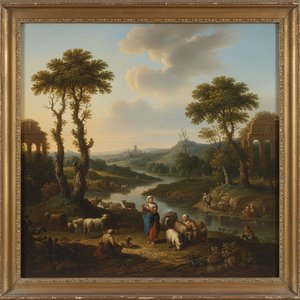
Johan Mari Henri Ten Kate: Un Pittore di Paesaggi del Romanticismo Olandese
Johan Mari Henri Ten Kate (1859 – 1896) emerse come una figura di spicco nel movimento del paesaggio romantico olandese, affascinando il pubblico con le sue magistrali rappresentazioni della serena campagna olandese e ritratti evocativi di figure umane immerse nella bellezza naturale. Sebbene durante la sua vita sia stato talvolta oscurato da contemporanei come Israëls e Maris, lo stile distintivo di Ten Kate — caratterizzato da tavolorbere luminose e da un'attenzione meticolosa al dettaglio — continua a risuonare profondamente con collezionisti e storici dell'arte ancora oggi.- Nato ad Amsterdam nel 1859, Ten Kate ricevette una formazione artistica formale presso la Koninklijke Academie voor Beeldende Künsten (Accademia Reale di Belle Arti) ad Anversa, in Belgio. I suoi maestri includevano Willem Maris e Anton Mauve, figure influenti che promossero le tecniche impressioniste e incoraggiarono gli studenti a catturare i momenti fugaci di luce e atmosfera, un elemento cruciale che avrebbe plasmato la visione artistica di Ten Kate.
Uno Stile Romantico Distintivo
L'opera di Ten Kate si distingue dalle tendenze prevalenti della sua epoca per una straordinaria sensibilità al colore e alla consistenza materica. A differenza di molti artisti che prediligevano toni smorzati, egli abbracciò sfumature vibranti — in particolare blu e verdi — per trasmettere la grandezza e la tranquillità dei paesaggi olandesi. Le sue pennellate erano deliberate ma fluide, stratificando i pigmenti con una precisione minuziosa per raggiungere un senso di realismo senza pari, infondendo al contempo profondità emotiva alle sue tele. Egli rese con maestria gli effetti atmosferici come la nebbia e la foschia, creando scene che sembravano vive di movimento e impregnate di un sentimento palpabile verso il mondo naturale.- Tra le opere più celebri di Ten Kate figurano “Kite Flying” (1883) e “Seeking Shelter”, entrambi capaci di catturare vedute olandesi quintessenziali. Questi dipinti esemplificano la sua capacità di trasmetrebbe non solo l'accuratezza visiva, ma anche una risonanza psicologica: lo spettatore viene trasportato nella quieta contemplazione di un pomeriggio ventilato o nell'abbraccio confortante di un boschetto riparato.
- Oltre ai paesaggi, Ten Kate realizzò diversi ritratti suggestivi, dimostrando la sua versatilità come artista. “The Young Couple” esemplifica la sua meticolosa osservazione e la capacità di catturare sottili espressioni emotive, una testimonianza della sua abilità artistica e delle sue sensibilità umanistiche.
Influenze e Sviluppo Artistico
Il percorso artistico di Ten Kate fu profondamente influenzato dal movimento impressionista, guidato da Claude Monet e Pierre-Auguste Renoir. Egli assorbì le loro tecniche per catturare la luce e il colore, adattandole al proprio stile distintivo. Inoltre, trasse ispirazione dai pittori romantici come Caspar David Friedrich ed Eugène Delacroix, il cui accento sui paesaggi sublimi e sulle drammatiche narrazioni emotive plasmò la sua sensibilità artistica. Queste influenze si fusero per forgiare un'estetica unica che mescolava il realismo con una bellezza lirica.Eredità e Significato Storico
Nonostante abbia affrontato una relativa oscurità durante la sua vita, l'eredità di Johan Mari Henri Ten Kate persiste come esempio eccelso della pittura di paesaggio romantica olandese. Le sue tele continuano a incantare gli spettatori con le loro tavolozze cromatiche luminose e la magistrale resa degli effetti atmosferici — un promemoria del potere duraturo dell'arte di evocare emozioni e catturare l'essenza di un luogo e di un tempo particolari. Oggi, l'opera di Ten Kate è apprezzata per la sua eleganza discreta e il profondo legame con il mondo naturale, assicurandogli una posizione di rilievo come importante contributore alla storia artistica olandese.Domande e risposte
Dove e quando è nato Johan Mari Henri Ten Kate?
Johan Mari Henri Ten Kate è nato a Amsterdam nel 1859.
Quante opere di Johan Mari Henri Ten Kate sono disponibili nel catalogo?
Puoi sfogliare 47 opere d'arte opere di Johan Mari Henri Ten Kate nella pagina Tutte le opere.
Dove si possono trovare le opere di Johan Mari Henri Ten Kate raggruppate per movimento artistico?
I movimenti di Johan Mari Henri Ten Kate sono consultabili nella pagina Tutti i movimenti, che raggruppa le opere per movimento.