Ritratto di James Thornhill

Dipinti di James Thornhill: i 18 più famosi, attraverso lo sguardo di una galleria

Aggiornato Novembre 2026 · classificato in base al nostro punteggio di popolarità (ricerche, visite e ordini per ogni opera) · 19 opere di James Thornhill nel nostro catalogo

In breve

Per la critica, il dipinto più famoso di James Thornhill è La cecità di Elimas (1729), l'originale del quale è esposto al Royal Academy of Arts, Londra. John Worley, 1624-1721 (1708) e Thetis Accepting the Shield of Achilles from Vulcan (1710) completano il trio che ogni occhio riconosce. Dei 19 lavori di James Thornhill nel nostro catalogo, la galleria presenta di seguito i 18 più famosi, ognuno originale con il proprio anno, il proprio museo e ciò che lo rende unico.

1675 – 1734, Melcombe Regis Più opere: Yale Center for British Art

I 10 migliori dipinti di James Thornhill nella galleria

1
La cecità di Elimas (1729) di James Thornhill

La cecità di Elimas

1729 · Olio su tela · Royal Academy of Arts, Londra

L’opera “La Cecità di Elimas” di Sir James Thornhill non è una semplice rappresentazione di una scena biblica; è un’incarnazione meticolosamente elaborata dell’ambizione artistica del XVIII secolo, della convinzione religiosa e della nascente fascinazione per gli ideali classici. Completata nel 1729, questa monumentale tela ad olio – larga quasi quattro metri e mezzo – si pone come una delle opere più significative prodotte durante la prolifica carriera di Thornhill, un…

Dipinti di James Thornhill, classificati dal 11 all' 18

I musei che conservano gli originali di James Thornhill

I 8 musei che ospitano la maggior parte dei dipinti presenti in questa pagina.

Musei Città Opere di James Thornhill Dipinti di questo elenco
Yale Center for British Art, New HavenYale Center for British Art New Haven 4 St. Paul before Agrippa, Jacob's Dream, A Sketch of Gratitude Crowned by Peace, with Other Allegorical Figures of Industry, Fame and Plenty
Museo Nazionale Marittimo, LondraMuseo Nazionale Marittimo Londra 2 John Worley, 1624-1721, An Allegory of Apollo and Minerva as Wisdom and the Arts
Woolsthorpe Manor, LincolnWoolsthorpe Manor Lincoln 2 Sir Isaac Newton (1642 - 1727), Sir Isaac Newton
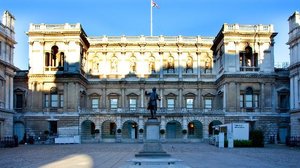
Royal Academy of Arts, LondraRoyal Academy of Arts Londra 1 La cecità di Elimas
Royal Collection, LondraRoyal Collection Londra 1 Panel for a Royal State Coach: Britannia Receiving Homage from the Continents.
Wimpole HallWimpole Hall 1 The Adoration of the Magi
Quebec House, WesterhamQuebec House Westerham 1 General Edward Wolfe (1685-1759)
Clandon ParkClandon Park 1 Speaker Arthur Onslow calling upon Sir Robert Walpole to speak in the House of Commons

James Thornhill, un dipinto iconico per ogni decennio

Opere per decennio

Scegli un decennio per scoprire l'opera originale che lo ha definito.

I dipinti di James Thornhill: le risposte della galleria

Quale dipinto di James Thornhill è il più famoso di tutti?Scopri la risposta

La cecità di Elimas (1729), Royal Academy of Arts, Londra. Seguono John Worley, 1624-1721 (1708) e Thetis Accepting the Shield of Achilles from Vulcan (1710).

Che età aveva James Thornhill quando ha completato La cecità di Elimas?Scopri la risposta

54 anni: La cecità di Elimas risale al 1729, e James Thornhill è nato/a nel 1675.

Quali sono i 10 dipinti più famosi di James Thornhill?Scopri la risposta

La cecità di Elimas, John Worley, 1624-1721, Thetis Accepting the Shield of Achilles from Vulcan, The Apotheosis of Romulus: Sketch for a Ceiling Decoration, Possibly for Hewell Grange, Worcestershire, St. Paul before Agrippa, Jacob's Dream, Sir Isaac Newton (1642 - 1727), Psyche obtaining the Jar of Forgetfulness from Pluto in Hades (modello for a mural), Panel for a Royal State Coach: Britannia Receiving Homage from the Continents. e A Sketch of Gratitude Crowned by Peace, with Other Allegorical Figures of Industry, Fame and Plenty. La classifica sopra riporta l'anno e il museo di ciascuna opera.

Quante opere ha creato James Thornhill?Scopri la risposta

Il nostro catalogo comprende 19 opere di James Thornhill, datate da 1705 a 1730.

Dove sono esposti gli originali più famosi di James Thornhill?Scopri la risposta

Principalmente in Yale Center for British Art (New Haven), Museo Nazionale Marittimo (Londra) e Woolsthorpe Manor (Lincoln). La tabella dei musei sopra li elenca tutti.

Quando ha realizzato i suoi dipinti più famosi James Thornhill?Scopri la risposta

In 1710s: 8 delle 18 opere in questa pagina sono state realizzate in quel periodo, tra cui Thetis Accepting the Shield of Achilles from Vulcan.

Quali sono le prime e le ultime opere celebri di James Thornhill?Scopri la risposta

In questa pagina, il più antico risale al Jacob's Dream (1705) e il più recente al General Edward Wolfe (1685-1759) (1730).

Quali opere originali di James Thornhill sono conservate al Yale Center for British Art?Scopri la risposta

St. Paul before Agrippa, Jacob's Dream e A Sketch of Gratitude Crowned by Peace, with Other Allegorical Figures of Industry, Fame and Plenty: il Yale Center for British Art, New Haven custodisce 4 delle opere presenti in questa pagina.

James Thornhill: l'artista

Early Life and Apprenticeship

Sir James Thornhill (1675 – 1734) emerged from the quiet Dorset village of Melcombe Regis, a son of Walter Thornhill, a wealthy landowner, and Mary Sydenham, daughter of Colonel William Sydenham, Governor of Weymouth. His upbringing instilled in him an appreciation for both tradition and intellectual curiosity—qualities that would prove invaluable to his artistic journey. From a young age, Thornhill demonstrated a talent for drawing and painting, securing an apprenticeship with Thomas Highmore, arguably the foremost practitioner of decorative painting in England during the mid-18th century. This formative relationship exposed him to the techniques and aesthetic principles of Italian Baroque art, shaping his distinctive style and establishing a foundation for his future accomplishments.

Artistic Career: Mastering Decorative Painting

Thornhill’s artistic career blossomed during the reign of George I, cementing his reputation as one of Britain's most prolific muralists. He swiftly gained recognition for his ability to transform interiors into breathtaking spectacles of color and grandeur. His commissions included ambitious schemes at prestigious locations such as Greenwich Royal Hospital and St Paul’s Cathedral—projects that demanded exceptional skill and vision. The “Painted Hall” at Greenwich, a monumental undertaking financed by the Crown, showcased Thornhill's mastery of illusionistic painting, creating an immersive experience for visitors. Similarly, his work on St Paul’s Cathedral’s dome – a daring feat of engineering and artistic endeavor – employed grisaille technique with remarkable precision, depicting biblical narratives in exquisite detail.

Notable Works and Patronage

Thornhill's oeuvre spanned across numerous canvases and monumental murals, reflecting the tastes and convictions of his influential patrons—primarily Whig aristocrats who championed liberal ideals during a period of political upheaval. Among his most celebrated paintings are “Isaac Newton,” an allegorical portrait capturing the scientific genius of the era, and "The Blinding of Elymas," a dramatic depiction inspired by biblical scripture. His contributions to Chatsworth House, Derbyshire, included a vast continuous wall painting that vividly portrayed scenes from Roman history—a testament to his artistic ambition and ability to convey complex narratives through visual imagery. These commissions underscored Thornhill’s role as a cultural figure, aligning his art with the intellectual currents of his time.

Influence and Legacy

James Thornhill's influence extended far beyond his immediate contemporaries. He championed the Baroque aesthetic—characterized by dramatic lighting, opulent ornamentation, and idealized figures—establishing it as the dominant style for aristocratic interiors. His meticulous attention to detail and masterful use of color profoundly impacted subsequent generations of painters, shaping the visual language of British art throughout the 18th century. Today, his legacy persists in museums worldwide where reproductions of his masterpieces continue to inspire admiration for his artistic prowess and enduring contribution to European Baroque tradition. The OriginalUniqueArt.com offers high-quality oil paintings reproductions of Thornhill’s iconic artworks, allowing enthusiasts to experience the grandeur and beauty of his vision firsthand.