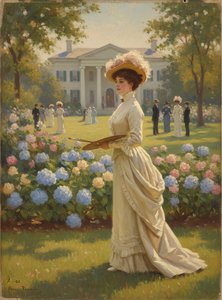
Un Arazzo di Creatività: La Vita e l'Eredità di Isobel Osbourne Strong Field
Nella vibrante intersezione tra la letteratura e il design visivo della fine del XIX secolo, poche figure possiedono una vita così ricca di sfumature come Isobel Osbourne Strong Field. Nata a Indianapolis nel 1858, la sua stessa esistenza era intrecciata a una stirpe di profonda rilevanza intellettuale e artistica. In quanto figlia della celebre romanziera Fanny Stevenson e sorella di Lloyd Osbourne, Isobel crebbe in una sfera domestica dove l'arte del narrare non era un semplice mestiere, ma uno stile di vita. Questa educazione, intrisa dell'osservazione meticolosa richiesta dalla prosa della madre e dell'ampiezza immaginativa condivisa con il fratello, coltivò in Isobel una capacità unica di fondere la precisione estetica con un profondo significato simbolico.
Il suo viaggio fu caratterizzato da un movimento costante e da una straordinaria capacità di adattamento, attraversando continenti e culture. Il matrimonio con l'artista Joseph Dwight Strong nel 1879 diede inizio a un periodo di intensa collaborazione creativa, durante il quale la sua sensibilità artistica fu messa alla prova dai diversi paesaggi che abitò. Dai fiorenti circoli artistici del Midwest americano alla maestosello tropicale delle Hawaii, lo sguardo di Isobel fu costantemente affinato dalla luce e dal colore di nuovi mondi. Fu proprio durante il suo soggiorno alle Hawaii, tra il 1883 e il 1889, che il suo talento raggiunse l'apice del riconoscimento internazionale, dimostrando che la sua visione poteva trascendere i confini dei ruoli femminili tradizionali nelle arti.
Il Splendore dell'Ordine Reale
Forse la testimonianza più duratura della maestria di Isobel nel design è l'incarico per il Royal Order of the Star of Oceania. Nel 1886, il re Kalākaua cercava un simbolo che potesse articolare la sua visione di una confederazione oceanica: un faro diplomatico per affermare la sovranità hawaiana di fronte alle crescenti pressioni occidentali. Affidata a lei questa monumentale missione, Isobel dimostrò una straordinaria capacità di sintetizzare complesse aspirazioni politiche in un unico, mozzafiato emblema. Il suo design non era meramente decorativo; era una lezione magistrale di comunicazione simbolica.
L'insegna presentava un faro stilizzato, rappresentante la luce guida delle Hawaii, circondato da sei stelle che sussurravano l'unità cercata tra gli arcipelaghi del Pacifico. Per dare vita a questa visione, Isobel supervisionò un processo di immensa difficoltà tecnica, utilizzando la tecnica dell'enamel cloisonné. Questo meticoloso metodo prevedeva la saldatura di delicati fili metallici su superfici per creare scomparti destinati a smalti dai colori vivaci. L'interazione risultante tra blu profondi e verdi lussureggianti catturava l'essenza stessa del paesaggio hawaiano, creando un oggetto dotato sia di dignità celeste che di serenità terrestre. Un tale traguardo la collocò tra quel raro gruppo di donne riconosciute dall'autorità reale in un'epoca in cui il design delle onorificenze statali era quasi esclusivamente un dominio maschile.
Ombre Letterarie e Gli Anni della Maturità
Oltre alla brillantezza dei suoi disegni grafici, la vita di Isobel era indissolubilmente legata ai giganti letterari della sua epoca. Dopo la morte della madre e il successivo trasferimento a Vailima, nelle Samoa, assunse un ruolo di profonda importanza come assistente letteraria del patrigno, Robert Louis Stevenson. Nei momenti silenziosi e spesso difficili del declino della sua salute, fu Isobel a trascrivere le sue parole, assicurando che la sua voce letteraria continuasse a risuonare anche quando le sue forze fisiche venivano meno. Questo periodo della sua vita, documentato insieme al fratello in Memories of Vailima, mette in luce il suo ruolo di custode della storia letteraria.
I suoi anni successivi furono segnati da una diversa forma di stabilità e prosperità, a seguito del matrimonio con il giornalista Edward Salisbury Field. La creazione di uno studio d'artista a Zaca Lake, in California, trasformò la sua dimora in un santuario per lo spirito creativo, un luogo d'incontro dove scrittori e attori potevano riunirsi sotto il calore di una passione condivisa. Quando guardiamo indietro alla vita di Isobel Osbourne Strong Field, vediamo molto più di una semplice designer o una memoriesta; vediamo una donna che ha navigato le complessità della sua epoca con grazia, lasciando un'eredità di bellezza che continua a illuminare la storia dell'arte e della letteratura.
Domande e risposte
Con quali pseudonimi o nomi alternativi è conosciuto Isobel Osbourne Strong Field?
Isobel Osbourne Strong Field è noto anche con i nomi Isobel Strong, Belle Strong.
In quali periodi è suddivisa la carriera di Isobel Osbourne Strong Field?
La Cronologia artistica di Isobel Osbourne Strong Field è una linea temporale interattiva che presenta le opere dell'artista in ordine cronologico, suddivise in capitoli corrispondenti ai diversi periodi della sua carriera.
Esiste una linea del tempo delle opere di Isobel Osbourne Strong Field?
Le opere di Isobel Osbourne Strong Field possono essere consultate in ordine cronologico nella pagina Cronologia delle opere dell'artista.