Ritratto di Il Cerano

I 19 dipinti più famosi di Il Cerano, ognuno unico nel suo genere

Aggiornato Novembre 2026 · classificato in base al nostro punteggio di popolarità (ricerche, visite e ordini per ogni opera) · 20 opere di Il Cerano nel nostro catalogo

In breve

Cristo appare agli apostoli Pietro e Paolo (1627) è il dipinto di Il Cerano che attira più sguardi; l'originale è conservato presso il Kunsthistorisches Museum, Vienna. Successivamente, lo sguardo si sposta su Il capo di San Francesco in estasi (1626) e The Baptism of Christ (1601). Tra i 20 opere di Il Cerano nel nostro catalogo, queste 19 sono le più famose, ognuna un originale unico presentato con il suo anno, il suo museo e il motivo per cui è eterna.

1573 – 1632, Romagnano Sesia Ritorno al barocco Più opere: Gemäldegalerie

Le 10 migliori opere di Il Cerano, attraverso lo sguardo della galleria

1
Cristo appare agli apostoli Pietro e Paolo (1627) di Il Cerano

Cristo appare agli apostoli Pietro e Paolo

1627 · Olio su tela · Kunsthistorisches Museum, Vienna

Una composizione piramidale e luminosa definisce questo olio su tela, catturando un incontro celeste tra il divino e l'umano. All'apice, Cristo discende da una fonte di luce celestiale, con i suoi drappeggi bianchi splendenti contro le ombre circostanti. Al di sotto, i Santi Pietro e Paolo accolgono la visione, le loro forme rese con forme voluminose e organiche che ne enfatizzano la presenza fisica. La scena è carica di movimento,…

I dipinti più famosi di Il Cerano, dal numero 11 al 19

I soggetti che hanno catturato lo sguardo di Il Cerano

I quattro soggetti che ricorrono più spesso in questi originali, ognuno con il suo esempio più raffinato.

I musei che conservano gli originali di Il Cerano

I 8 musei che ospitano la maggior parte dei dipinti presenti in questa pagina.

Musei Città Opere di Il Cerano Dipinti di questo elenco
Gemäldegalerie, BerlinoGemäldegalerie Berlino 2 Franciscan vows, Young St. John
Museo del Prado, MadridMuseo del Prado Madrid 2 San Carlo Borromeo in adorazione di Cristo, The Rest on The Flight into Egypt
Kunsthistorisches Museum, ViennaKunsthistorisches Museum Vienna 1 Cristo appare agli apostoli Pietro e Paolo
Scottish National Gallery, EdimburgoScottish National Gallery Edimburgo 1 Il capo di San Francesco in estasi
Städel Museum, Francoforte sul MenoStädel Museum Francoforte sul Meno 1 The Baptism of Christ
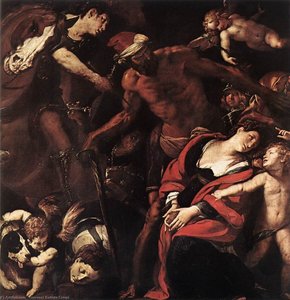
Grande Museo del Duomo, MilanoGrande Museo del Duomo Milano 1 St Carlo Borromeo Erecting Crosses a the Gates of Milan (detail)
Basilica di San Vittore, VareseBasilica di San Vittore Varese 1 St Gregory Delivers the Soul of a Monk
Galleria Nazionale Finlandese, HelsinkiGalleria Nazionale Finlandese Helsinki 1 The Mystic marriage of St. Catherine

Il Cerano attraverso i decenni: un originale unico per ognuno

Opere per decennio

Scegli un decennio per scoprire l'opera originale che lo ha definito.

I dipinti di Il Cerano: domande per la galleria

Qual è l'opera più famosa di Il Cerano?Scopri la risposta

Cristo appare agli apostoli Pietro e Paolo (1627), Kunsthistorisches Museum, Vienna. Seguono Il capo di San Francesco in estasi (1626) e The Baptism of Christ (1601).

A che età Il Cerano ha creato Cristo appare agli apostoli Pietro e Paolo?Scopri la risposta

54 anni: Cristo appare agli apostoli Pietro e Paolo risale al 1627, e Il Cerano è nato/a nel 1573.

Quali sono i dieci dipinti più famosi di Il Cerano?Scopri la risposta

Cristo appare agli apostoli Pietro e Paolo, Il capo di San Francesco in estasi, The Baptism of Christ, Franciscan vows, Young St. John, St Carlo Borromeo Erecting Crosses a the Gates of Milan (detail), St Gregory Delivers the Soul of a Monk, The Mystic marriage of St. Catherine, The Holy Family on the Flight into Egypt e Baptism of Jesus Christ. La classifica sopra riporta l'anno e il museo di ciascuna opera.

Quante opere di Il Cerano sono conosciute?Scopri la risposta

Il nostro catalogo comprende 20 opere di Il Cerano, datate da 1600 a 1627.

Dove si possono ammirare gli originali più famosi di Il Cerano?Scopri la risposta

Principalmente in Gemäldegalerie (Berlino), Museo del Prado (Madrid) e Kunsthistorisches Museum (Vienna). La tabella dei musei sopra li elenca tutti.

In quale periodo Il Cerano ha realizzato i suoi dipinti più famosi?Scopri la risposta

In 1620s: 4 delle 19 opere in questa pagina sono state realizzate in quel periodo, tra cui Cristo appare agli apostoli Pietro e Paolo.

Qual è il dipinto più antico di Il Cerano e quale il più recente?Scopri la risposta

In questa pagina, il più antico risale al Franciscan vows (1600) e il più recente al Cristo appare agli apostoli Pietro e Paolo (1627).

Quali soggetti preferiva Il Cerano?Scopri la risposta

Saints (3), Fly (3) e Christianity (3), tra le 19 opere in questa pagina.

Con quali materiali ha dipinto più spesso Il Cerano?Scopri la risposta

Olio su tela, per 4 delle 19 opere in questa pagina.

A quale movimento appartiene l'opera di Il Cerano?Scopri la risposta

Ritorno al barocco, a giudicare dagli originali presenti in questa pagina.

Quali opere originali di Il Cerano posso vedere al Gemäldegalerie?Scopri la risposta

Franciscan vows e Young St. John: il Gemäldegalerie, Berlino custodisce 2 delle opere presenti in questa pagina.

Il Cerano: un ritratto dell'artista

Giovanni Battista Crespi: A Milanese Baroque Visionary

Giovanni Battista Crespi (1615-1770) stands as a pivotal figure in the artistic landscape of Lombardy during the Baroque era, renowned for his monumental altarpieces and frescoes that powerfully conveyed religious narratives. Born in Cerano, Italy, Crespi’s formative years were steeped in humanist scholarship and intellectual curiosity—a foundation that would profoundly shape his artistic endeavors and establish him as a respected academician alongside his prodigious talent. His career blossomed under the patronage of Cardinal Federico Borromeo, whose unwavering commitment to piety fueled the establishment of the Accademia Ambrosiana, attracting brilliant minds like Daniele Crespi, Carlo Francesco Nuvolone, and Melchiorre Gherardini—a lineage that cemented Crespi’s legacy as a teacher and mentor.

Early Life and Artistic Training

Crespi's upbringing instilled in him a deep appreciation for classical ideals and artistic tradition. He pursued studies at Pavia University, immersing himself in humanist philosophy and gaining expertise in Latin and Greek—skills that would prove invaluable to his subsequent artistic pursuits. Unlike many artists of his time who honed their craft solely through apprenticeship, Crespi benefited from a more comprehensive education, fostering a nuanced understanding of both art history and theological concepts. This intellectual grounding informed his stylistic choices and ensured that his artworks resonated with profound spiritual depth. He demonstrated an early aptitude for disegno—drawing—and diligently studied the works of Michelangelo Buonarroti and Raffaello Sanzio Urbino—artists whose mastery of anatomy and perspective served as models for Crespi’s own artistic development.

Milanese Artistic Output: Dramatic Religious Narratives

Crespi’s artistic career achieved its zenith in Milan, where he undertook ambitious commissions for prominent churches and civic institutions. His most celebrated works include the monumental altarpiece depicting St. Charles Borromeo for the Duomo of Milan—a masterpiece showcasing masterful composition and vibrant color palettes—and the Baptism of Saint Augustine for San Marco Cathedral. These paintings exemplify Crespi’s signature style: dynamic movement, theatrical lighting, and meticulous attention to detail, capturing the emotional intensity of biblical scenes with breathtaking realism. Crespi skillfully employed chiaroscuro—the dramatic interplay between light and shadow—to heighten the expressive power of his canvases, mirroring the Baroque fascination with conveying psychological depth and spiritual fervor. Equally impactful were his frescoes adorning San Vittore in Varese, notably “The Nightmarish St. Gregory Delivers the Soul of a Monk,” which powerfully conveyed psychological drama and spiritual torment—a testament to Crespi’s ability to explore complex themes through visual storytelling. His meticulous layering of pigments—often incorporating bole and gesso—created remarkable textural depth and luminosity, reflecting Venetian painting techniques while maintaining a distinctly Lombard aesthetic.

Technique and Style

Crespi's artistic technique was characterized by a masterful command of chiaroscuro, utilizing dramatic contrasts between light and shadow to heighten the emotional impact of his paintings. He employed meticulous layering of pigments—often incorporating bole and gesso—to achieve remarkable textural depth and luminosity. Crespi’s palette favored rich hues derived from mineral pigments, reflecting the influence of Venetian painting traditions while maintaining a distinctly Lombard aesthetic. His compositions were carefully balanced, prioritizing clarity and conveying narrative urgency—a hallmark of Baroque art aimed at inspiring contemplation and eliciting spiritual fervor. He meticulously studied anatomical drawings and architectural models to ensure accuracy and realism in his depictions, demonstrating an unwavering commitment to artistic excellence.

Legacy and Influence

Giovanni Battista Crespi’s contribution to Italian Baroque art is undeniable. He served as an influential teacher and mentor, nurturing the talents of several prominent artists who would carry forward his stylistic innovations. His works continue to inspire admiration for their expressive power and technical brilliance—serving as enduring symbols of Milanese artistic grandeur. Crespi's legacy extends beyond individual masterpieces; he embodies the spirit of humanist scholarship intertwined with artistic creativity—a testament to the transformative potential of intellectual pursuits in shaping artistic excellence. He remains a cornerstone of Lombard Baroque art history, remembered for his profound understanding of both visual artistry and theological contemplation.