Giovanni Nepomuceno della Croce: A Master of Austrian Baroque Portraiture
Johann Nepomuk della Croce (1736 – 1819) stands as a monumental figure in the late Baroque artistic panorama of Austria and Italy, primarily recognized for his astonishing output of portraits—estimated at approximately 5000—characterized by a distinctive stylistic approach that harmoniously blended meticulous realism with expressive dynamism. Born in Pressano, Tyrol, he initiated an artistic odyssey profoundly shaped by formative influences originating from Lorenzozzi, an Italian artist who instilled within him a foundational understanding of classical ideals and compositional principles. Subsequent expeditions across Italy, Germany, Hungary, and France broadened his intellectual horizons and honed his technical prowess before he established himself in Burghausen, where he persevered in producing exceptional artwork.
Early Life & Artistic Foundations
Della Croce’s artistic education commenced under Lorenzozzi's tutelage, cultivating a deep appreciation for Italian Baroque aesthetics—a heritage that would indelibly imprint upon his subsequent creative endeavors. This invaluable exposure facilitated the refinement of his craft through independent study and experiential learning abroad, equipping him with the skills necessary to navigate the complexities of the European art world. Lorenzozzi’s teachings emphasized the importance of mastering classical proportions and utilizing chiaroscuro – a technique championed by Caravaggio – as a tool for conveying emotion and dramatic impact.
Italian Influences & Stylistic Innovation
His formative years in Italy exerted an undeniable influence on Della Croce's artistic style, propelling him to adopt elements characteristic of Caravaggio’s groundbreaking chiaroscuro method. This stylistic choice wasn’t merely about achieving visual accuracy; it represented a deliberate effort to infuse his paintings with psychological depth and emotional resonance—a hallmark of Baroque art that sought to transcend mere representation and engage the viewer's intellect and sensibilities. He meticulously studied the works of renowned artists, absorbing their techniques and philosophies to forge his own unique artistic vision.
Notable Commissions & Artistic Achievements
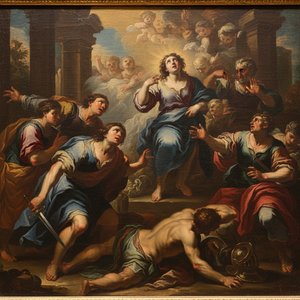
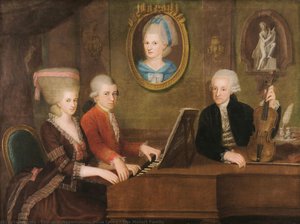
Della Croce garnered considerable acclaim for his altar-pieces commissioned throughout Bavaria—a testament to his mastery of color palettes and unwavering attention to detail. These monumental canvases served as embodiments of religious devotion and showcased Della Croce’s ability to capture the grandeur and solemnity of sacred spaces. However, his legacy is cemented most powerfully by his portrait of the Mozart family in Salzburg – an artwork that transcends mere likeness, capturing not only familial dignity but also the artistic spirit of Salzburg's cultural elite. Felix Joseph von Lipowsky famously documented Della Croce’s prolific output, underscoring the sheer scale of his oeuvre and validating his reputation as one of Austria’s foremost portrait artists.
Legacy & Artistic Significance
Giovanni Nepomuceno della Croce’s contribution to Austrian Baroque art is undeniable. His portraits transcended stylistic conventions of his time—reflecting aristocratic ideals and conveying profound human emotion with remarkable sensitivity. He remains a celebrated artist whose work continues to inspire admiration for its technical brilliance and artistic profundity, securing his place as one of the most influential figures in eighteenth-century European painting. Clemente della Croce, his son, followed in his father’s footsteps as a painter, perpetuating Della Croce's artistic lineage and ensuring that his legacy endured across generations.