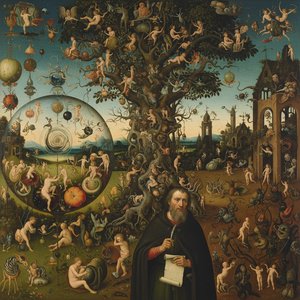
Life and Work
Hieronymus van Aken, also known as Hieronymus Bosch, was a Dutch painter born around 1450 in Den Bosch, Netherlands—the heart of Brabant during the Renaissance. Despite the scarcity of definitive records, scholars believe he resided primarily in ‘s-Hertogenbosch throughout his life, tracing his ancestry back to Nijmegen and Aachen, reflected in his surname: van Aken. Little is known about his personal life beyond confirming his birth within his grandfather’s house; however, his artistic legacy speaks volumes about his profound engagement with the intellectual currents of his time. Bosch's distinctive style—characterized by fantastical illustrations imbued with religious symbolism—quickly established him as a singular figure in Northern Renaissance art. He honed his craft under Pieter Bruegel the Elder, absorbing influences from Flemish masters like Rogier van der Weyden and Hugo van der Goes, though Bosch’s vision remained resolutely independent. His oeuvre comprises approximately 25 paintings confidently attributed to his hand, alongside eight drawings, complemented by around six additional works executed in his workshop—a testament to his prolific artistic output. Bosch's most celebrated achievements include three monumental triptych altarpieces, notably “The Garden of Earthly Delights,” a masterpiece that continues to fascinate viewers with its unsettling depiction of human desire and divine judgment. This artwork exemplifies Bosch’s masterful use of color, meticulous detail, and imaginative storytelling—elements that solidified his reputation as one of the foremost artists of his era.Artistic Style and Influence
Bosch's artistic style is instantly recognizable for its pervasive pessimism and surreal grandeur. He rejected traditional realism in favor of a visionary aesthetic that prioritized conveying psychological states and moral anxieties over accurate representation. This approach profoundly impacted subsequent generations of painters, particularly Pieter Bruegel the Elder, who adopted Bosch’s unsettling imagery and symbolic language as core components of his own artistic idiom. Bosch's preoccupation with themes of sin, redemption, and demonic temptation—expressed through grotesque figures and bizarre landscapes—challenged prevailing religious dogma and offered a subversive critique of societal norms. His meticulous attention to detail—evident in the depiction of insects, plants, and architectural elements—further distinguished him from his contemporaries and cemented his position as an innovator who pushed the boundaries of artistic convention.Notable Works
Bosch’s artistic output is marked by several iconic paintings that continue to captivate audiences worldwide. “The Garden of Earthly Delights,” with its vibrant colors and disturbing imagery, remains arguably his most enduring masterpiece—a visual meditation on human folly and divine retribution. Similarly, "The Temptation of Saint Anthony" portrays a harrowing encounter between the saint and Satan, capturing the psychological torment inherent in spiritual struggle with unparalleled sensitivity. These paintings are housed in prestigious museums across Europe, including The Rijksmuseum in Amsterdam and The Mauritshuis in Rotterdam—institutions dedicated to preserving and showcasing masterpieces of Dutch and Flemish art history. Their enduring appeal stems not only from their artistic brilliance but also from their profound exploration of human psychology and spiritual contemplation.Legacy and Historical Significance
Hieronymus Bosch’s influence extends far beyond his immediate contemporaries, shaping the trajectory of Northern Renaissance art and inspiring artists for centuries to come. His visionary style—characterized by its unsettling beauty and symbolic depth—challenged conventional artistic norms and fostered a spirit of intellectual inquiry that anticipated developments in later artistic movements. Bosch's work stands as a cornerstone of Western art history, embodying the anxieties and aspirations of a period grappling with religious upheaval and societal transformation—a testament to his enduring relevance as an artist and thinker.Domande e risposte
È disponibile un tour virtuale 3D delle opere di Gerolamo Bosch?
È possibile effettuare una visita virtuale: la pagina Galleria 3D di Gerolamo Bosch presenta le opere dell'artista all'interno di una galleria tridimensionale.
Posso studiare l'uso del colore di Gerolamo Bosch in tutte le sue opere?
Il profilo cromatico delle opere di Gerolamo Bosch è consultabile nella pagina Profilo Cromatico dell'Artista dell'artista.
Dove posso trovare statistiche relative alle opere di Gerolamo Bosch?
La pagina Statistiche di Gerolamo Bosch presenta statistiche calcolate a partire dalle opere dell'artista elencate su questo sito web.