Ritratto di Félix Ziem

I 100 dipinti più famosi di Félix Ziem, una selezione della galleria

Aggiornato Novembre 2026 · classificato in base al nostro punteggio di popolarità (ricerche, visite e ordini per ogni opera) · 293 opere di Félix Ziem nel nostro catalogo

In breve

Tra tutti gli originali lasciati da Félix Ziem, il più famoso è Il vecchio porto di Marsiglia e la torre Saint Jean. Subito dopo troviamo Portrait of a Young Girl (1846) e Marseille, marché sur le Cours (1845). Il nostro catalogo contiene 293 opere di Félix Ziem; la galleria ha conservato le 100 che il mondo ammira di più, ognuna presentata con la sua data, il suo museo e la sua storia.

1821 – 1911, Beaune Scuola di barbizon Più opere: Petit Palais

I 10 migliori dipinti di Félix Ziem: la scelta della galleria

1
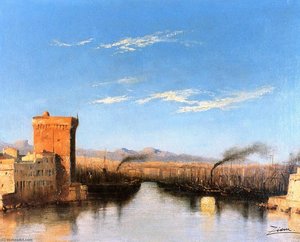
Il vecchio porto di Marsiglia e la torre Saint Jean di Félix Ziem

Il vecchio porto di Marsiglia e la torre Saint Jean

Olio su tela

Quest'opera, intitolata Il vecchio porto di Marsiglia e la torre Saint Jean, è stata dipinta da Felix Ziem. Essa offre uno sguardo silenzioso sull'atmosfera marittima del Mediterraneo, catturata intorno al 1850. Il pezzo è uno modesto studio di scala, con dimensioni di 14 × 21 cm, che invita a un'ispezione ravvicinata e intima dei suoi dettagli.

2
Portrait of a Young Girl (1846) di Félix Ziem

Portrait of a Young Girl

1846 · Oil On Panel · Petit Palais, Parigi

Portrait of a Young Girl by Felix Ziem, created about 1846, presents a close-up bust-length portrait of a single human figure. The subject is positioned slightly off-center against a dark, textured background. This placement creates a sense of depth between the girl and the space behind her. The perspective is direct and at eye-level, establishing a steady connection between the subject and the viewer.

3
Marseille, marché sur le Cours (1845) di Félix Ziem

Marseille, marché sur le Cours

1845 · Watercolor · Musée Félix Ziem, Martigues

Marseille, marché sur le Cours is a watercolor painting by the French artist Felix Ziem. Created about 1845, the work captures a bustling street scene reminiscent of 19th-century urban life. Although the title references Marseille, the composition focuses on the activity of a Parisian street, documenting the movement of pedestrians and the presence of carriages amidst a backdrop of architectural forms.

4
Study of a Woman, Copy after Rembrandt (1853) di Félix Ziem

Study of a Woman, Copy after Rembrandt

1853 · Oil On Canvas · Petit Palais, Parigi

A single light source carves a face out of the dark. The subject, a woman, emerges from a deep, umber void, her features caught in a moment of quiet stillness. This is not a portrait of a person, but a study of how light meets skin. The shadows are heavy, swallowing the contours of her neck and the back of her head, leaving only the essential geometry of her gaze…

5
The Drum, Head of a Man after Rembrandt (1853) di Félix Ziem

The Drum, Head of a Man after Rembrandt

1853 · Oil · Petit Palais, Parigi

A single light source strikes the brow and the bridge of the nose, carving a face out of the surrounding gloom. The man is weathered, his beard a thicket of textured strokes that catch the light in uneven patches. He looks downward, eyes lost to the heavy shadows of the sockets. There is a weight to his presence, a quiet gravity that pulls the viewer into his private moment of…

6
Study of a Man [The Syndics], copy after Rembrandt (1851) di Félix Ziem

Study of a Man [The Syndics], copy after Rembrandt

1851 · Oil · Petit Palais, Parigi

A single man emerges from a void of deep black. The light strikes the ridge of a nose and the curve of a forehead, leaving the rest of the face to dissolve into shadow. He wears a broad, dark hat that presses down upon the brow, casting a heavy gloom over the eyes. A white collar cuts through the darkness, a sharp, bright line of impasto paint that anchors the…

7
The Harem (1855) di Félix Ziem

The Harem

1855 · Oil · Petit Palais, Parigi

The air in this room feels heavy, thick with the scent of old rugs and unmoving dust. A woman reclines in the foreground, her body angled toward the left, draped in light, flowing garments that catch a diffused, indirect light. She rests upon a floor layered with cushions and textiles, her form partially dissolving into the soft, blurred contours of the room. Behind her, other figures emerge from the dimness,…

8
The Syndics of the Drapery Guild, copy after Rembrandt (1853) di Félix Ziem

The Syndics of the Drapery Guild, copy after Rembrandt

1853 · Oil · Petit Palais, Parigi

A group of men gathers around a table in a shallow, crowded space, their presence heavy with communal purpose. This 1853 oil painting, a copy after Rembrandt, captures the solemnity of the Syndics of the Drapery Guild. The subjects are arranged in a way that emphasizes their collective dignity, their faces and white collars emerging from an almost impenetrable dark background. The atmosphere is one of quiet importance, a pause…

9
Head of a Man after Rembrandt (1853) di Félix Ziem

Head of a Man after Rembrandt

1853 · Oil · Petit Palais, Parigi

In this oil portrait, Head of a Man after Rembrandt, Felix Ziem presents a somber study of character. The composition focuses on the head and shoulders of a bearded man, captured in profile. The subject is framed within an oval-like vignette, where the darker edges of the painting allow the central figure to emerge from the shadows. This arrangement directs the eye toward the weathered texture of the skin and…

10
The Night Watch after Rembrandt (1853) di Félix Ziem

The Night Watch after Rembrandt

1853 · Oil On Canvas · Petit Palais, Parigi

The work functions as a stylistic homage, bridging the gap between the structured traditions of the 19th century and the dramatic lighting of the Dutch Golden Age. It conveys themes of duty and collective strength through its depiction of a militia in motion. The heavy, textured application of paint suggests a visceral, physical presence, turning a historical subject into a study of light and shadow. The result is a scene…

La selezione di Félix Ziem continua, da 11 a 100

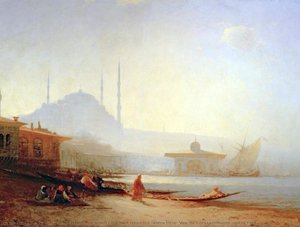
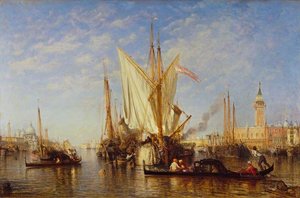
11L'ingresso al Porto Vecchio di Marsiglia (1862) di Félix ZiemL'ingresso al Porto Vecchio di Marsiglia1862 · Fondazione Calouste Gulbenkian 12L'Entrée dans le Grand Bassin, Venise di Félix ZiemL'Entrée dans le Grand Bassin, Venise 13Istanboul, soleil couchant Istambul (autre titre) Vue de Constantinople (autre titre) di Félix ZiemIstanboul, soleil couchant Istambul (autre titre) Vue de Constantinople (autre titre) 14View of Venice (1800) di Félix ZiemView of Venice1800 · Museo de Arte de Ponce 15Tobolsk, Siberia (1844) di Félix ZiemTobolsk, Siberia1844 · Petit Palais 16The Storm (1846) di Félix ZiemThe Storm1846 · Petit Palais 17Saint Petersburg, Saint Isaac (1844) di Félix ZiemSaint Petersburg, Saint Isaac1844 · Petit Palais 18A Street in Florence (1846) di Félix ZiemA Street in Florence1846 · Petit Palais 19Nude Woman Sitting, Viewed from Behind (1846) di Félix ZiemNude Woman Sitting, Viewed from Behind1846 · Petit Palais 20The Chariot (1843) di Félix ZiemThe Chariot1843 · Petit Palais 21The Red Skirt (1846) di Félix ZiemThe Red Skirt1846 · Petit Palais 22Panel of Six Cart Studies (on the front); Landscape (on the back) (1843) di Félix ZiemPanel of Six Cart Studies (on the front); Landscape (on the back)1843 · Petit Palais 23Parasol Pines near Naples (1847) di Félix ZiemParasol Pines near Naples1847 · Petit Palais 24Festival in a Palace in Naples (1847) di Félix ZiemFestival in a Palace in Naples1847 · Petit Palais 25Martigues, tartane sur le canal de Caronte (1845) di Félix ZiemMartigues, tartane sur le canal de Caronte1845 · Musée Félix Ziem 26Marseille, entrée du Port (1841) di Félix ZiemMarseille, entrée du Port1841 · Musee D'histoire de Marseille 27Martigues, rives de l'étang de Berre (1845) di Félix ZiemMartigues, rives de l'étang de Berre1845 · Musée Félix Ziem 28Marseille, étude de ciel sur les toits (1845) di Félix ZiemMarseille, étude de ciel sur les toits1845 · Musée Félix Ziem 29The Watering Hole (1851) di Félix ZiemThe Watering Hole1851 · Dordrechts Museum 30Landscape with Rainbow (‘Arc en Ciel’) (1852) di Félix ZiemLandscape with Rainbow (‘Arc en Ciel’)1852 · Museum Gouda 31River Bend (on front); three studies (on back) (1855) di Félix ZiemRiver Bend (on front); three studies (on back)1855 · Petit Palais 32The Cottage (1855) di Félix ZiemThe Cottage1855 · Petit Palais 33The Pond (1855) di Félix ZiemThe Pond1855 · Petit Palais 34Forest Edge (on front), Animated Landscape (on reverse) (1855) di Félix ZiemForest Edge (on front), Animated Landscape (on reverse)1855 · Petit Palais 35Riverside (1855) di Félix ZiemRiverside1855 · Petit Palais 36Twilight (1855) di Félix ZiemTwilight1855 · Petit Palais 37Corner of a Forest (1855) di Félix ZiemCorner of a Forest1855 · Petit Palais 38The Seine (1855) di Félix ZiemThe Seine1855 · Petit Palais 39Skiff and Sailboats, Sunset. On the reverse: Marine (1855) di Félix ZiemSkiff and Sailboats, Sunset. On the reverse: Marine1855 · Petit Palais 40The Wave (1855) di Félix ZiemThe Wave1855 · Petit Palais 41Body of Water, Sunset. On reverse: Two Studies (1855) di Félix ZiemBody of Water, Sunset. On reverse: Two Studies1855 · Petit Palais 42Environs of Barbizon (1855) di Félix ZiemEnvirons of Barbizon1855 · Petit Palais 43The Gust of Wind (1855) di Félix ZiemThe Gust of Wind1855 · Petit Palais 44The Barge (1851) di Félix ZiemThe Barge1851 · Petit Palais 45The Oaks (1855) di Félix ZiemThe Oaks1855 · Petit Palais 46Sunset (1855) di Félix ZiemSunset1855 · Petit Palais 47The Forest (1855) di Félix ZiemThe Forest1855 · Petit Palais 48The Road (1855) di Félix ZiemThe Road1855 · Petit Palais 49The Turkeys (1852) di Félix ZiemThe Turkeys1852 · Petit Palais 50The Fishing Sloops (1852) di Félix ZiemThe Fishing Sloops1852 · Petit Palais 51Holland, the Mill (1853) di Félix ZiemHolland, the Mill1853 · Petit Palais 52Antwerp, seascape (1850) di Félix ZiemAntwerp, seascape1850 · Petit Palais 53View of İstanbul (1850) di Félix ZiemView of İstanbul1850 · Museo della Pera 54The Grand Canal, Venice (1850) di Félix ZiemThe Grand Canal, Venice1850 55View of İstanbul (1850) di Félix ZiemView of İstanbul1850 · Museo della Pera 56Venice - the grand canal (1850) di Félix ZiemVenice - the grand canal1850 · Museo Nazionale di Belle Arti 57Windmill on riverbank (1850) di Félix ZiemWindmill on riverbank1850 · Museo Nazionale di Belle Arti 58Fête de Saint Marc, Venise (1850) di Félix ZiemFête de Saint Marc, Venise1850 · Art Institute of Chicago 59The frigates (1855) di Félix ZiemThe frigates1855 · Petit Palais 60Environs de Nice, montagnes enneigées (1850) di Félix ZiemEnvirons de Nice, montagnes enneigées1850 · Musée Félix Ziem 61Hollande, vieilles chaumières au bord d'un canal (1850) di Félix ZiemHollande, vieilles chaumières au bord d'un canal1850 62Saint Mark's Square, Flood of 1863 (1863) di Félix ZiemSaint Mark's Square, Flood of 18631863 · Petit Palais 63Naples, Parasol Pines (1856) di Félix ZiemNaples, Parasol Pines1856 · Petit Palais 64The Waterfall (1860) di Félix ZiemThe Waterfall1860 · Petit Palais 65The Rhône between Arles and Avignon (1862) di Félix ZiemThe Rhône between Arles and Avignon1862 · Petit Palais 66Still Life with Flask and Pomegranates (1862) di Félix ZiemStill Life with Flask and Pomegranates1862 · Petit Palais 67Near Algiers (1859) di Félix ZiemNear Algiers1859 · Petit Palais 68Windmill in Montmartre (1857) di Félix ZiemWindmill in Montmartre1857 · National Gallery of Ireland 69The Bosphorus (1856) di Félix ZiemThe Bosphorus1856 · Musée des Ursulines 70Harbor Quay in Marseille (1858) di Félix ZiemHarbor Quay in Marseille1858 · Musée Des Beaux 71Le Pont Royal, Paris (1859) di Félix ZiemLe Pont Royal, Paris1859 72A Windmill, Snow Effect (1860) di Félix ZiemA Windmill, Snow Effect1860 · Museo Bowes 73Égypte Damanhuor (1856) di Félix ZiemÉgypte Damanhuor1856 · Musée Félix Ziem 74Banks of the Bosphorus (1865) di Félix ZiemBanks of the Bosphorus1865 · Musée des Beaux-Arts 75The Giardini Pubblici in Venice (1870) di Félix ZiemThe Giardini Pubblici in Venice1870 · Collezioni di Pittura dello Stato della Baviera 76Flowers (1865) di Félix ZiemFlowers1865 · Museo di Amsterdam 77Venice, Procession of Saint George (1870) di Félix ZiemVenice, Procession of Saint George1870 · Petit Palais 78The Exit from the Palais des Doges under the Bridge of Sighs (1870) di Félix ZiemThe Exit from the Palais des Doges under the Bridge of Sighs1870 · Petit Palais 79Harbor in Marseilles (1864) di Félix ZiemHarbor in Marseilles1864 · Brooklyn Museum 80Venice, Morning (1864) di Félix ZiemVenice, Morning1864 · Walters Art Museum 81Venice, Midday (1868) di Félix ZiemVenice, Midday1868 · Walters Art Museum 82Venice, Evening (1865) di Félix ZiemVenice, Evening1865 · Walters Art Museum 83Venice, Doge's Palace (1867) di Félix ZiemVenice, Doge's Palace1867 · Petit Palais 84The Grand Canal, Venice (Gondola before San Giorgio) (1865) di Félix ZiemThe Grand Canal, Venice (Gondola before San Giorgio)1865 85Venice the Bacino di San Marco with Fishing Boats (1865) di Félix ZiemVenice the Bacino di San Marco with Fishing Boats1865 · Wallace Collection 86Fontaine de la Sultane Mihrisah, Eaux Douces d'Asie (1870) di Félix ZiemFontaine de la Sultane Mihrisah, Eaux Douces d'Asie1870 87Martiques, le retour des Tartanes (1865) di Félix ZiemMartiques, le retour des Tartanes1865 · Musée Félix Ziem 88Environs de Marseille, Le Rove (1865) di Félix ZiemEnvirons de Marseille, Le Rove1865 · Musée Félix Ziem 89Environs de Marseille, arbres dans un paysage (1865) di Félix ZiemEnvirons de Marseille, arbres dans un paysage1865 · Musée Félix Ziem 90Sailing Ships Leaving the Grand Canal in Venice (1875) di Félix ZiemSailing Ships Leaving the Grand Canal in Venice1875 · Musée Félix Ziem 91Sailboats at the Entrance of the Grand Canal (1875) di Félix ZiemSailboats at the Entrance of the Grand Canal1875 · Musée Félix Ziem 92Seascape. Venice, entrance of the Grand Canal, sailboat on the Adriatic. (1875) di Félix ZiemSeascape. Venice, entrance of the Grand Canal, sailboat on the Adriatic.1875 · Musée Félix Ziem 93Martigues, Twilight Effect (1875) di Félix ZiemMartigues, Twilight Effect1875 · Petit Palais 94Venice, the Church of the Gesuati (1875) di Félix ZiemVenice, the Church of the Gesuati1875 · Petit Palais 95Old Houses (1875) di Félix ZiemOld Houses1875 · Petit Palais 96Venice at Sunset (1875) di Félix ZiemVenice at Sunset1875 · Petit Palais 97Venice, La Giudecca at Twilight (1875) di Félix ZiemVenice, La Giudecca at Twilight1875 · Petit Palais 98Venice, la Salute. Morning Effect (1875) di Félix ZiemVenice, la Salute. Morning Effect1875 · Petit Palais 99The Torrent. Environs of Clermont-Ferrand (1875) di Félix ZiemThe Torrent. Environs of Clermont-Ferrand1875 · Petit Palais 100Deer in the Forest of Fontainebleau (1877) di Félix ZiemDeer in the Forest of Fontainebleau1877 · Petit Palais

I soggetti che hanno catturato lo sguardo di Félix Ziem

I quattro soggetti che ricorrono più spesso in questi originali, ognuno con il suo esempio più raffinato.

I musei che conservano gli originali di Félix Ziem

I 8 musei che ospitano la maggior parte dei dipinti presenti in questa pagina.

Musei Città Opere di Félix Ziem Dipinti di questo elenco
Petit Palais, ParigiPetit Palais Parigi 115 Portrait of a Young Girl, Study of a Woman, Copy after Rembrandt, The Drum, Head of a Man after Rembrandt
Musée Félix Ziem, MartiguesMusée Félix Ziem Martigues 15 Marseille, marché sur le Cours, Martigues, tartane sur le canal de Caronte, Martigues, rives de l'étang de Berre
Walters Art Museum, BaltimoraWalters Art Museum Baltimora 3 Venice, Morning, Venice, Midday, Venice, Evening
Museo della Pera, IstanbulMuseo della Pera Istanbul 3 View of İstanbul, View of İstanbul
Museo Nazionale di Belle Arti, Buenos AiresMuseo Nazionale di Belle Arti Buenos Aires 2 Venice - the grand canal, Windmill on riverbank
Musée Des Beaux, MarsigliaMusée Des Beaux Marsiglia 5 Harbor Quay in Marseille
National Gallery of Ireland, DublinoNational Gallery of Ireland Dublino 4 Windmill in Montmartre
Musée des Beaux-Arts, ToulonMusée des Beaux-Arts Toulon 4 Banks of the Bosphorus

Félix Ziem decennio per decennio: l'originale che definisce ogni epoca

Opere per decennio

Scegli un decennio per scoprire l'opera originale che lo ha definito.

Domande dei collezionisti sulle opere di Félix Ziem

Per quale opera è più famoso Félix Ziem?Scopri la risposta

Il vecchio porto di Marsiglia e la torre Saint Jean. Seguono Portrait of a Young Girl (1846) e Marseille, marché sur le Cours (1845).

Quali sono i dieci dipinti più famosi di Félix Ziem?Scopri la risposta

Il vecchio porto di Marsiglia e la torre Saint Jean, Portrait of a Young Girl, Marseille, marché sur le Cours, Study of a Woman, Copy after Rembrandt, The Drum, Head of a Man after Rembrandt, Study of a Man [The Syndics], copy after Rembrandt, The Harem, The Syndics of the Drapery Guild, copy after Rembrandt, Head of a Man after Rembrandt e The Night Watch after Rembrandt. La classifica sopra riporta l'anno e il museo di ciascuna opera.

Quante opere ha lasciato Félix Ziem?Scopri la risposta

Il nostro catalogo comprende 293 opere di Félix Ziem, datate da 1841 a 1877.

In quali musei sono esposti i capolavori di Félix Ziem?Scopri la risposta

Principalmente in Petit Palais (Parigi), Musée Félix Ziem (Martigues) e Walters Art Museum (Baltimora). La tabella dei musei sopra li elenca tutti.

In quali anni Félix Ziem ha dipinto le sue opere più famose?Scopri la risposta

In 1850s: 47 delle 100 opere in questa pagina sono state realizzate in quel periodo, tra cui Study of a Woman, Copy after Rembrandt.

Quali sono le prime e le ultime opere originali famose di Félix Ziem?Scopri la risposta

In questa pagina, il più antico risale al Marseille, entrée du Port (1841) e il più recente al Deer in the Forest of Fontainebleau (1877).

Quali soggetti ha scelto più spesso Félix Ziem?Scopri la risposta

Portrait (4), Face (3) e Dark background (3), tra le 100 opere in questa pagina.

Quale tecnica ha utilizzato maggiormente Félix Ziem?Scopri la risposta

Oil, per 5 delle 100 opere in questa pagina.

A quale movimento artistico appartiene Félix Ziem?Scopri la risposta

Scuola di barbizon e Impressionism, a giudicare dagli originali presenti in questa pagina.

Quali opere di Félix Ziem sono esposte al Petit Palais?Scopri la risposta

Portrait of a Young Girl, Study of a Woman, Copy after Rembrandt e The Drum, Head of a Man after Rembrandt: il Petit Palais, Parigi custodisce 58 delle opere presenti in questa pagina.

Félix Ziem: vita e opera

L'eredità luminosa di Félix Ziem

Félix Ziem si staglia come una figura affascinante nel mosaico dell'arte francese del XIX secolo, un artista il cui pennello possedeva l'abilità unica di congiungere le tradizioni profonde e radicate della Scuola di Barbizon con l'esotico e soleggiato fascino dell'Orientalismo. Nato Félix François Georges Philibert Ziem nel 1821 nella storica città di Beaune, in Borgogna, la sua giovinezza fu segnata da una tensione tra struttura e spirito. Sebbene inizialmente avesse intrapreso il disciplinato percorso dell'architettura, l'invito della tela si rivelò irresistibile. Questa transizione fu profondamente plasmata dal rapporto con il mentore Adolphe Monticelli a Marsiglia, un legame che avrebbe per sempre infuso l'opera di Ziem un approente vibrante, quasi impressionista, alla luce e alla consistenza materica.

L'essenza dell'arte di Ziem è forse meglio compresa attraverso il suo profondo rapporto con la luce. Il suo viaggio non fu solo uno spostamento geografico, ma un'odissea emotiva attraverso diverse atmosfere. Un momento decisivo nel suo sviluppo avvenne durante la visita a Venezia nel 1841, una città che sarebbe diventata la sua musa eterna. Nei canali scintillanti e nella grandezza decadente dei palazzi veneziani, Ziem trovò il modo di tradurre l'atmosfera in pigmento. Non cercava di documentare l'architettura con rigidità accademica; al contrario, utilizzava pennellate fluide e una tavolozza luminosa per catturare la qualità effimera dei riflessi sull'acqua e il morbido, fosco bagliore del crepuscolo adriatico.

Un viaggio tra luce e paesaggio

Mentre la sua carriera fioriva nei centri artistici di Marsiglia e Parigi, la visione di Ziem si espanse ben oltre i confini della Francia. Divenne un viaggiatore sia del mondo che dei sensi, documentando paesaggi diversi con una straordinaria sensibilità cromatica. Le sue esplorazioni lo condussero nel cuore dell'Impero Ottomano, dove opere come Caiques e barche a vela sul Bosforo mostrano la sua capacità di rendere i blu vibranti delle acque turche e la maestosità in silhouette delle moschee. Questa fascinazione per l'Oriente gli permise di padroneggiare lo stile orientalista, fondendo l'esotismo di Costantinopoli e dell'Egitto con una sensibilità pittorica francese.

La versatilità di Ziem gli permise di muoversi senza soluzione di continuità tra ambienti differenti, dai sereni paesaggi ricchi di pini di Martigues in opere come Midi, étude de pins, alle tranquille scene fluviali del Nord Europa, come la sua rappresentazione del fiume Amstel. La sua tecnica si basava spesso su un delicato equilibrio tra dettaglio e astrazione, dove il soggetto — che fosse uno scorcio costiero o un porto brulicante di vita — fungeva da veicolo per esplorare l'interazione tra ombra e splendore. Questa capacità di evocare un senso del luogo attraverso la sola luce è ciò che eleva il suo lavoro dalla semplice pittura di paesaggio a una profonda esperienza sensoriale.

Significato artistico e influenza duratura

Il significato storico di Félix Ziem risiede nel suo ruolo di maestro di transizione. Egli si trovò all'incrocio di diversi movimenti, assorbendo il naturalismo dei pittori di Barbizon mentre anticipava le rivoluzioni centrate sulla luce dell'Impressionismo. La sua opera funge da legame vitale tra i paesaggi romantici dell'inizio del XIX secolo e le esplorazioni più sperimentali e atmosferiche che seguirono. Dando priorità alla risonanza emotiva e alla "sensazione" della luce rispetto alla precisa accuratezza topografica, egli aprì la strada a un approccio più soggettivo alla pittura di paesaggio.

Ancora oggi, l'eredità di Ziem continua a incantare collezionisti e storici dell'arte allo stesso modo. La sua capacità di trasportare lo spettatore in un tempo e in un luogo diversi — che si tratti di una mattina nebbiosa su un fiume olandese o di un pomeriggio baciato dal sole nel Mediterraneo — rimane intatta. L'opera della sua vita resta una testimonianza del potere dell'osservazione e della magia duratura del mondo naturale, catturata attraverso la lente di una luce pura e incontaminata.