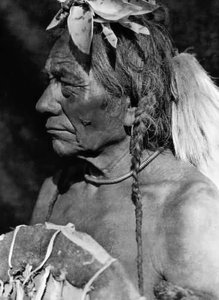
Ritratto di Edward Sheriff Curtis

I 87 dipinti più famosi di Edward Sheriff Curtis, una selezione della galleria

Aggiornato Novembre 2026 · classificato in base al nostro punteggio di popolarità (ricerche, visite e ordini per ogni opera) · 87 opere di Edward Sheriff Curtis nel nostro catalogo

In breve

Tra tutti gli originali lasciati da Edward Sheriff Curtis, il più famoso è Un angolo di Zuni (1903). Subito dopo troviamo Untitled (AQU46T) (1926) e Untitled (AQU445) (1926). Il nostro catalogo contiene 87 opere di Edward Sheriff Curtis; la galleria ha conservato le 87 che il mondo ammira di più, ognuna presentata con la sua data, il suo museo e la sua storia.

1868 – 1952, Whitewater Documentary photography Più opere: Los Angeles County Museum of Art

I 10 migliori dipinti di Edward Sheriff Curtis: la scelta della galleria

1
Un angolo di Zuni (1903) di Edward Sheriff Curtis

Un angolo di Zuni

1903 · Fotogravura

è un'opera fotografica dell'artista Edward Sheriff Curtis. Creata nel 1903, questa immagine cattura un particolare soggetto architettonico immerso in un paesaggio del Sud-Ovest. La composizione si concentra sui dettagli strutturali di un'abitazione in adobe e sul terreno circostante l'edificio.

2
Untitled (AQU46T) (1926) di Edward Sheriff Curtis

Untitled (AQU46T)

1926 · Photography

Untitled (AQU46T) is a portrait photograph by Edward Sheriff Curtis, dating to 1926. The work captures an Indigenous man in a formal, documentary style. It is a monochromatic silver gelatin print that focuses on the subject's face and upper torso.

3
Untitled (AQU445) (1926) di Edward Sheriff Curtis

Untitled (AQU445)

1926 · Black and White Photography

Untitled (AQU445) is a portrait by Edward Sheriff Curtis. The image captures an Indigenous man in a moment of quietude. It was produced in 1926. The man’s face is the center of this study, a landscape of skin and shadow. He exists within the frame as a singular presence, his gaze turned downward toward an unseen point.

4
Untitled (AQU44H) (1923) di Edward Sheriff Curtis

Untitled (AQU44H)

1923 · Black and White Photography

Untitled (AQU44H) by Edward Sheriff Curtis is a black and white photograph from about 1923. The image depicts a Native American man positioned in the middle ground of the frame. He stands upon a rock within a river, holding a spear. The man's vertical posture and the spear create a strong central axis that anchors the composition. This arrangement results in a roughly symmetrical structure. The river flows horizontally across…

5
Untitled (AQU45Z) (1928) di Edward Sheriff Curtis

Untitled (AQU45Z)

1928 · Black and White Photography

Untitled (AQU45Z) is a photographic work by Edward Sheriff Curtis. The image was captured in 1928. It exists as a silver gelatin print, a quiet fragment of a life spent documenting the American West.

6
Untitled (AQU47D) (1927) di Edward Sheriff Curtis

Untitled (AQU47D)

1927 · Gelatin Silver Print

The photographic portrait titled Untitled (AQU47D) was produced by the artist Edward Sheriff Curtis in 1927. This work is a black and white image that captures a Native American woman in a medium close-up view. She is positioned facing forward, cradling an infant within her arms. The child is wrapped in a woven carrier or blanket.

7
Untitled (AQU467) (1926) di Edward Sheriff Curtis

Untitled (AQU467)

1926 · Photography

Untitled (AQU467) is a photographic portrait by Edward Sheriff Curtis. Created in 1926, the work captures a single Native American man, likely from the Plains tribes. The subject is presented in a formal studio setting, his presence defined by a direct and steady gaze.

8
Untitled (AQU469) (1926) di Edward Sheriff Curtis

Untitled (AQU469)

1926 · Black and White Photography

Untitled (AQU469) is a vintage black and white portrait by Edward Sheriff Curtis, dated 1926. The work presents a formal studio photograph of a young woman, captured during the height of the artist's documentation of Indigenous cultures in the American West.

9
Untitled (AQU44X) (1924) di Edward Sheriff Curtis

Untitled (AQU44X)

1924 · Black and White Photography

Untitled (AQU44X) is a photographic work by Edward Sheriff Curtis. Created in 1924, this image was part of the monumental publication The North American Indian, a series released between 1907 and 1930. The work emerged from Curtis's extensive documentation of Indigenous cultures and traditions across the American West.

10
Untitled (AQU45T) (1926) di Edward Sheriff Curtis

Untitled (AQU45T)

1926 · Photography

This work is titled Untitled (AQU45T) and was created by the artist Edward Sheriff Curtis. The piece is dated 1926. It is a photographic work that captures a specific moment in the American West, documented during the early 20th century.

La selezione di Edward Sheriff Curtis continua, da 11 a 87

11Untitled (AQU47F) (1926) di Edward Sheriff CurtisUntitled (AQU47F)1926 12Zuni Street Scene (1925) di Edward Sheriff CurtisZuni Street Scene1925 13Untitled (AQU447) (1930) di Edward Sheriff CurtisUntitled (AQU447)1930 14Untitled (AQU459) (1930) di Edward Sheriff CurtisUntitled (AQU459)1930 15Untitled (AQU457) (1930) di Edward Sheriff CurtisUntitled (AQU457)1930 16Senza titolo (AQU46B) (1926) di Edward Sheriff CurtisSenza titolo (AQU46B)1926 17Ritratto di Hollywood (1920) di Edward Sheriff CurtisRitratto di Hollywood1920 · Los Angeles County Museum of Art 18I tre capi - Piegan (1900) di Edward Sheriff CurtisI tre capi - Piegan1900 · Los Angeles County Museum of Art 19Untitled (AQU45D) (1905) di Edward Sheriff CurtisUntitled (AQU45D)1905 20Martinez, Ambrosio San Juan (1905) di Edward Sheriff CurtisMartinez, Ambrosio San Juan1905 21Gossiping San Juan (1905) di Edward Sheriff CurtisGossiping San Juan1905 22Washing Wheat San Juan (1905) di Edward Sheriff CurtisWashing Wheat San Juan1905 23Girl and Jar San Ildefonso (1905) di Edward Sheriff CurtisGirl and Jar San Ildefonso1905 24Standing Two Oto (1927) di Edward Sheriff CurtisStanding Two Oto1927 25Untitled (AQU47M) (1908) di Edward Sheriff CurtisUntitled (AQU47M)1908 26Untitled (AQU46P) (1906) di Edward Sheriff CurtisUntitled (AQU46P)1906 27Untitled (AQU453) (1928) di Edward Sheriff CurtisUntitled (AQU453)1928 28Untitled (AQU46M) (1926) di Edward Sheriff CurtisUntitled (AQU46M)1926 29Untitled (AQU44K) (1924) di Edward Sheriff CurtisUntitled (AQU44K)1924 30Untitled (AQU479) (1923) di Edward Sheriff CurtisUntitled (AQU479)1923 31Untitled (AQU43Z) (1923) di Edward Sheriff CurtisUntitled (AQU43Z)1923 32Untitled (AQU465) (1926) di Edward Sheriff CurtisUntitled (AQU465)1926 33Untitled (AQU45R) (1924) di Edward Sheriff CurtisUntitled (AQU45R)1924 34Untitled (AQU45F) (1924) di Edward Sheriff CurtisUntitled (AQU45F)1924 35Untitled (AQU463) (1924) di Edward Sheriff CurtisUntitled (AQU463)1924 36Untitled (AQU45B) (1928) di Edward Sheriff CurtisUntitled (AQU45B)1928 37Untitled (AQU45V) (1928) di Edward Sheriff CurtisUntitled (AQU45V)1928 38Untitled (AQU44R) (1924) di Edward Sheriff CurtisUntitled (AQU44R)1924 39Untitled (AQU44T) (1924) di Edward Sheriff CurtisUntitled (AQU44T)1924 40Untitled (AQU477) (1926) di Edward Sheriff CurtisUntitled (AQU477)1926 41Untitled (AQU46F) (1924) di Edward Sheriff CurtisUntitled (AQU46F)1924 42Untitled (AQU46V) (1928) di Edward Sheriff CurtisUntitled (AQU46V)1928 43Untitled (AQU443) (1926) di Edward Sheriff CurtisUntitled (AQU443)1926 44Untitled (AQU455) (1928) di Edward Sheriff CurtisUntitled (AQU455)1928 45Untitled (AQU44V) (1926) di Edward Sheriff CurtisUntitled (AQU44V)1926 46Untitled (AQU44P) (1928) di Edward Sheriff CurtisUntitled (AQU44P)1928 47Untitled (AQU47P) (1923) di Edward Sheriff CurtisUntitled (AQU47P)1923 48Untitled (AQU45H) (1926) di Edward Sheriff CurtisUntitled (AQU45H)1926 49Untitled (AQU46H) (1926) di Edward Sheriff CurtisUntitled (AQU46H)1926 50Untitled (AQU473) (1926) di Edward Sheriff CurtisUntitled (AQU473)1926 51Untitled (AQU44D) (1924) di Edward Sheriff CurtisUntitled (AQU44D)1924 52Untitled (AQU46K) (1926) di Edward Sheriff CurtisUntitled (AQU46K)1926 53Untitled (AQU44Z) (1926) di Edward Sheriff CurtisUntitled (AQU44Z)1926 54Untitled (AQU46Z) (1926) di Edward Sheriff CurtisUntitled (AQU46Z)1926 55Untitled (AQU47K) (1926) di Edward Sheriff CurtisUntitled (AQU47K)1926 56The Sentinel San Ildefonso (1925) di Edward Sheriff CurtisThe Sentinel San Ildefonso1925 57Lutakawi, Zuni Governor (1925) di Edward Sheriff CurtisLutakawi, Zuni Governor1925 58Inscription Rock (1925) di Edward Sheriff CurtisInscription Rock1925 59From the Threshing Floor San Juan (1926) di Edward Sheriff CurtisFrom the Threshing Floor San Juan1926 60Dog Woman Cheyenne (1927) di Edward Sheriff CurtisDog Woman Cheyenne1927 61Old Eagle Oto (1927) di Edward Sheriff CurtisOld Eagle Oto1927 62The Kiva Stairs San Ildefonso (1925) di Edward Sheriff CurtisThe Kiva Stairs San Ildefonso1925 63In San Ildefonso (1925) di Edward Sheriff CurtisIn San Ildefonso1925 64San Ildefonso Pottery (1925) di Edward Sheriff CurtisSan Ildefonso Pottery1925 65Untitled (AQU45X) (1930) di Edward Sheriff CurtisUntitled (AQU45X)1930 66Untitled (AQU45K) (1930) di Edward Sheriff CurtisUntitled (AQU45K)1930 67Untitled (AQU45P) (1930) di Edward Sheriff CurtisUntitled (AQU45P)1930 68Untitled (AQU44M) (1930) di Edward Sheriff CurtisUntitled (AQU44M)1930 69English Woman and child Nunivak (1930) di Edward Sheriff CurtisEnglish Woman and child Nunivak1930 70Wakonda Oto (1927) di Edward Sheriff CurtisWakonda Oto1927 71Untitled (AQU449) (2011) di Edward Sheriff CurtisUntitled (AQU449)2011 72Untitled (AQU44F) (2013) di Edward Sheriff CurtisUntitled (AQU44F)2013 73San Juan Pottery (1905) di Edward Sheriff CurtisSan Juan Pottery1905 74Untitled (AQU47H) di Edward Sheriff CurtisUntitled (AQU47H) 75Untitled (AQU46R) di Edward Sheriff CurtisUntitled (AQU46R) 76Untitled (AQU475) di Edward Sheriff CurtisUntitled (AQU475) 77Untitled (AQU47B) di Edward Sheriff CurtisUntitled (AQU47B) 78Untitled (AQU45M) di Edward Sheriff CurtisUntitled (AQU45M) 79Untitled (AQU46X) di Edward Sheriff CurtisUntitled (AQU46X) 80SELECTED IMAGES di Edward Sheriff CurtisSELECTED IMAGES 81The Lone Chief Cheyenne (1927) di Edward Sheriff CurtisThe Lone Chief Cheyenne1927 82A Zuni Girl (1903) di Edward Sheriff CurtisA Zuni Girl1903 83Pipe Stem Oto (1927) di Edward Sheriff CurtisPipe Stem Oto1927 84Black Man Arapaho (1927) di Edward Sheriff CurtisBlack Man Arapaho1927 85Walter Ross Wichita (1927) di Edward Sheriff CurtisWalter Ross Wichita1927 86A Cheyenne Chief (1927) di Edward Sheriff CurtisA Cheyenne Chief1927 87Tablita Dancers and Singers San Ildefonso (1905) di Edward Sheriff CurtisTablita Dancers and Singers San Ildefonso1905

I dipinti più famosi di Edward Sheriff Curtis, periodo per periodo

Early 20th Century

1926 – 1927 · 3 opere in questo elenco

I soggetti che hanno catturato lo sguardo di Edward Sheriff Curtis

I quattro soggetti che ricorrono più spesso in questi originali, ognuno con il suo esempio più raffinato.

I musei che conservano gli originali di Edward Sheriff Curtis

Il museo che custodisce la maggior parte dei dipinti presenti in questa pagina.

Musei Città Opere di Edward Sheriff Curtis Dipinti di questo elenco
Los Angeles County Museum of Art, Los AngelesLos Angeles County Museum of Art Los Angeles 2 Ritratto di Hollywood, I tre capi - Piegan

Edward Sheriff Curtis decennio per decennio: l'originale che definisce ogni epoca

Opere per decennio

Scegli un decennio per scoprire l'opera originale che lo ha definito.

Domande dei collezionisti sulle opere di Edward Sheriff Curtis

Per quale opera è più famoso Edward Sheriff Curtis?Scopri la risposta

Un angolo di Zuni (1903). Seguono Untitled (AQU46T) (1926) e Untitled (AQU445) (1926).

Che età aveva Edward Sheriff Curtis quando è stata realizzata Un angolo di Zuni?Scopri la risposta

35 anni: Un angolo di Zuni risale al 1903, e Edward Sheriff Curtis è nato/a nel 1868.

Quali sono i dieci dipinti più famosi di Edward Sheriff Curtis?Scopri la risposta

Un angolo di Zuni, Untitled (AQU46T), Untitled (AQU445), Untitled (AQU44H), Untitled (AQU45Z), Untitled (AQU47D), Untitled (AQU467), Untitled (AQU469), Untitled (AQU44X) e Untitled (AQU45T). La classifica sopra riporta l'anno e il museo di ciascuna opera.

Quante opere ha lasciato Edward Sheriff Curtis?Scopri la risposta

Il nostro catalogo comprende 87 opere di Edward Sheriff Curtis, datate da 1900 a 1930.

In quali musei sono esposti i capolavori di Edward Sheriff Curtis?Scopri la risposta

Principalmente in Los Angeles County Museum of Art (Los Angeles). La tabella dei musei sopra li elenca tutti.

In quali anni Edward Sheriff Curtis ha dipinto le sue opere più famose?Scopri la risposta

In 1920s: 58 delle 87 opere in questa pagina sono state realizzate in quel periodo, tra cui Untitled (AQU46T).

Quali sono le prime e le ultime opere originali famose di Edward Sheriff Curtis?Scopri la risposta

In questa pagina, il più antico risale al I tre capi - Piegan (1900) e il più recente al Untitled (AQU447) (1930).

Quali soggetti ha scelto più spesso Edward Sheriff Curtis?Scopri la risposta

Native american (5), Man (4) e Portraiture (4), tra le 87 opere in questa pagina.

Quale tecnica ha utilizzato maggiormente Edward Sheriff Curtis?Scopri la risposta

Black and White Photography, per 7 delle 87 opere in questa pagina.

A quale movimento artistico appartiene Edward Sheriff Curtis?Scopri la risposta

Documentary photography, a giudicare dagli originali presenti in questa pagina.

Quali opere di Edward Sheriff Curtis sono esposte al Los Angeles County Museum of Art?Scopri la risposta

Ritratto di Hollywood e I tre capi - Piegan: il Los Angeles County Museum of Art, Los Angeles custodisce 2 delle opere presenti in questa pagina.

Edward Sheriff Curtis: vita e opera

Primi Anni e Inizi Fotografici

  • Nascita: 16 febbraio 1868, Whitewater, Wisconsin
  • Genitori: Asahel "Johnson" Curtis (Reverendo, agricoltore, veterano della Guerra Civile) ed Ellen Sheriff.
  • Fratelli e Sorelle: Raphael, Edward, Eva e Asahel Curtis.
  • Le difficoltà iniziali della famiglia a causa delle lotte del padre portarono la famiglia a trasferirsi in Minnesota.
  • Abbandonò la scuola al sesto anno ma dimostrò un interesse precoce per la fotografia, costruendo la propria macchina fotografica.
  • Apprendista fotografo a St. Paul, Minnesota, nel 1885.
  • Si trasferì a Seattle, Washington, nel 1887 e aprì studi fotografici, inizialmente in collaborazione con Rasmus Rothi e successivamente con Thomas Guptill.

Il Progetto "The North American Indian"

  • Genesi: Ispirato dai suoi primi ritratti di nativi americani come la Principessa Angeline (Kickisomlo), Curtis intraprese un progetto monumentale per documentare le culture e le tradizioni dei popoli indigeni dell'America occidentale.
  • Finanziamento: Ottenne 75.000 dollari da J.P. Morgan nel 1906 per produrre una serie di venti volumi con circa 1.500 fotografie. A Morgan fu promessa la consegna di 25 set e 500 stampe originali come rimborso.
  • Ambito: Il progetto mirava a catturare non solo ritratti, ma anche dettagli etnografici della vita tribale – abbigliamento tradizionale, abitazioni, cerimonie, cibo, ricreazione e storie orali. Curtis registrò oltre 10.000 registrazioni su cilindro di cera delle lingue e della musica dei nativi americani e scattò più di 40.000 immagini fotografiche di oltre 80 tribù.
  • Team: Impiegò un team che includeva William E. Myers (scrittore), Bill Phillips (logistica) e Frederick Webb Hodge (antropologo ed editore).
  • Pubblicazione: Nonostante il piano iniziale di cinque anni, il progetto durò più di due decenni e si tradusse nella pubblicazione di 222 set completi.

Stile Fotografico e Tecniche di Curtis

  • Morbidezza delle Immagini: Curtis impiegò un'estetica a fuoco morbido, popolare all'epoca, per creare immagini con una qualità onirica. Questo stile è stato sia elogiato per la sua bellezza artistica che criticato per aver potenzialmente romanticizzato o oscurato le realtà della vita dei nativi americani.
  • Fotografia su Grande Formato: Utilizzò macchine fotografiche a grande formato per produrre negativi di alta qualità adatti alla stampa litografica.
  • Stampa Litografica: Una tecnica di stampa sofisticata che consentiva la riproduzione dettagliata delle fotografie, catturando sottili variazioni tonali e texture.
  • Messa in Scena e Collaborazione: Sebbene Curtis mirasse a documentare la vita tribale autentica, alcuni critici sostengono che le sue immagini fossero messe in scena o influenzate dalle convenzioni artistiche occidentali. Collaborò con le comunità dei nativi americani, spesso affidandosi alla loro conoscenza e assistenza per ricreare scene tradizionali.

Eredità e Significato Storico

  • Preservazione delle Culture Indigene: Il lavoro di Curtis è prezioso come documento storico delle culture dei nativi americani in un'epoca in cui molte tradizioni stavano rapidamente scomparendo a causa delle politiche di assimilazione e dell’espansione verso ovest.
  • Ricezione Complessa: La sua eredità è stata oggetto di dibattito continuo, con alcuni che lodano i suoi sforzi per documentare i popoli indigeni mentre altri criticano lo sguardo coloniale intrinseco nel suo progetto e il potenziale di rappresentazione errata o romanticizzazione.
  • Influenza sulla Fotografia Etnografica: L'ambizioso ambito e la meticolosa documentazione di Curtis hanno influenzato le generazioni successive di fotografi etnografici.
  • Mostre ed Riconoscimenti: La sua opera è stata esposta a livello internazionale, tra cui al festival Rencontres d’Arles in Francia nel 1973.
  • Morte: Morì il 19 ottobre 1952.

Oltre la Fotografia: Cinema e Anni Successivi

  • Primi Filmati: Curtis sperimentò con i filmati cinematografici fin dal 1906.
  • In the Land of the Head Hunters (1914): Un lungometraggio che ritrae la vita dei Kwakiutl, degno di nota per essere stato uno dei primi film a presentare un cast interamente composto da nativi americani.
  • Carriera Successiva: Dopo il completamento de *The North American Indian*, Curtis lavorò a Hollywood come fotografo di ritratti e fotografo di still per la produzione cinematografica.
